I tried Jenkins once before locally. From what I remember, it wouldn’t let me cross-compile my project from Windows to Linux and vice-versa.
If you don’t have access to a Windows machine, the only suggestion I have is to find a cloud Windows machine to compile your project. I’ve used Github Actions before, I can recommend them as a learning experience. If your project is private you can use Github Actions for free, but they have limits.
I’m not aware of many alternatives. I tried Docker in the past, as I thought it would make a Virtual Box of another OS, so I’d be able to compile my project there, but I run into issues trying to cross-compile again, so I gave up.
I’m building on Linux, but targeting Win64 eventually.
Right now I’m compiling a Linux client/editor first just to stabilize the pipeline — but I’m running into a mix of:
platform-specific C++ issues (Windows-only includes, missing headers on Linux)
Unreal AutomationTool / UBT failures after long build times
cases where things work fine on Windows locally, but break in Linux CI
I’m primarily working on Linux, so I started with the Linux builds first. Once that was done, I focused on Windows builds, to keep things separate. This is for a custom engine made in C and using Github, not sure how that translates to Unreal and Azure, but here’s some details:
When making Windows builds, I did that on a windows CI server (Github Runner), which helps deal with issues like platform-specific code as you mention.
Github does allow you to run Bash commands on the windows machine, which was more familiar to me.
I attempted cross compilation (mostly compiling Windows builds from a Linux machine) but it was a lot of headaches and I gave up.
Is building a Linux client first on a Linux CI server the right stepping stone, even if the real target is Win64 + Steam?
My advice would be to focus on a Windows CI server if your target is a Windows build. I’m assuming Unreal behaves better this way too.
How you decided when a pipeline was “stable enough” to trust
This happens over time. No matter how much effort you put on the pipeline now, it will only feel stable after you spend 6 months developing your game and you always have up-to-date builds ready without thinking about it. If you get occasional build errors, that’s your sign to revisit the pipeline and make it more robust.
You can’t fix everything from the get go. It’s absolutely normal to make a pipeline that kinda works, and once you get an error as you work on the game, return to the pipeline to improve it.
Whether you had long compile times + late failures, and how you reduced iteration pain
I’m working on a custom C engine, so compile times are always small. From what I’ve seen Unity and Unreal have longer compilation times. There are ways to cache parts of your project that don’t need to be re-compiled, but I’m not entirely sure how friendly Unreal is with that.
At the moment, I’m intentionally keeping things simple:
Honestly that’s the way to start. Just make a small pipeline that creates a release-able build, but doesn’t upload it anywhere. Once you have that, over time as it gives you successful builds, it will feel more dependable, and a next step can be to automatically upload it to different stores. It’s easy to be overwhelmed if you aim for too many things at once.
If you’re open to it, I’d love to keep discussing this here
I’m happy to keep chatting here, this way future readers going through the same experience can read this thread :)
Not exactly answering the question, but if you use the tool butler, you can upload new versions of your project that automatically override the older versions, so only the latest version is visible on your page.
On top of that, users using the Itch App will still be able to download older versions.
Some time ago I set up CI/CD for my projects. I’m using a custom made game engine made in C and OpenGL, not sure how this translates to bigger engines, but I’ll share my experience anyway.
I made a project where I had a develop and main branches. Whenever I made any changes in the develop branch, it would make builds for me to test, but also push the build on Steam so I can test Steam specific features work too.
Every so often, if everything worked well, I’d push all my changes to main, which would create, push and publish builds in pretty much every store I supported, which included Itch.io using butler.
Overall it was great fun, I enjoying making the builds more and more optimised. I did it all with Github Actions but I messed around with other build systems. I can definitely recommend playing around and see how much of your workflow you can automate. The ideal goal is to minimize the time it takes from you making a commit to the users enjoying your update.
I suppose this depends on if you are expecting the user to “lose progress” while playing the game.
Can the player explore the village and then die from a monster attack or something similar? If that happens, does the player have to re-load to the last save, or do they respawn in a nearby place with all of their items?
If the player is expected to re-load an older save, then you need to make sure player’s don’t lose a lot of progress. This could be one save point in the middle of a small village, or several save points spread out, depending on the game. This is similar to Resident Evil 1.
If the player just respawns nearby and play continues, then saves are only there to allow to dip in-n-out of the game, so having a lot of saves, even autosaving when exiting the game, might be a better idea. This is similar to Dark Souls-esque games.
These are my two cents, the details really depend on your game, but hope this gives you some food for thought :)
For the most part I agree. It would be nice to have a status on each game page to get an idea if the game is still being indexed or not. I think that would also reduce the amount of people asking in their community why their game is not indexed.
Having said that, I’m not sure if this isn’t implemented on purpose. Not knowing how indexing works makes it harder to “game the system”, so maybe it’s not as easy as adding an extra status badge in the game pages?
I’ve noticed that too, there are games that have been part on a variety of events (especially gamejams with long names) and the buttons on the top-right eat a lot of space.
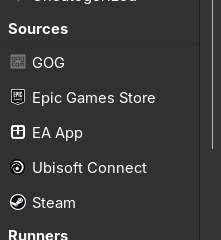
I tried Lutris recently, is there a way to connect the Itch.io library to it? I only get these options in the app, not sure if I have an older version:
Honestly, if you have a VR game ready and published on another platform, why not include Itch.io too? Nothing to lose, the platform makes it quite straightforward.
I like the idea, and it would definitely add value to the site!
However, I believe this was mentioned before. from what I remember the response was that Itch was not going to do that because it’s a lot of resources and effort to moderate. There is the Discord Server which offers similar functionality.
At the end of the day, the users want to know if AI is involved in a project or not, especially in the indie scene. It’s hard to make everyone happy. Maybe if there was a separate flag for AI Art and AI code?
Either way, this is just my opinion, I have no say on what the platform plans to do.
I don’t really know how all this works behind the scenes, but I wonder if that is still a problem. I imagine if payment processors don’t want to support sales of certain content, they might also not want to support credits for a site that hosts such content.
Having said that, I like the idea of Itch credits in general. I don’t know how complex it is to implement, but I feel like it would make user’s experience much better.
The individually priced files work in a tier system. That means is a person pays £10 to your project, they will have access to your base project plus all files with an individual price of £10 or less.
The system wasn’t designed to provide DLC, as you’ve discovered by the problem you’re having. A good idea is to have DLC on separate project pages and link them to the base game, but there’s no hard rule for it. I understand having each character in its own project page might be a bit too much work, it’s up to you to find a system that works for you.
Is this about the project “United by Love’s Heart”? It seems to appear in searches just fine. You might need to enable adult content if you can’t see it when searching.
Congrats on the release! It seems this is the first time you’re posting on Release Announcements, it would be great if you could include a summary of your game and either a screenshot or video of it. This will help users looking at this post visualise what your game is about!
In case it helps, these are the rules for posting on Release Announcements:
I don’t think there’s a specific path for horror games. Similar to any other genres, you can pick up a game engine, and get a few assets from their asset stores, and get a head start.
However making a game can be a very big task, especially if you haven’t made one before. My advice is to start slow, make a tiny game, and slowly build up from there. Just like any other artistic activity, the more you do it, the better and faster you become.
Indeed I did mean making a Devlog tagged as “Major Update or Launch”.
Adding a demo should satisfy the “Major Update or Launch”, feel free to give it a go and see what happens. Make sure to mark the relevant file with “This file is a demo and can be downloaded for free”.
Often new projects from new developers take longer to index. Sometimes admins need to review projects manually. I wouldn’t recommend having a file that’s not the game, as the algorithm might think your game is finished an available to users, even though it’s not, which might be poor user experience.
The general advice is, focus on making your game, and release it when it’s ready. The algorithm might help you, but most indie devs have to market themselves to get enough eyes on their project.
When you make a new post about the release of your game, you can tag it as Major Update or Launch, which will signal that this needs to re-appear in relevant places, I believe it includes the “Most Recent” category too.
This is meant for games that are having big updates, or in your case, the game already has a page but it’s now launching. It might take a few days for things to happen once you make a post.
My understanding is that bundles just give access to the project itself, but none of the individually priced files. This should includes discounts (either on bundles or the game itself).
Individually priced files can only be priced higher than the base project itself, so users can only gain access to them specifically by paying more for the project itself.
Thanks for posting those links, I think they are very useful to this discussion. There’s this paragraph that describes individually priced files in detail:
Individually priced files come with an important distinction regarding ownership: The buyer will only continue to have access to these files if the price they paid satisfies the minimum price you set on the file. This means that if you change the individually priced file to be more expensive, you may lock out access to that purchase tier from existing buyers. We strongly recommend considering how you intend to price your project in the future before using an individually priced file. Use individually priced files for quick bonus content, not to set the price of your content. Use the minimum price on your project to set the price of your product, as this will allow you to change the price at a later time without affecting ownership.
It seems this has been answer already, but in case this helps future readers, I though I’d share how the price system is designed.
If you set your project to paid, people can pay that amount to own your project. That means, no matter what happens to the price of that project, people will be able to gain access to its files. (Except individually priced files, see below)
Individual priced files are intended to reward people that support you by paying more than the project’s price and they work in a tier system. For example your project is set at £5, extra soundtracks are individually priced at £10 and some behind the scenes files for £15. That means that if someone pays £15, they will have access to your project plus any files with an individual price of £15 or below.
Having the game set as free, but in reality the full version is behind an individually priced file is not the intended way to do this. On top of the issue you mentioned on this post, this also confuses the algorithm as it displays your game as free to play which might not be the best experience for users.
I see you mentioned DLC on some comments. As far as I’m aware there’s no official way to do DLCs, but some other people have created new project pages exactly for that reason, with a link on the base game for users to find. This should eliminate pretty much the issues you’ve been having, but it’s up to you to decide what works best for you.
The solution is different in each game, but here’s a couple of my thoughts:
Have multiple solutions for each problem. Is there a giant ogre guarding the entrance? Maybe there’s also a hidden entrance. This way newbie players can still progress in the game, but more hardcore players might decide to take on the extra challenge of the ogre instead.
Make harder challenges optional, but with rewards, so players will be more likely to at least give them a chance.
Playing a game in a browser requires less effort from users, so you are likely to have more people trying out the browser game.
As opposed to downloading a game, which requires downloading the files, extracting them, and find out where the executable is. Not to mention there’s more chances of something goes wrong, like the game not running properly on someone’s system.
I don’t think there’s anything you can do about this, it’s just how it works. The easier a game is to access the more people will give it a go.
Is this for a profile picture, or a screenshot for a project?
It’s possible sometimes when you export a gif image that it automatically removes transparency, is it a good idea to check if you can view the exported .gif file with an image viewer to confirm it still has transparency?