


Diving into performance
Chrome DevTools
Chrome has many tools that let us know what we're doing.
First off, don't check Hide Violations. Violations are bad, let's not do them.
They may happen when first-time-loading large datasets, that's okay - but in normal, we-have-almost-everything-cached state, they shouldn't happen.
Use the Performance tab to see where time is spent, including React rendering:
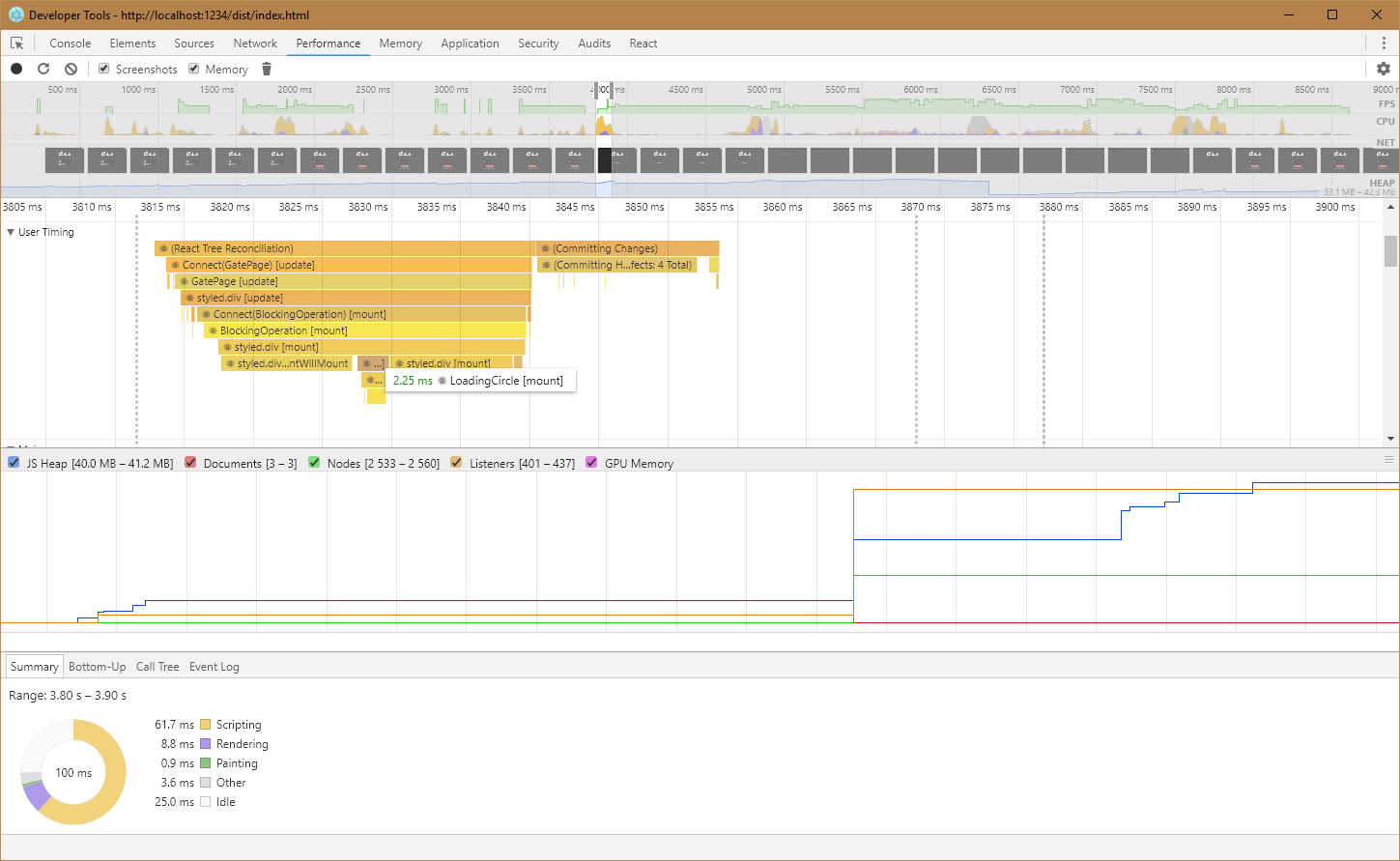
Get to know the tools. They're good.
React performance tips
In short:
Use
React.memoto wrap your functional components. It serves the same purpose asReact.PureComponentbut for functional components, preventing unnecessary re-renders by using a shallow comparison of props.For connected components, use hooks like
useSelectorfromreact-reduxto listen only the least set of dependent values to avoid re-renders
import React, { memo } from 'react';
import { useAppDispatch, useAppSelector } from "renderer/hooks/redux";

const SomeComponent = () => {
  const dispatch = useAppDispatch();
  const appVersion = useAppSelector((rs) => rs.system.appVersion);

  const handleButtonClick = useCallback(() => {
    dispatch({ type: 'DO_SOMETHING' });
  }, [dispatch]);

  return <button onClick={handleButtonClick}>{appVersion}</button>;
};

export default memo(SomeComponent);
- Avoid using anonymous functions in render when passing into sub-components so that they make take advantage of memoization. Instead, use stable references with
useCallbackwhich will return a memoized version of the callback that only changes if one of the dependencies has changed.
import React, { memo, useCallback } from 'react';

// Bad approach
const BadComponent = memo(() => {
  const doStuff = () => {
    // stuff.
  };

  // This will force MyComplexComponent to always re-render
  return <MyComplexComponent onClick={doStuff}/>;
});

// Good practice
const GoodComponent = memo(() => {
  const doStuff = useCallback(() => {
    // stuff.
  }, []); // Dependencies array

  // Memoized `doStuff` won't trigger unnecessary renders when GoodComponent is re-rerendered
  return <div onClick={doStuff}/>;
});
By using hooks and keeping function references stable with useCallback, you
allow React's memoization strategies to optimize your component rendering. This
helps in performance gains by reducing unnecessary rendering.