
On Sale: GamesAssetsToolsTabletopComics
Indie game storeFree gamesFun gamesHorror games
Game developmentAssetsComics
SalesBundles
Jobs
TagsGame Engines

Weihao Xu

16
Posts
A member registered Sep 17, 2021 · View creator page →

Creator of

Recent community posts

It is really interesting to experience a cooking game like this. I only watched others to play Overcooked and it is all about the simulation of cooking and cooperation. However, this game is much different. What I can describe is that it translates the cooking videos from YouTube into the game form, which teaches you the traditional Chinese dish through the text messages and visual elements in the game.

Personally, I love cooking, and there is always a debate about whether you should put sugar in the dish Scrabbled Eggs and Tomatoes. And my way of cooking it is always to put some sugar in order to increase the flavor. There is a measurement for this: if you can taste the obvious sweetness in the dish, you have actually put too much sugar in the dish and you may want to reduce the amount in the next time. In this game, you have to strictly follow the steps or you will have to restart all over otherwise, but there is a exception where the designer allows you to not put the seasoning in the dish and proceed the game. This is surprising to me since I restarted so many times before and it is a relief when I finally got me dish cooked.

The tiles in the game are composed in a way that represents the shapes of necessary ingredients in the dish, and it allows players to immerse themselves more in the cooking procedure. The heat button was always distracting me since it is in the center of the scene and I can accidentally trigger the conversation every time when I passed through it. When I got the eggs, the color of the room is changed to pink and yellow, which I assumed that the aim is to mimic the heat of the actual cooking. It is also nice that the designer added a question mark in the bottom of the scene for players to check the recipe in case that they forgot it, and I am one of the players who get benefits from it.

The text messages are the most important part in the game. In fact, it teaches you the whole process of how to successfully make the dish and its steps. The text will change based on your steps. If you did not follow the correct steps, the text will show a different conversation and you will have to restart the game. It functionality is to keep track of the changes in variables and show the corresponding game content. 

My best score for Ping-Pong jump is 502 and I tried a few times before reaching this high score. It is a great game with simple control, though it is hard for me to control the ball movement. Sometimes it moved slow, but when I hit the wall or the obstacles coming down from the top, it suddenly became really fast and it will bounce forth and back very quickly and it is really hard for me to catch it.

The central uncertainty in this game for me is the ping pong ball movement when it hits the either the walls on the side of the screen or the black obstacle walls coming down. What I can do is to try my best preventing my ball from hitting the wall, and the tension comes from the fast bouncing and the helpless feeling that I cannot catch that with my reaction. The challenge that designer throws to players are the black walls coming down from the top. There are two patterns for the black rectangles, and players can pass them through the empty gap between two black walls. There is also an interesting point that when I hit the black walls from the bottom with the ping pong ball, it usually will move with a faster speed and it makes me harder to catch it and bounce it back to the air so that it will not fall off. I feel like that you can change the wall position every time when it comes down rather than fixing it into two patterns. For example, you can use the random function and give a range to the random so that it will not generate numbers that is not on the screen, and you can always leave a blank space for players to pass through their balls. Or you can make the black walls more intelligent by using the X positions of the balls when you generate the black walls and make it long enough that players need to get to either the right-most area or left-most area to find the gap.

The other interesting thing that I encounter is the time where I first played this game and I move my pad really quickly. Then the ping pong ball moves in a crazy speed where I cannot see it clearly in the screen and I only got several points in that few rounds.

A way that the designer can create more interplay is to change the pad that is controlled by the mouse into two pads that can be controlled by the keys on the keyboard, and there are two scores separately for each player to keep trach with. In this way, players can invite their friends to play with them and it will add more fun as things go. The designer can also add more randomly appeared objects or sprites on the screen, and it can add more points or multiply their points if one player hits those objects with his ping pong ball. 

I enjoyed playing Listen a lot and it is a great puzzleScript games with well-ordered problems and levels. Each level presents a different difficulty and I found myself being much more different after the final level compared to the level 1. The core rule of Listen is to put the crosses into the right places. It may sound simple, but with the constraints of the walls and spaces, players have to figure out a unique way to move them in the right places and it can take a few rounds of trials before we can find a correct solution. Even though the crosses are the core elements, there are supplementary requirements, which is that players have to also turn the blue and red squares into the green squares by steeping over them. However, red squares are a little bit different since it cannot turn green unless the crosses pass them and they turn into blue. All of the constraints make players to think about their decisions carefully and plan their moves ahead of time.

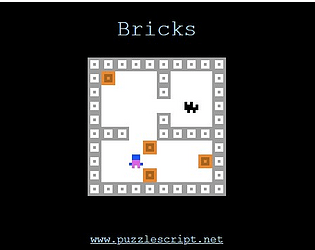
The first level is the introductory level and it aims to allow players to get familiar with the game mechanics and its rule. When I first played the level one, I was confused about what all the blue squares are used for and it will turn green and blue back and forth when I move back and forth. When I put the cross into the right place, nothing happened. So I then tried to turn all the squares into green and I successfully moved to the second level. The second level is the level that the red level is first introduced to players and I thought I can move to the next level without doing something about it in the first place. Then after the necessary procedures, I still cannot move to the next level. This is the time that I realized that the red square actually means something but I cannot just change its color just by stepping over it. Then I tried to move the cross above it and it indeed changed to blue. However, doing so will inevitably change the green squares back to blue, so I moved back and forth a few times to finally succeed and made to the level 3. The strategy for level 3 is to first move the two crosses into the right places first, use the left one to turn all the red squares into blue, put the final cross into the right position, and turn all the blue boxes into green. For the next several levels, the general dominant strategy is this: I first used the crosses to turn all the red squares into blue without making them placed into the dead corner, since I cannot move them around in this way. Then I put the crosses into the right position, and turn all squares to green. However, in the step for turning boxes into green, I may move the crosses slightly away from the right position due to the limitation of the space and walls. 

Deep Deep Ocean brings me a great game experience with all the tile sets and min-games. The general blue theme helps me to immerse myself into the deep sea feeling, which feels like I am in the deep ocean right now as a fish (or a human).

The color of this game is generally blue with important characters or objects being yellow. The blue color corresponds to the ocean elements in the natural world, which helps to render to a similar environment. The wave animation, the sun in the sky, and the screen movement from top to down also implies that we are in the ocean and we are exploring from the surface to the deep ocean. Personally, I really like all the characters being yellow instead of other colors, because it allows me to know what I can interact with in the game and what to expect next.

However, the entries in the game are not explicitly labeled in the game. The three entries are at different tubes in the second scene, which corresponds to different parts of the tubes in the bottom right of the screen. I was confused at first about how to enter the other games when I found the first bubble game. But after a few rounds of talking with sprites in the game and wandering, I found the pattern and correctly entered the next two games.

The first exit of the game is actually mandatory and instructional, since there is only one way you can move and you can only move horizontally. After I move to the right most area of the first scene, the transition begins. However, it is not two separate rooms. The rooms are connected together since the camera only moves down instead of being black. The other exits in the game are not explicit, and it is only mentioned in the text messages after players interact with the essential sprites, which is different parts of the tubes in the bottom right of the screen.

The text messages are the core of the game, since it provides the essential information and instructions to players. Without talking to the sprites, players will not what to do next. Also, the text messages act like an inventory so that you can see what you gain and what you lose after each conversation. For example, when I talk to the crab, the text message can show me that I have gained a shrimp and I can do something about it. It also works for the starfish, which can give me the coupon as the entry requirements to the game.

The three mini games are also wonderful experience to me. The first one that I encounter is to collect all the bubbles, and the second one is the maze. The final one is actually the most interesting since I did not actually play the game, but I managed to get out of the room because I talked to the sprites one more time. 

Prompt 2: Describe the challenge of the game as if the designer was working to thwart you.

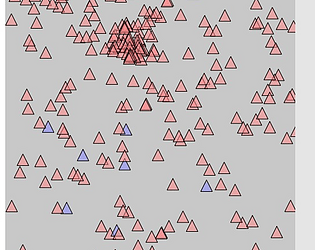
In this game, I cannot actually win at all since the balls are just too fast for me to dodge in a short period of time. There are so many balls and many of them move really fast, and it is easy for me to get touched by other balls in a limited space. However, I find that I can actually win this game by moving my ball really fast at the beginning to the upper right corner of the black hole, where all other balls cannot hit. I also tried the left bottom of the scene and it also worked. The enemies in the game are actually the other balls on the table. However, it is different from normal enemies. They would not get close to my avatar intentionally. But they move really fast and it leaves the players no choice but to move really quickly at the start of the game so that our avatar can stay in a safe place where no other balls can hit on. I guess the reason why the author wants players to lose is related to the title-Life Ball. If you act slowly in real life, you will be kicked out by the society and be outdated. And it is really easy to experience failures in life, which is also a normal thing in this game too.  

Prompt 3: Describe an interesting moment of interplay.

Since this is a two player-game, I asked my roommates to play this game with me. There are many interesting moments. The core verb of this game is to move the wall up and down so that it can hit back the ping pong ball back. And the person who misses it will lose. First both of us were really bad at controlling how the wall moves. It is a bit less friendly for players who use the arrow keys to control the wall movement, because we were both more accustomed to using the up and down keys to control the walls instead of the left and right arrow keys. So when we switched the sides, whoever that uses the arrow keys always lost. But then after a few rounds, we were getting more and more familiar with it. And there is a case where both of us just stopped move the wall around and the ball can still keep bounce back and forth and nobody can win or lose until I move the wall a bit so that the ball can be hit back in a slightly different angle. Moreover, the ball will shoot immediately once someone did not catch the ball and it will shoot from the middle to the other player. It was really hard for us to catch that at first, and I actually still cannot catch that accurately in the later part of the game, so I lost many rounds. However, my roommate reacted quite good to it and he can catch that ball every time. 

Prompt 5: Describe an emergent story from your play experience that wasn't intended by the designer (so far as you know).

The memorable moment in the game is where my avatar first enters the game and the screen started to shake hardly. And when I start to move to the left, the screen sometimes stop to shake for a while, and when I moved out of that area, the screen started to shake again. The first red house is also memorable since when I move to the left side of the screen, the game compulsorily moved my character to the chair area. And the different areas on the left correspond to different chairs on the screen. For this game, I would recount the game to my friends that this game requires you to find a safe place to avoid the earthquake. The earthquake is manifested as the shaking effects of the screen, and the houses on the side of the road are your experiences and journey to find a shelter. The event that the designer was not intended for is that I moved to the last house directly, which is the shelter, when I played this game for the first time. I did not go to the first red house, but I chose to hold the right arrow key until my avatar cannot move forward anymore. Moreover, I kind of experience the game backward since my order of entering is the house is the last house, middle house, and the first house. 

Prompt 1: Describe how the shape of the space influences the feeling of play.

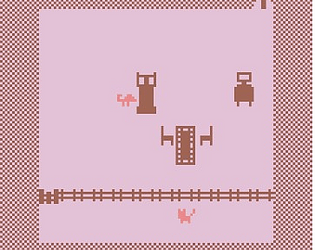
The shape of the space actually makes me feel warm and friendly to play this game, since the structure in the start of the game is more like a house structure. As we move on, the scene changes into a field where the road stands in the middle and many houses are on both sides of the road, which makes me feel like that my avatar and Phil are living in the same house and we just stepped out of it. The space is organized in a feeling that my avatar is following Phil’s footprints and we are trying to find Phil’s loved food – the grass. Also, the scenes are connected and continuous. The scene changed from the inner part of the house to the external part of the house. The contrasts that shaped this experience is the house furniture on the first scene and the house structures on the second scene. The scene where our avatar first met Phil is covered with tables and sofa, and this reminds people of being at home or indoor. The exit is in the bottom of the scene, and once we get out with Phil, there is no back option. Then we move to the outer part of the world, where Phil can find its grass on the right bottom of the screen. At first, I do not know which part is the exits since I skipped talking to Phil and just directly moved to the grassland. And then after a few trials, the upper part of the grassland is the exit to the next scene. And the next scene is organized to give a sense that we have caught Phil in the end. 

Prompt 5: Describe the mechanic of clicking.

The clicking in this game is more than just to make the story proceed. It also determines how the story will develop. At the start of the passage where the game first offers the two options of clicking, there is actually only one option left for the player to proceed. And the other extra choice allows you to either get more familiar with the situation or ask yourself to give up such thoughts. What actually makes the clicking important is choices given when the person has lost its aim and objects and do not what to do. Now the choices of whether contacting his commander or not will decide what plots will show up next. Moreover, the choice of clicking is also involved with the trust that you develop to the commander through the reading, since the commander have already given the instructions of not contacting him while they are in the mission in the first place. The clicking in here also mimic psychological struggle, where you struggle to obey the orders or not when you run into a dilemma that your enemies are disappeared, and your fuel is almost running out. And the final decision made under pressure and struggle will determine if the battle will be successful or not. Thus, the clicking here actively engage the avatar to do things. Moreover, it also engages the player to make his own choice, which makes the clicking more meaningful.  

Prompt 1: Describe your process of reading.

When I start the game, I was shocked by the sudden sound, which makes me think that it might tell a horror story. Especially, “don’t tell them you can see” makes me feel like the person is hiding from someone or something. The third passage is a state where the person tries to open his eyes, and the words have a flickering effect. This effect actually mimics the state that someone tries to open his eyes when they wake up and the picture in the background also helps to do the effect. Then the author explains why the person is blind, and it describes that the person feels unfair about why he is the only one that gets hurt and blind. This also clears out the horror feeling that I feel at the start of the game, since the story mentions more about his family, which is the closet group that the person belongs to.

Then the story is back to its main plot, as it describes that “dawn has finally arrived”. It has two meanings: the actual dawn has come, and the person is finally able to see the dawn, which makes his life brighter. He cannot wait to tell his mom and dad about the great news, but unusual behaviors stop him. His mom and dad are like robots, which has confirm buttons that they can click, and everything they do is like mechanical instructions that were assigned to them.

Then the picture on the wall reminds the person that his dad used to say that "I'm making something that will always be there for you." I then realized that the parents are actually fake and they are robots created by his parents, and he is the only one that survived in the car crash. And at the same time, the cruelness of the truth is not only hurting the person in the game, but also the player

Prompt 2: Describe something you really want to do, but can't.

One thing that I really want to do is to draw large pink flowers on the canvas, but the maximum of the brush size control on the upper right is not big enough for me to draw. I tried several times and I found out that the size control is only validate for the colorful brush, while it has no effects on two other brushes. In this game, three brushes represent three different kinds of functions. For the first brush, it simply draws a green line. And the limitation for the first brush is that I cannot change to other colors, though it might be too complex to list all the color options. The second brush contains more colors in it and it has more uncertainty, since the points will appear randomly in a range where the mouse is clicked. The third brush is my favorite, since it draws lovely flowers alone the line that my mouse clicks and the color pattern is more pink-related. When I clicked it, it also just draws a single flower with a white dot in the center. And I tried to draw a heart-like shape with the third brush and it looked surprisingly amazing. And I mentioned that I really want to increase the size of the brush and draw bigger flowers since it is easier to compose the drawing, but I cannot due to the limitation. Maybe it is because the author does not want me to have this function because it might destroy the lovely shape of the flower.

 Promt 4:Describe when and how the game feels uncertain.

The uncertainty is in every brush of the game. When I first played this game using the first brush, different color pattens shows up while I am pressing the left button of the mouse. I cannot control which color I want and make it stay in the canvas, but I did try to click in the same space just to get the desired color covering the old ones. However, this is not ideal if I drag the mouse around.  For the second brush, at first, I thought it is completely random and I thought the right side of the canvas can make the shape that I drew bigger. But after a series of experiments, I discovered that the shape will get bigger if the mouse is moving fast enough. And the color also has its pattern, which is that the top half will be the black and white pattern while the bottom half will be more colorful pattern. The uncertainty is within the colorful pattern since I have no idea what exact color will pop up in the canvas. The uncertainty for the third brush is also the random color while the player is drawing, but the color of the circle is not random. The color decreases from white to black when I draw from right to left. Therefore, the author mixes the randomness and the regularity in the same brush. 

When I first play this game, I am actually very confused. Because it is different from any other games that I have ever played-this game actually uses X button and makes it effective. The text before the game stresses about the function of 'X' button and when I pressed it, there is snow falling down. But later I find out that the snow also falls down when the avatar makes a move, which makes me confused about how this button actually works. I tried pressing the button while my avatar is on bed, but nothing happened. ThenI got the red hat and went straight to the destination, but i did not progress into the next level. Then I rememered the X button and I figured out its function (since X is the only thing that I did not try and it can do something.) The second level and third level is quite easy. I just go directly to the destination and pressed X to win. However, things are different for level 4 and level 5. Blue Pikachu came out and I was confused in the first moment. When I tried to approach to the pinkchu surround by the blue ones, it suddendly turned yellow. Then I finally understood why I need to find a pikachu instead of a "pinkchu".  It took me a while to figure out how to save all the pikachu from the blue ones that surround them, and I found out that I do not need to bring all the pikachu with me to pass. I only need to save all of them and go to the destination. 

Prompt 4

The first level of this game is to tell the basic mechanism that the rabbit can follow the avatar once the avatar moves next to the rabbit, and the player should lead the rabbit to eat all the grass and get to the final destination in order to go to the next level. At first, I switched my position with the rabbit a lot and confuses me because if I switch twice, the rabbit will be one space far from me. It took me a lot of times to figure out how this mechanism works and I ran to this issues several times when I try to make the rabbit eat the grass.  The second level allows me to get more familiar with the mechanism but it is not challenging. However, I ran into several problems when I get to the third level. When I try to lead the rabbit to eat the grass, it fails. I just keep switching positions with the rabbit and the grass, which is quite disappointing. But when I moved two piece of grass together and the rabbit can follow my avatar in the same direction as I approach to the grass, the rabbit successfully eat the grass. Then I finally realized that if I need to eat the grass, the rabbit, avatar, and the grass should be on the same horizontal or vertical direction. If there is not enough position for the rabbit, I should do it by switching positions with the grass so that I can make the extra room for the rabbit to follow my avatar. Once I figured out the strategy, it is less difficult for me. The final level adds the element of doors and i need to push the keys to the door so that I can pass through them. I doubted my first decision that whether I am going on the right track, but it disappeared immediately because I found it is the only door that I can open. One trouble-spot is that I can eat all grass without opening all the doors, so when I eat all the grass and bring the rabbit to the red point, the game did not end. I have to open the last door and then go to the final destination to end the game

Prompt 4: Describe how text is used.

When I start to play it, the game’s name “Escape” showed up. It makes me wonder like what the avatar should escape from, and it motivates the player to explore what is really going on in this game. And the flashing bubble next to the avatar gives a basic context, but not enough for the players to deduce the pilot. The dialogues for the keys and doors are designed to require a key to open the door, because I tried to open the door first without the key and it failed.

The next room is the same idea with the first room, but it changes the key to a dog. Since I did not talk to the dog and just go straight to the bones, I am actually curious about the reasons why I pick the bones up. Without the dialogues of the bones, the players are confused about what to do with the items that they pick up, so it might be better to add some dialog to indicate that it is a bone. Therefore, the players can connect it with the dog and know its function,

When I interact with the princess, I know what my goal is- to help the princess get her necklace. And the dialog with the dog after the avatar escapes from previous rooms makes me realize that those scenes that I have just been through are the places that I want to escape from, but it is not the end. After having the last dialog, we finally get to know the whole plot of the game, which I think is a small plot twist, because those scenes are just the memories and they help me to escape from the comma. 

Promtp 2: Describe how the tiles have been composed

At the start of the game, the avatar is surrounded with the walls that it cannot pass except for one brick that has a breach, which the players can assume that it might be an exit to the next room or at least try to approach to it to see if anything happens. This actually gives the player a hint about what they should do next to proceed to the game.

            But before that, when the players explore the second objects from the left, they immediately entered a room that displays the enlarged version of the avatar that is eating something. By doing this, it allows players to further understand what their avatar is-a lop, and the walls that surrounds the lop actually reveals that it is an imagined scene by our avatar.

            When the player enters the third room, they can fell that it is just the outside of the room that they were in because the walls on the left side are identical to the walls on the right side of the previous room. Then players can have a sense that the avatar is going outside to look for something. By interacting with the items, we gradually understand what the room is about and can infer that the big chunk of square is actually the avatar’s bed.

            Then we hit to the room where the wall tiles’ shape changed. The two areas surrounded by the thin walls that players cannot go through, which makes the players wonder what things are inside the area, and the animation on the left side also creates a sense of showering for me. Maybe I misunderstood it because the concrete walls in the bottom left also makes me wonder if it is a bed.

            Then the last room is also quite interesting because all tiles with animation looks the same and only a few have darker colors, which drives players to randomly explore them. It creates the randomness to the game and also to the players because they cannot guess what will happen when they find the “correct” item.