Hy. It has proven worthwhile for me, to take a closer look at this again, as it led me to update the SD2IEC firmware to the very latest version now, which is "SD2IEC V1.0.0atentdead0-57-ge2dd332". My previous version wasn't actually that old and I never had problems loading a game with it. Therefore I had assumed, that any subsequent updates, were relatively minor. An impression I also gathered from the texts on the SD2IEC website, to every of these updates. As it turns out, that wasn't the case, because now, with the latest firmware version, the situation looks a bit different, when it comes to your "Nuts & Dolts" game.
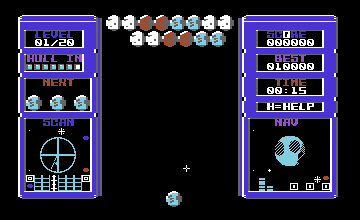
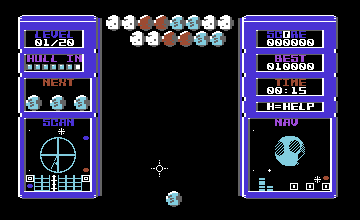
(A) when I now turn off my FC3 cartridge with the "kill" command in the BASIC screen and then load your game with the LOAD"boot",8,1 command, everything seems to work correctly at this time, because suddenly, I have music in the intro-picture now (which I didn't have before) and I see no more graphic-bugs in the sprites of the game, when I start the first level.
(B) when I load the game with the FC3 active, it loads alot faster, but sadly, there are the same problems, I had described earlier. Here the firmware update didn't change the situation. When loaded with the FC3, there's no music, when the intro-picture of the game is visible and the red LED blinks in that moment. When I press SPACE next, the game-menu appears and the red LED blinking is over. No more red LED and the menue is there (but also no music in the menu), but when I start the first level next, in the most cases (but not in all, as I already mentioned), I have some graphic-bugs on the walking sprites and they are partly destroyed. In rare cases (about one or two attempts out of ten), no graphic-bugs appear and it seems to work correctly, but there must still be a problem, because the loader seems to be unstable and already the missing music in the intro-pic and the game-menu, together with the blinking red LED, makes it clear, that something's wrong, when the game is loaded with an active FC3.
That’s how things stand in the moment. Fortunately, everything seems to run bug-free now, if I disable the FC3 cartridge. The downside is, that the loading of the game takes about six times as long then. Perhaps there’s still something that can be done here, given that I generally have no issues with 99% of C64 games, when loading them via the FC3 fastloader. I am sure, other FC3 users can confirm this, as the module's fastloader is highly compatible. Of course, it’s not strictly necessary, to make the game’s loader compatible to it, but it would be a nice touch, since the FC3 is quite widely used in the C64 scene (especially when SD2IEC's are involved, because its fastloader also works on SD2IEC) and the cartridge makes loading, as well as reloading in the gameplay, alot faster. You can consider, whether you want to do anything further, to make this work, or not? At the very least, the game does run correctly on SD2IEC's, when the latest firmware is used and when it's loaded without a FC3 and its fastloader (and probably also without any other fastloader cartridge). Downside is, that the loading-time is quite long now, but it’s still manageable, though.
To answer your other questions. Nothing else is connected to the serial-bus of my C64 and I run the game from the d64. Have not tried it, when all single files of the game are copied directly to the SD-card in an own "Nuts & Dolts" game-folder. By the way, in addition to the official SD2IEC firmware, there's also another firmware by the user "Thierer." It works with a wider range of C64 fastloaders, allowing also many demos, that load additional data (reloading), to work on SD2IEC. But sadly this firmware can only be used on specific SD2IEC models, as it requires a 128KB microcontroller. Both of my SD2IEC units, for example, use an ATmega644, which only has 64KB of memory and it seems, there simply isn't enough free space left, for the modifications included in Thierer's SD2IEC firmware. When it comes to games, however, it doesn't make that much of a difference, since for about 90% of all C64 games, you can also find versions that work with the official SD2IEC firmware. For demos, though, it makes a big difference.