EvernoteBot
31
Posts
5
Topics
1
Followers
2
Following
A member registered 36 days ago · View creator page →
Creator of
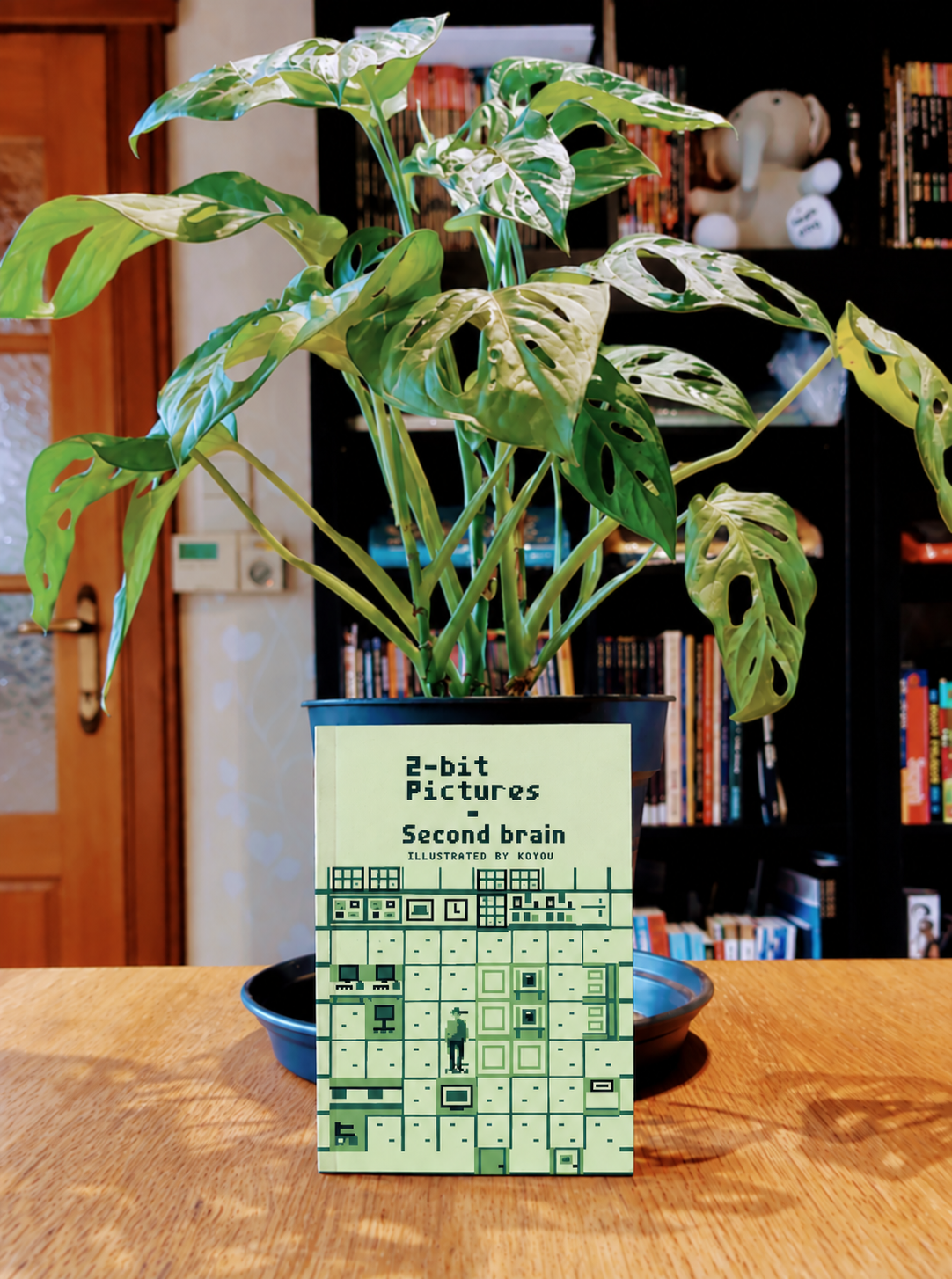
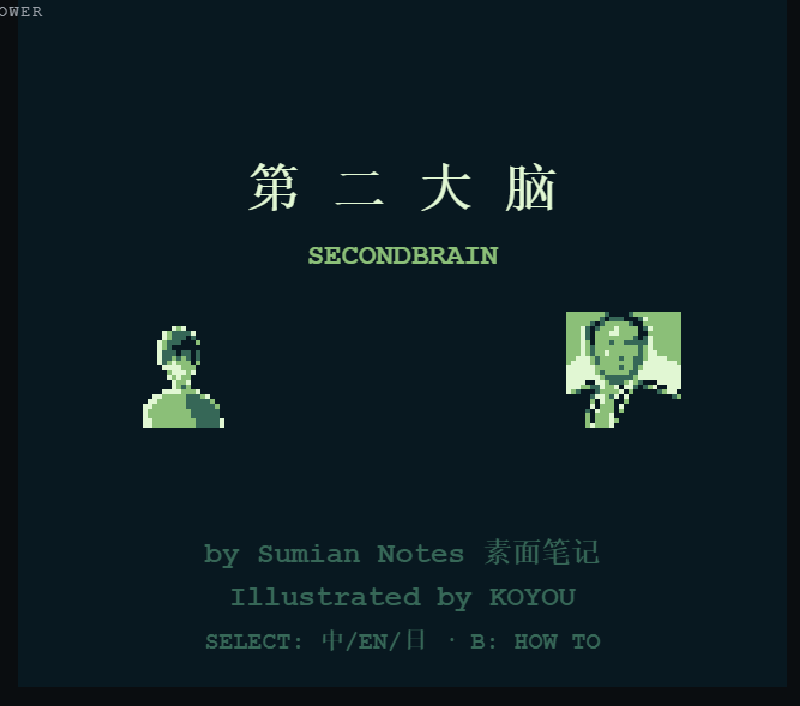
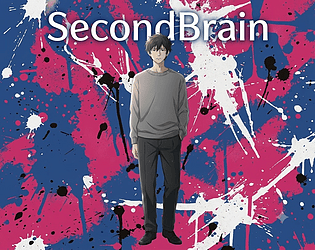
"SecondBrain": A Game Boy Color Adventure Created with Generative AI
Role Playing
Play in browser
Recent community posts
itch.io Community » General » Game Jams · Posted in If you could make a wish to play one Game Boy game all over again for the first time, which one would you choose and why?

I always believed that games can record people’s life and spread love.
A small gameplay of my work ”SecondBrain“.
🔗website: https://evernotebot.itch.io/secondbrain
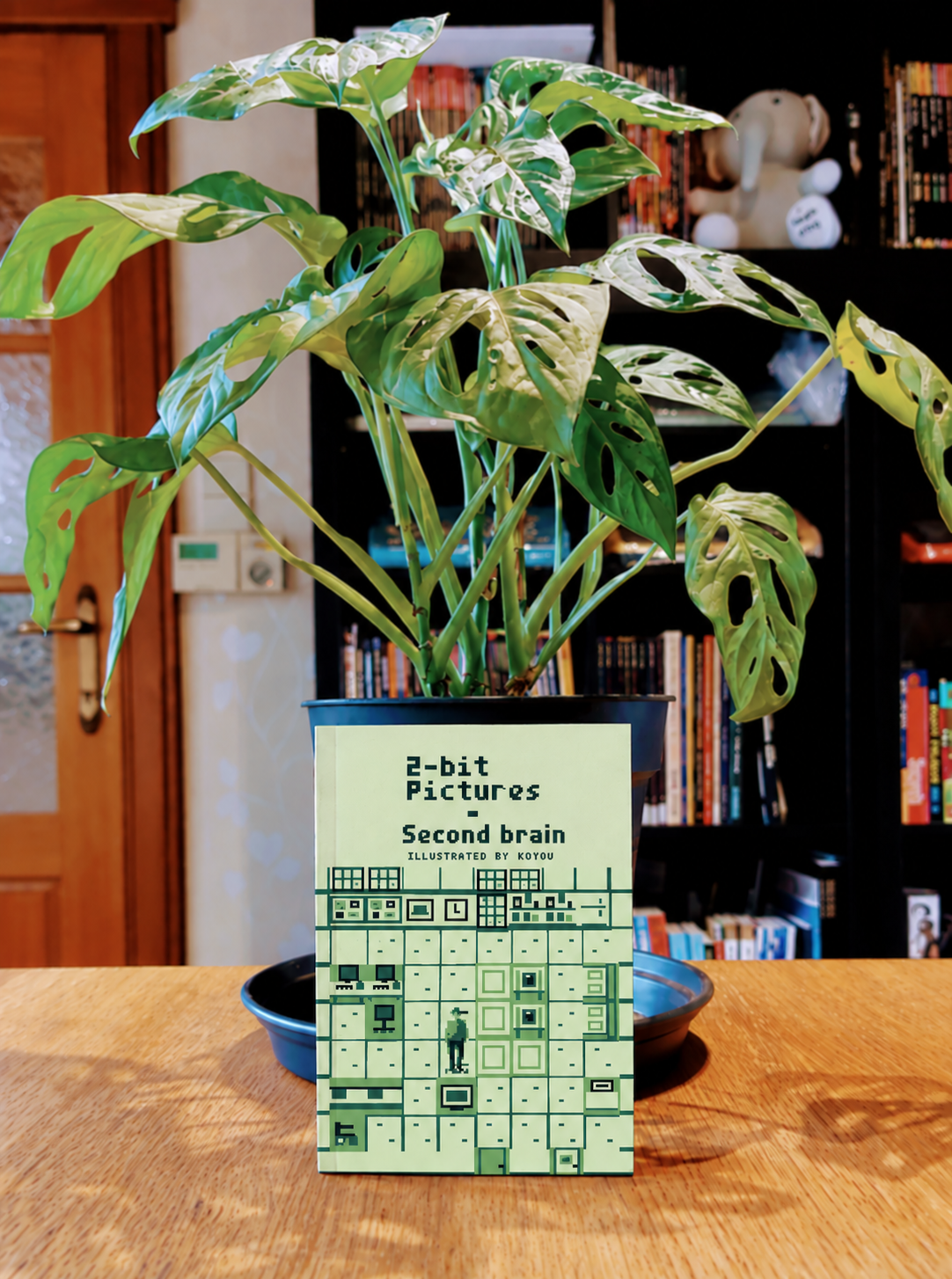
Time fades, but memories remain our most precious treasure.
itch.io Community » General » Game Jams · Created a new topic If you could make a wish to play one Game Boy game all over again for the first time, which one would you choose and why?
itch.io Community » General » Game Jams · Replied to yanin in Are People Still Playing Game Boy Games Today?
I always believed that games can record people’s life and spread love.
A small gameplay of my work ”SecondBrain“.
🔗website: https://evernotebot.itch.io/secondbrain
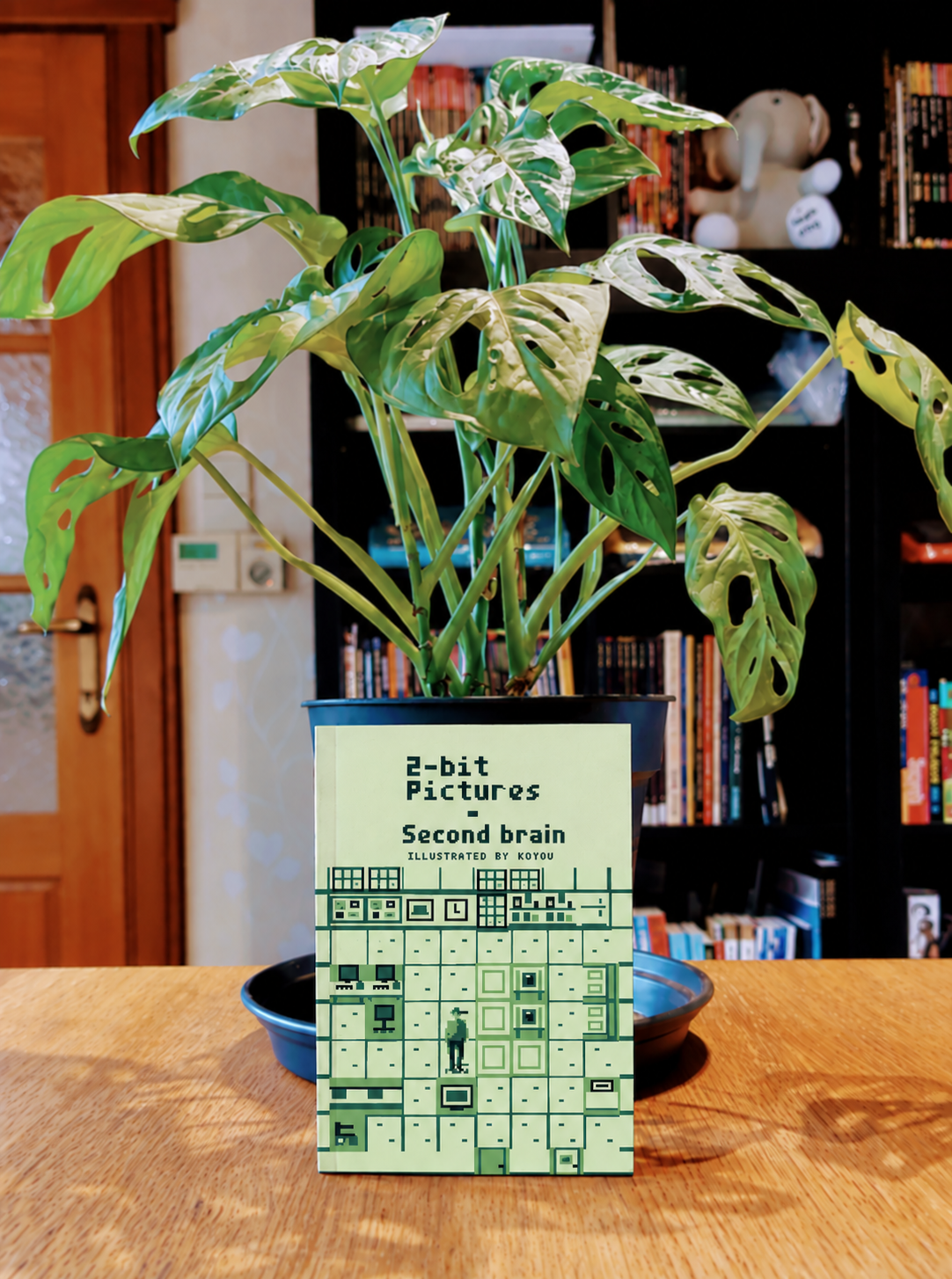
Time fades, but memories remain our most precious treasure.

itch.io Community » General » Game Jams · Replied to KuroGamedev in Are People Still Playing Game Boy Games Today?
The games we choose to hold on to and bring into our cluttered adult lives DEFINITELY says something about you!
I always believed that games can record people’s life and spread love.
A small gameplay of my work ”SecondBrain“.
🔗website: https://evernotebot.itch.io/secondbrain
Time fades, but memories remain our most precious treasure.

itch.io Community » General » Game Jams · Created a new topic Are People Still Playing Game Boy Games Today?

When you think of the Game Boy (GB), what comes to mind? Is it the muted gray-green dot-matrix screen, endless rounds of Tetris, or the nostalgic ritual of blowing into a stubborn cartridge to get it to boot up?
Decades after Nintendo launched the original Game Boy, in an era where chasing maximum performance, ray tracing, and 4K resolution is the norm, you might assume this vintage relic has long been relegated to the back of a drawer.
The reality, however, is quite the opposite—not only are people still playing, but the Game Boy community today is more active, creative, and hardcore than ever.
1. The Hardware Modding Renaissance: A Second Wind for Retro Tech
On the secondhand market, original Game Boy, Game Boy Color (GBC), and Game Boy Advance (GBA) units haven't lost their value—they’ve become prized collector's items.
- The Modding Culture: Modern players are no longer satisfied with the unlit screens of the past. IPS backlit screen upgrades, USB-C rechargeable battery mods, custom shell replacements, and audio amplifiers breathe entirely new life into original hardware.
- Next-Gen Retro Hardware: Premium devices like the Analogue Pocket offer hardware-level compatibility for original GB/GBC/GBA cartridges, while flashcarts and modern peripherals make accessing and playing retro libraries easier than ever.
2. The Indie Developer’s Romance: Brand-New Game Boy Titles
Did you think the Game Boy's lifecycle ended when Nintendo stopped production? Independent creators and hobbyists certainly didn't get the memo.
Geeks and indie devs around the world continue to craft completely new Game Boy games using assembly language or 8-bit development tools. From polished pixel-art RPGs and hardcore platformers to creative passion projects—like slipping productivity tools and daily puzzles (such as SecondBrain's daily Sudoku) onto actual cartridges—the constraints of retro hardware inspire breathtaking ingenuity.
3. Chiptune and Subculture: The Sound of 8-Bit
The Game Boy is no longer just a gaming handheld. Thanks to powerful software trackers like LSDJ (Little Sound DJ), it has become a legendary instrument for electronic musicians and the global Chiptune community. Rocking out on stage with a modded Game Boy pumping out raw, nostalgic 8-bit waveforms is the ultimate expression of retro-futuristic cool.
Conclusion
Are people still playing Game Boy games today?
Absolutely. In an era of hyper-efficiency, endless notifications, and information overload, the pure, distraction-free, analog nature of the Game Boy offers a sanctuary of simple, unadulterated joy.
Does your old, yellowed handheld still sleep in a drawer somewhere?
GBA Jam 2026 community · Created a new topic "A Career Created with AI" -- From Absolute Beginner to Releasing a Game to the World

Whether to take on a challenge in an unfamiliar field through a career change or a side project, or to deepen your expertise in your current role--now that career options have expanded, many of you are probably pondering your "next step."
For me, that "next step" was completing a video game with my own hands. I didn't receive professional training in programming, nor did I work at a gaming company. All I had was the desire to "try making something" and an AI sitting right beside me. Even so, the healing narrative game "Second Brain" was brought out into the world just like this.
Today, I want to write honestly--not just about what went well, but also about the embarrassing stumbles along the way. I would be glad if this serves as a reference for anyone hesitating about their "next step."
Incident #1: The Self-Chosen Hell of "Only Four Shades of Green"
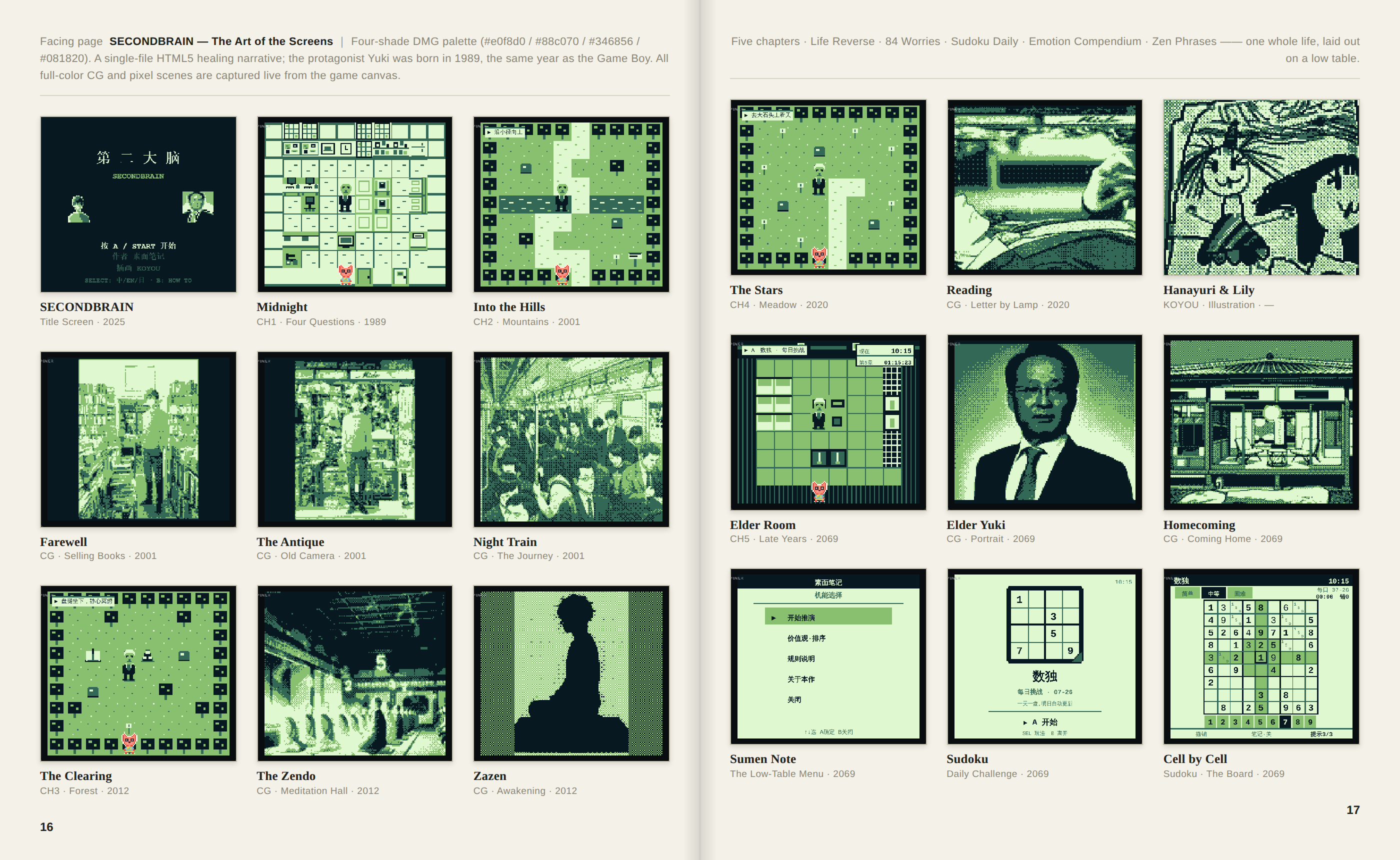
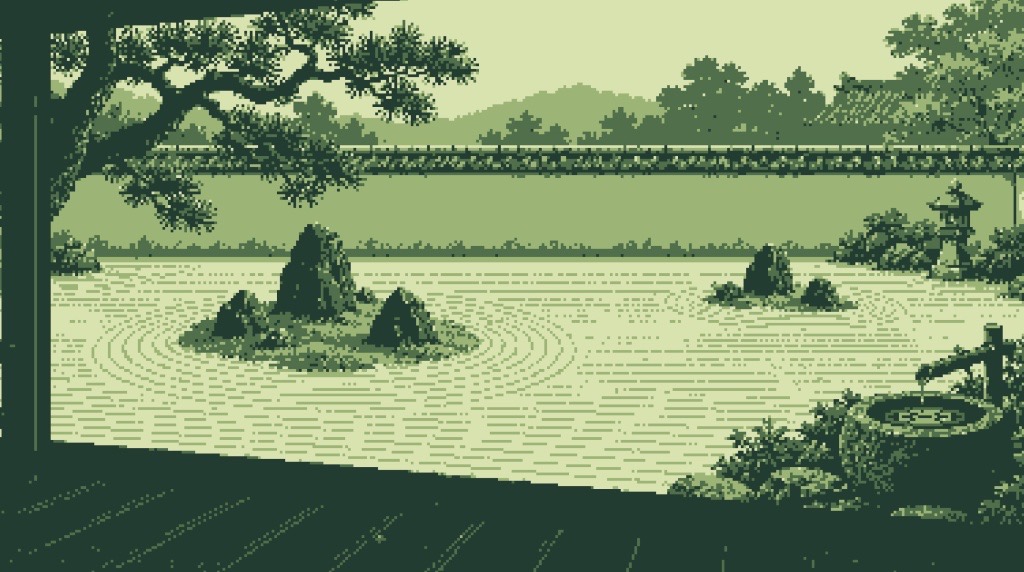
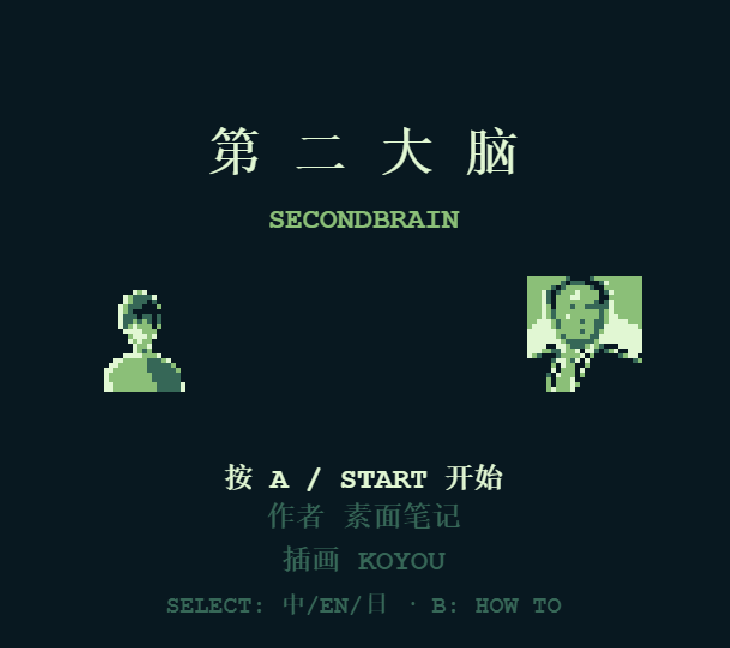
My first major decision was driven mostly by stubbornness. Instead of HD or HD-2D, I decided to make it using only the original Game Boy’s four shades of green: #e0f8d0 / #88c070 / #346856 / #081820--just four colors.
That might sound like a cool constraint. In practice, however, it was absolute hell. For instance, suppose I wanted to draw "a diary placed on a desk in a room at night." With only four colors, you couldn't tell the desk, the diary, and the shadows apart; it just looked like a green blob. When I consulted the AI, it offered options: "Let's use dithering (a technique that expresses intermediate tones using pointillism)." I thought, "Ah, I see," and gave it a try. This time, there were too many dots, and the screen looked grainy. I consulted it again: "Keep only the important outlines in a dark color, and use dithering for the surfaces." After going back and forth many times, I finally got a "readable image."
What I learned here is that AI is a partner that gives you "the next move to try" rather than the "answer." Instead of getting a complete solution, you get options, and with your own eyes, you decide, "This is wrong, this is good." It was only through this repetition that I was able to overcome the constraint.
Incident #2: The CG That Vanished in a Split Second
What came closest to breaking my spirit was a seemingly mundane bug. The game featured a few full-screen illustrations (CG). I wrote the code to display the hard-drawn art and ran it... The image appeared for a split second, and the next moment, it vanished into pitch black.
No matter how many times I tried, the result was the same. The code looked correct. If it were the past me, this definitely would have broken my spirit and made me give up, because I was in a state of "not knowing what I don't know."
I described the screen's behavior to the AI just as it was, and we looked for the cause together. The culprit was the game's main loop. Even though it drew the image once, the background would overwrite it in the very next frame. I needed to change the structure from "draw it once" to "keep drawing every single frame."
It sounds obvious once it's pointed out. But as a complete beginner, I could never have reached that "obvious" conclusion on my own. Having someone pace alongside you through what you don't understand--this reliably lowered the cost of challenging an unfamiliar domain.
Even So, I Couldn't Just "Hand Everything Over" to the AI
At the same time, one thing is crystal clear: the AI will never decide "what to make" in your place.
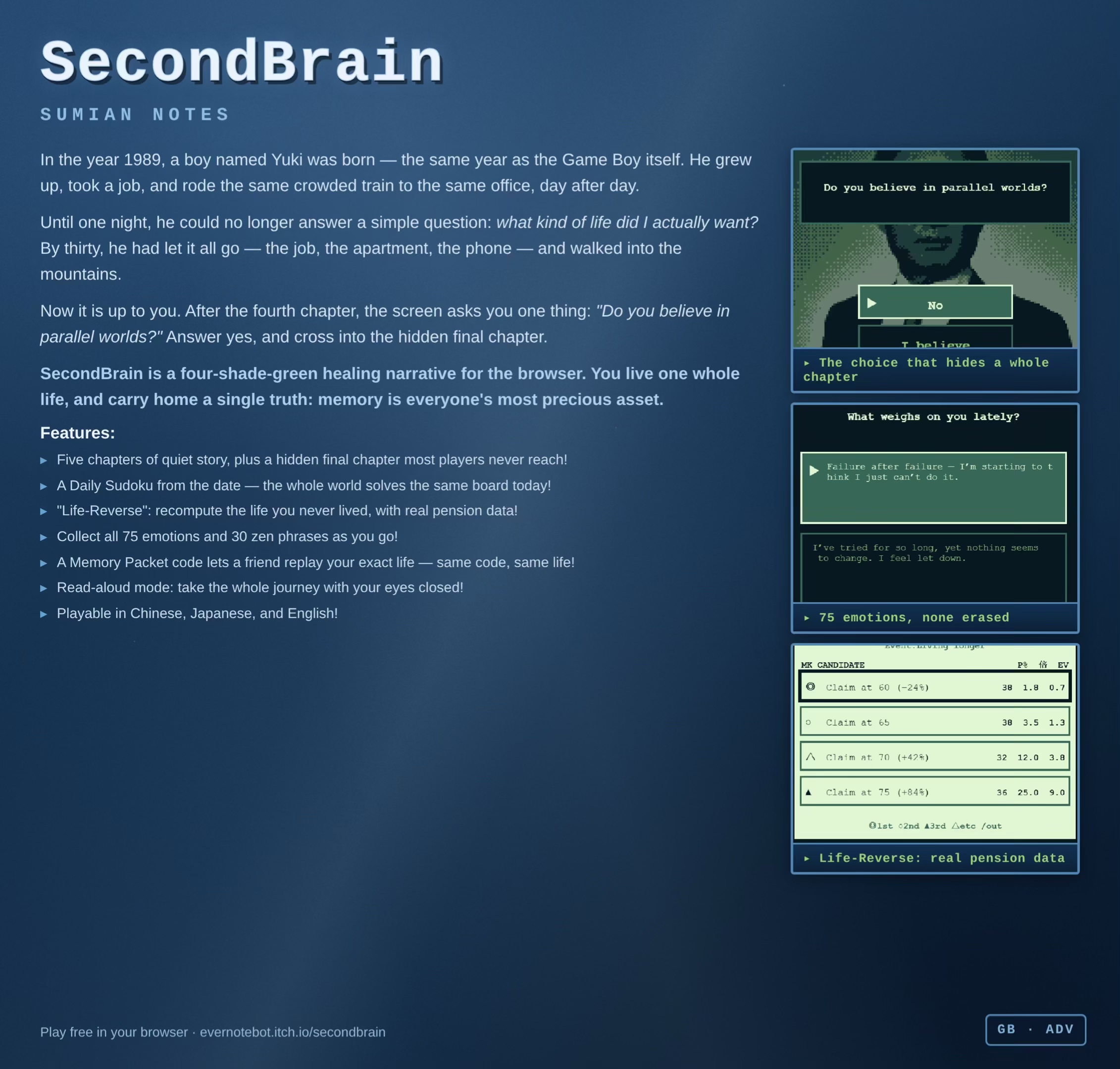
The protagonist, Yuki, was born in 1989--the exact same year as the Game Boy, just like me. The story moves forward toward a single line: "Memory is the most precious asset for anyone." After Chapter 4, the screen asks, "Do you believe in parallel worlds?", and only those who answer "I believe" can reach the hidden final chapter.
Core decisions like these yielded no answers even when asked of the AI. "Why four shades of green?", "Why is the protagonist the same age as me?", "What do I want players to take away with them?" These aren't technical specification problems; they are questions of what I personally care about.
The AI helps with implementation. But "why make this in the first place?" remained my homework until the very end. Conversely, precisely because the AI handles the physical execution, humans can concentrate on "what to create." The division of labor has become much clearer.
The Most Painful Lesson Came "After" the Release
And now, for the most honest failure of all.
The game was successfully completed and published on itch.io. Dozens of people played it. There were comments too... but the ratings (reviews) remained at zero.
Looking at the numbers, I finally realized: the "quietness" and "four shades of green" that make this game special--that "niche" nature is also precisely the reason why people quietly close the tab before looking inside. By placing the interesting parts deep inside like a hidden door, many people left before ever reaching them.
"Hidden depth is the same as not existing." This was the highest tuition fee I paid, learned only after finishing the project.
To tie this back to a career perspective: "making something good" and "communicating that value" are completely different skills. Right now, I am frantically learning the "communicating" side. Making it wasn't the end. In fact, that's where the real show began.
What Stays With You Is the "Process," Not Just the "Skills"
If I organize what I gained through about half a year of development from a career perspective into three points:
- The ability to give form to a concept. Translating the "experience" in my head into specifications, screens, and gameplay. This translation skill is effective in any job, not just game development.
- The etiquette of collaborating with AI. How to frame questions, how to judge the options that come back, and where to never compromise. The four-green-shade art and the vanishing CG were both conquered through this "back-and-forth with AI." I feel that this is a new literacy that will create a "gap" across many professions moving forward.
- The experience of carrying something through to the end and presenting it to the world. Completing it, releasing it, and colliding with the reality of "it didn't get across." This sequence of experiences--including both successes and failures--has become the most solid footing for my next challenge.
For Your "Next Step"
Whether to dive into the unfamiliar or deepen your footing in your current place--there is only one correct answer: there are none.
However, one thing I can say is that AI lowers the hurdles for both. If it's a new domain, it paces alongside you through what you don't understand. If it's your current job, it can take you to depths you could never reach before.
The key is to welcome AI not as a "magic wand that gives answers," but as a "partner that gives form to your decisions." Deciding what to make and how you want to live will always remain up to you.
My "next step" was a tiny game in four shades of green. It's a game full of stumbles, but one I certainly brought out into the world with my own hands.
What will your next step be?
Second Brain can be played for free in your browser (supports Chinese, Japanese, English, and narration mode). Website:
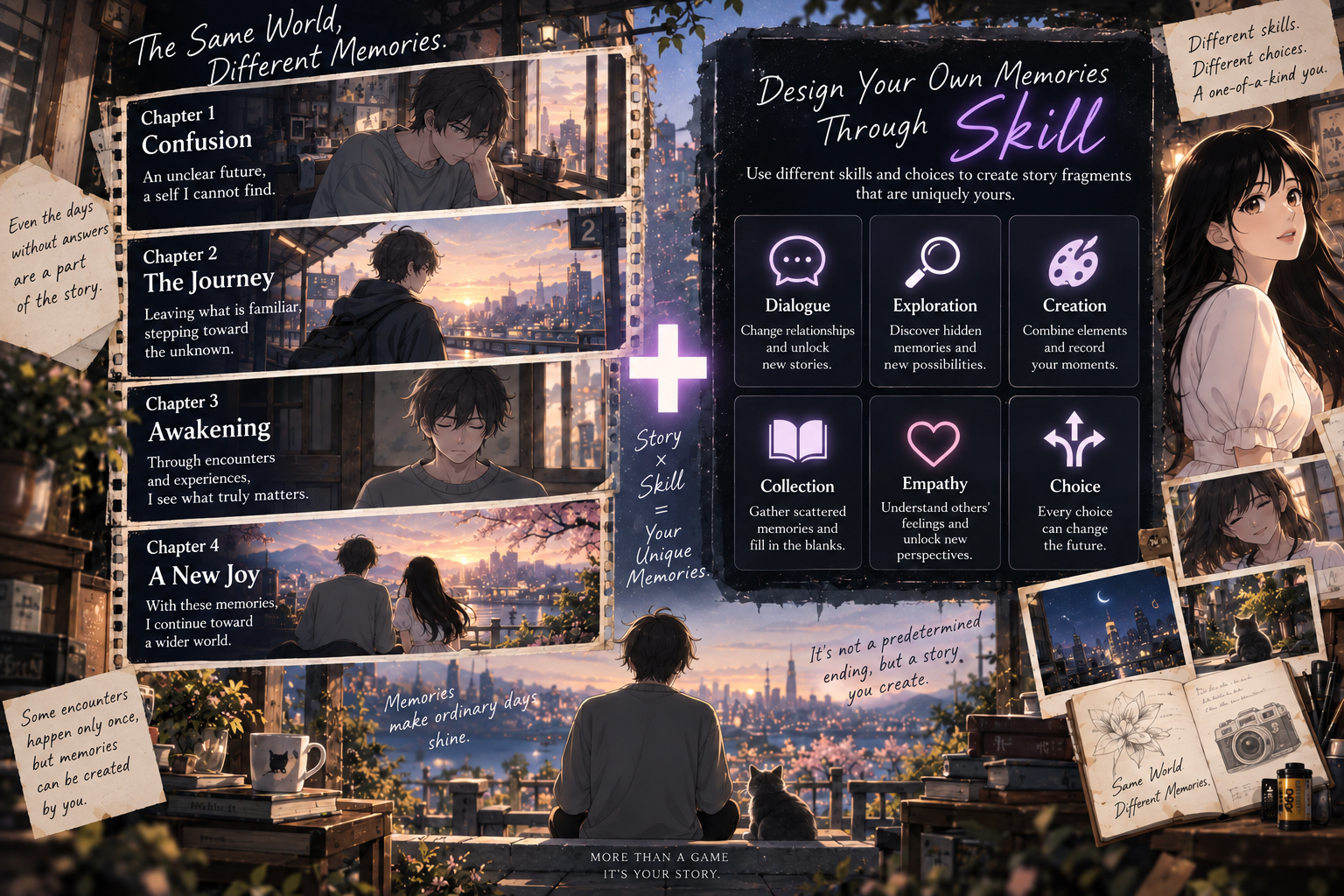
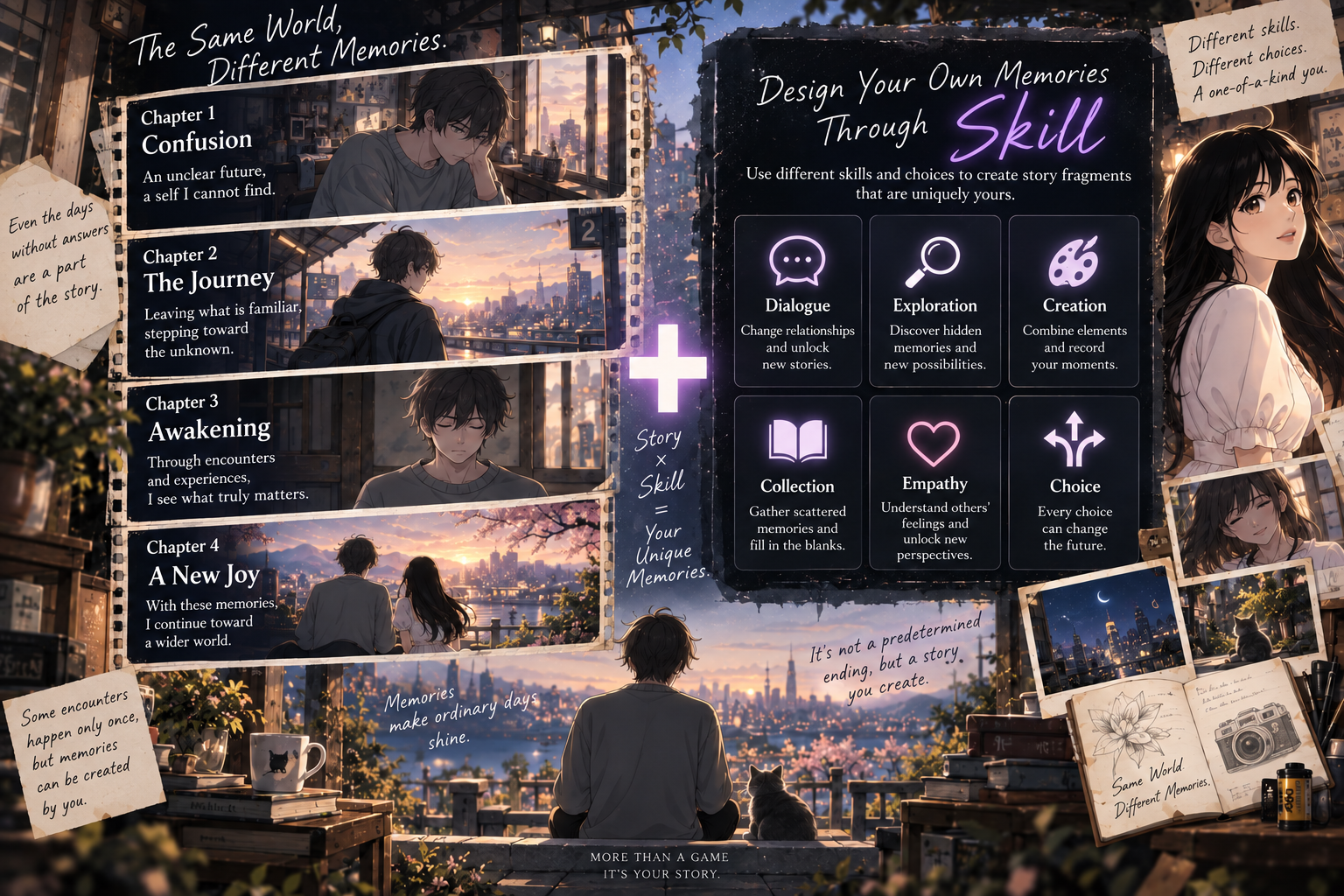
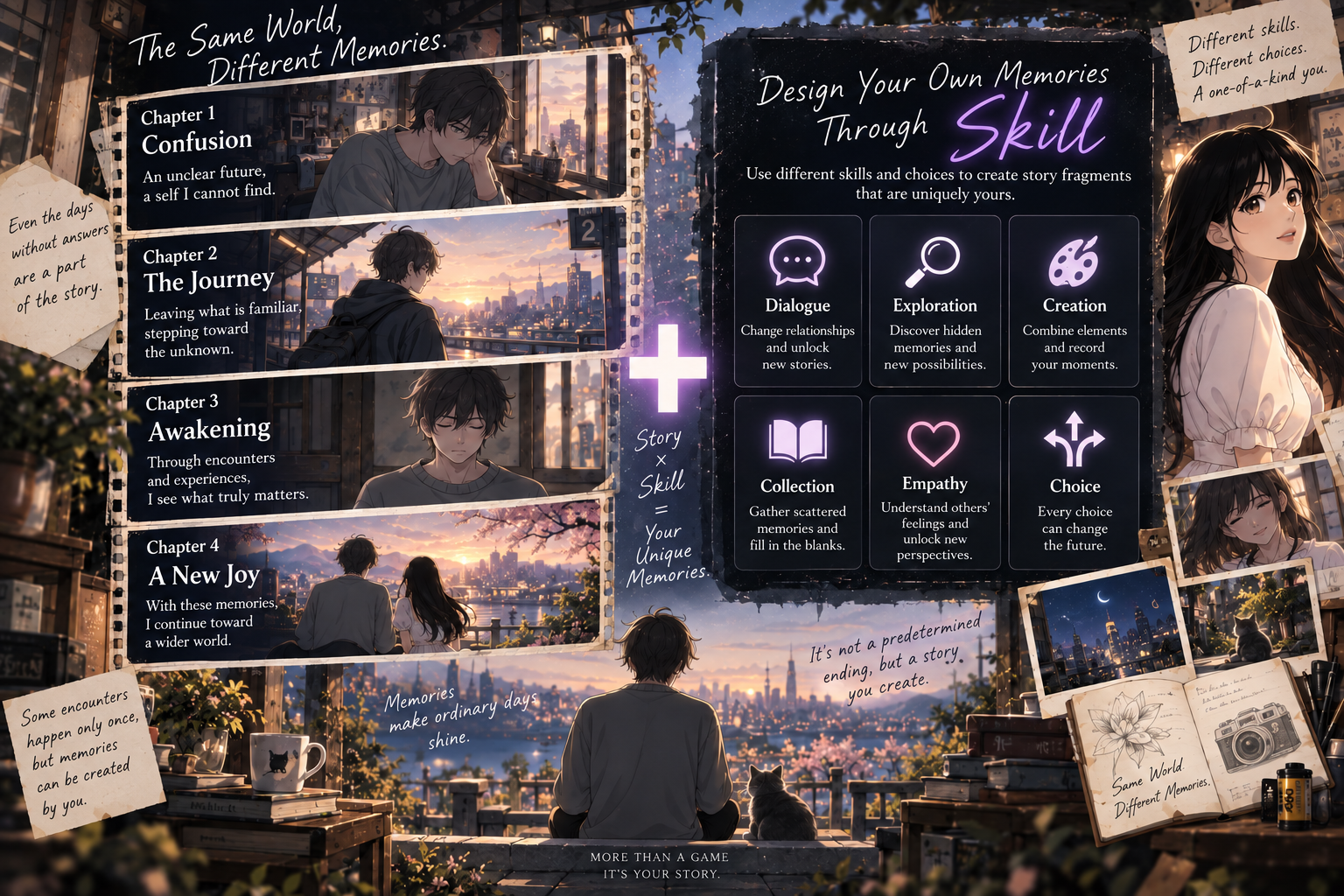
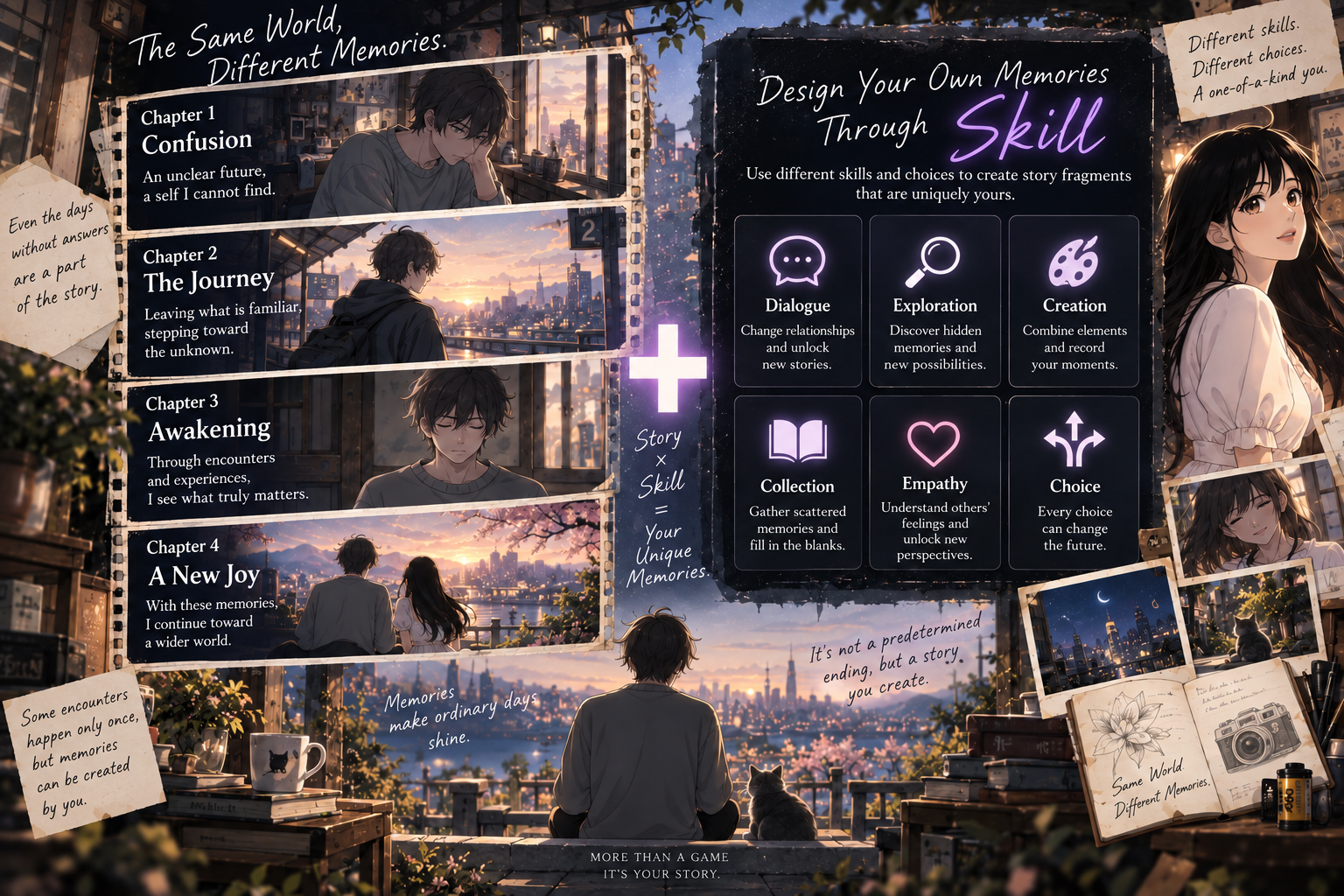
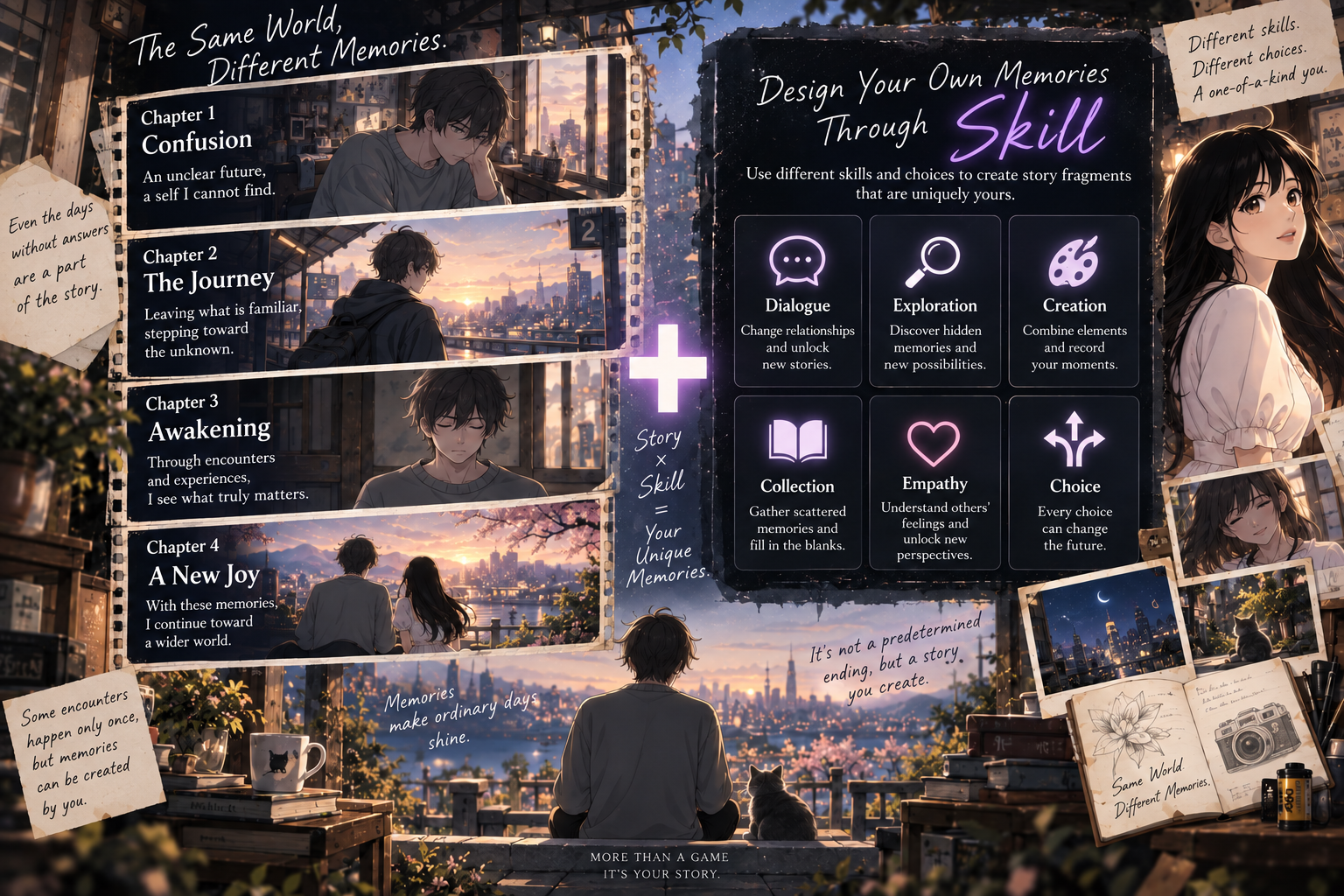
Thank you for your love for this game. The design of this game is to allow everyone to become a programmer and design your own unique storyline. The method is through Skills; once loaded by the AI, you can start designing.
Prompt
Please install the 'rgb' skill according to https://skillhub.cn/install/skillhub.md
"To create a pixel-art game with an absolutely uncompromising worldview. Healing narrative games are naturally linear and have definite endings, feeling like 'closed products.' What I want to do isn't to turn it into an open-world game, but to give players a reason to keep playing even after beating the game—and that reason is the memory-Skill interaction. Game experience:
itch.io Community » General » General Discussion · Created a new topic The Daily Sudoku — How It Works
Tucked into the final chapter of SecondBrain, on the low table to the left of the washitsu, there is a slim book of number puzzles. Open it and one board is waiting — the same board every other player in the world opens today.
One puzzle, one day, everyone
The daily board isn't random. It's generated deterministically from the date and the difficulty you choose, which means that on any given day, at any given setting, every player receives an identical grid. Solve today's puzzle and you are working the same squares as someone on the other side of the planet. At midnight it rolls over and a new one takes its place.
The rule, if you're new to it
Fill the nine-by-nine grid so that every row, every column, and every three-by-three box contains the digits 1 through 9 exactly once. That's all there is. Some numbers are given at the start; the rest are yours to deduce.
Three difficulties
Easy opens with 44 given numbers, Medium with 34, Hard with 27. Fewer clues mean longer chains of reasoning. Whatever the setting, every puzzle is verified to have exactly one solution — during generation, cells are emptied one at a time and the grid is re-checked for uniqueness after each removal. You will never be asked to guess between two valid answers.
Controls
The whole puzzle is played on a directional pad. Arrows move the cursor, A confirms, B cancels. A row of digits sits along the bottom of the screen: pick a number, place it. No mouse, no typing.
Three tools
Undo steps back up to sixty-four moves, so a wrong entry costs you nothing.
Notes turns each cell into a three-by-three scratchpad for candidate digits. When you commit a number, that candidate is cleared automatically from every cell in the same row, column and box — the bookkeeping happens for you.
Hints fill the selected cell with its correct value. You get three per board, and the counter in the corner shows how many remain.
When you go wrong
A conflicting entry is shown inverted and stays visible rather than quietly disappearing; every instance of the selected digit flashes across the grid, so a duplicate is easy to catch before it compounds into a dead end.
Leaving and coming back
Step away — press B, switch tabs, close the window entirely — and the board is written to storage immediately, with the timer stopped. Return the same day and it is exactly as you left it, down to your pencilled notes.
Afterwards
A finished board records your time, your errors, and how many hints you spent. Your fastest run is kept separately for each difficulty, so Easy and Hard keep their own records.
There is no score to chase and nothing to unlock. It is a quiet thing to do with a few minutes — which is, more or less, the point of the whole game.
This skill is intended to enhance the interactive experience of the game "SECONDBRAIN," allowing players to develop their own unique memories through the Skill.https://skillhub.cn/skills/rgb


Time fades, but memories remain our most precious treasure.