Game events → Camera → look for the Enforce camera boundaries action, change the bottom from 360 to the number you want (999999 if you want infinite bottom).
Will take a look at your game once I get some free time :3
The template uses THNK-P2P extension for online multiplayer, P2P in general requires 1 player at less to open a lobby on his side, in P2P the host player is basically the server, if he leaves, the server will close, in order to make a room open forever, you actually need to host a paid server (there is many online) then connect it with gdevelop, the template currently doesn't support that :)
Game scene events → Bosses mechanics → Knife boss → Player enter boss area:
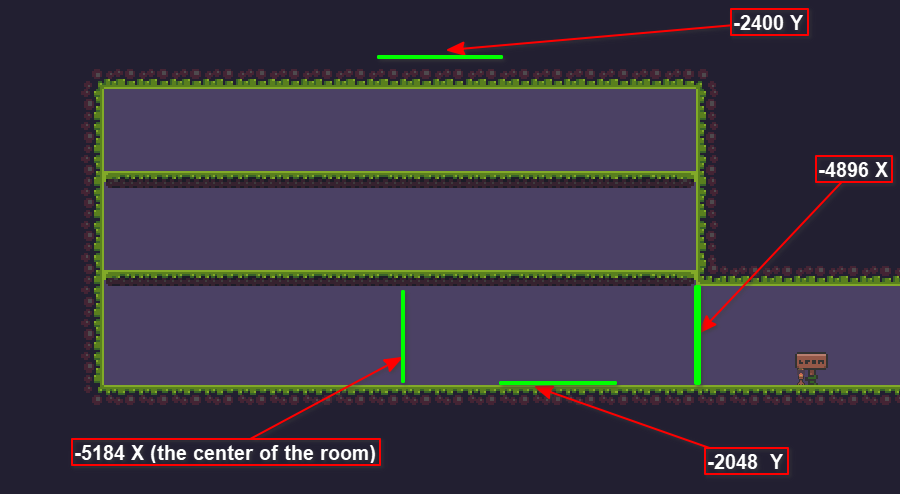
You need to change the numbers of the player position to the new numbers of the boss area, so numbers like
-4896 (Used to trigger the player entering boss room cutscene).
-2048 (Used to define the top side of the boss room).
-2400 (Used to define the bottom side of the boss room).
-5184 (Used to stop moving the player exactly in the center of the room during the cutscene).
All of them you need to change them, some for the X position and some for Y, just change them to your new boss area numbers :)
Take a look at this screenshot, this is the Knife boss area, look at the numbers, they are just returning the boss room numbers (X and Y position).
Hello :)
You can remove that limit, but i do not recommond doing it, because the game codes handles 7 players only currently, player 8 and above will break everything in the game, you will have to handle all players in the codes in order to make them not break the game rules.
Open the Lobby scene events → Server code event → Spawning players → A client has connected event → State.HowManyPlayersHasJoinedTheLobby → currently its 7, change that to the number of players you want. to be in the lobby.
Hello :)
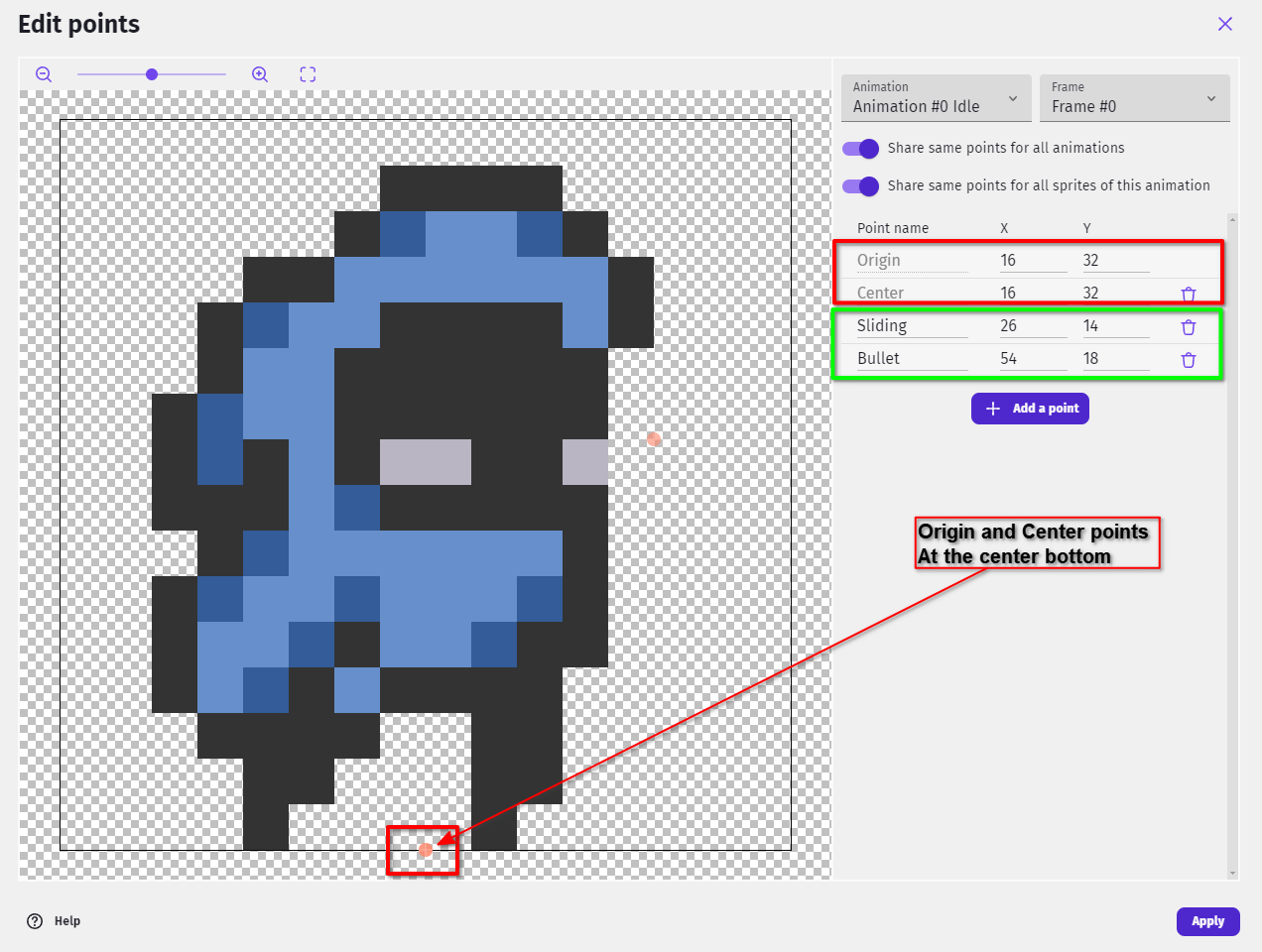
After replacing the old skin with the new one, you need to double-check that you have the Origin and Center points of the new skin, set at the center bottom (that's how the old skin also works):
Double-click on PlayerSkin object → Edit points → Change Origin and Center points to the very bottom center of the skin.
And make sure to add the Sliding and Bullet points as well (one used for particles and one used for Shooting bullet create position).
Hello :)
Make sure your new idle assets for the skin is actually visible (not empty frame).
And make sure the Origin and Center points are at the bottom center of the skin (double-click on the skin object → points editor).
If your new assets canvas size is not (32x32) as the original asset, then you need to adjust the skin position event (Game scene events → Player mechanics → Skin + horizontal flip → Change PlayerCollisionBox.Y()+32 )
Hello :)
As for the Fishing, Farming, combat system (or any other mechanics), yes you can add as much as you want without any issue.
But as for the exploration (adding more worlds (Tiles)), then it depends on how big the world is, the more tiles you add the lower the performance might get, you can get thousands of tiles without any problem, but still if your worlds are huge, then you might start noticing performance issues, since the tiles are being taken into account when the player interact with them.
Though soon I will make a new extension (Culling) that can be used to make the template (or any game with a lot of world tiles) works with unlimited amount of tiles without affecting the performance at all :3
So yes, you can build anything on top of the template, but when it gets to adding more worlds (more tiles), you need to keep the performance in mind.
That's really weird, can you play the template directly from its itch page, and check if you see this issue in it ?
This issue does not exist at all in the template nor itch or anywhere, I believe you are getting some frames skipped for some reason 🤔
What OS you are on ?
Are you getting the same issue with any other projects in gdevelop ?
Are you on gdevelop latest version ?
Running the game directly from its itch page on your browser still makes the same issue ? (what browser are you on ?)
The template does not have this bug, you can test it directly on itch or open the template original project and test it in gdevelop.
Most likely you changed something in the player movement events/codes that made this bug happen to you, compare my template events to yours and check what did you change that triggered this bug for you.
In Tiled, if you changed the tiles in the tileset, without giving it a class, gdevelop won't be able to create the collisions for it, so the player will go through it, to fix that, you can simply add the Class in Tiled so gdevelop auto-detect the collision, you can read how to do that in here:
https://wiki.gdevelop.io/gdevelop5/objects/tilemap/#define-tiles-collision-mask
The class filter name used in the project is Floor
So make sure to Tiled → Open tileset editor → Select your new tiles you want them to have collision → Set the class to Floor → Export as .tmj → Import into gdevelop and replace the old level collision.
The range attack unlocks during the game, not at the beginning (of course you can change that in the events if you want).
By push ability, you mean the enemy getting pushed after doing the melee combo attack ?
If so, I use forces + platformer character behaviour to give the push feeling with gravity :)
Hello :)
If you mean in THNK-P2P
Then there are few things that help in that:
1- Use (Set target tick rate) and reduce the number to something like 15, or just keep reducing it until you are satisfied (the lower the number the less the sync data, and the less the game feel responsive).
2- Avoid syncing every frame.
I already did most of that in the template, but i didn't play with the server tick rate, the default is 20, you can reduce that if you feel the game is lagging.
The template doesn't use Autotile, it uses External Tilemap object for the level making.
But you can easily replace the tilemap object with sprite object and use my Autotile extension to do the job 😉
https://vegetato.itch.io/autotile-extension
or if you want to go with internal Tilemap object, and wants autotile, then i suggest you take a look at my Farming Template
https://vegetato.itch.io/farming-template
I built an autotile system in it that uses gdevelop Tilemap object (not an extension though, but soon will turn it into an extension), you can use the same system in any of your projects (Copy-Paste the group event) :)
Hello :)
Make sure you actually changed the boss spawn position and the trigger area position:
Game scene → Bosses mechanics → Dragon boss → Player enter boss area → the current player X position is -8512, change that to the new area x position (if the player X position pass this area to the left, the boss will spawn).
Game scene → Bosses mechanics → Dragon boss → Player enter boss area → change the Create DragonBoss action X and Y position to your new area.
Sure, changing the skins is by simply replacing the object animations with the new one, but it must match the exact fight style (like Attack1/attack2/attack3) if your skin doesn't have this exact combo, then you're going to need to adjust the events (codes) to support the new fight style for your skin.
Of course, you can publish/sell games from the template even if you didn't add or change anything in the project, the only thing you are not allowed to do, is selling the template as Template not as game, even if you adjusted the codes.
You can read more about the license at the bottom of the template itch page.
As for autotile but for top-down, all you need is your top-down tileset, but it must follow the same rules for the Autotile extension tileset (can be found on the extension itch page), the system in the template should be the same.
No, the template have the older version of the extension, you can get the extension latest version from its itch page, and you can import it into the template without any problem, the latest update for the extension does not break anything.
Hello :)
Nothing is broken in the extension, I just added a new action to be used in a specific case.
I also updated the example to use the new version of the extension, you can open it and check it out, nothing broke in it.
Open the example and learn from it, though my guess for your case, is that you ruined the actions order for change position and snap to grid in your project, make sure the action Change cursor position is at the top and right below it is the action Snap cursor to grid
If you make snap action above the change cursor position action, the snap will not work, because gdevelop read the actions from top to bottom.
If that didn't solve your problem, please send a screenshot of your events related to auto tile and cursor position and snap to grid so i can take a look :)
Hello :)
Thank you for your purchase <3
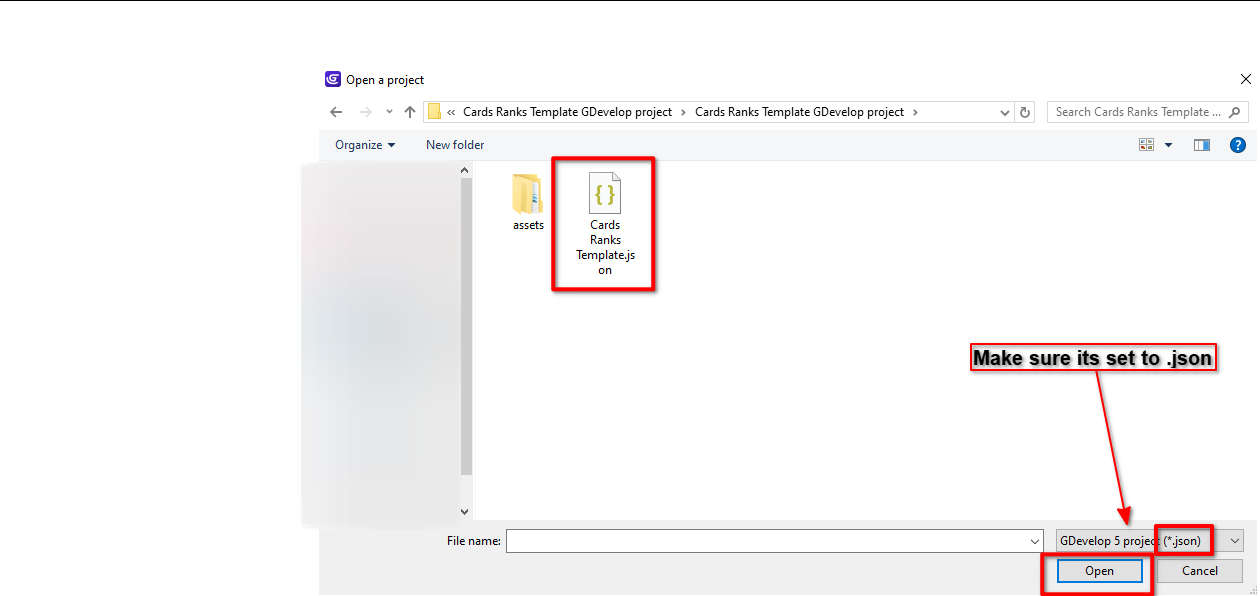
Unfortunately, you can't open gdevelop projects directly from your phone storage, but there is an easy way to solve this:
1- Open GDevelop desktop app on PC or Laptop.
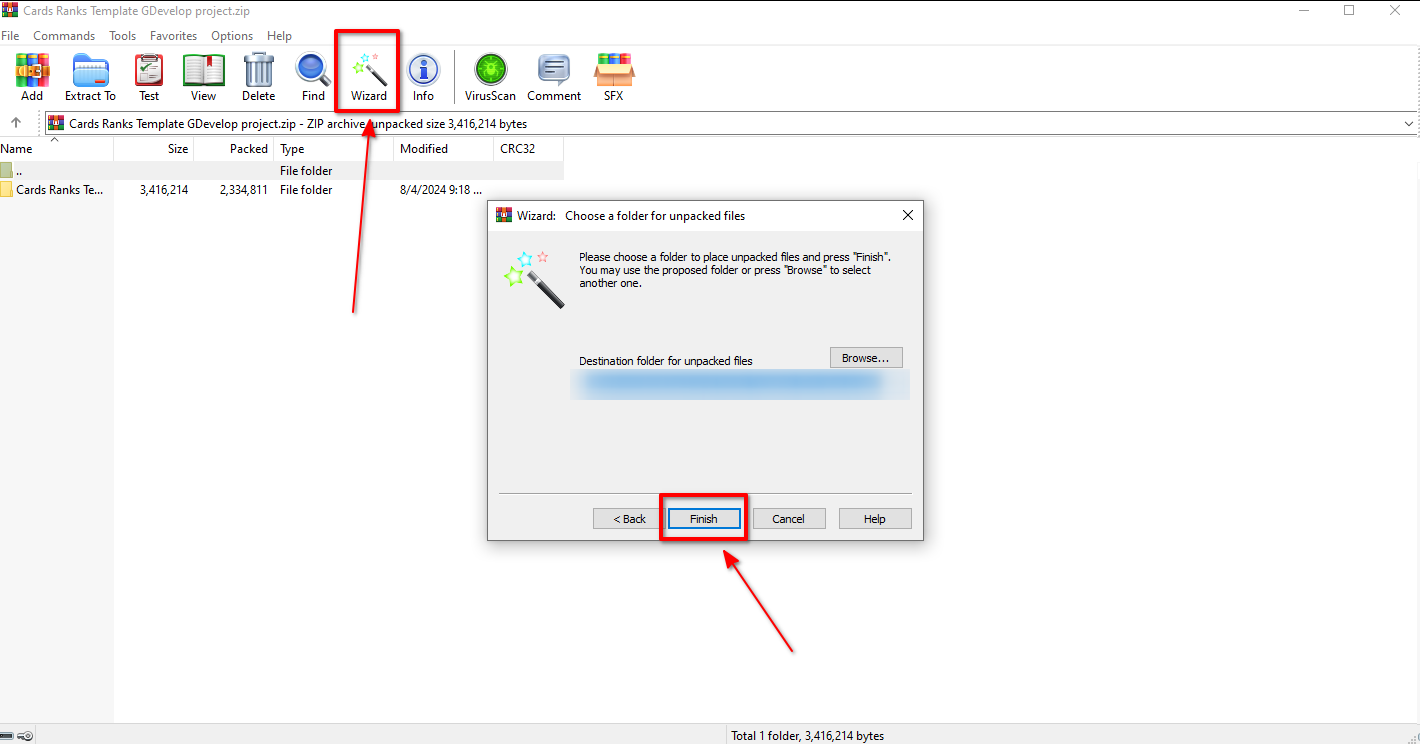
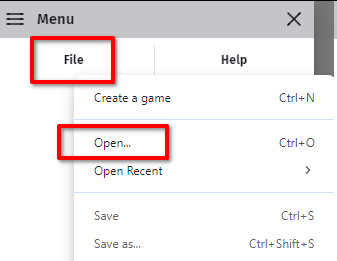
2- Unzip the template project and open the .json file in gdevelop.
3- Save the project in your cloud (make sure you are logged in into your account).
4- Close everything and open gdevelop from your mobile.
5- Now you can simply select and open the project from your cloud projects list.
Hello :)
Thank you for your purchase <3
Your tiles are spawning slow because you are creating them in every single frame per second (so 60 tiles created per second).
If you want them to spawn immediately (instant), then you simply increase this process by using the Repeat event, I made a quick example for you in the screenshot, you can follow it.

0- Please download the extension again from its itch page to get the latest version, I released an update to include a new action you are going to need.
1- We do it as a sub-event under At the beginning of the scene condition, no need to run this in every single frame, Repeat event will already make the event run as much as we want in a single frame (which is the beginning of the scene).
2- We set the repeat number to the number of tiles you want to create, in your case:
1920/32 = 60
544/32 = 17
17*60 = 1020 (so we make the repeat event repeat 1020 times to create the entire tiles).
3- I see you set the variables FillX and FillY to 0 at the beginning of the scene, that's not required if your default variables value is 0 (set in the variables editor).
4- I see you put your conditions to increase FillY variable in a new event, that's not required as well, you can make it as a sub event just like what i did in the screenshot.
And that's it !
This will create all of your tiles and autotile them in a single frame :)
Though that single frame might freeze for a second, because you are creating and autotiling a lot of tiles at the same time, you can either cover/hide this using loading screen, or just leave it as it is, it's up to you :3
Merci <3
Il suffit de remplacer la ressource InGameMap par une nouvelle, après l'avoir modifiée dans un logiciel de dessin (comme Aseprite).
Ensuite, pour ajouter la collision au nouvel emplacement :
1- Ouvrez votre logiciel de dessin (comme Aseprite) → ouvrez l'image du tileset dans : Dossier Template → Assets → Map → MapsTileset.png
2- Ajoutez votre nouvelle image au tileset, puis enregistrez-la.
3- Ouvrez le logiciel Tiled (utilisé pour créer la Tilemap) → Ouvrez le fichier → Accédez au dossier du modèle → Assets → Map → InGameMap5.tmj → La Tilemap devrait s'ouvrir. Si un élément est corrompu, double-cliquez dessus → puis localisez le Tileset ici :
Dossier du modèle → Assets → Map → MapsTileset.png
4- Dans Tiled, ouvrez l'éditeur de Tileset (il devrait s'ouvrir automatiquement après l'étape 3) → sélectionnez tous les éléments qui recouvrent votre illustration → Dans le menu de gauche, vous trouverez Property → changez la classe en Walls
5- Cliquez sur Fichier → Enregistrer sous → Enregistrez le fichier où vous le souhaitez. Vous devriez obtenir le fichier InGameMap5.tmj.
6- Retournez dans GDevelop et ouvrez le modèle → Scène de jeu → recherchez l'objet MapCollisions → Double-cliquez dessus → Cliquez sur Remplacer et sélectionnez le nouveau fichier InGameMap5.tmj
Et voilà !
Désolé d'avoir rendu la personnalisation des collisions un peu plus complexe, mais j'ai utilisé la collision de la carte de tuiles car elle est ultra-rapide et optimise les performances :)
Amazing work ! :o
The scene looks perfectly polished !
May i know what things you did externally, and what you did internally in gdevelop to achieve this graphic look ? :)
I didnt know you could achieve such polished looking graphics in gdevelop, so i was wondering if there are any you tricks used in the project other than the outline one that made the scene look high quality :)
In other words, the high quality graphic in this project, is just the models themselves ? (simply export from blender and imported into gdevelop) and adding outline + gdevelop built-in light and shadows, no other extensions or shaders or tricks ?
And whats the difference between SD and HD ?
What the project is doing when i trigger it ? Does it change the game resolution ?
And does it actually improve the FPS when it's SD ?
Great job again <3