Indie game storeFree gamesFun gamesHorror games
Game developmentAssetsComics
SalesBundles
Jobs
TagsGame Engines

hztron

5
Posts
4
Topics
2
Followers
9
Following
A member registered 8 days ago

Creator of

Recent community posts


I just released an early alpha of my game:

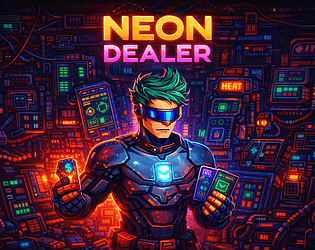
Neon Dealer: Risk & Profit

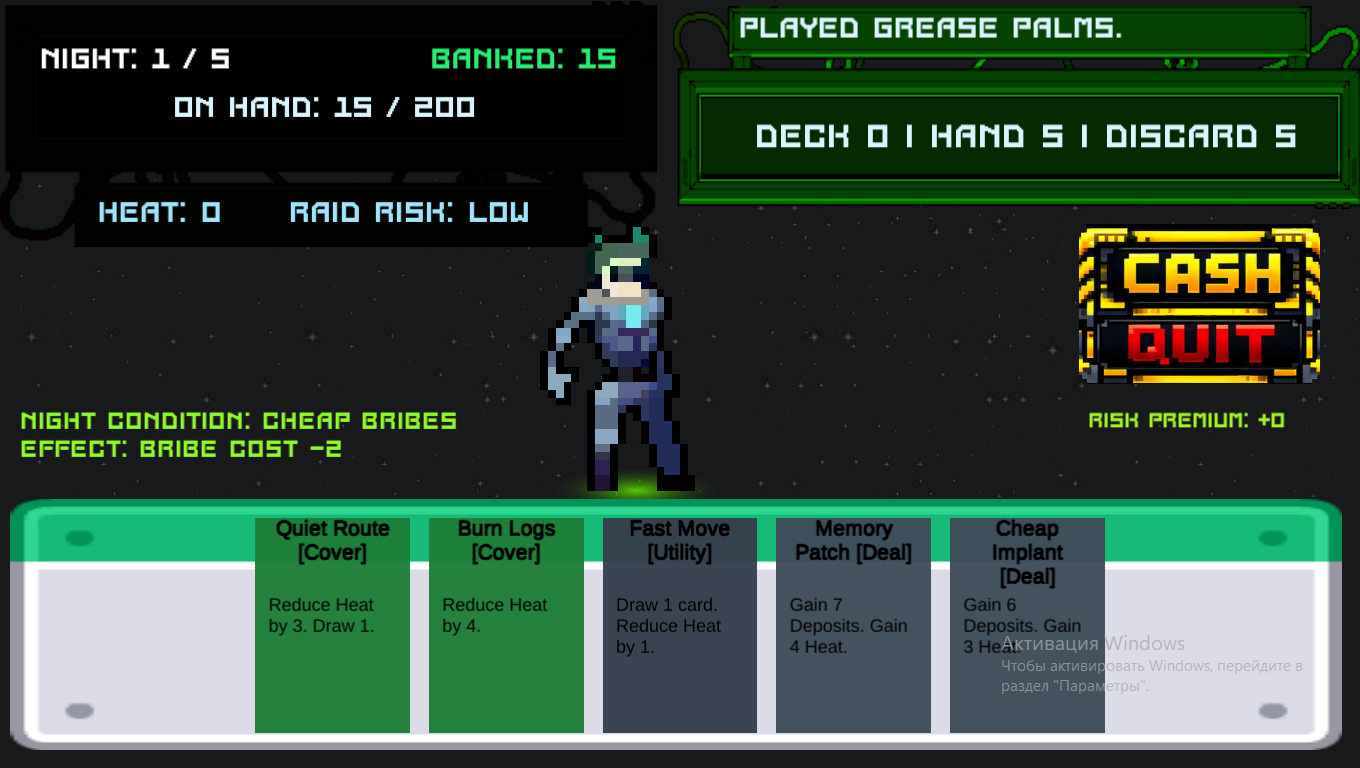
It’s a cyberpunk deckbuilder where every card is a deal: you earn credits — but you also increase your Heat.

The longer you stay, the more you make.

But if you push too far… you lose everything.

The whole game is built around one moment:

You look at your hand. You know you should stop. And you still play one more card.

Playable in browser: https://hztron.itch.io/neon-dealer-alphav001

Current features:

  • 30+ cards
  • short runs (8–15 minutes)
  • risk vs reward core loop
  • instant play (no download)

This is an early alpha focused on the core feeling: greed vs survival.

If you try it, I’d love to know:

  • when you decided to cash out
  • when you lost everything
  • and if it felt fair

If you want to support development:

More content and bigger projects will follow depending on support.

Thanks for checking it out.

Thanks a lot, really appreciate this!

Yeah, you’re absolutely right about the spacing — the UI is still very tight, especially since it was designed desktop-first and doesn’t adapt well yet.

I’m already planning to rework the layout to give more breathing room and make everything easier to read and focus on.

Really glad you liked the core idea and the overall feel — that means a lot at this stage.

Thanks again for taking the time to play and write this!

This build is focused on one thing: the core loop of risk vs reward.

Now I need feedback to shape the next steps.

🎯 What I’m trying to test

  • Does the “one more deal” feeling work?
  • Do you feel tension when Heat rises?
  • Is the decision to cash out clear?

💬 What I need from you

If you play the game, tell me:

  1. When did you lose your run?
  2. Did it feel fair or frustrating?
  3. Did you understand why it happened?

🧠 About the design

The game is not about building the perfect deck.

It’s about:

  • pushing your luck
  • reading risk
  • knowing when to stop

If you lost because you got greedy — that’s intended.

If you lost and didn’t understand why — that’s a problem.

⚠️ Current issues

  • Mobile UI doesn’t fully fit on some screens
  • Balance is still rough
  • Feedback clarity (Heat / danger) can be improved

💡 Ideas I’m considering

  • clearer danger indicators
  • more ways to control Heat
  • stronger card synergies
  • better onboarding

🧪 Early alpha

This is an early build focused on the core gameplay.

Your feedback directly affects:

  • balance
  • mechanics
  • future content

☕ Support

If you want to support development:

Neon Dealer: Risk & Profit is built as a small, focused system-first game.

The goal is simple: make every decision feel risky and meaningful.

🎯 Design goal

The game is not about complex systems.

It’s about one core tension:

stay longer → earn more → risk everything

Everything in the game supports this loop.

🧠 Core systems

The project is built around a few simple systems:

  • Deck system — draw / discard / reshuffle
  • Heat system — tracks risk
  • Incident system — punishes greed
  • Economy system — credits and cash out
  • Card resolver — applies effects

Each system is small, but together they create pressure.

🔁 Game loop

  1. draw cards
  2. play deals
  3. increase Heat
  4. risk grows
  5. decide: cash out or continue

If you push too far → you lose the run.

🧩 Data-driven approach

Cards are fully data-driven.

Each card has:

  • type (Deal / Cover / Bribe / Utility / Boost)
  • effects
  • rarity

This makes it easy to:

  • add new cards
  • balance numbers
  • test ideas quickly

🎮 Why WebGL

The game runs in browser:

  • no install
  • instant play
  • easy to share

This matches the design: short runs, fast sessions, quick retries.

📱 Current issue: mobile UI

Right now the UI is desktop-first.

On some mobile devices (20:9 screens):

  • cards don’t fully fit
  • HUD takes too much space

Fixing mobile layout is the next step.

⚙️ Development approach

The project is built in small steps:

  • implement one system
  • test
  • fix
  • move forward

No overengineering. No big rewrites.

🧪 Current state

  • playable alpha
  • full core loop
  • 30+ cards
  • WebGL build

The focus is still on feel, not content.

🔜 Next steps

  • mobile UI fixes
  • better onboarding
  • more cards
  • clearer feedback (Heat / danger)

💬 Feedback

If you play the game:

What made you lose the run?

That’s the most important signal.

☕ Support

If you want to support development:

https://hztron.itch.io/pressbutton

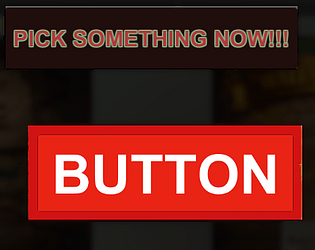
Recently I released a small experimental project called PressButton. The core idea is extremely simple: the player is given a single action — pressing a button — and nothing more.

At first glance, this might seem pointless or even boring. There are no traditional mechanics, no clear goals, and no progression system in the usual sense. But that was exactly the point. I wanted to explore how far a minimal interaction could go in terms of player engagement.

What surprised me during development is how quickly a simple action can turn into something meaningful if you frame it correctly. Players tend to create their own expectations. Even with something as basic as a button, they start asking questions: “Why am I still clicking?”, “Is something going to happen?”, or “Did I miss something?”
https://ko-fi.com/hztronsworld

This kind of curiosity becomes the actual gameplay loop.

Instead of building complexity through systems, I tried to build tension through repetition and subtle change. The idea was not to overwhelm the player with content, but to make them reflect on their own behavior while interacting with the game.

Of course, this approach comes with limitations. Without a strong hook or clear payoff, many players will simply leave. Minimalism is a risky direction — it relies heavily on atmosphere and psychological engagement rather than mechanics.

Still, I think projects like this are valuable, especially for solo developers. They allow you to test ideas quickly, understand player behavior, and experiment without spending months on production.

For me, PressButton is not a finished product, but a step toward a larger goal. I’m currently working on a cyberpunk-themed deckbuilder, and this small experiment helped me better understand how to create engagement with limited resources.

If you’re a developer, I’d be interested to hear your thoughts: How far do you think minimal mechanics can go before players lose interest?