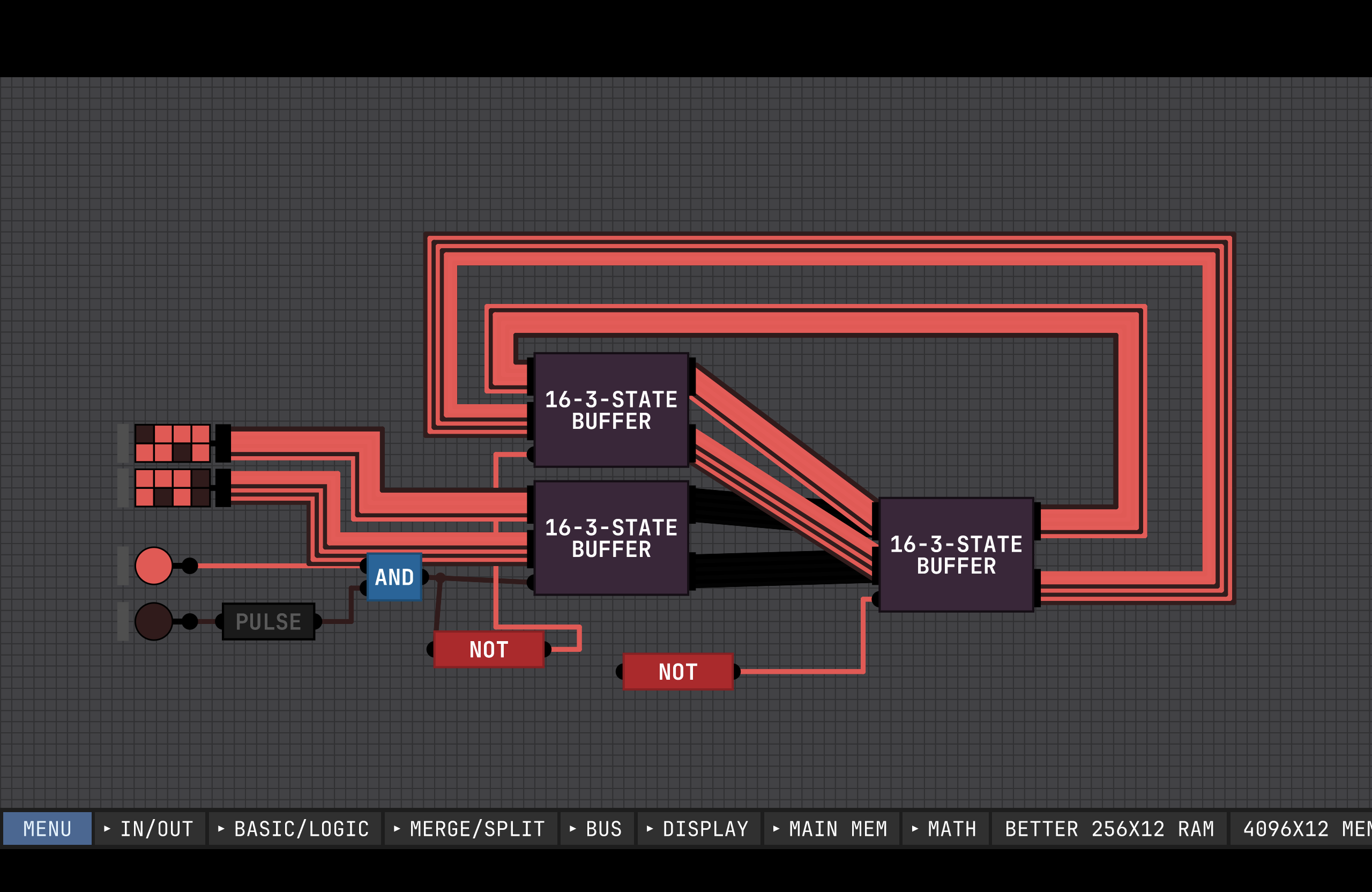
The one in the video is the way i like it, it doesn't requirer a pulse. Have 2 d-latches, the data input for the second one is the output of the first one, the data input of the first one is the data input pin, the store for the second d-latch is the store input pin, and the first store is the opposite of the store input pin, by plugging it in a not
you need a d-flip-flop, plug its output into a not and its output into it self data, for a clock its input pin, place another , it's input is the output of it's not and the last d-flip-flops not as a clock, repeat this 8 times for a byte, the first input is its selfs not and a input pin
Shift d, i dont know why its shift d instead of control c or v, Alt (or option if on mac) with mouse movement to scroll, Shift and scroll to apread out chips
so i was playing with and auto cliker but when i touch a wire in the simulation, it made a bunch of tiny wires that turn a tiny bit, making a smooth line, i use an auto click at 1 millisecond, no straight lines or snap to grid.
sebastian already made a video but there are alternative chip design. for example you could make it by having a d-latch but the store is an and gate with inputs of store and a pulse of 1 tick connected by a clock singal
I Have 16-bit address ram storing 16-bits, it runs at 1800 operations per second, its made using rgb screens, i got the idea after making a 16 64 x 64 rgb display with output pins.
using Sebastian's method of ram, I only got 16-bit address with 1-bit storage with 14 operations per second
i did rgb screens instead, makes more data while still having the same performace. also i think 32-bit address is impossible. its 512 mb-17 gb of ram depends on how many bits, unless you are going to minimize it to something like 16-bit, but yeah its fun
its like ram. the 8-bit input is the address/location and the 3 4-bit inputs are data/color for the pixel/ mem address. reset clears it all, write is store, refresh is to show what you wrote and clock is, well just a clock input like in the vids


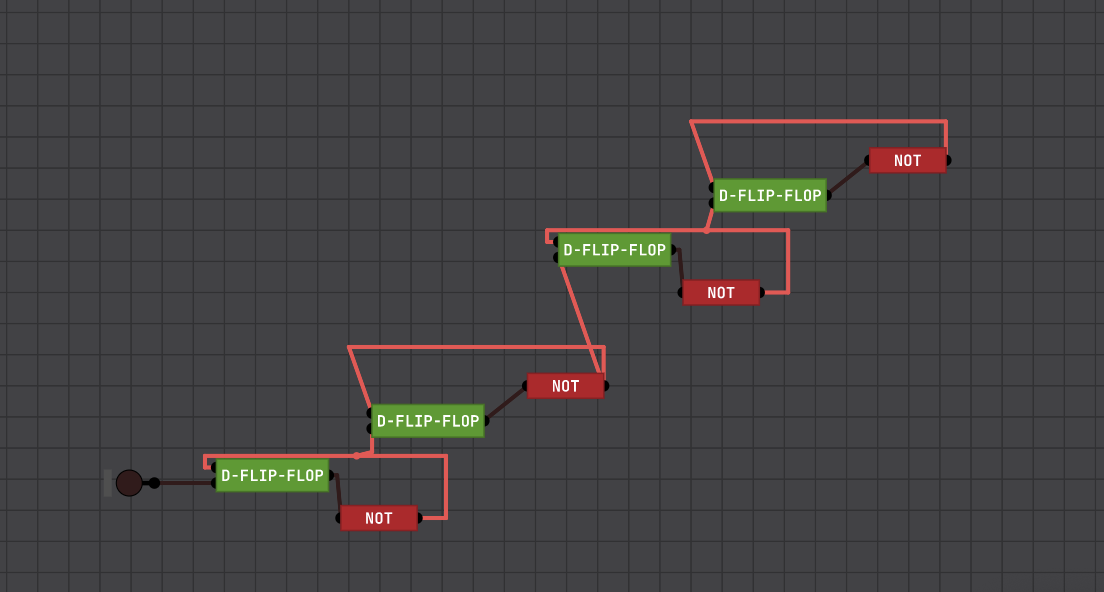 , place another , it's input is the output of it's not and the last d-flip-flops not as a clock, repeat this 8 times for a byte, the first input is its selfs not and a input pin
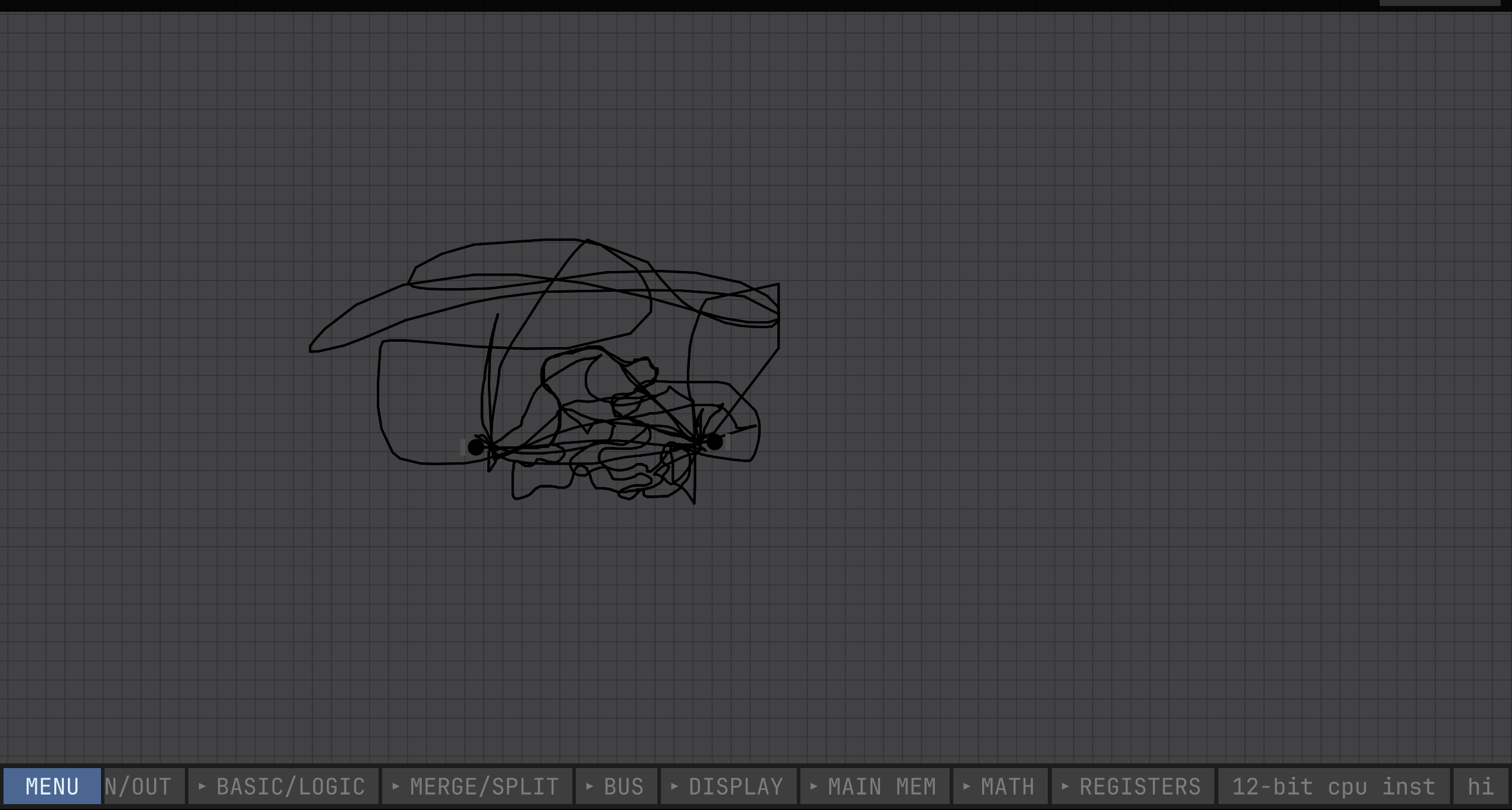 so i was playing with and auto cliker but when i touch a wire in the simulation, it made a bunch of tiny wires that turn a tiny bit, making a smooth line, i use an auto click at 1 millisecond, no straight lines or snap to grid.