

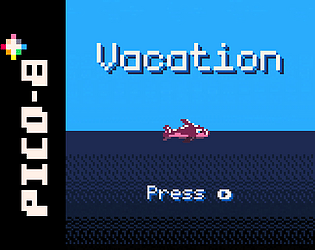
And the app is always right there if you want to give it another try, refresh the suggestions a little, find out if it affects you even more strongly now that your mind has had some practice with the effects…
Kistaro
66
Posts
4
Topics
60
Followers
20
Following
A member registered Jan 31, 2018 · View creator page →
Creator of
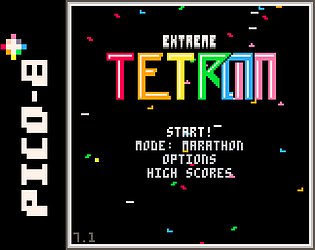
A Pico-8 TGM homage intended for veterans and aspirants alike
Puzzle
Play in browser
Recent community posts
ADHD medication might help. Hypnosis is, ultimately, a state of focus. ADHD hyperfixation can make it more effective for some folks, but others find it harder to maintain trance.
It sounds like you did have some hyperfixation experiences! Just maybe ones not focused on the things the session was trying to direct you towards.
It’s okay to let your mind wander and just notice the text and notice your reactions to it; “trying too hard” to push your own attention around is a normal way to get less-than-ideal results out of hypnosis. Noticing the responses you have to the words – whether they’re the ones you expect or not! – tends to lead you down an experience of finding wha tyour mind is ready to create for you.
I’m glad you found something interesting in it! I wanted to communicate a breathing rate so I could suggest it slowing down (or, during the awakener, speeding up) without having to just tell people to change their breathing rate. (That doesn’t work, that just distracts people and makes them think about whether they are controlling their breathing right.)
Strawberry Jam 9 community · Replied to Kittyjig in Use Proper Protection: Configuring Windows Sandbox
The After Hours: Office Predators community » Issues · Created a new topic Ultra-ultra-wide displays
So, the Web build wouldn’t register keyboard input for me for some reason, so I downloaded the Windows version. I use a 5120x1440 monitor. The game goes full screen and attempts to fit the width of the main menu to the screen, cutting off the top and bottom, including important parts of the menu.
I could get to the Settings screen to take it out of fullscreen mode, but that just puts it into a non-resizable window occupying my entire screen, still at an aspect ratio the game can’t handle.
Please allow resolution selection in windowed mode and scale the game so it doesn’t get cut off when it has to fit an unexpected aspect ratio.
On an Xbox controller playing via the browser under Chrome on Windows, the “south” and “east” fire buttons are exchanged relative to in-game prompts. But my inputs are shuffled totally differently relative to this Picotron Gamepad Tester thing, which doesn’t agree with either layout! Bizarre. Not sure if it’s something weird about my setup, Picotron being a moving target across its revisions, or what’s going on here…
Engine is a good start, although “jump” on dpad up doesn’t feel great on a controller. (It’s fine on a keyboard.) Best of luck developing this further if you choose to do so!
After that example code uses LoadLibrary to load up OpenGL and initialize a bunch of API function pointers, it calls FreeLibrary because it doesn’t need the library handle anymore. But wouldn’t that close the entire library and invalidate all those function pointers? I guess if OpenGL is itself loaded into shared memory, a different process keeps it open, and Windows doesn’t invalidate the address space in the application, it could still work? But if that was happening, I’m not sure why OpenGL would just nondeterministically not work, I think it would crash.
So I’m confused about that. I didn’t read the source code listing super closely so I might have overlooked something obvious. But I can’t help but wonder if you’re using example code that itself is unreliable in some way. I wonder what else that code listing is dropping before it’s actually done with it…
What version of Windows are you using? What CPU is it running on?
I think this is a good start for a “handcrafted” puzzle game, but I don’t think these mechanics work as well for random generation. Randomly generated navigation/movement puzzles don’t tend to have an interesting “hook” like an intentionally-designed puzzle can. I think the core mechanics would work well for a game designed specifically around them, but like this it feels a lot like a randomly generated Sokoban relative where everything has tits for some reason.
This is currently flagged as Windows-only, but Twine games are almost always playable in browser – I don’t see why this one wouldn’t be. I think if you upload the zip file you already have and mark it as “playable in the browser”, it will Just Work because your entrypoint is already “index.html”. Give it a look at https://twinery.org/cookbook/starting/twine2/publishing_on_itchio.html#step-3-uploading-project-files
You seem pretty down on yourself from a lot of the in-game text. I certainly understand getting burned out on a game jam – there’s a reason the only thing I did this year was help a friend with minor development on theirs, rather than develop something of my own. But, in my opinion, this is on the high end of structurally complete, playable games that has come out of this jam (or its prequels!): a Fetch Quests: The Game adventure game that gives enough hints in its dialogue and environment design to make its puzzles solvable without trivializing them. There are fundamentally good design and world-structure-based communication ideas here that many game designers miss. This is an effort to be proud of.
I certainly understand regret over not finishing graphical assets out more – there are obvious missed opportunities for cutscenes, inflation state, NPCs, etc. – but this jam has a lot more games with visual assets and no identifiable gameplay than games with a solid core of gameplay and adequate but incomplete graphics. This is genuinely one of the stronger results of the jam. I hope the experience of rating other games will help you appreciate the substantial merits of your own!
I feel like this stumbles into a common problem with character-centered shmups: the player is a large target with an unclear hitbox. The right-to-left motion on a playfield that is taller than it is wide tends to make this worse.
The visual assets are good, and the audio assets are functional! There’s definitely a basis here.
Hey all! I stayed up too late last night wrestling with configuring Windows Sandbox, so I figured I’d share what I came up with for the benefit of everyone here. I’ve checked my configuration into a repository on my personal Git server: https://git.chromaticdragon.app/kistaro/windows-sandbox-config
Windows Sandbox is a disposable virtual machine for running software that you think might mess up your real computer. Jam games are, by definition, a bunch of hastily-assembled amateur efforts, so for the ones you can’t run in a browser, I strongly recommend using some kind of VM – it’s not just about viruses (which are a real risk in game jams, to be clear; you’re running a bunch of new software from total strangers), it’s about ordinary software bugs accidentally getting a little too eager to delete files. (…something I have more experience with from my day job than I’d like to admit.)
Windows Sandbox’s default configuration is not particularly secure and, in my opinion, awkward. Windows Sandbox doesn’t have any kind of launcher or setup tool – you can configure it only by handwriting some XML-ish files with the configuration you wanted – so it’s not as friendly to use as it could be, but it is really easy to share usable configurations once someone sets one up.
So I figured I’d share mine! If you have the Pro version of Windows, please check out https://git.chromaticdragon.app/kistaro/windows-sandbox-config for a Windows Sandbox setup to run jam games safely. Its README.md includes full instructions, so you don’t have to be an experienced Windows admin to use this. Let me know if you have any questions, bug reports, improvements, etc.
Hey, congrats on improving on your previous game! This is still rough around the edges, of course, but it’s a more complete package.
You might have better luck with an engine a bit more tuned for games than hand-rolling your own in Java. My personal recommendation for the types of games you’ve made so far is Pico-8, or TIC-80 if the price of Pico-8 is a barrier for you. These do more of the input handling and rendering for you, while providing asset editors for pixel art and chiptunes, so you might spend less time writing a basic input-handling engine itself.
So, I’m trying to run this through Windows Sandbox, because a game jam seems like a good time to be cautious. It’s nothing personal – I’m doing this for all the Windows software I can! (When I can’t make Windows Sandbox work, I’m shuffling things over to a Parallels VM on a Mac, because that’s the other VM I have available…) This game seems to be unable to launch in this configuration, I get an error:
player.exe – Application Error
The application was unable to start correctly (0xc000007b). Click OK to close the application.
A quick search suggests it’s a .NET application that isn’t self-contained, or a Visual C++ application that is also not self-contained (but can’t be fixed quite as easily).
If this is not VC++, could you recompile it as a self-contained single file app (https://learn.microsoft.com/en-us/dotnet/core/deploying/single-file/overview?tabs=cli#publish-a-single-file-app)? That seems to be the advice I could find for a quick Google search for making a .NET application “just work” in Windows Sandbox.
If this is Visual C++, which version of the Visual C++ redistributables do I need to install first?
Thanks! Looking forward to trying your game once I get it working.
Hey, good luck with your ongoing work as a game dev! There’s a lot to pick up – you attempted something ambitious, and you have a ways to go before you reach your vision, but you’ve made something, and you’re learning what goes into it.
This could use content warnings for noncon themes and sexualized violence.
What aspects of it did you enjoy the most? There’s a pretty good assortment of hypnosis-based games by Nyx Gaming here on Itch, but “interactive” and “chill vibe” and “hypnosis” all together isn’t something I’ve found other renditions of. There’s relaxation hypnosis that isn’t very interactive, and assorted interactive hypnosis that is heavier on its kink content.
Is there an API to check “fraction of script steps remaining this frame” from inside a Lil script? (For operations with shorter limits, like accessing a property on a Contraption, is there one that checks the operation limit?)
I’m consider9ing Decker to write a loosely-chess-inspired roguelike, and I’d want to use this to know when to stop searching for a move on the current frame and advance a “thinking” animation so the deck does not act frozen during the opponent’s turn.
Ooh, I get to check “convince a skeptic that hypnosis is real” off my list of goals I had for this thing! Sounds like you had quite the experience with it, it’s great to hear you responded so strongly.
Hypnosis is a real, well-studied effect, although the details are up for a lot of debate. There are a lot of ways to get hypnotic responses out of folks; nothing is reliable because it’s very dependent on how each individual person processes communication and information they receive, but to me it also feels like everything works, at least for someone, at least some of the time. Which is pretty consistent with the general consensus of current research – insofar as there is a consensus – which can be summarized as “everyone is alarmingly suggestible most of the time”.
Vacation uses a lot of conventional (and unconventional) techniques of suggestion. The primary thing that inspired it was realizing I could use the basic structure of an endless runner game to produce a “pattern break” structure. I also started thinking of how a game tutorial is a structure for getting folks to interactively follow instructions with the intent of learning how to automatically perform a task (to control a character in a game, you want to not be thinking about the controls all the time), and voluntary compliance is an important basis for rapport – so I wanted to see what I could build up from there.
It sounds like I built up quite the thing for you! I’m pretty sure that getting so hypnotized you can’t play the game is how you actually win, score be damned. I wanted to implement something to actually detect that and comment on it at the end-of-game screen but ran out of space in the Pico-8 cartridge and time in the game jam, although I should probably revisit it to see if I can cram it in anyway now that I’m not under time pressure.
Hey, I’m glad to hear you had a good time with it! I love hearing when it’s effective for folks. Text hypnosis usually requires prior experience as a hypnotic subject to be effective; I wanted to see if I could use the participatory structure of a game to get stronger effects despite the medium, and it sounds like it worked for you.
I have ambitions to write a couple more things using the engine I developed for Vacation, but I’m still trying to work out more ways to adapt typical forms of suggestion to game mechanics. The arcade segments of Vacation were primarily an exercise in pattern breaking; still trying to figure out what else I can express within the constraints of Pico-8!
sure! my Mastodon account is linked in my profile, and my Telegram and Discord username is the same as here. (I use Discord more.) You can contact me in any of those places. You can also email me – same username, gmail.com. I can’t promise to have all the right answers for you but I can talk about what I’ve implemented here and the hypnotic theory behind it! And we can talk about how to get started with game development, too.
Hey, I’m flattered! And I’m glad to hear you had fun with it. I do already have plans to do more like this – the biggest puzzle is figuring out mechanics for the arcade segment that would work reasonably well, I think I used the easiest one this time and I’ll have to get more creative in the future.
That’s something I was concerned about when developing the game, tbh – that the breathing rate would be wrong for someone to an extent that it makes them ill, especially if their breathing entrains to the breathing animation continuing after the explicit prompting has passed. (Which is an intended effect.)
In general, do you find yourself to run out of breath easily? Alternatively, do you have extraordinary cardiovascular endurance? I’m not sure if my implementation is more at risk for producing hyperventilation (in people who start taking very deep breaths) or hypoventilation (in people with restricted breathing, higher oxygen needs, or habitually shallow breathing).
monogram v1.1: fancy update + open source tools comments · Posted in monogram v1.1: fancy update + open source tools comments
since you’re asking if folks found Monogram useful…
so, this is probably not something you expected your font to be used for, but Monogram was the backbone of my Strawberry Jam 8 entry, Vacation. Strawberry Jam is an annual month-long game jam with the same theme every year, which is “whatever the devs are hot for”, explicitly inviting “adult-only” content.
Vacation is a Pico-8 game about being hypnotized into experiencing yourself as a pooltoy orca. “About” might be putting too much distance in there, it’s a text hypnosis session using a simple minigame as part of its schtick and mechanism. And the bulk of that text is in Monogram!
Monogram is the most legible Pico-8 font I found that had the friendliness and playfulness I needed for the concept I wanted to express. I had initially specifically wanted something “not-monospace” so it would feel less computer-y, but all other fonts I could find were substantially less legible or comfortable to read and I soon realized that it was much easier to get text placement right with a monospace font.
Out of 76 entries (74 after DQs), Vacation got 16th place overall, and 2nd place in the “Kink” category, the category which the game jam’s organizer describes as “Does it transcend the typical bounds of what is typically understood as sex?” in the judging criteria. I’m proud of that result, especially for my first game jam!
So, uh, a Pico-8 hypnokink Experience by a furry into inflatable toys may not have been what you were expecting Monogram would be used for, but here we are.
Different people experience different levels of response to hypnotic suggestion. Getting hypnotized is a skill that can improve with practice, but there’s wide variance in baseline experiences. Different “kinds” of suggestion work in different ways – some people experience vivid hallucination very easily (and would feel the sun and the waves quite directly!) while others might be more susceptible to identity-play, amnesia effects, etc.
Clinical hypnotherapy research suggests that it is possible to induce an REM state in someone hypnotized with their eyes closed. But I’m not going to get that when the eyes are busy reading text! Vivid, dreamlike sensory hallucination is definitely possible under hypnosis for some folks, but I’ve only experienced it myself on a couple of occasions, and never with a prerecorded file of any sort, only in a live session when I was unusually responsive and my friend hypnotizing me was especially on point. I typically get effects much closer to vivid daydreaming, from a sensory perspective. Bending my motivations, desires, behavior, cognition, and memory is all easier – but it’s taken a while to get to that level of experiential susceptibility. Behavior is the easiest thing to elicit but folks rarely subjectively “feel” particularly hypnotized – one technique that I used but needed to lean into more is that of using behavioral suggestions to produce something that a subject will recognize more directly as an altered state; that’s what the bit about “you can’t look away when you try, which you should do” was about.
“Zoned out” is a light trance state. People used to focused work (software engineering, including game dev, is a notable example) are typically familiar enough with a state of focus that it takes a bit more work to persuade them that they’re hypnotized, since “focus” and “hypnosis” are such closely related states that hypnosis doesn’t feel unfamiliar enough. I tried to lean into avolition – acting without experiencing intent to do so – but that’s hard to emphasize in a short session, since the subjective experience is of just going along with the suggestions. I can do more with it directly. It’s hard to convert skills I’ve built around noticing how someone is reacting to being hypnotized and using that into a “prerecorded” context like this. Which is pretty common, which goes back to why prerecorded things usually work poorly for less-experienced subjects. My ambition with this was to see if I could make it more participatory in ways that would help produce stronger effects for less-experienced subjects, as well as use hypnotic techniques not typically attempted in a text form, but overall I think I got a pretty “normal” level of response out of folks, reading the comments here.
Maybe I should still be pretty satisfied with that – I got a “normal” level of response out of folks from my first hypnosis software, which I did in Pico-8 (not known for its suitability for this use), in a shorter form with a non-traditional induction. I’d like to do more, and I already have ideas for what a rewritten script could do better – and I do plan to write an alternate version with a totally new script, aimed at slightly different kinks, pushing harder into them to an extent I wouldn’t put in a game jam because it’d be more than the other developers were signing up for when agreeing to rate games. (Which is part of why this was on the lower-key end.)
It’s reasonable to be vigiliant about whether a hypnotic thing is appropriate for you – “check out the file first without going into trance” is common advice in the hypnokink community. That internal hypervigilance can definitely be headache-inducing – I’ve been there – and I don’t think it’s unreasonable at all to have a hard time handing over that level of trust to, in this case, a computer program written by a complete stranger. Vacation is roughly the same every time – word spawning in the arcade stages is partially randomized, but the other text is constant. (The arcade stage text is structured to be suggestive in ways that might not be apparent at first, so it is suggestive, but its themes are constant.) You can also open up the source (vacation.p8) to review the script, including the word lists, in its entirety. But that only does so much; I guess what I’m saying with this long rambling comment is that I think you’re having a very normal experience for any prerecorded Hypnosis Thing. My writing in the game about how vivid the experience would be is, in a word, optimistic – if I don’t try for it I’ll never push anyone’s experience that far, but (like a lot of hypnotic suggestion) it is very exaggerated relative to a reasonable expectation.