On Sale: GamesAssetsToolsTabletopComics
Indie game storeFree gamesFun gamesHorror games
Game developmentAssetsComics
SalesBundles
Jobs
TagsGame Engines

half-a.press

108
Posts
18
Topics
211
Followers
8
Following
A member registered Feb 25, 2023 · View creator page →

Creator of

Recent community posts

Update 6 makes the core game playable solo.

I've updated All Errors are My Own to update 6's text. I've been unable to fix what is a bug with about 8 or so references in the rule book that I've spent multiple nights trying to unsuccessfully fix. Hopefully it won't affect you.

I've also done a minor cosmetic update to the Crewed Rules to remove some blank pages.

It could just be everyone ticking "not human" on the latest census form. It's really up to you.

Update 6 is now out. I said it would be modular but it’s ended up being the biggest single update to the game.


so far

Normally you’ll only visit 1 solar system in a sector  so you can just generate the systems on a table and choose one.

I’m less worried about sharing LaTeX source because it requires a version that I don’t believe is available any more.

With regards to the issues with coloured dice, dropping counters and so on, I think the minimum lovable product version will be the best approach. That way you can solitaire play the major part of the game with much reduced record keeping. All of the counter/dice interactions are for “zoomed in” parts of the game and zooming in is intentionally optional.

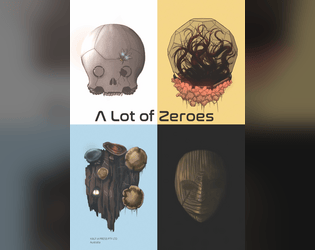
A Lot of Zeroes is also a standalone space exploration game that I’ve published except the scale is up to 30LY/cm and up to million year long turns.

(2 edits)

I design in LaTeX which supports various epublishing formats as well.

Is the more complex tables something that would be more useful to expose as a spreadsheet in e.g. Google docs?

(1 edit)

There is a high frontier site list which has the burns to each site from LEO at https://docs.google.com/spreadsheets/u/0/d/1TGDLdBEEjtkLFcg0j19R_sgRlkmSeIGXIhT_Pyj_rfw/htmlview#gid=0 I had thought someone had made a map planner in Python but all the map resources I can find are visual planners

I can also try rendering the PDFs in various accessible formats, but I really don’t know how to make tables work for someone who is visually impaired: the tables are really complex in some instances, and can also use colour to convey some information.

However I think the actual fix is something I’m planning for the update after next which is a cut down version of the game which features the “minimum lovable product” which will have you playing as a Mission Control moving your spacecraft around the solar system and rolling for trends.

Throne of Salt is doing another solitaire play through of Sixty Years in Space at http://throneofsalt.blogspot.com/2025/09/60-years-in-space-return.html

At this stage of the design it’s a worker placement board game.

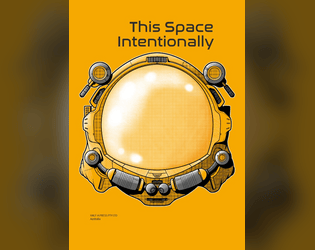
Just a heads up that it looks like the Shipboard Life rules will be going into This Space Intentionally instead. Colony: Sub/title is morphing into a much bigger thing than I had initially planned. It's all under control, but it just means it'll take a little longer to release.

(they actually do share the same actio resolution system, but half of them are roll over, half of them are roll under, and then there’s A Lot of Zeroes which ultimately doesn’t care and so the SRD system version of this just ends up being extremely confusing to read).

I know you say it's end game content, but A Lot of Zeroes is designed as an introductory game to the series and has much simpler rules than its prequel.

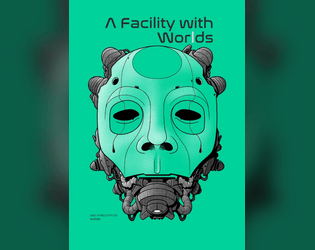
This is a paradox of the whole series of games. For the most part -- (A)-Base (D)-Landing excepted -- the complexities of space travel and colonization get simpler the higher the technology level is. I am flirting with releasing A Facility with Words and Colony: Sub/title as standalone games for this reason -- both have their own character generation systems and I could introduce a different action resolution system that makes sense for each of them (if you think about it, the fast combat resolution in AFwW already is that).

But then I end up in a situation where I benefit from writing an SRD that has the rules common to all games, but the SRD won't have character generation or action resolution mechanics in it which just feels incredibly weird.

I think I know how to square the circle on this and CSt might end up being the first rules I try this with.

OK. I’ll prioritise this and see how much I can get done for the next update. The work I’m doing on Colony: Sub/title touches so much of the rules that I’ll have to do an update for all the Sixty Years in Space rule books anyway.

If I’m going to do it, I’d rather use eg PDF layers to allow you to toggle the notes on/off and at that point page references are the least complex of part of what I’m trying to do

This is the sort of thing that’s quite hard to do using the current development pipeline I use. I’ll investigate what options there are.

For anyone else reading, I’ll respond with answers to more general questions here: this is for typographic stuff which won’t have much relevance for anyone reading after the next update.

My email is andrewdoull@gmail.com

Looks like I missed cleaning up the references to BSU in a few places. You are correct - this is a High Frontier 3rd edition concept.

I do need to introduce the colours a bit better as well. The Development path table is the best place to try to understand what these are in the current rules. 

Thanks for the feedback.

I ended up deciding that the A Lot of Zeroes update was large enough to qualify as a full update -- update 6. It is out now.

Update 6 for A Lot of Zeroes is out - you can now get the first 48 pages for free. The full release notes are at the link.

At the same time, I've released some minor updates to Sixty Years in Space which fixes a long standing bug with the indexes, and one formatting issue in Sixty Years in Space.

No. A Lot of Zeroes is completely standalone. You just need pencils/pens/erasers, paper and dice. I recommend having some A3 paper but two sheets of A4 or even letter is perfectly fine — given how little measuring is actually required to play.

Update 5 was a massive amount of work over a very short time period: I wrote over 100 pages of rules in 3 months during the development process. I'm still really happy with what I was able to do across multiple systems, especially in making the Exoglobalization era feel like humanity moving throughout the solar system in a way that honours the core conceits of the game as well as a lot of the changes that made it into High Frontier 4All, and in fully realising A Lot of Zeroes as a standalone game which had been a long held dream of mine.

Commercially, it unfortunately doesn't appear to have paid off. While the visits to the itch pages have been as high or higher than many of the other updates, the sales bump from this update has been drastically lower. I think this is as much a marketing issue as an accessibility issue. I dropped a whole new game without much marketing, and then gave it away to everyone who had already bought the supplement it was based on (I am very smart).

I'm going to try a different approach for update 6, and see if it has any impact, by breaking up these big updates into a lot of smaller, more frequent ones.

First, I'll be releasing an incremental update for A Lot of Zeroes. I realised almost immediately after releasing the latest update that there was something I could do to significantly improve the economy of the game which at the moment doesn't provide incentives to entered civilised space. I've mentioned this elsewhere, but this update (call it 5a) will add in fragments, which you collect from system infrastructure from within civilised systems, and which allow you to work incrementally towards answers in even smaller ways than currently possible. It's been a very quick turnaround from conception to implementation, to the point where 5a will probably come out within the next 2 weeks. 5a will include a bunch of small changes all over the rules because fragments touch the game at so many points.

Secondly, I've got to get the new supplement for the Futures era to the point where I'll be able to release it. It's called Colony:Sub/title and will focus on political intrigue, exploration of living ecosystems, and atmospheric and undersea travel. Because that includes a bunch of rules that were excised from A Facility with Words, I'll initially be releasing it as pay what you want, before making it a full priced supplement after a suitable time interval (which may include a full update). It'll also include a chapter on Shipboard Life chapter for crews to have more ways to spend their time during extended voyages.

Thirdly is the alternate release strategy I'm working on: I'll be releasing a lot of smaller supplements, rather than big monolithic books. These are going to focus on a particular area of the game in more detail. I've talked about Epic Hazard Operations, and had hoped to include it with update 5, but it hasn't worked out quite that way. EHO will instead be released as a standalone game - a rules light introduction for the map-based play that doesn't rely on the High Frontier map. It'll be in the exoglobalization era, and A Facility with Words will act as the expert set to EHO's basic rules, as it were, allowing you to just buy those two books without having to get the Crewed Rules (if for instance, you want to play a pure High Frontier 4All compatible game).

Then I have a big list of potential ideas for further supplements. I don't want to reveal titles and much in the way of contents at the moment,  although a close reading of the text may reveal some, but there's essentially going to be supplements for each era, that provide more detailed interactions for specific parts of the game. Think of them as adventure modules, but as if some of the adventure modules allowed you to replay the base game in radically different ways. Others will just be a bunch more stuff. For instance, I have faction specific missions for about 60% of the factions in All Errors are My Own which I ended up cutting from those rules, that I should probably release as a supplement at some point.

DriveThru versions have been updated as well.

The more I think about this, the more I realise this will turn into a retelling of the flatmates from hell.

I've dug these up and have ended up starting to rewrite them, inspired in part by https://knightattheopera.blogspot.com/2025/06/seven-part-pact-time.html

Email sent.

Drop me an email.

> I'd assume whatever ideas you have planned for how combat resolves would be a bit abstract to fit with the rest of the game and not require some battle map or something though?

I haven’t sketched much out at all to be honest, because I had a feeling the level of granularity that people would like would be beyond what I’d be willing or able to deliver. It sounds like maybe I should be just licensing your game…

I was planning on doing something more granular with zone warfare which would have an energy map of a moon system with a scale of months rather than years, where attacking factories to impede production would make sense.

Is it ok to say that I don’t think there’s a paradox in largely unplayable but still beloved indie games? Or more specifically that the paradox can be resolved by accepting games don’t have to be played to be enjoyed?

(Also check out my 2000+ page indie game…)

I do have month by month rules for resolving operations using an event card based system that I’ve already written and play tested that I shelved because I didn’t see how it fit into the game. I think that’s probably what you’re looking for; I think it’d fit best in the “trading a crew for their first human interplanetary space flight” rules I’m planning for the Re: Crewed Rules.

I have Black Silicon planned and would love someone else to write it as I only have so much time in my day. I have also pencilled in a similar supplement for interstellar travel that will be similar to the High Frontier Interstellar rules I developed.

Me experience with watching the Expanse is that the parts of the show wandering around space stations as they fell apart were so much better then standing on the flight deck that I’m focusing on those parts of the game first.

You will be happy to know that I’ve already developed life path rules that work while you travel, but not at the month by month (or smaller) scale that I think you’re asking for.

Thanks for this feedback by the way - it’s a useful lens to think about things in the game.

I suspect its based on the interest level of the author in the thing being described.

Based on your feedback it looks like I’ll be more explicit here in the next update. Player thinks best is appropriate but that also means some skills will be favoured more than others and I think there’s some non-obvious choices that might be more interesting.

(1 edit)

It’s entirely possible that the correct answer is just you have to roll for every action.

(1 edit)

Trouble is intended to allow you to trigger things that only otherwise happen at a longer time scale than the one you’re working at. In the current update, that doesn’t explicitly include year long operations and moves, but there’s no exception made for them either (there is one for 3D printing).

The operation and move resolves when you make the trouble roll that results in the year long action. You make the decision what you’re going to do and where you’re moving and the total sequence resolves instantaneously. For operations it is assumed you started a year ago. For movement — well. What is completely abstracted away in the High Frontier rules is the fact you actually decided where you were going at the point you launched the rocket; and map movement is just a convenience that allows you to plot out this movement over the time it actually takes rather than pre calculate the entire path. It’s really not clear that’s how the game works until you start to look under the hood.

As for how often you should roll; you should do it for any action which consumes resources that are not easy to replace (top of page 23 in the Crewed Rules). This includes any actions that happen at a time scale where you’re using up oxygen or power without a good way of replacing these (eg you’re not carrying enough solar panels to last a full day/night cycle).

For base construction, this should be any action that is long enough to trigger an event that puts your population at risk. This is normally annually but might be every week if the base is starving.

However you’re correct in noting that if you’re working at a small enough a time scale, you never have to roll, which means you never trigger trouble and therefore never use up resources. I don’t have a solution I’m happy with here yet — I need to force a minimum number of rolls per turn at these smaller scales but I don’t have a clean way of doing so.

(2 edits)

> A-Base D-Landing has 'Factory' as a building function, but under that definition I could technically use a Room-level factory to refuel a 1500 tonne rocket

Looks like I need to clarify the entry: a Factory building function (and 3D printer function) only acts like a factory cube for operations at the Complex and larger scale (that's what I mean by factory printer). At smaller scales, it acts like a 3D printer -- at the Room scale a workshop printer, and a freighter printer at the Facility scale, but it allows you to manufacture stuff (like wire and fabric) instead of printing objects.

> I can't seem to find where water tanks would be created on-site

Either using the Refueling rules in the Site Actions chapter, or the Employment subsection under the Migration & Trade section in the Encounters chapter in the Crewed Rules.

This is actually quite a bit more complicated than it looks like and has a lot of abstractions that I really want to write up as an entire "economics of colonies" essay at some point. Essentially, while the crew administers the site, they don't own all the proceeds from it: usually because they're working for a Mission Control, but maybe also because the site has its own independent economic activity. So the amount of water tanks they get from factory refueling because they helped build the factory is actually a reflection of the value of their labour, and not the actual amount of water that the factory can produce. However, for anything that contributes to the site, the "taps open" as it were and the full output of the site can be directed to it. That's why refineries, printers and factory buildings scale up their output as the map scale increases for the purposes of making other buildings, but the amount of water that the crew gets from a factory does not.

> When I zoom into that card, do I still create a structured map via the Crewed Rules

Yes. Whether this is a structured map actually depends on the site population (see the Civil Maps chapter of A Facility with Words) but for the purposes of zooming into a card this doesn't matter that much and I still don't think I have the way this works right in AFwW. The idea with a structure map is it is sometimes the interesting "slice" of a larger map and so is the default map type for many things, instead of being a complete map of the site at that scale.

For aerostats, I would recommend creating a floor plan when you zoom in rather than a structured map as floor plans should be symmetric. I should probably write that down somewhere in the rules...

Mixing maps that you create and build is going to be supported better in the next update of (A)-Base (D)-Landing, where you'll have the ability to infiltrate existing colonies. But generally once you've placed a card, you shouldn't really have to zoom into it to build on the zoomed in card as far as I can tell, because you've done the hard work of printing it, and upgrading it should be easier than trying to zoom in to do the same. I had thought I'd said that you can't build beyond the edges of the map but it looks like I missed that.

> The mission plan list in This Space Intentionally confuses me a little bit

It is only intended for year long turns. At smaller scales, spacecraft are essentially stationary on the HF map for the entire turn length -- although they will move if you get into trouble (and have to resolve a year long turn as a result) but only once per year. I'll have to clarify that. Operations are also year long and will "resolve" with trouble, but also that could be potentially be abusable in ways I haven't thought of. I've experimented with ways of subdividing operations and events into month long turns, and it plays ok but just adds complexity for not much pay off.

Hope that all helps and apologies for missing this.

Wow sorry completely missed this reply. Let me have a read and get back to you.