
Indie game storeFree gamesFun gamesHorror games
Game developmentAssetsComics
SalesBundles
Jobs
TagsGame Engines

DerrickMoore

143
Posts
17
Topics
64
Followers
50
Following
A member registered Mar 29, 2018 · View creator page →

Creator of

Recent community posts

https://youtu.be/T6yKe51Dfy4. 


Just a reminder that the game is 3D, im just f9cusing on simulating the Imperium right now, but the 3D stuff is there and still works

(1 edit)


Alright. Command Tent Dev Log. Loose. Honest. Slightly sleep-deprived.

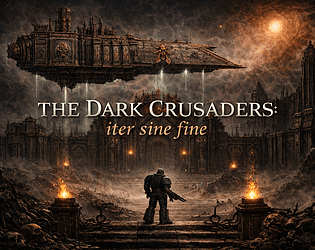
Dark Crusaders: Iter Sine Fine

Dev Log – Last Few Days

The big theme this week has been clarity over chaos.

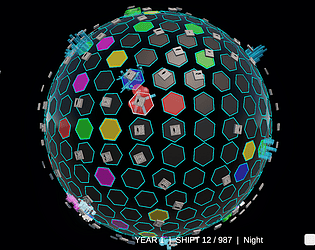
We’ve been tightening the galaxy layer. The grid isn’t just a helper anymore — it’s becoming the spine of the whole system. Sectors feel deliberate now. Blocked regions actually read visually. Warp presence is starting to look intentional instead of “random blob soup.” That alone made the galaxy feel like a map instead of a texture.

Warp Tarot got promoted from flavor to system. Instead of me agonizing over what color the galaxy should be (sepia? blue? sickly green? grimdark brown?), we made the Warp decide. Tarot cards now function as emotional climate control for the galaxy — tinting, mood shifting, instability cues. It ties art direction and mechanics together, which feels correct.

On the Battlebarge side, we’ve been staring at UI composition and asking hard questions. Too much green telemetry text. Too much noise. The Astropathic Choir page is close, but needs breathing room. The Command Tent brain says: reduce clutter, increase weight.

Combat is the other big mental shift.

I found the original Doom helmet view spritesheet, and that unlocked something. Instead of overbuilding some insane 100 live camera NASA wall of feeds system, we stepped back. The smarter move is modular combat. One battle space. Multiple camera anchors. Illusion of scale, not brute force rendering.

That led to sprite work.

We’ve begun building a first-person style weapon sprite sheet inspired by Doom — but 40K. Straight rear view, no hands, no muzzle flashes, no effects. Clean base layers so I can add recoil, glow, muzzle flash, smoke, etc., in-engine later.

So far:

• Boltguns (multiple variants) • Missile launchers (classic patterns) • Heavy weapons in rear view • Clean sprite sheets, no baked effects

It’s starting to feel like a real modular FPS layer that can plug into the galaxy campaign.

The energy this week hasn’t been “add more stuff.”

It’s been:

Make it cohesive. Make it readable. Make it intentional.

Iter Sine Fine.

Still building 


Dev Log – last couple days (travel edition)

Ok so.

We didn’t just “add features.”

We kinda figured out what the GAME actually is.

Which is different.

The Grid (huge)

I love the Grid.

Like actually love it.

It solved:

  • scale problems
  • readability
  • movement clarity
  • sector sanity
  • navigation feel

And it LOOKS good.

It makes the galaxy feel like a place instead of a background.

And then it hit me:

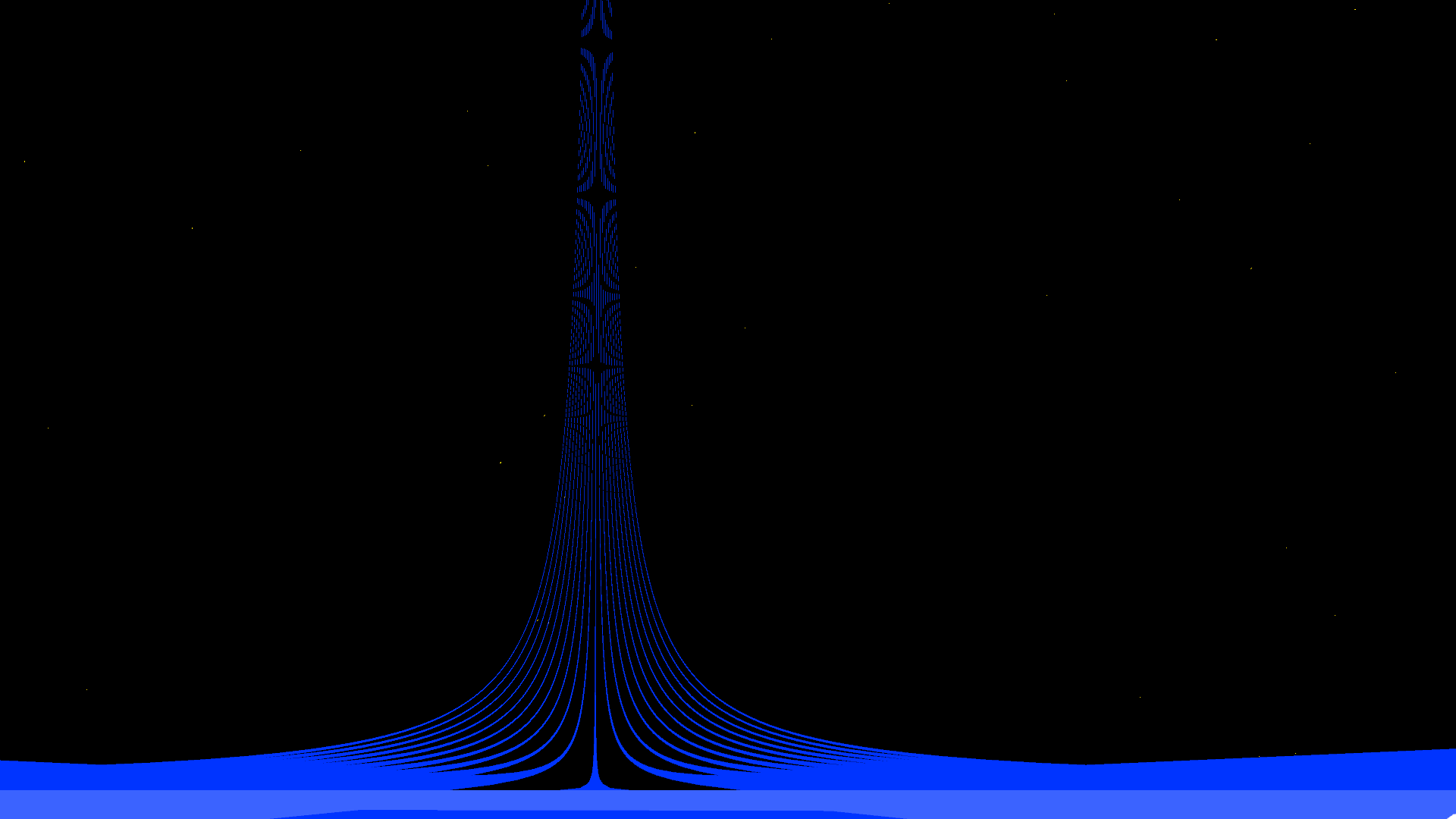
The Grid can show warp currents.

Not just visually cool.

SYSTEMIC.

So now the Grid isn’t decoration. It’s physics. It’s warp flow. It’s lanes. It’s choke points. It’s danger.

That was a big moment.


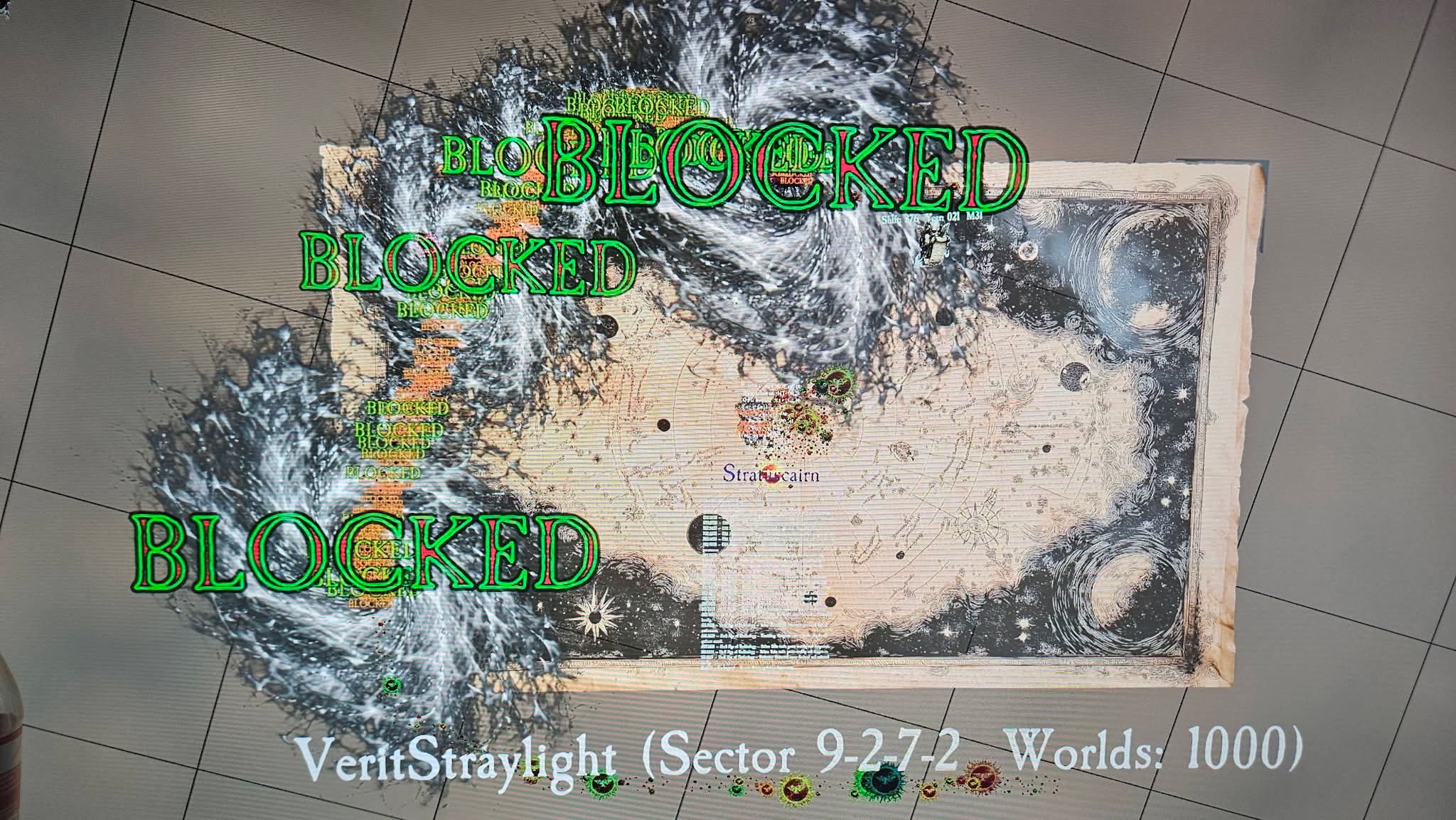
Warpstorms + Blocked

We fixed the stupid canvas scaling issue (z positions were off, big worlds scaled panels out of view, duh).

Now the overlays actually WORK.

Blocked sectors feel real.

Not just text.

That matters.

Warp Tarot (this is the big one)

I was stuck on colors.

Sepia? Blue? Grimdark brown? Green chaos glow?

Couldn’t decide.

So instead of deciding…

We made the Warp decide.

Warp Tarot now:

Controls mood. Controls sector color bias. Controls instability. Controls grid glow. Controls vibe.

Each card = emotional climate engine.

So if The Tower hits?

Sector goes harsh. Red. Shear. Instability spikes.

If The Fool?

Calm. Pale. Safer travel.

This solved: Art indecision. Tone indecision. Brand indecision.

Warp picks the mood.

And players SEE the card on the Astrophysics Choir page on the Battlebarge canvas.

Not hidden.

Ritualized.

That feels right.

Combat Thoughts (travel brain)

Saw my first game again (Doom clone squad thing).

Realized I could remake it easy.

Which is wild.

But instead of making a whole separate corridor shooter…

Maybe combat is a module.

Galaxy → Select World → Deploy Squad → Tight mission.

Contained. Visceral. Clear.

Not bloated.

Still thinking.

Title Screen

We did new Iter Sine Fine title concepts.

Less arcade explosion energy.

More mythic, systemic, heavy.

Feels more like:

“This galaxy is alive.”

Not:

“CLICK ENTER SOLDIER.”

Big Realization

The game is starting to unify.

Before it was:

Cool systems. Cool scripts. Cool ideas.

Now it’s:

One atmosphere.

Grid. Warp currents. Tarot. Sector mood. Blockades. Galaxy color.

It’s becoming coherent.

That’s the win.

Anyway.

That’s the Command Tent update.

Not coding.

Architecting.

Iter Sine Fine.

We don’t stop.

We just zoom out sometimes.

(6 edits)

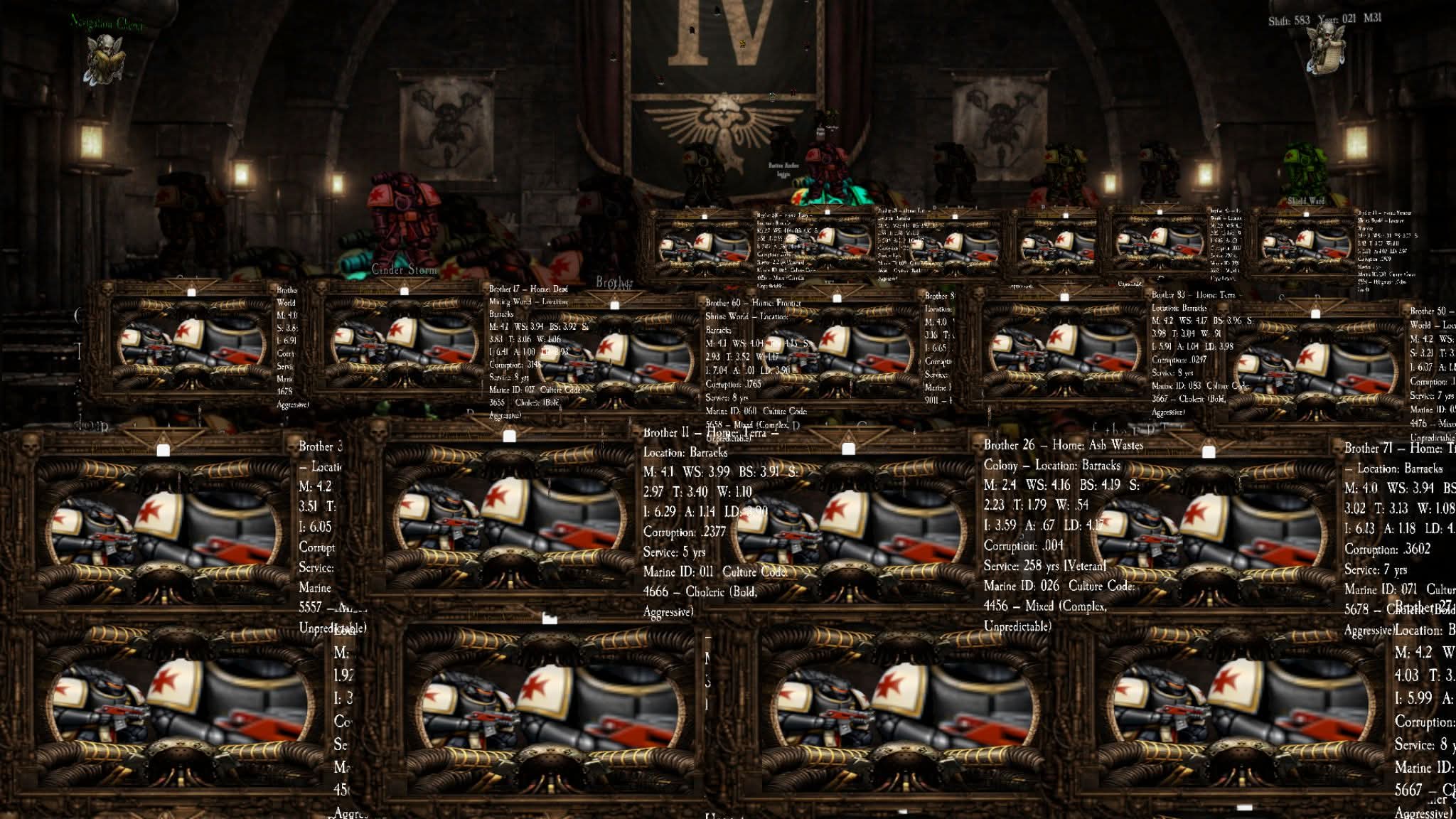
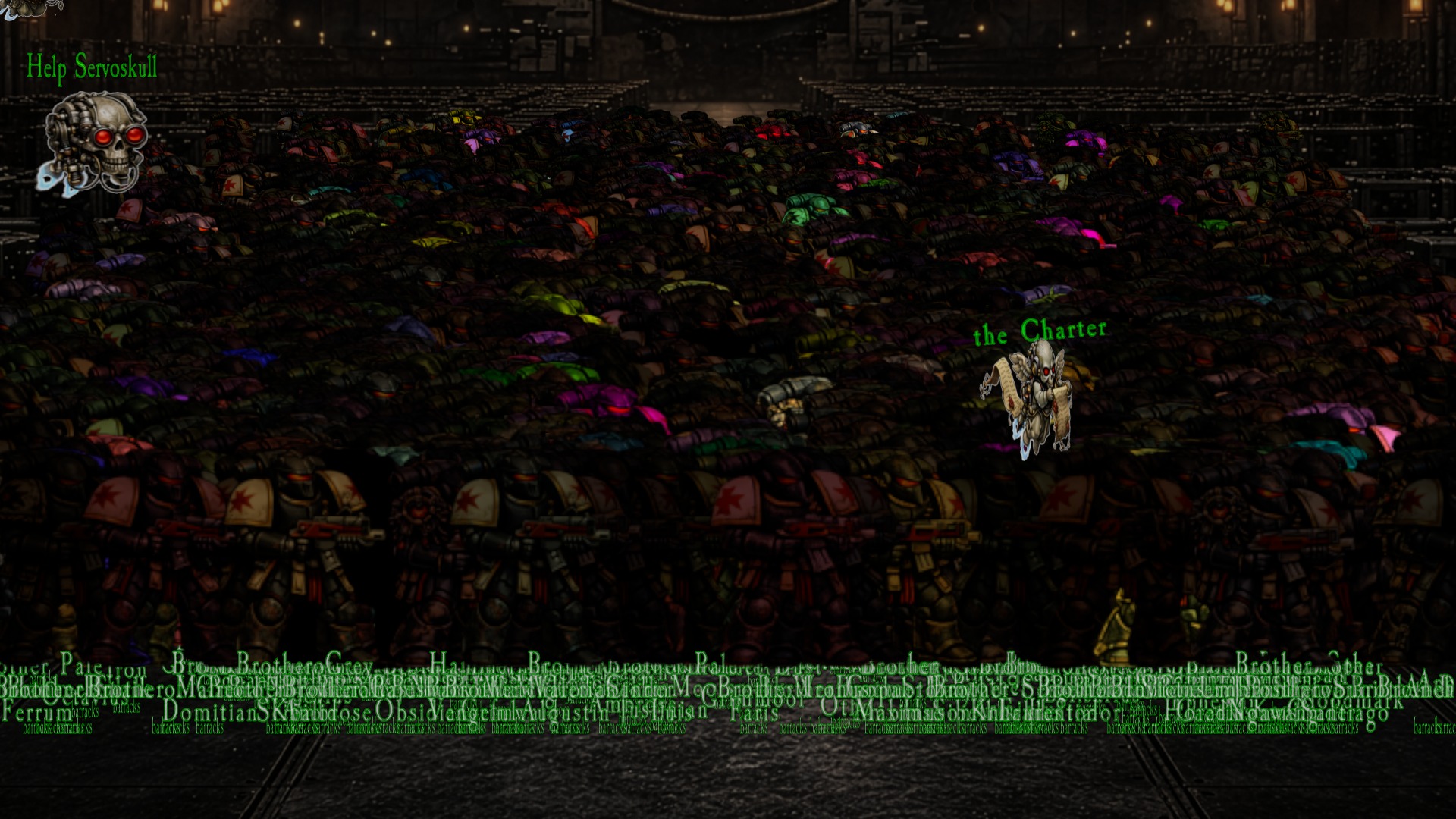
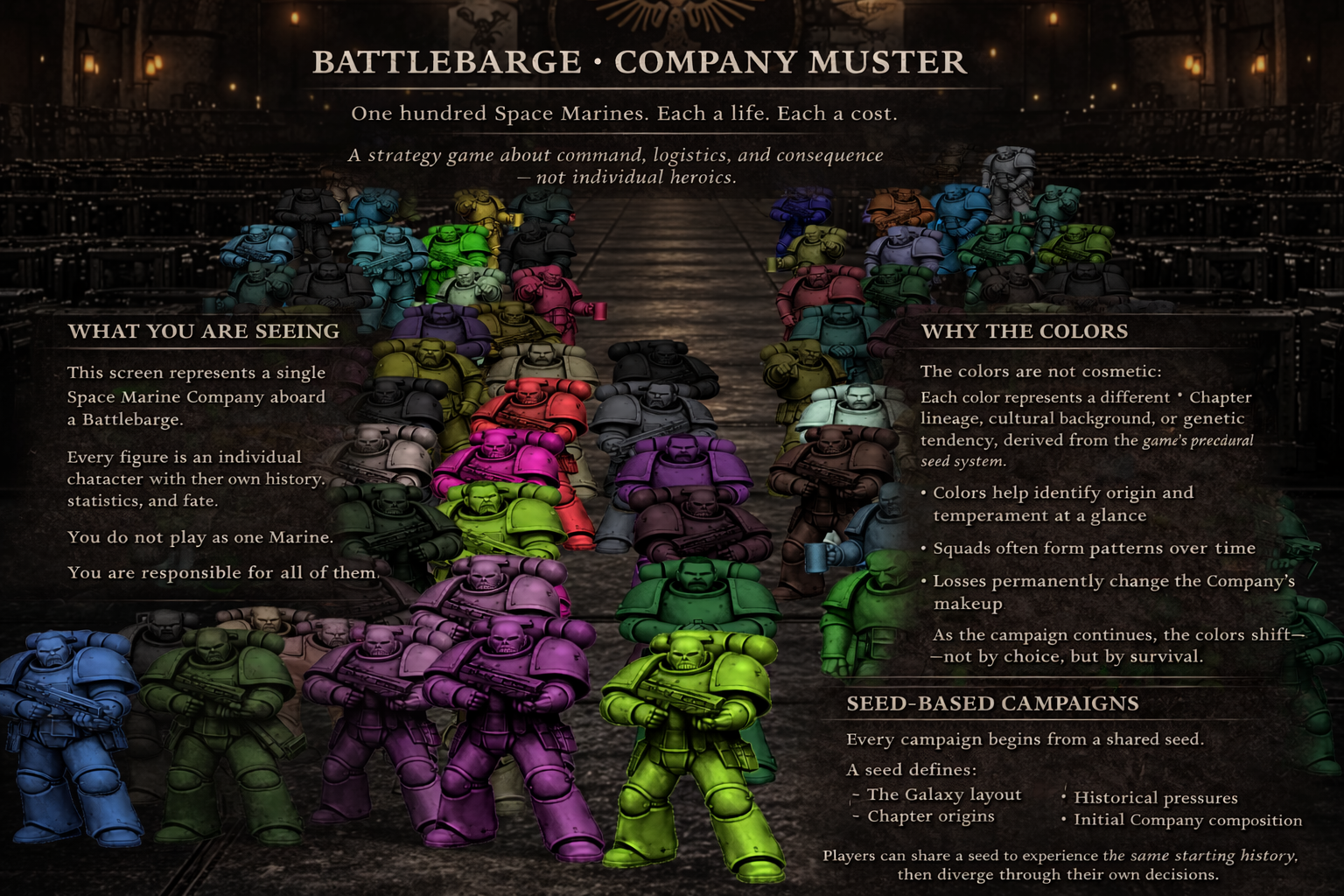
1000 marines on screen, the goofy color tints represent "personality" 

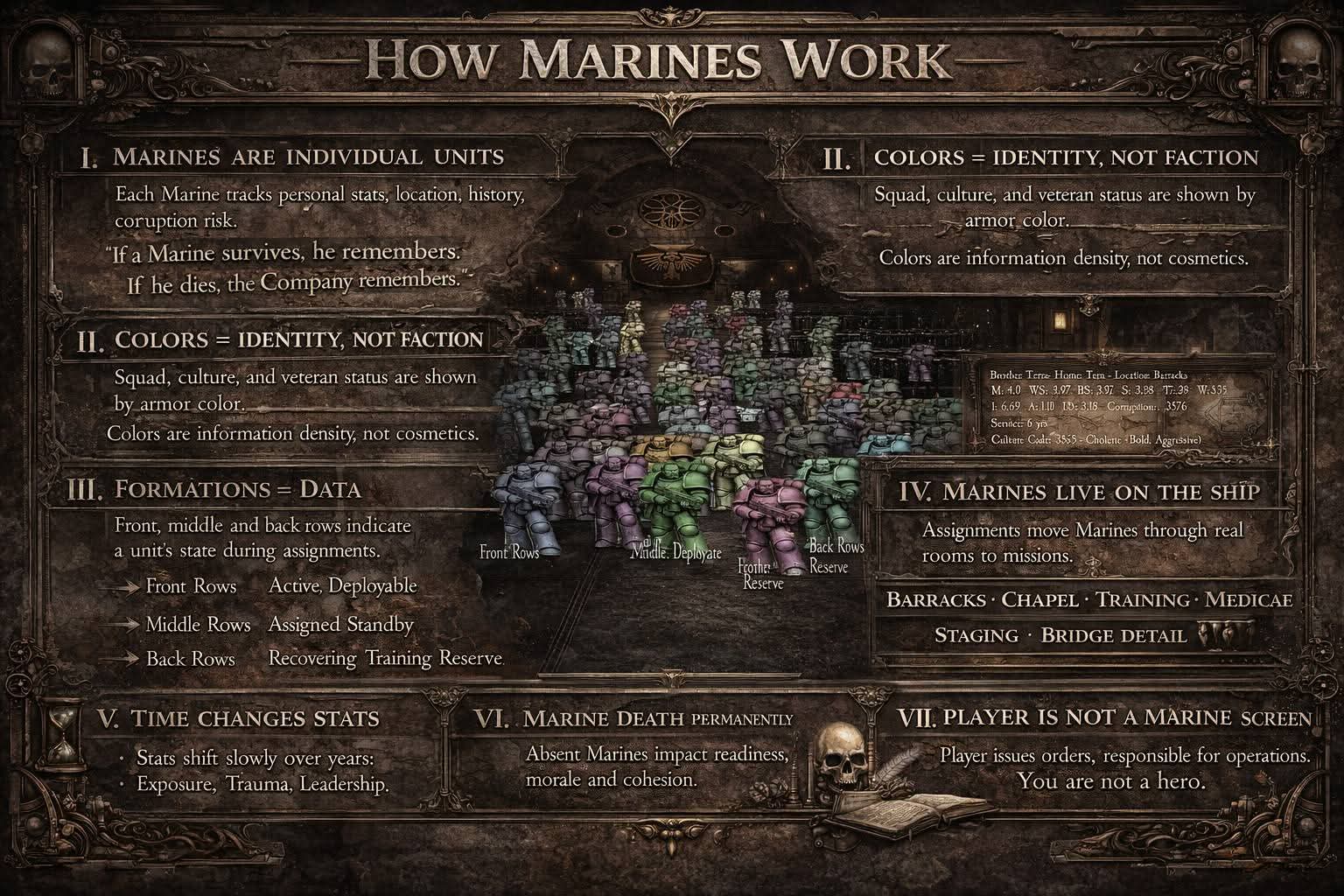
Each Space Marine carries a hidden Culture DNA profile made up of numerical trait values that define personality, discipline, aggression, loyalty, and psychological stability.  High aggression deepens reds and increases emissive intensity; high honor cools the blacks and tempers the gold; high intelligence warms white panels toward ivory; warp exposure introduces faint violet shadow sheens. Personality traits adjust saturation, gloss, and contrast rather than base color, meaning every Marine visually reflects their internal state without obvious UI indicators. Over time, players can recognize temperament, origin, and corruption simply by how a Marine’s armor feels on screen — turning color into quiet storytelling.


This week was about foundations. A lot of invisible-but-critical systems got cleaned up, stabilized, and restructured so the game can grow without collapsing under its own weight later.

On the Voidship side, docking and helm control received major refinement. Docking now properly hooks into the DockingFlow system, and — more importantly — helm authority feels correct. Any turn or throttle input immediately cancels docking, and the explicit abort key works as intended. The old warp misfire behavior has been removed. Undocking still needs work, so we’re not treating docking as production-ready yet, but structurally the system is much cleaner and more predictable. This was a big step toward stable fleet movement and eventually real strategic navigation.

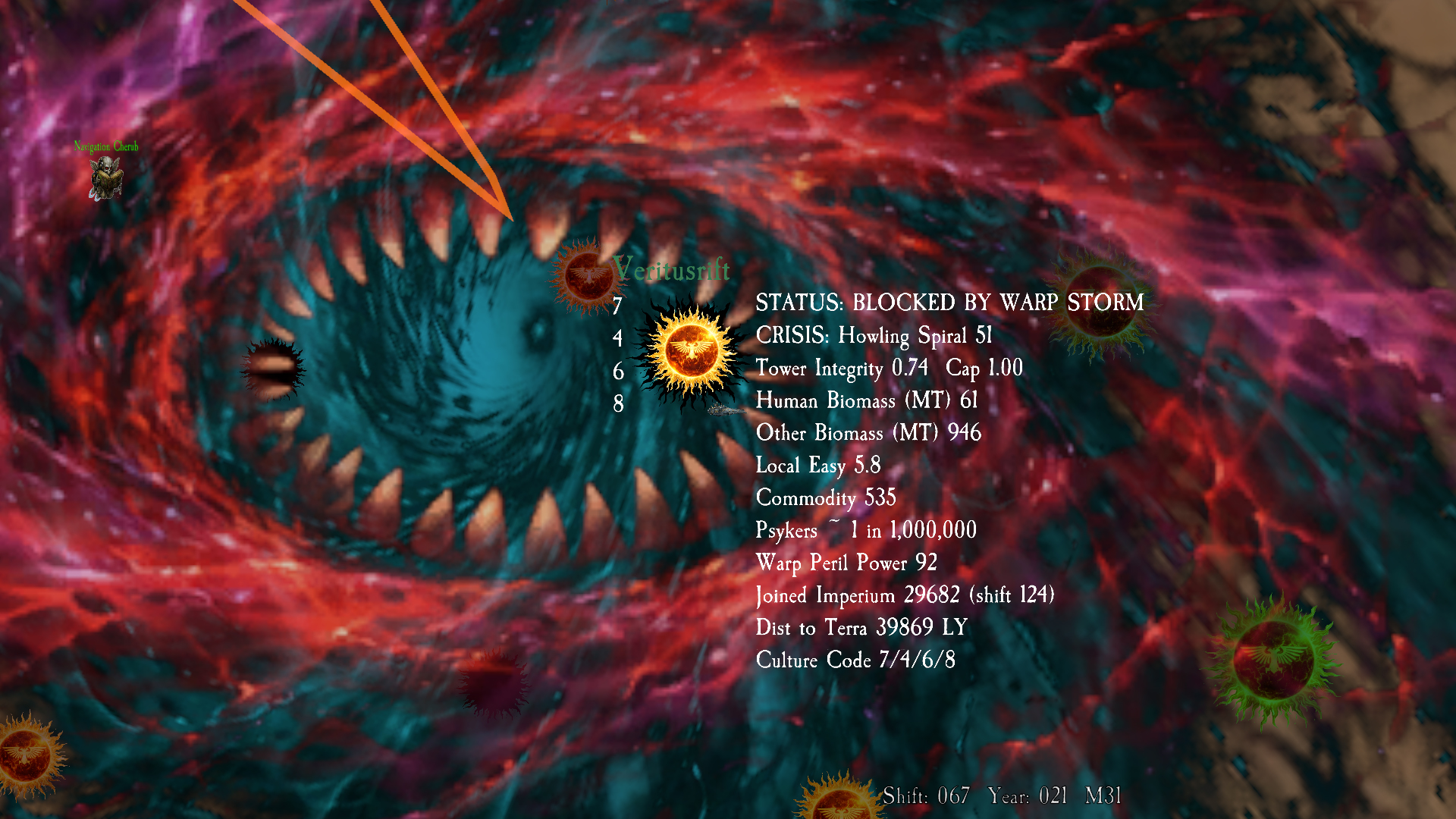
Warpstorms were also refactored. Canvas behavior was cleaned up so storm panels remain visible for testing while still being interactive. Toggle logic is more consistent, and storms now behave more like proper galactic obstacles instead of UI experiments. Across the board, world-style panels are becoming standardized, which will make future systems easier to implement and debug.

The biggest conceptual leap this week was the Imperial History engine. Rather than treating worlds as static data points, we’re moving toward a living timeline system anchored in real Warhammer 40K canon — from the Dark Age of Technology and Old Night through the Great Crusade, the Horus Heresy, and beyond. The History system will live directly on the ImperialWorld GameObject and generate dated lore entries while modifying world attributes over time. This shifts the galaxy from a decorative star map into an evolving simulation of ten thousand years of Imperial rise, decay, and catastrophe.

We also began restructuring the Tarot system toward a centralized MasterTarot controller. Instead of placeholder cards with isolated effects, the direction now is systemic influence — editor-driven, sprite-assigned, and capable of modifying the galaxy at scale. The Tower card was conceptualized as a destabilizing force within that framework. This is early groundwork, but it’s moving the Tarot from flavor to architecture.

Finally, several UI and Canvas issues were diagnosed and fixed — including button interaction problems and a camera-related drag offset bug that was throwing elements thousands of units off-screen. With those resolved, iteration speed has improved significantly. On the visual side, Rogue Trader–style corridors and darker Dark Crusaders interior concepts continue to refine the aesthetic: black, white, red, gold — solemn, cathedral-industrial, void-heavy.

This week wasn’t flashy. It was structural. The game is steadily transforming from a collection of experiments into a coherent Imperium simulation engine.

(2 edits)


Yesterday was one of those days where a lot of invisible structure finally snapped into place. The game feels different now—not just more complete, but more coherent.


Warp Travel & Player Movement

The biggest shift was committing to warp travel as actual movement, not just a transition screen.

  • The Player now travels through the Warp using camera/WASD control, with the voidship attached directly to the camera.
  • Warp currents affect the Player object directly, allowing storms, currents, and misfires to push or distort travel.

This instantly made scale, distance, and danger legible. You feel like you’re moving through something hostile, not clicking between nodes.

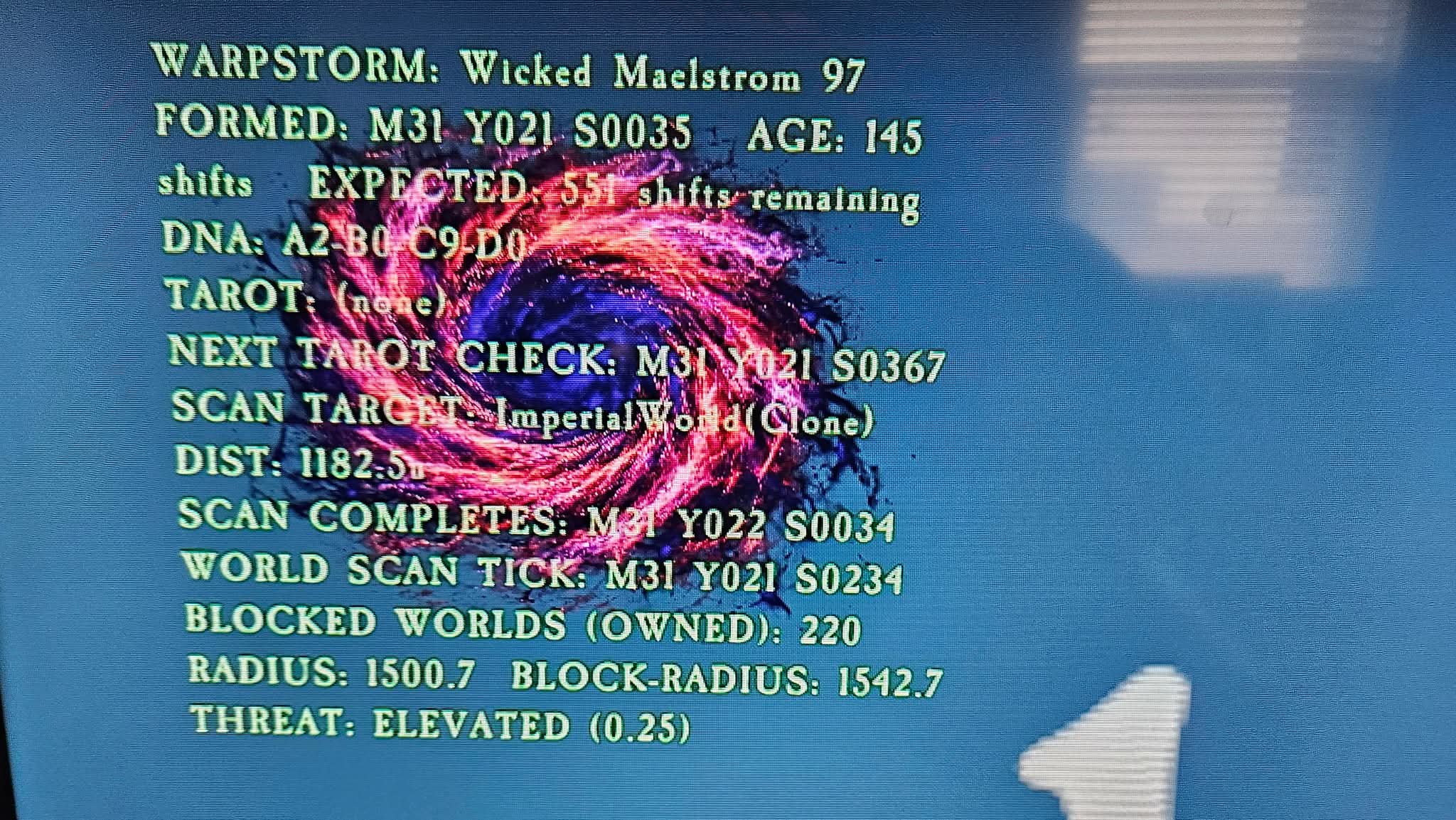
Warpstorms

Warpstorms are now first-class objects:

  • They are clickable, expandable, and readable like planets.
  • They exert physical influence on the Player via warp currents.
  • They integrate cleanly with the Tarot / omen pipeline for future effects.

Warpstorms are no longer flavor—they’re navigational hazards and narrative devices.

Docking (Mostly 👀)

Docking logic exists and works… but undocking is currently bugged, so for now:


Tarot & History Systems

The Tarot system continues to grow into a real backbone.

  • Added a new Major Arcana card: The Tower
    • Designed to slot cleanly into the existing omen / history flow
    • Will heavily influence Warp, catastrophe, and sudden change
  • Tarot is now clearly split between:
    • Imperial / Structural cards (Emperor, Tower, etc.)
    • Warp / Journey cards (ongoing work)

History seeding and deterministic RNG continue to pay off—omens feel authored without being scripted.

Cherubs, Servo-Skulls, and UI Life

A surprisingly important win: UI agents.

  • Cherubs and servo-skulls now:
    • Wander intelligently within their UI bounds
    • Bob, bank, loiter, and react to state
    • Carry deterministic “culture DNA” tied to chapter/seed
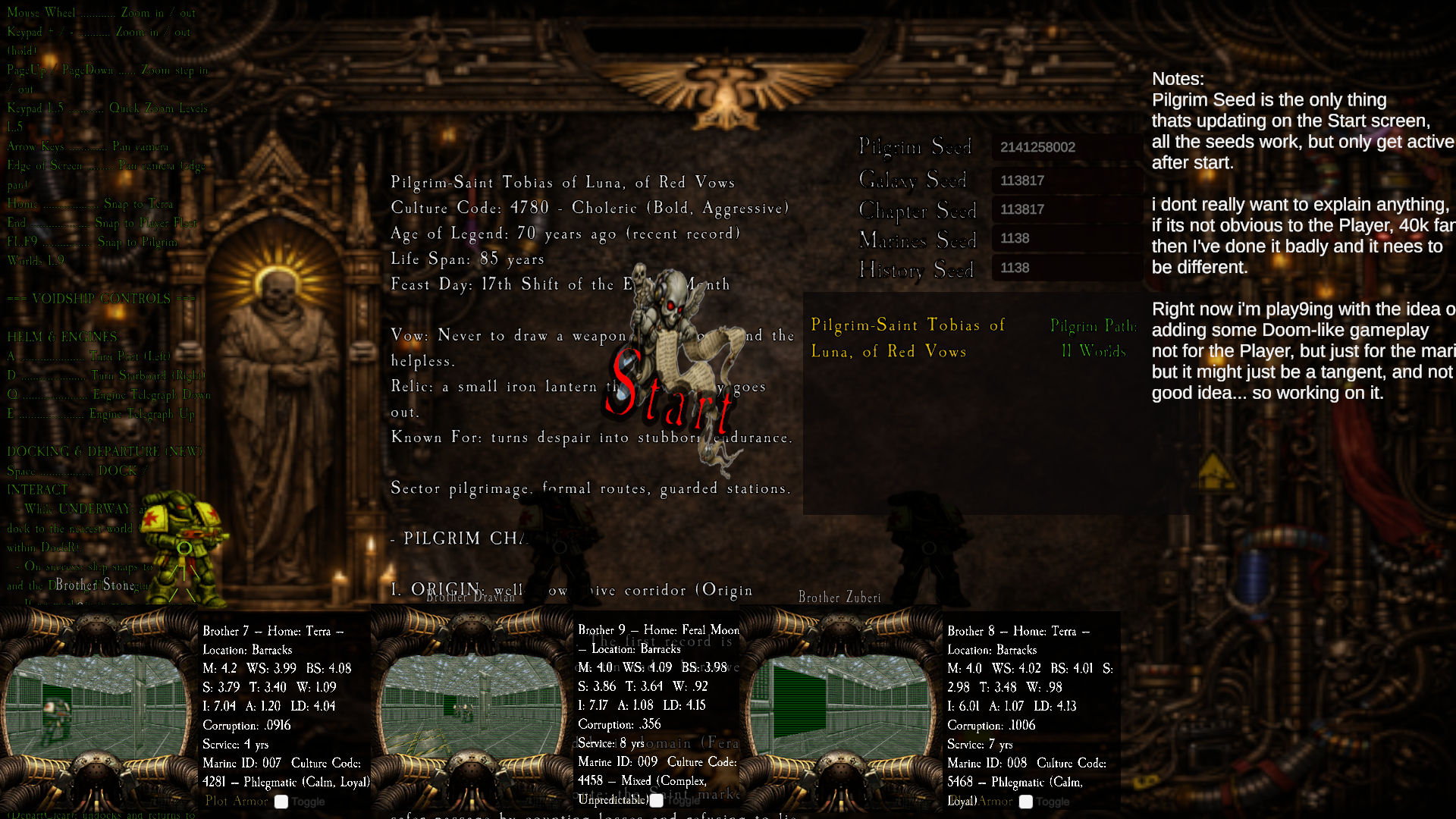
  • The “Start Cherub” replaced the traditional Start button

This turned out to be huge:

  • It teaches perspective, scale, and interaction immediately
  • It reinforces that orders are given by clicking living things
  • It makes the UI feel Imperial, not abstract

Honestly one of the best design decisions so far.

Camera, Perspective, and Refinements

A lot of quiet but critical cleanup happened:

  • Fixed multiple camera/UI space bugs (including a nasty drag teleport issue caused by the wrong event camera)
  • Suppressed auto-zoom correctly when the Player is manually navigating
  • Improved Y-based scaling and sort order for depth illusion
  • Refined galaxy map readability and spacing

The map now reads correctly at multiple zoom levels without UI noise.

Known Issues

Because transparency matters:

  • Undocking is bugged → docking disabled for now
  • Warp Tarot is still being split/refined (Imperial vs Warp influence)
  • Some systems are intentionally “overbuilt” for future expansion

Overall

This was a systems day, not a content day—and those are the ones that change everything.

Warp travel now feels dangerous. The map feels alive. The UI teaches the game without words. And Tarot is becoming a true narrative engine.

More soon.


The Web (WebGL) build is currently **significantly out of date** and no longer represents the state of the project.


As development has progressed, the game has grown beyond what the WebGL build can reliably support—particularly in terms of **memory usage, procedural generation, and long-running simulation systems**. This has resulted in instability, crashes, and missing features that do not exist in the desktop builds.


For that reason, the Web version should be considered **archival only** and will likely be disabled. All active development, testing, and playable updates are now focused on the desktop version, which reflects the current design and systems accurately.

(2 edits)

Starting on the Pilgrim Path

## **Dev Log – Imperial Worlds, Pilgrims, and the Shape of the Galaxy**


Today felt like real progress — the kind where systems stop feeling theoretical and start supporting each other.


### **Imperial Worlds: Scale With Intention**


Imperial Worlds are now fully present on the map as generated entities, not placeholders. Each world is built from the galaxy and history seeds and carries just enough identity to feel distinct while remaining lightweight enough to scale.


At the moment, there are **around 1,000 unique worlds visible on screen**, each placed deterministically. That alone has been a big milestone, because it proves the rescaled galaxy structure works.


Importantly, this galaxy has **room for much more**. In its current form, there’s space for another **1,000 sectors — roughly a million worlds** — without needing to change the underlying architecture. That said, scope matters. For now, development is deliberately focused on **a single sector**, so the systems can be made deep and meaningful before expanding outward.


### **Worlds That Matter to the Player**


These worlds aren’t just scenery. One of the core ideas moving forward is that the player will be able to **recruit from Imperial Worlds**. Over time, those worlds will shape the Chapter through:


* where recruits come from

* how culture and temperament differ

* how losses and replenishment feel across a long campaign


This makes the map personal. Worlds aren’t just locations — they’re sources of people, history, and consequences.


### **History, Saints, and the Pilgrim Path**


The **Pilgrim Path** is still early, but its foundations are in place. It’s a route defined by belief rather than efficiency, shaped by centuries of pilgrimage and anchored by the legacy of a Saint.


What’s important right now is that history is starting to **tie worlds together**. Instead of each planet being an isolated point, routes, traditions, and shared memory are beginning to form connective tissue across the sector.


As this develops, the Saint and the Pilgrim Path will influence:


* Warp stability

* travel patterns

* the spiritual “weight” of certain systems


### **Voidships Are Back (Early, But Moving)**


Voidships are back in the game.


They’re still very much in an early state, but having ships physically moving through realspace again changes how the galaxy feels. Travel isn’t abstract — it has direction, momentum, and risk.


Current controls are intentionally simple:


* **W / S** – forward and backward thrust

* **A / D** – strafe left and right

* **Q / E** – rotate


This will evolve, but even this early pass restores a sense of scale and presence that menus alone can’t provide.


### **Tarot, Warp Currents, and Subtle Influence**


The Tarot system is beginning to interact with the galaxy in meaningful ways. Tarot readings are tied to the **History Seed** and feed into Warp conditions and background pressures.


Rather than acting as obvious buffs or debuffs, Tarot influences the **currents beneath the surface**:


* how stable Warp travel feels

* which routes feel safer or more dangerous

* how history asserts itself over time


As the Pilgrim Path and Saints take clearer shape, Tarot will become one of the ways the player senses those invisible forces.


### **Where This Leaves the Game**


Right now:


* Imperial Worlds exist at a meaningful, testable scale

* the galaxy structure can support massive expansion, but isn’t rushing toward it

* worlds are becoming sources of recruits, not just dots on a map

* history is beginning to bind systems together

* voidships move again

* Tarot influences the galaxy rather than sitting outside it


What’s in place is a strong start — enough structure to build on without overcommitting too early.

new version uploaded, slowly getting back to adding in voidships

Dev Log – Map, Imperial Worlds, and Visual Systems

This phase of development has been largely about making the galaxy readable and believable, both mechanically and visually. A lot of time went into things that don’t immediately look like “new features,” but which are necessary if the game is going to scale beyond a tech demo.

The Map & Imperial Worlds

Work on the map has shifted away from the idea of showing everything and toward showing only what matters to the player.

Imperial Worlds are now treated as prefabs with authority, not just points on a star map. They carry identity, history hooks, and future expansion potential, but they don’t try to simulate the entire Imperium at once. This was a deliberate scope decision: the galaxy exists in full, but the player only meaningfully interacts with places that are relevant to their campaign.

The map itself is becoming more of a navigational instrument than a traditional strategy view. It’s meant to communicate distance, importance, and danger rather than raw data density. This also ties directly into Warp travel and why some routes (like the Pilgrim Path) matter more than others.

Servoskulls: Why They Exist

Servoskulls were added very intentionally as in-universe UI messengers.

Rather than dumping information directly onto the player through abstract menus, servoskulls act as:

  • carriers of updates
  • indicators of events
  • guides between layers of information

They give the player a diegetic reason for why information appears when it does. A servoskull drifting into view feels like a message being delivered, not a UI popping open. This makes the interface feel more like part of the Imperium and less like a game overlay.

Mechanically, they’re lightweight, but conceptually they’re important: they’re the glue between systems that would otherwise feel disconnected.

Cherubs: Tone and Hierarchy

Cherubs serve a similar role, but with a different purpose.

Where servoskulls are functional, cherubs are about tone and hierarchy. They signal importance, sanctity, and ritual. When a cherub appears, it implies that what’s happening isn’t just logistical—it’s doctrinal, ceremonial, or significant within the Imperial worldview.

They help reinforce the idea that the Imperium doesn’t just do things; it enshrines them.

Scaling Fixes (A Big One)

A major technical cleanup during this period was fixing a number of scaling issues, especially around ships and Space Marines.

Previously, things technically worked, but proportions were off in ways that would have caused endless problems later. Battlebarges, Marines, and internal spaces weren’t always speaking the same “scale language.”

That’s now been corrected.

  • Space Marines aboard the battlebarge now draw at the correct scale
  • Internal and external views align properly
  • Transitions between map, ship, and battle scenes feel coherent

This was one of those fixes that doesn’t feel exciting while you’re doing it, but dramatically improves everything built on top of it.

Returning Procedural Planets & Ships

Another quiet but important step has been the early return of procedurally generated planets and ships into the live game flow.

These systems existed before in isolation, but they’re now being carefully reintegrated in a way that respects the new seed architecture. The focus isn’t on quantity yet—it’s on making sure that when a planet or ship is generated, it:

  • comes from the correct seed stream
  • feels consistent with the campaign’s history
  • can persist and be referenced later

This is the beginning of the galaxy feeling remembered, not regenerated.

Why the Dark Crusaders

During all of this, I finally committed to choosing a specific Chapter for the game: the Dark Crusaders.

This decision came out of a longer conversation with Alan Merritt about early Warhammer design and the importance of intentional gaps in canon. The Dark Crusaders are almost entirely undefined in official material, which makes them ideal for this project.

Choosing them does a few important things:

  • It gives the game a clear identity
  • It avoids constant lore friction
  • It lets the player meaningfully define the Chapter without breaking canon
  • It limits scope in a way that feels right, not restrictive

Rather than trying to support every Chapter equally, the game can go deep on one: fleet-based, crusading, bound to the Pilgrim Path, and shaped by long duty rather than conquest. Everything about them fits naturally with the systems already in place.

Where This Leaves the Game

At this point, the galaxy has structure, the map has intent, visual messengers have purpose, scale is under control, and procedural systems are coming back online in a disciplined way.

This phase was about alignment—making sure that art, systems, lore, and scope are all pointing in the same direction.

The next steps are less about deciding what the game is and more about making it playable moment to moment: Warp travel, Terra as an entry point, and letting the player actually live inside these systems.

More to come.

(3 edits)

Going to Savannah tomorrow to hang out with Mike "world record for most videogames" Thomasson , and old friend from artschool 


**Dev Update – Roadtrip Progress & Direction**


Quick update now that I’m back in **Georgia** and properly settled again.


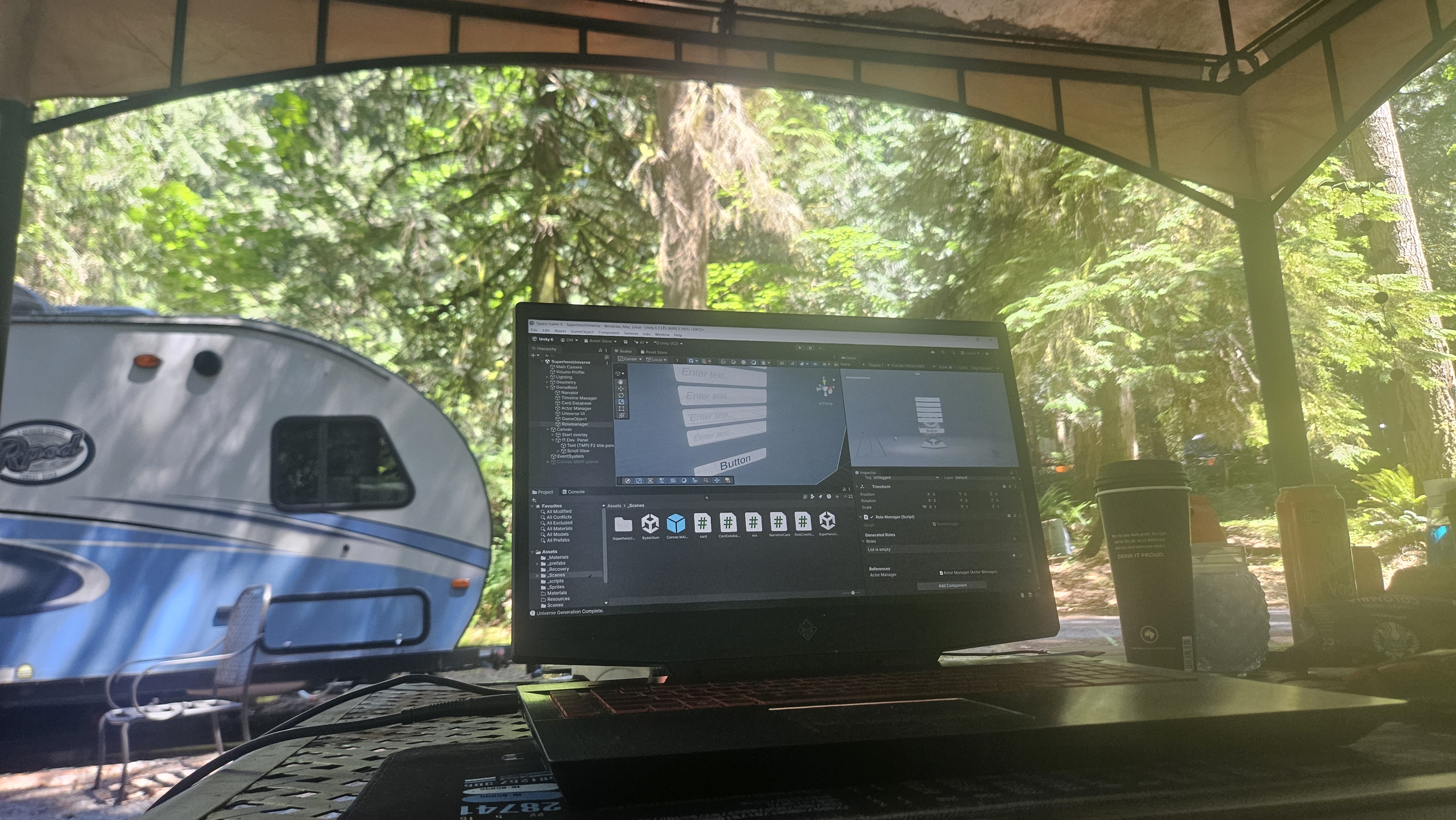
A lot of the work during the roadtrip wasn’t flashy, but it ended up being some of the most important groundwork I’ve done on the game so far. Working from a laptop forced me to slow down and really think through systems instead of just building content, and that ended up paying off.


The biggest thing I locked in was the **seed system**. The game now runs on four separate seeds: Galaxy, Chapter, Marine, and History. Galaxy handles the big picture stuff like map layout and world placement. Chapter controls identity and visual/naming bias. Marine is the individual Space Marine stream, and History drives long-term Imperium events, Tarot behavior, and Warp weirdness. Everything procedural now pulls from those seeds instead of using random calls, which means campaigns are fully repeatable and shareable.


I also spent time cleaning up how **daily actions** work (the “Daily Do” layer). That system is now clearly separated from location-wide behavior, which makes it much easier to reason about things like travel, downtime, healing, meditation, and long-term attrition without everything bleeding together.


Marine generation got some love too. Each Marine now feels like they come from a consistent stream rather than being a one-off roll, which is important once you start tracking losses, veterans, and long service histories.


Creatively, I had a really good conversation with **Alan Merritt** during this period that helped clarify something I’ve been circling for a long time. We talked about early Warhammer, the Great Crusade era, and the idea that Games Workshop actually wants *new* stories—not just tighter retellings of existing ones.


That pushed me to finally commit to a specific Chapter for the game: **the Dark Crusaders**.


They’re perfect for what I’m trying to do. There’s very little official lore, which means the player can define the Chapter without breaking canon, and it also helps me **limit scope** in a healthy way. Instead of trying to support every possible Chapter identity, I can focus on making one feel deep, coherent, and meaningful. Fleet-based, crusading, guarding the Pilgrim Path—it all lines up naturally with the mechanics and the tone I’ve been building.


Choosing the Dark Crusaders feels less like narrowing the game and more like finally giving it a spine.


Now that I’m stationary again, the next phase is much more about execution: Terra as a starting/tutorial space, Warp travel becoming playable, Tarot reacting to history and exposure, and turning all this scaffolding into something the player can actually touch and play.


More soon.


(1 edit)

My insticts telll me to go with a specific Chapter, and, someone once told me that GW wants NEW stories, and, well, f you go look up the Dark Crusaders chapter, theres literally no info, so, its really a perfect Chapter (im going to give the Player a Chapter they can define without breaking any Lore, idk, its important.. (end goal of course is a game propsal to GW for a game about the Great Crusade and onwards where the Player is one of the Lost Primarchs, eh "dreamgame" 


"By this Charter,

Let it be known and recorded in the ledgers of the Imperium that the Chapter hereafter named the Dark Crusaders is bound in sacred duty to the protection of the Pilgrim Path.

By decree of Imperial Authority, witnessed and sealed, they are charged to guard the route of the faithful: to shield the pilgrim, to secure the passage, to hold the road against all enemies of Man.

They shall not abandon the Path. They shall not claim dominion over it. They shall not lay down this burden for glory, reward, or relief.

This duty endures beyond campaigns, beyond generations, beyond remembrance itself.

Until such time as the Galaxy is extinguished, this Charter shall stand.

Iter sine fine."

ultimatlu, the game needs to be 3D, for the stuff I want to do, right ow im just forcing everything onto a 2D plane, but all the code is 3D coordinates.

Im not a writer, I cant express h0w happy Seed Generation finally being in game makes me... from now on Players should be able to share a Galaxy's shape,&composition  as well as the "history" of the Galaxy ("future history", the game right now starts at the 2nd Founding) and Chapter composition and Characters.. so, 4 seeds to create game start... but means, 0layershpuld be able to have their favorite character, history, Chapter seeds in a new galaxy.. yeah, I didn't explain that well, its all exits perfectly in visuals in my head. Important things like planets need to be in scale with characters and ships.. I need that for orbital b0mbardment and a bunch of stuff im not ready to try and implement yet.


Yay, im on a roadtrip, going to Atlants. Staying in Reno for a few days to work on videogame (mostly Halo) stuff

Found a nice shale outcropping and fossile hunting


(1 edit)

Ok, the ai is helping me, and this seems like a good place to put notes because i would like some help doing quest, anything that involves writing


### Dev Log — Marine Systems Progress (Brief)


**Status:** Core marine pipeline is online and behaving correctly.


**What’s working now:**


* **Marine Generator (`SpaceMarineGenerator2`)**


  * Spawns a unique marine once per prefab (no rerolls).

  * Assigns origin (90% Terra), service age, veteran/dreadnought status.

  * Generates ABCD culture → temperament + color.

  * Applies culture color to the **button sprite**.

  * Randomly assigns a **button sprite variant** for visual diversity.

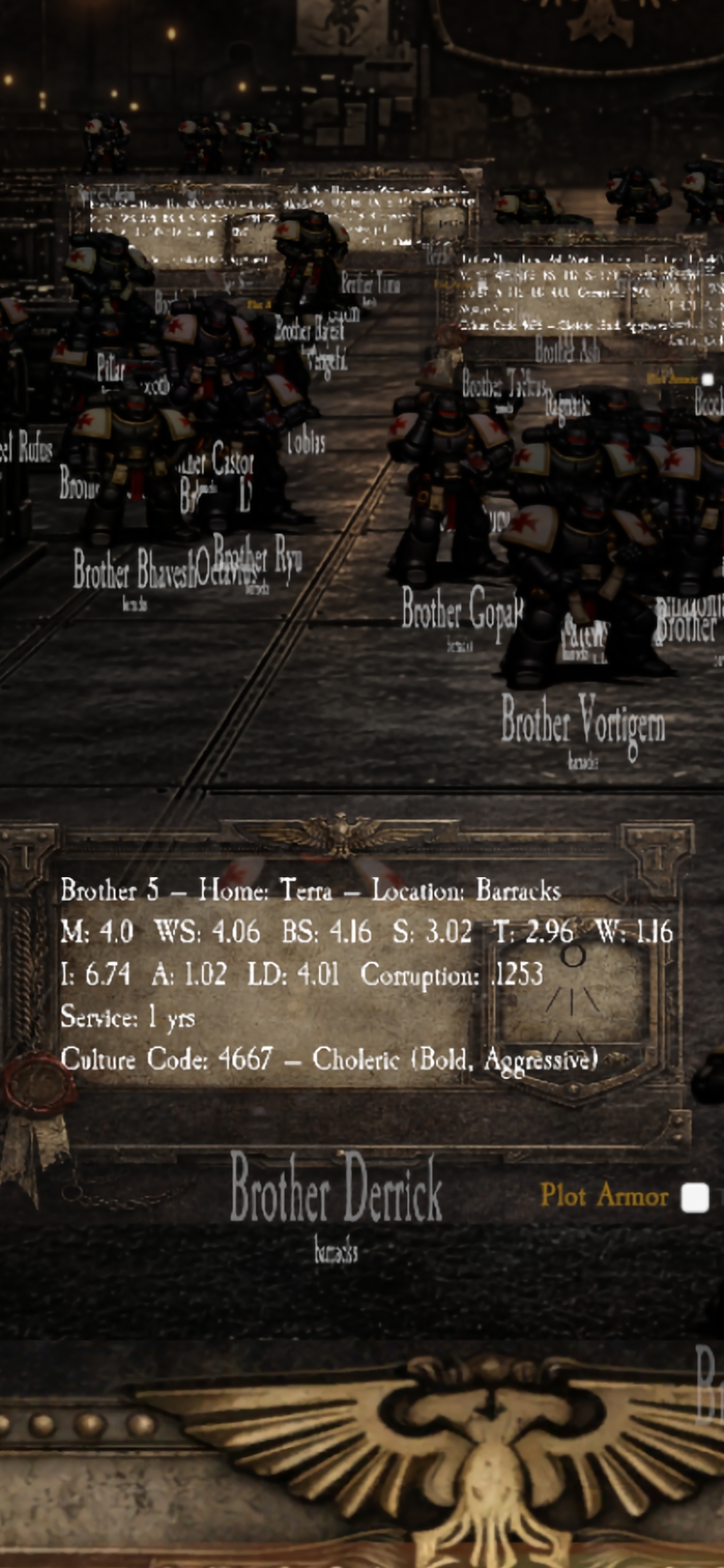
  * Displays stats + ASCII readout (read-only).


* **Interaction Layer**


  * Marines are **clickable, draggable** world-sprites.

  * Dragging is clamped to bounds (Y min/max) to stay on the ground plane.

  * Panels open/close per marine without affecting data.


* **UI / Control**


  * Marine info panels are event-driven (no Update spam).

  * Context menu groundwork exists for actions like **Assign to Mission**.

  * Button visuals remain stable across interactions.


**Architecture wins:**


* Identity (generator) is cleanly separated from interaction (drag/panel/menu).

* Marines are persistent objects; missions will **reference**, not own them.

* Terra recruitment can run without a full Terra scene (world-as-data).


**Next steps:**

Recruiting and redoing "imperial worlds" to work with seed generator instead of RNG (go look at my rant on GTNW about Tic-Tac-Toe and the RNG)

Minimum effort and a bunh of ai slop, apologies for that. I just cant put much effort into this part, id rather be putting energy into the game. 


Ive been a 40k fan since the 80s, and in 1993 i got my first job as a videogame artist,   

(1 edit)

New version, narrowing down the scope a little more, and, well, there's ethical problems about the Tithe

(2 edits)

Eh, work in progress on the poem (poetry is the best way to copyright a word, or phrase, imo)

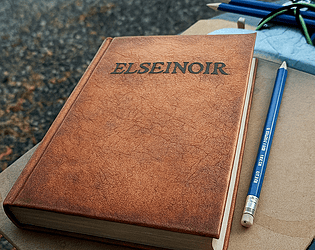
Where does the name come from? Old joke about Torpeinhow Hill (except thats a silly name), and its vaguely reminiscent of Hamlet, which id like to channel into the game)


"Elseinoir, Elseinoir!

Once a place, but now no more;

 its seven hills in shadows shy,

Its puckered towers silhouette the sky.


In those streets of mist al9ng the shore.

The forgotten footsteps shorn of worn stone.

We walked thro as though the world were dream,

And the Dreamer holding on.


Wherefor far away the city sleeps,

sensceless dreamers creep between

folds of fever-dream soaken sheets?

A place I knew, but have not seen"

oh yeah, not giving up, please check here on Discord, and send me a DM if you can.

Getting started, doing it right, and legal. 


https://discord.gg/pGkfJcDZ

Just checking in, 5 days to go. I look forward to it, thanks

I got a painted and an unpainted BG, your choice for prize give away. And I hope people are interested in going further with this

I just think its a good idea to try and recruit from the fans. (Ive asked a few fans and fellow game devs about it.  Like, ive been talking to the guy who made the Atari E.T. game, good advice.. hes been a hero of mine since i saw him on TV when i was 8) Ive been hanging out with a great server of people doing custom Halo maps lately, too


So. Concept art next, and, im planning to have a "5 minute" demo this Fall

an out line, premise, or several chapters would be great... especially if there's no or an open ending, because that'll make people want more, imo, or want to complete that story themselves in game.

im working on building procedural mazes and stuff today for "practice" 40k fangame. Which is basicly just my dreamlike of items id want in a space game, or promised other people if be sure to include (crew being ejected out to Space when damaged during during spaceship battles, and that the planets should be in scale to the ships)


Alot of ideas that I think would flow smoothly into any scifi game. I do want to see fleets of ships, all from the pov of the Player, ground battles the same, so (o working out some ideas of how to "shout" orders to your crew (instead of just hitting a button on keyboard or screen, cinematic stuff)

(1 edit)

little Ringworld flight sim turned out nice

(1 edit)

I spent most of the day thinking about Ringworlds, and thought it'd be fun to do a simple Ringworld flight sim here on itch. So, day 1.. im hoping to get a nice random procedural landscape going, which might be useful later

It's not ready, but you can look at it on my profile page


(1 edit)

I always felt the habitable areas on the Halo were for all the people to be at when the device went off, like, its the safe place because "eye of the hurricane"


But, yes, "clearing a Ring" should definitely be a thing Players should be able to di

it had better be a waterproof handheld i can take to the pool

"the only way to win is to not play the game"


Actually tic tac toe was hard, I kep having X wins, like alot, like most of the time. And realized that was simply because X was always going first.. so fixed that by alternating whi starts first, but then.. X still wins alot (i bet 99% thats from a rng cycling problem and if I added some random nanoseconds the problem would disappear

thank

So, I had a dream about a human made Halo, you know?

(1 edit)

Hi, im Derrick thanks for comming here, any questions, just ask

I didn't set up a Discord for the game jam, but here is my personal Discord server, mostly focused on fan game stuff

Myself, I just want to give the Players the feeling of commanding troops on the ground and fleets in space all from a first person perspective 

https://discord.gg/xGWWKkNw

(goth girls would love it), dont change a thing, the colors and sound fit perfect

one of the best games ive seen on itch

unfinished, bit off more than I could chew, and then i got distracted creating digital life, oops. Anyway, great fun, met a few people and learned some new things. Im gonna probably work on this a bit more later, but im looking forward to the next jam

very nice. Like the gravity mechanic (doesn't make alot of sence, but it doesn't need to) great classic 8bit music and look and feel. 


I think if you changed that robot to a cute spider, you'd have a hit

Like specs?

very very good

(1 edit)

and, I want to get started on my dream game, a superhero team game.   


Um...  here's some 10 polygon trees of mine from 25 years ago. (I'm relearning alot), so if I get some trees on a landscape, I'll be happy. 


But, any interest in superhero team game?


why reported?

Surely my game isn't that bad


yeah, I coulda done better, I lost track of the goal a bit around day, especially the 1 bit color


I feel good about what I got done, tho, which was just reworking how spaceships worknin fangame

attention would be nice.

I had intended to have zero graphics,  but I didn't finish. 


 I feel i got alot done. The jam helped me get back into my 40k fangame, which I hadn't worked on in months.  

Abominable sound effects is what I wanted, a cacophony of choirs at Terra and then only a single voice when your far out in space.


But "no game", I ran out of time before I got the button commands to work

Here's a vid of me talking about big project

thanks for checking on that. Following