Indie game storeFree gamesFun gamesHorror games
Game developmentAssetsComics
SalesBundles
Jobs
TagsGame Engines

Browser MMORPG development

A topic by Wagrant created 53 days ago Views: 1,013 Replies: 17
Viewing posts 1 to 14
(2 edits) (+1)

https://fragmentsofworlds.com/
Hello everyone!

Well, it seems like it's time to start sharing the development, because it's starting to look like a game. It's going to be a grinding game, there's a bit of a plot now (5 quests) a few mechanics and features. I honestly don't even know where to start, so this post probably won't be very useful, but I'll try.

The game has no genre, there are different mechanics here, and I plan to work on and develop them all. 

Important: I generated all the images using AI, and if anyone protests against this, now you know it.

From the mechanics I can list the following:

You can catch creatures created by the monolith (something similar to Pokemon mechanics) with enchanted creatures (with extremly small spawn rate) but with fun mechanics.

There is very basic cooking, this is the basis for raising the player's attributes. Very basic because there are still very few recipes.

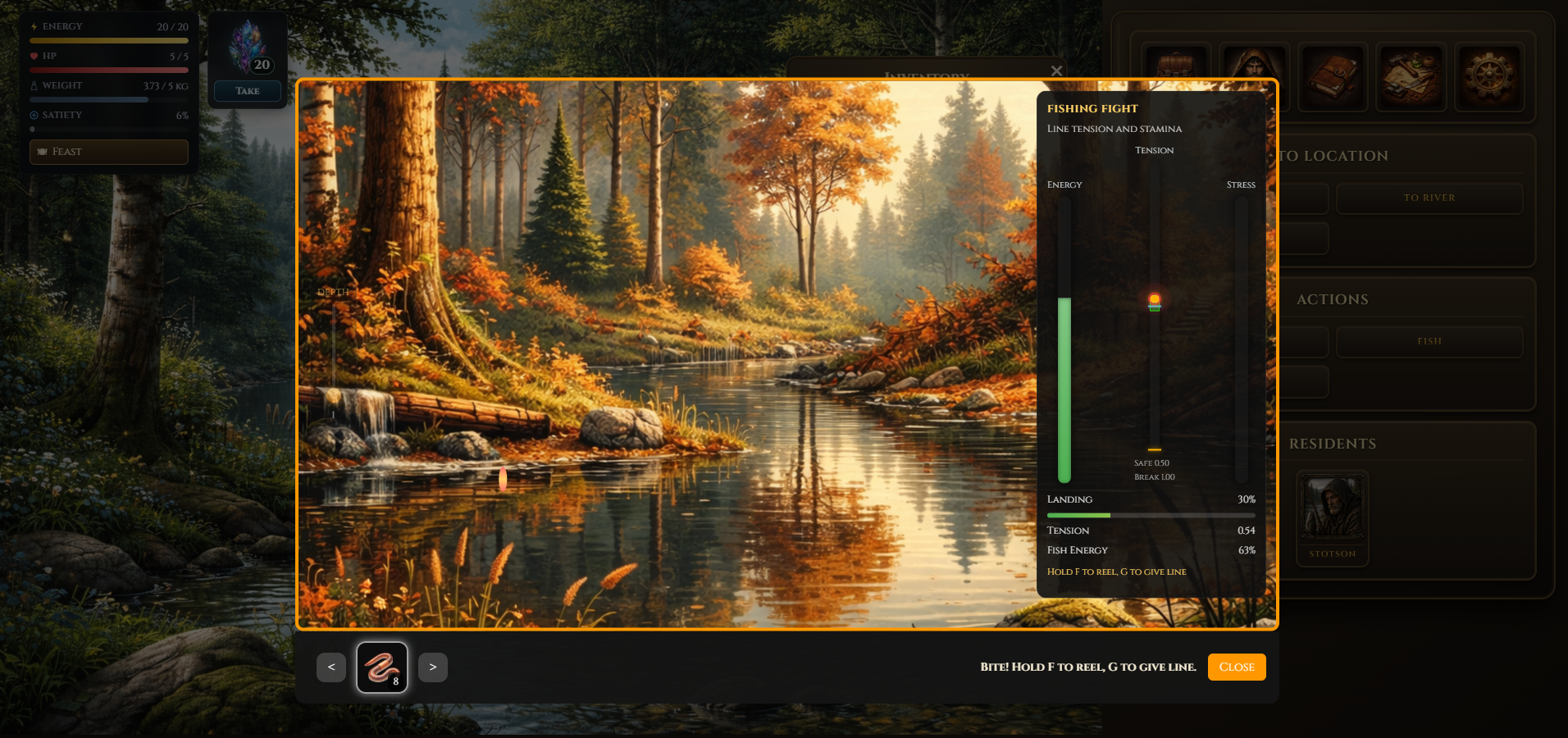
There is fishing, it is very simple if you understand how it works, but from those who tested it -  couldn't catch even one fish for quite a long time.

There is also the Hand Of God event mechanic (it is a roguelite event with meta progression)

Five quests will show all the basic mechanics that the player needs to know, here is voice acting, because there was quite a lot of text.

I started working on instances, I put them off for a very long time, because this is a very very large layer of work. Also, interestingly, I spent a lot of time on the inventory and container system, which surprised me, I didn't think inventory was so complicated.

There is also alchemy, but it turned out to be too complicated, and while there are no injuries in the game, it is quite useless at an early stage.

Also, from what seems interesting to me, there are stone gates that allow you to open a portal to other worlds, according to legend, the monolith that creates the player shines with energy, and people, plants and everything live in this light. And other shards of worlds (with their monoliths) are approaching ours, and at this time it is possible to enter them using a gate and a key. Only the Cloverluck world (St. Patrick's Day themed) is available now, but it's also ready for 30 percent.

and yes, 100% of users have a very serious problem with the fact that they wander around locations and don't know where to go and how to get to the right point, and that's normal, I planned it that way, the world is not big, so you don't have to wander for long here.

I don't know what else to tell, if someone is interested in something from the above - ask and I'll tell you. I will share the development process from time to time, as even five people who will be able to test the project will be a huge achievement for me. And yes, there will be a donation in the game, but it is unique, the player will not be able to buy anything for the donation for himself personally, he will be able to buy world buffs that apply to all players.

And here is some screenshots and link if anyone want to test.


(1 edit) (+1)

I'll tell you a little about the map I'm working on, if anyone is interested of course. 
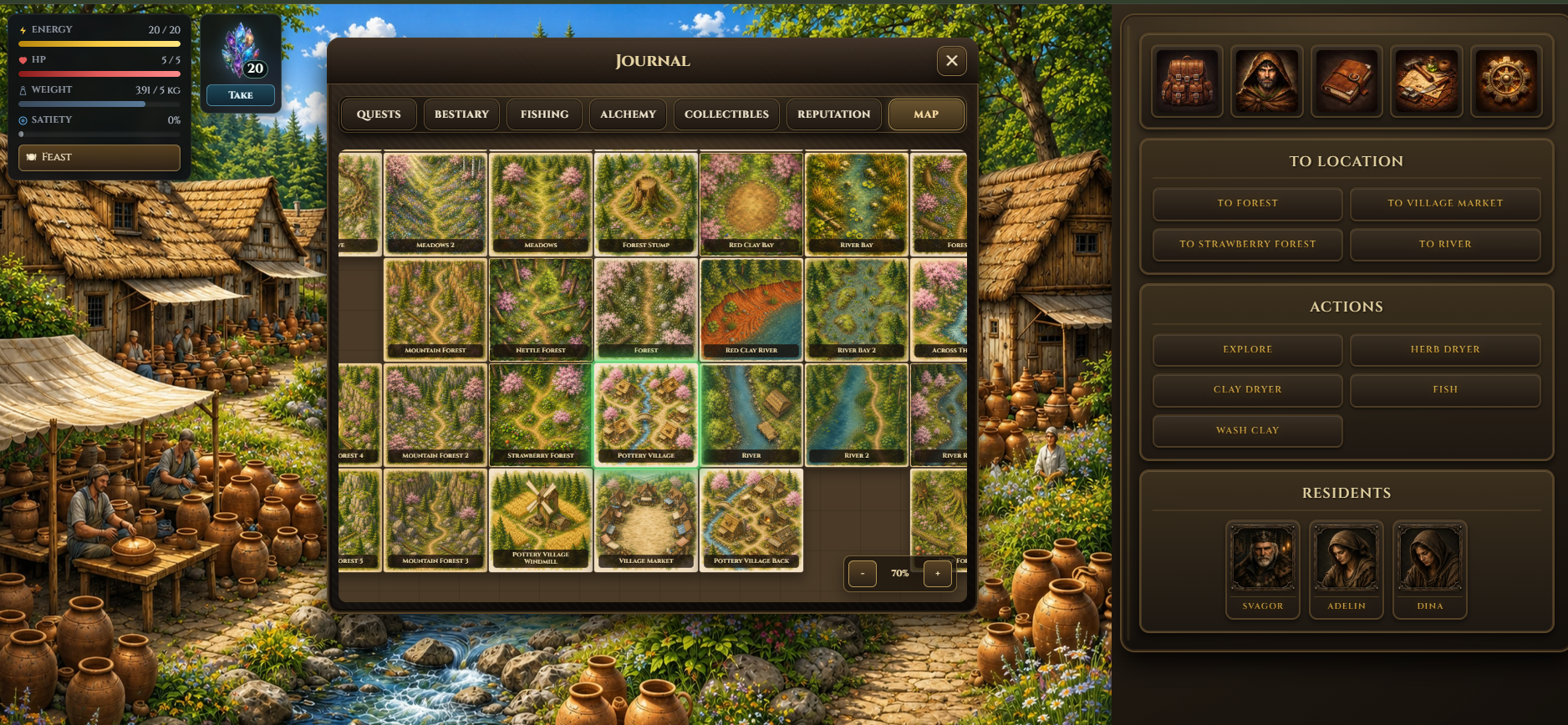
Creating a map is a very complex, but important thing for player. A map is a very important tool that helps with navigation, shows where and what resources are there, and what is the quality or rarity of these resources (if you have explored the location and seen them)

The map is created by the player, piece by piece, sketching the location in which it is located. Paper, paints, and feathers are created by the players, as well as the blueprint (everything is crafted on blueprints). A blueprint can be created by the player from an idea that he gets while working with paper, or buy a blueprint from other players. The main attributes for players who want to work with paper and ink or paints are intelligence and psy (psy is a character's mental state that reflects his ability to interact with the monolith and its light)

The map can be assembled and disassembled into parts to sell, it is also possible to create parts of the map of those locations that are beyond the runelight, groups of players can make forays into the darkness, illuminating the way with a portable beacon, to search for resources, but this will awaken the darkness (the creatures that live there)

(1 edit)

Let me tell you a little about instances. The old gods have disappeared, along with those who lived here before us. The player is not a person, he is a creature of the monolith. The area that we consider home is illuminated by the light of the monolith, which gives life to everything that is here.

The new gods began a struggle for territory and power. There are 4 instances in the light at this time.

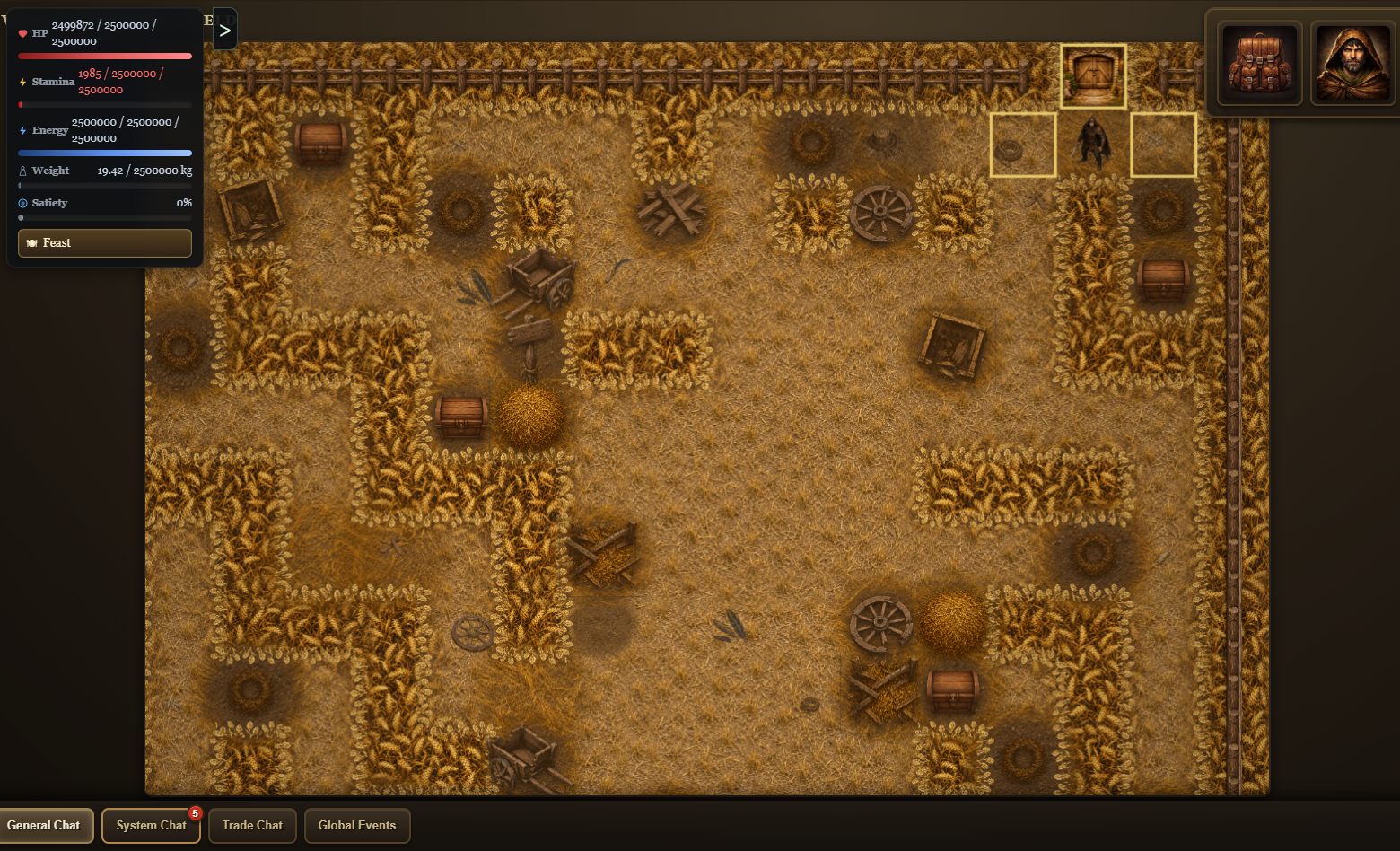
The village mill - captured by Scurren, when the sower and miller tried to expand the mill's basement - they dug into the caves, which awakened the new god.

The goddess Chithex is a spider-like giant bee that has made a home for herself in the middle of the meadows, a huge hive. This instance has become a home for the bees, who have come to consider the place their home. Bees have begun to be hunted by wasp bee-eaters, wax golems protect the structure of the hive, they do not care about those who live there, but the sweet smell of honey attracts honey eaters, who destroy the hive, which is why they have become the worst enemies of golems. And lizards run through the endless tunnels, devouring all those who died in battles, or are too weak to fight back.

There is also a new god, Nerax, who has come to Runelight from the dying world of Nexertia. He has claimed the rivers and lakes as his own, and his creatures will attack anyone who tries to fish.

There is also the goddess Orael, she considers herself the creator of all living things (creatures and plants), which is the reason why players cannot cut down trees. Each instance has five creatures, each creature has five evolutions.

Scurren Mill is a place from which resources can be used to create equipment for the player's melee. Defense, damage

Chithex Hive is a place from which resources can be used to create equipment that gives the player Leadership, which allows the player to command creatures that the player has captured for use in combat.

Stinking pit (house of Nerax) provides resources for Stealth, DOT, Evasion, and Heavy Carrying

Orael forest is a place that provides resources for managing runes, monolith energy, and everything that is called magic in other worlds.

There is also an instance of the Cloverluck world (the first of 12 event worlds), where equipment is tied to combinations and luck.

In each instance there is 1 creature (the most common creature, 1 evolution) from which you can get a carcass, this is the source of meat, hides and bones. From all other creatures, resources drop out after victory, equipment is created from resources, and then improved (by tier) All equipment breaks in battles, but in each battle there is a chance to get super rare equipment that can be repaired.

Also, interaction with Aldetorckol (he is also a new god) directly affects instances. The monolith infects the creatures, the creatures crawl - form tumors from which copies of these creatures appear (those copies are creatures of the monolith, we can catch them in shards)

This is exactly the reason why I postpone work with instances further and further, now in essence only the scurren mill works as an instance for creating things and improving them (from the essence of 1 evolution) Well, of course, this is one of the professions that also requires a lot of work.

And yes, I saw that someone had registered and decided to see what I was talking about. If you want, write a nickname in the comments to the post, I will give you a map. It has a wide range of functionality, it will help you complete plot tasks, for example.

Hey, another small update.

Currently working on the Finds system.

While gathering resources you'll occasionally come across something — a lump of clay shaped like a hand, a shard of old pottery, a small clay figure of a raven. You drop it into a study slot, wait a while, and when it's done you get some profession XP and inspiration.

Inspiration is a per-profession resource. Accumulate enough of it and you can generate ideastemporary blueprints for things not sold by any NPC. Low amounts give you simple recipes. Higher amounts unlock structures, and further up, things connected to the gods.

A few things worth noting:

- Rarity and quality of a find scales everything: XP, inspiration, study time, intellect required. No hand-tuned values, just formulas.

- A common find is roughly worth ~20 crafting actions of XP. Mythic quality is closer to 1000.

- Resource quality in this game is theoretically unbounded, which means finds can be too — something to keep in mind.

- Rerolling an idea's quality costs inspiration, and the price increases each attempt.

Design is done for Clayworking finds. Now building it.

I'll show you how it looks in the game in a while.

Thank you for your attention.

There's no worse habit than starting something new before you've finished what you already had going. 

So — naturally — I've started something new.

I've begun laying the groundwork for the "going into the dark" mechanic, starting with the portable beacon.

Walking in the dark is a big social piece of this world. The first expeditions will be cautious and uncertain — players feeling things out.

Whoever carries the beacon can light up the dark stretches of the world. That lets a group extend bridges of light deeper into the darkness, opening a path toward points of interest — for example, the Tomaridema tower. The tower is where knowledge about the monolith's energy is gathered: how to use it, what its place in the world is. There you study the pages of the book, earn knowledge, and work on runes, combinations, and everything else that draws on the monolith's energy.

But waking a darkness that's slept for centuries isn't exactly a smart move. Light it up, and the things that live there — the ones that were asleep until you showed up — start attacking the beacons.

There are four of these quest points of interest scattered around Runelight. Each one is a guild in its own right that anyone can join and help build up:

- Tower — energy and runes. Home for players chasing complex combinations, mobility, buffs, and the secrets of the world.

- Garrison — for the melee crowd: vanguard, brute force, holding the line.

- Menagerie — this one's for players like me. The ones who collect pets, command them, set up tactics and attack chains. They're also the ones who hold the locations while everyone else is offline.

- Crafters — the heart of the world. They process everything that gets brought in, found, or stolen: building fortifications for pets, recycling creature parts into gear, brewing alchemy, and generally shaping the world everyone else sees.

Every point of interest needs beacons to build its bridge. Each one is its own little front that has to be defended against the creatures of the dark — but each is also meant to become a home and a hub of growth for the players who settle there.

And yes — any player can head to any point of interest, and even do well at all of them, if they've got the free time for it. Each point also has its own book that grants buffs and has to be studied.

This is the players' first real meeting with the dark, and honestly the moment they realize how the push toward the capital can begin (the finale of the fifth quest) — the first clashes, the first forays after better resources, and so on.

It's all still on paper for now, but the work has started. After that it's just the small stuff — sit down and do it.

Thanks for reading.

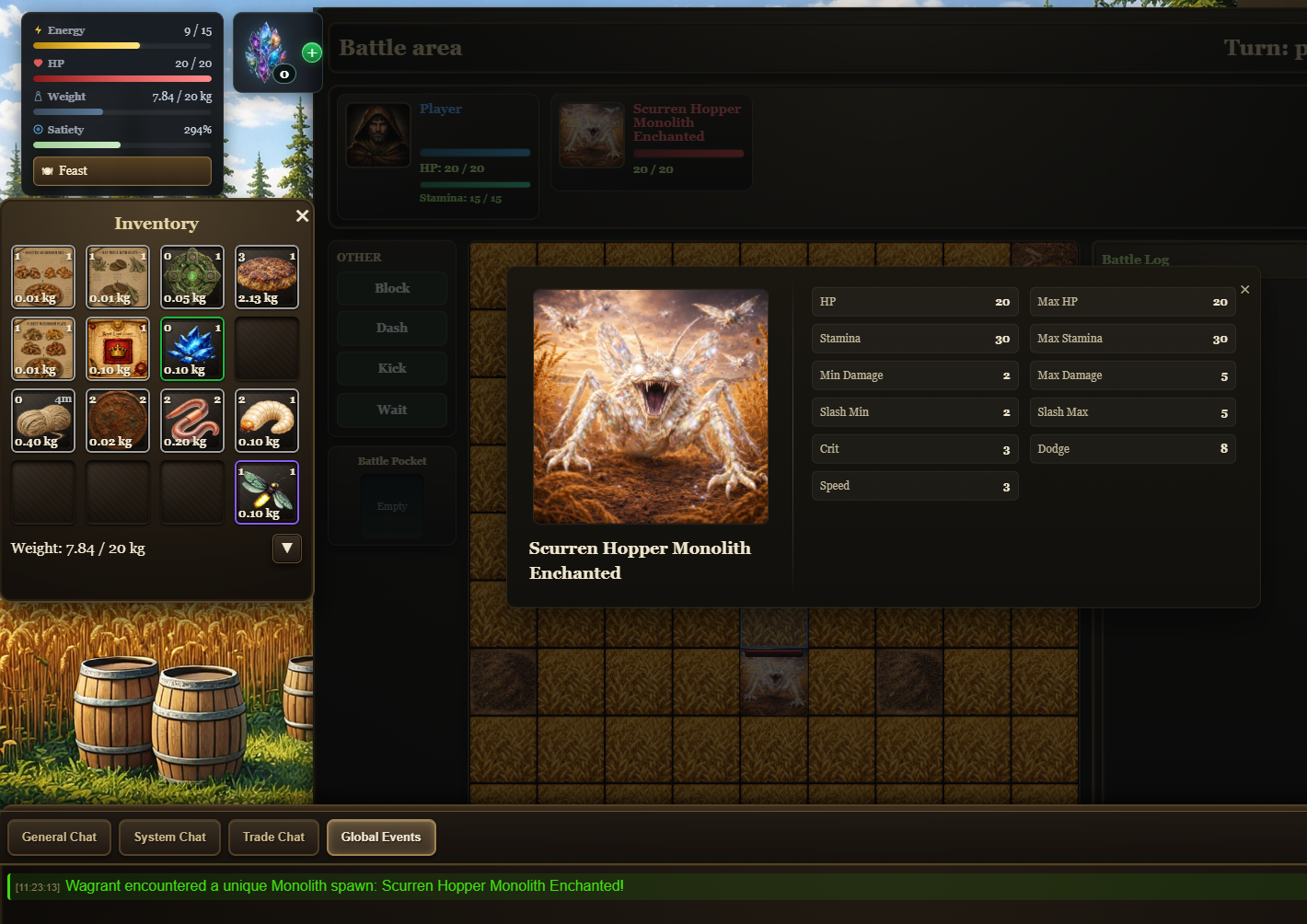
Was deep in testing a huge batch of skill-system changes when I stumbled onto an enchanted creature completely by accident.

I know full well it's just my local test server, and I can't catch it — no shards on me — and honestly I probably couldn't even if I had them, since I'm nowhere near strong enough. But still: my first real encounter, at absurdly low odds. Hard not to grin.

For anyone unfamiliar with how these things work: they emerge into the world out of tumors, but only after devouring the entire contents of one on their own. That ability stays with them afterward — you can feed them fragmented monolithic beings and they'll absorb their skills, potential, and power. This one would make a fantastic leader for a locust swarm guarding the beacon bridge.

the mines got a lot deeper.

Been heads-down on the mining update for a while, and it grew into something bigger than I planned.

Mining used to be "hit rock, get ore." Now it's its own little game. You walk into the cave with a pickaxe, some water, and empty bags, and you dig. But the rock isn't safe everywhere. Some tiles are weak, and if you break into one without bracing it first, the ceiling comes down and you die. You respawn at a monolith, banged up, and your dropped gear is still sitting back in the cave — so you can go get it, if you're willing to head back in before the cave resets for the day.

It ends up playing a bit like minesweeper. You learn to read the walls, work out where it's dangerous, and prop up the risky spots before you dig through them. Lime for the supports is scarce, so you can't brace everything — you have to pick your spots. Harder rock needs a stronger arm and a better pickaxe, which means good food and a blacksmith. And that's the whole idea: mining is the front of a chain now. The miner digs, the smelter melts it down, the blacksmith forges it, the jeweler cuts the gems you turn up. Each one leans on the others. Your worn-out pickaxe even goes back in the furnace to become metal again.

The other half of this update you can't really see, but it mattered more. Skills used to level up in about four different ways depending on which skill it was — a real mess under the hood. I ripped all of that out and rebuilt it as one system. Every skill in the game now grows the same way: quick and generous when you're new, slower the higher you climb, and no hard ceiling — you can keep pushing as far as you've got the patience for. Better materials help too: bring back a rare, high-quality resource and you learn from it faster. Same with the weapon in your hand when you fight.

Smelting and forging are next. More soon.

Quick follow-up to the mining post, because the chain finally reached its far end: the jeweler.

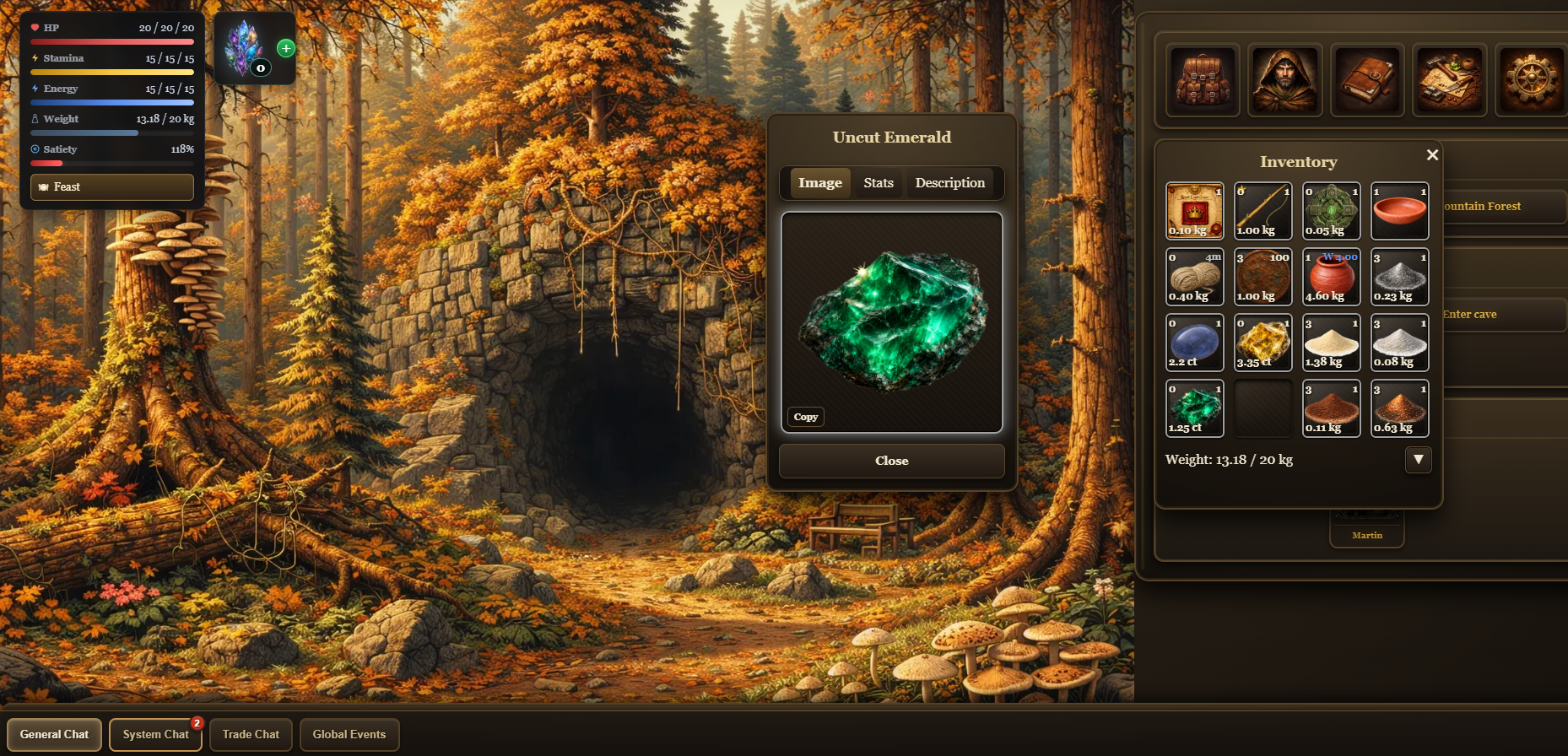
It starts back in the mine. When you wash the rubble you dig out — the same rubble you'd otherwise toss — you sometimes turn up gold, and every so often a raw gemstone. Ruby, sapphire, emerald, topaz, diamond, amber. They're rare, and a rough stone tells you almost nothing on its own. It's a lump. You don't know what's inside until someone who knows stones takes a look.

That's the first job — appraising. A trained eye reads the stone: what it's worth, what it would give you, and how much of it is dull, ordinary, or clear. Because a gem isn't one solid thing. It's got patches of dull and clear scattered through it at different angles, and a good appraiser can see them. A bad one is mostly guessing.

Then you cut it, at a simple bench on your own land. This is the part I like. Cutting isn't "press button, get better gem" — it's carving. You grind away the dull patches to expose the clear stuff underneath, and the clearer the cut, the stronger the stone. But every gram you grind off is weight you lose, and weight is what unlocks a stone's power in the first place. So you're always trading: shave it down for a purer, sharper bonus, or leave it heavy and keep more of what it does. Push too far and the whole thing can shatter into dust — though the dust isn't wasted either, it ends up as pigment. Get it wrong early on and you'll crack a lot of stones. That's the cost of learning.

After that it goes into a setting — a ring, an amulet, whatever you can build — and the metal matters. A rich stone in a cheap setting gets choked; it can only give as much as the setting can carry. Match a good gem to a good setting and it opens all the way up. And what does it give? Depends on the stone. A ruby leans into strength and health, an emerald into agility and dodge, a sapphire sharpens the mind and helps you learn faster. Rings and amulets are how you shape your character beyond just eating well — this is the mid-game, the stuff you chase once you've got your footing.


I've been posting these mining updates piece by piece, so here's the wider picture now that it all clicks together.

The chain is closed. It starts in the mine — you dig, you wash the rubble, you turn up ore, coal, the odd gemstone. The smelter melts the ore down and cleans it into metal. The blacksmith takes that metal and makes your tools and gear. The jeweler cuts the gems and sets them into rings and amulets that actually change how your character plays. And it loops: your worn-out pickaxe goes back to the smelter as scrap and becomes metal again. Nobody in this chain stands alone. The miner needs the blacksmith's pickaxe, the blacksmith needs the smelter's metal, the smelter needs the miner's ore. Four jobs leaning on each other.

Each one is its own thing, not a menu of recipes. Mining is that minesweeper-ish game of reading walls and bracing before you dig. Smelting is hauling ore and coal into a cocoon, feeding it peat, pouring the melt into a mould — and slowly learning to refine metal cleaner and cleaner, which matters more the deeper the game goes. The jeweler's cutting table is the one I keep coming back to: a rough stone hides dull and clear patches at odd angles, and cutting is carving away the dull to expose the clear, trading raw weight for a sharper bonus, one wrong slip away from cracking the whole thing to dust.

Under all of it, one thing you won't see but that holds everything up: every skill in the game now levels the same way. Generous when you're new, slower as you climb, no hard ceiling, and better materials teach you faster. One law instead of the four tangled ones I had before.

Some of this is live, some is still rough, and a few pieces — the forge, the furnace, armor, steel — are scaffolded but waiting their turn. But the shape is here. And honestly, once this settles, it's about half of what I want Runelight to be. The bones of the world are in.


There is a huge amount of work ahead, but I am very pleased with what is already here. I am even afraid to imagine how all this will have to be tested for balancers.

this game looks interestind, does it have elves

Technically, there are no direct races to choose from in the world, but indirectly, other fragments of monoliths (worlds) are approaching the Runelight world (the one where the player appears) that can be raided or established relationships, which means that we can add any race to one of these fragments (worlds), the main thing is to add it beautifully (lore and world). I can't promise an elf race in the near future, but it will still be an event in one of the months.

Well, according to the game's lore, our monolith (what illuminates the Runelight world) is a predator, so we won't be able to play as the elves, we will either destroy their world or help.

I see, your concept looks interesting

An incredible amount of tests behind me, and unfortunately even more ahead. I feel exhausted, but to distract myself, I started working on the visuals and the feeling of combat. I still don't really like the visuals of the creatures, and I even tried to remake them several times, but there are too many images. 5 creatures with 5 evolutions, 3 types (normal, monolith and enchanted) and this is only for one new god, and there are already 5 of them + the event world.

I plan to work deeper into the combat system, reputation and activity. Due to the lack of players, I plan to close access to the game for a while, I will probably share updates after I finish the combat system and darkness. Thanks for your attention, and see you later.

And yea, still no elves here(

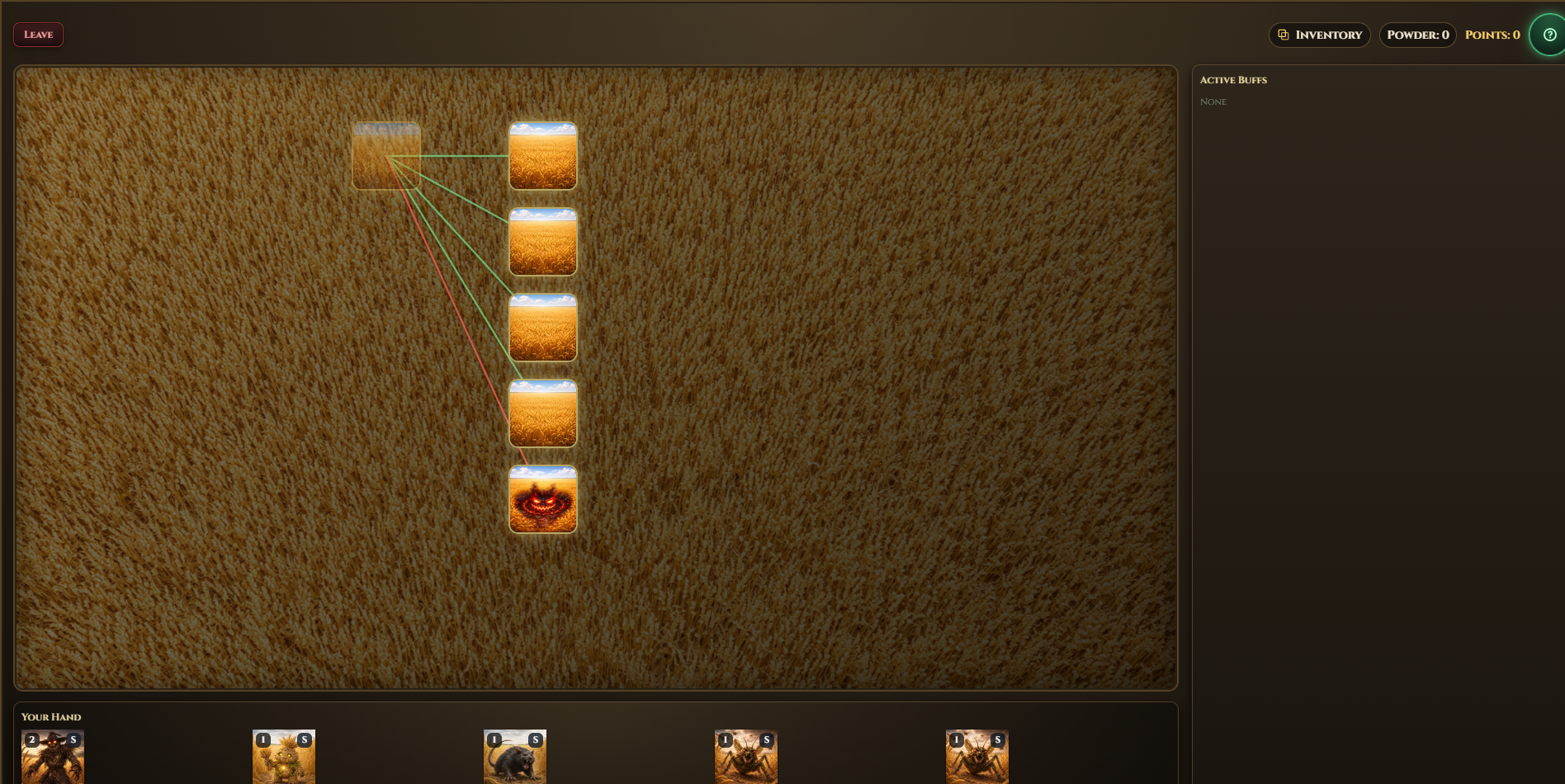
New dungeon map generating system and visual. 

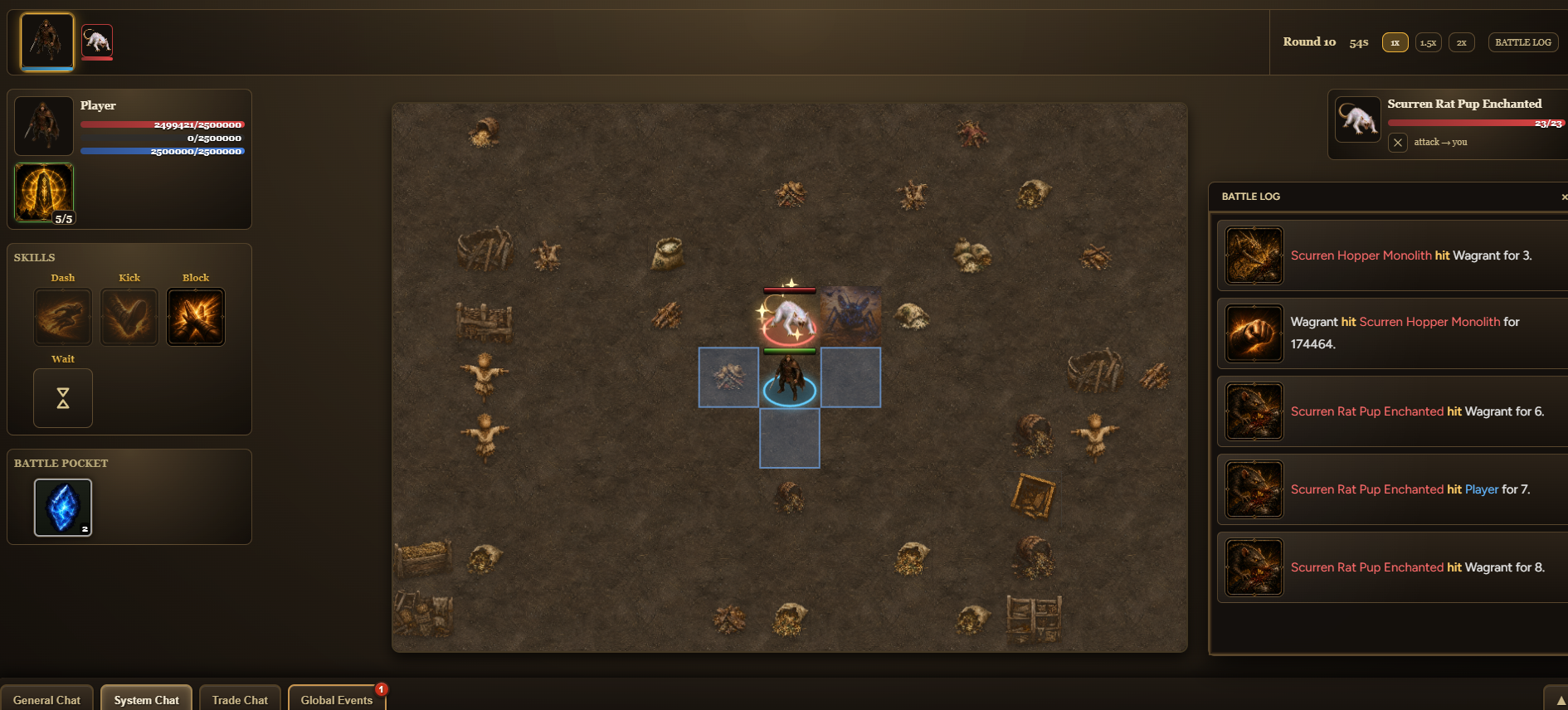
a bit more of new visual and enchanted creature


(+1)

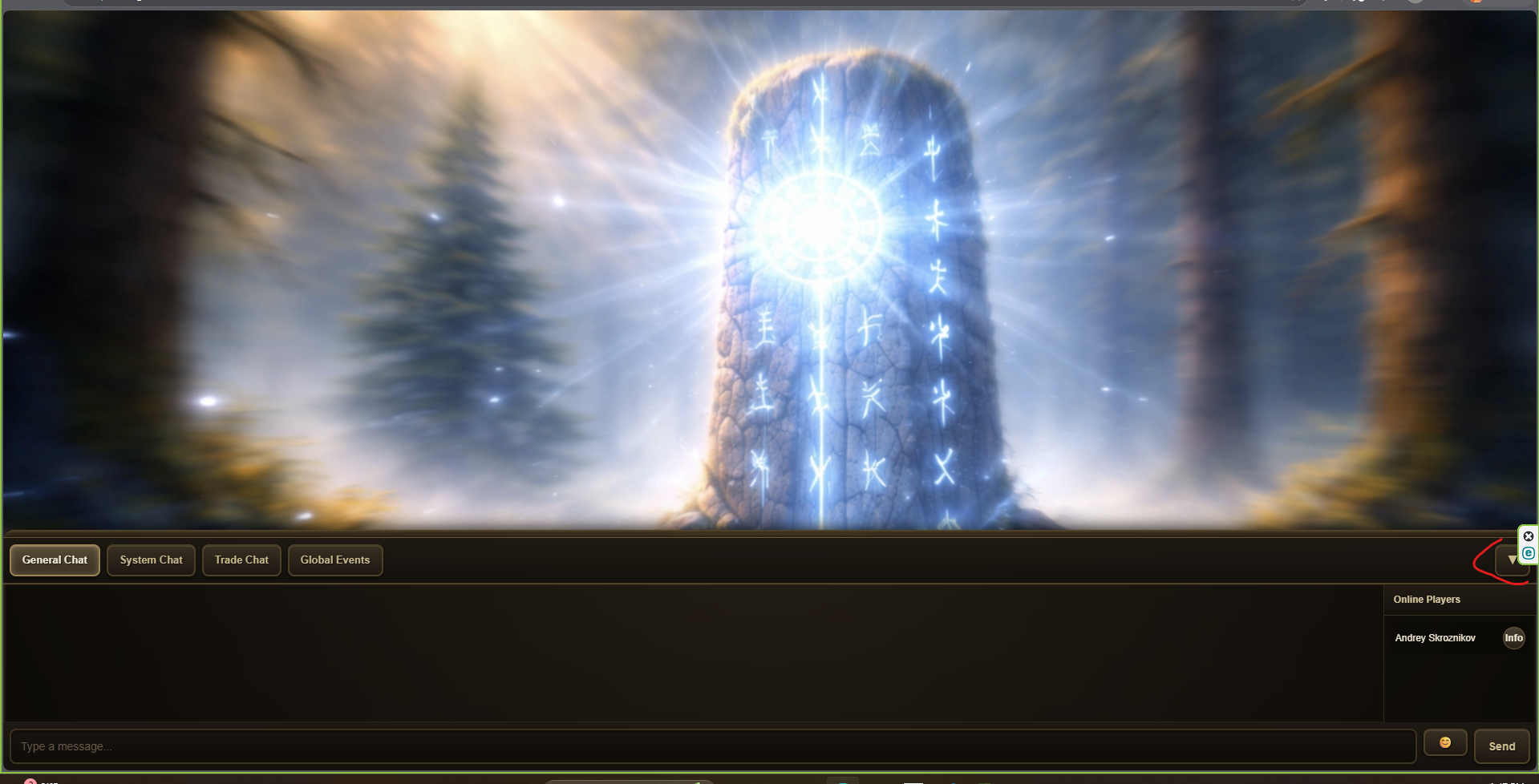
played it for a little bit, the things i liked -> i liked the musical composition and narration, overall polish was good. not sure if the tactical approach to battles was a good design choice, if you have only one character to control this is not really tactics, so this was weird.  Also, progression through the scenes felt to linear, to much hand holding. A map would be a nice convenience feature, having to memorize sequence of scenes to get to a location sounds good in theory, but i think its an unnecessary limitation and an imposed restriction to freedom. Posted a screen shot for an opening scene, took me a while to figure out what to press, or if the first screen was the entire game that didn't load, like how would somebody know that pressing a small downward triangle will progress you further? no tool tips or explanation for the character stats. Scenes where there is an ability to collect resources allow collection once, but then those resources are still showing up as like they can be collected, thats confusing a little bit. If you are doing firebase login i would at least allow a player to set up a nick name, why would anybody like to  be called their real name in the game ?  ......so there ya go :)

(+1)

Thank you so much for taking the time to check out the game.

That small triangle is simply a button for hiding the chat. I have not yet adapted the interface for a wide range of screen sizes, so new players may need to collapse the chat for now. Thank you for pointing this out.

Now, going through your feedback point by point.

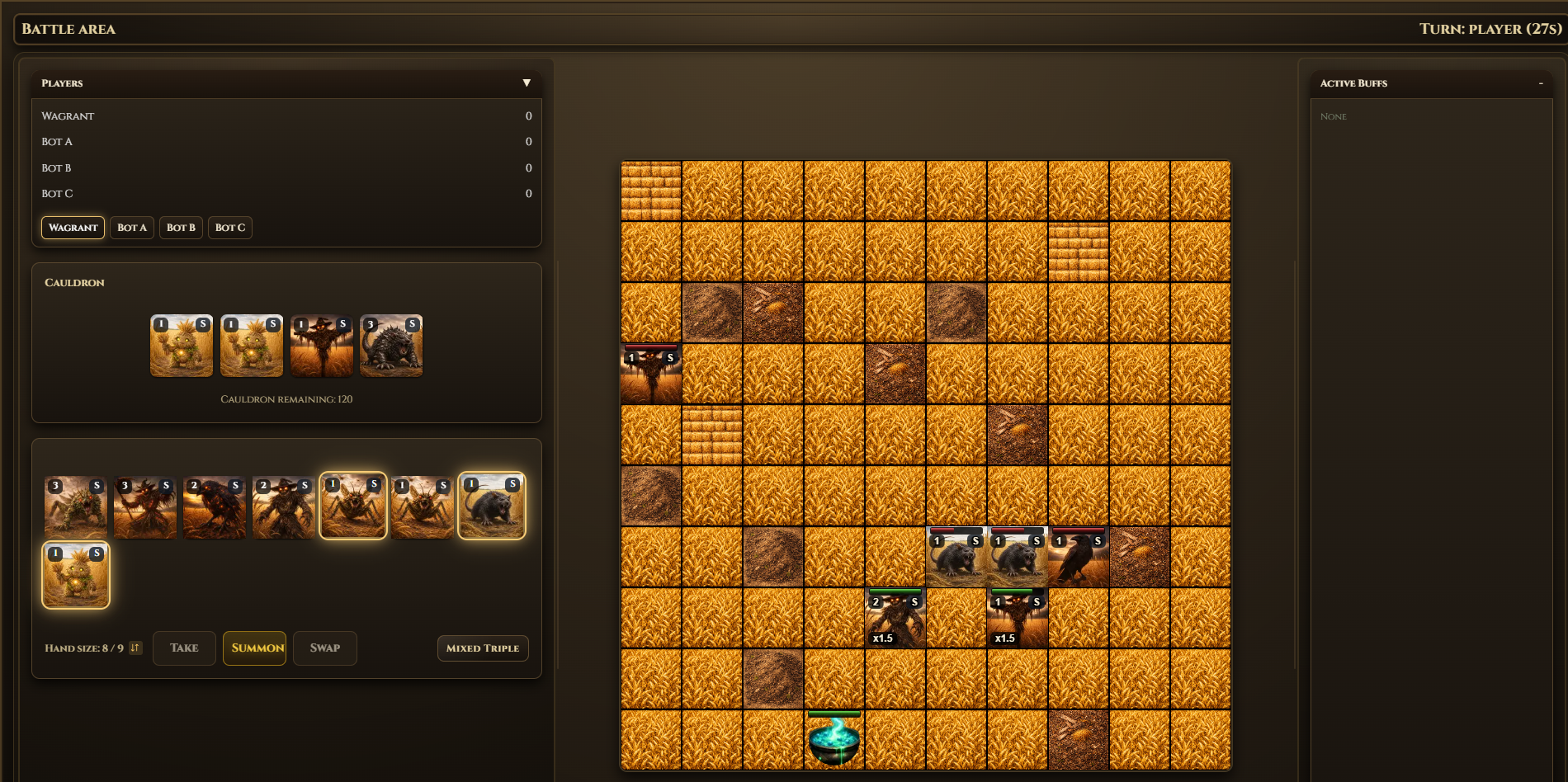
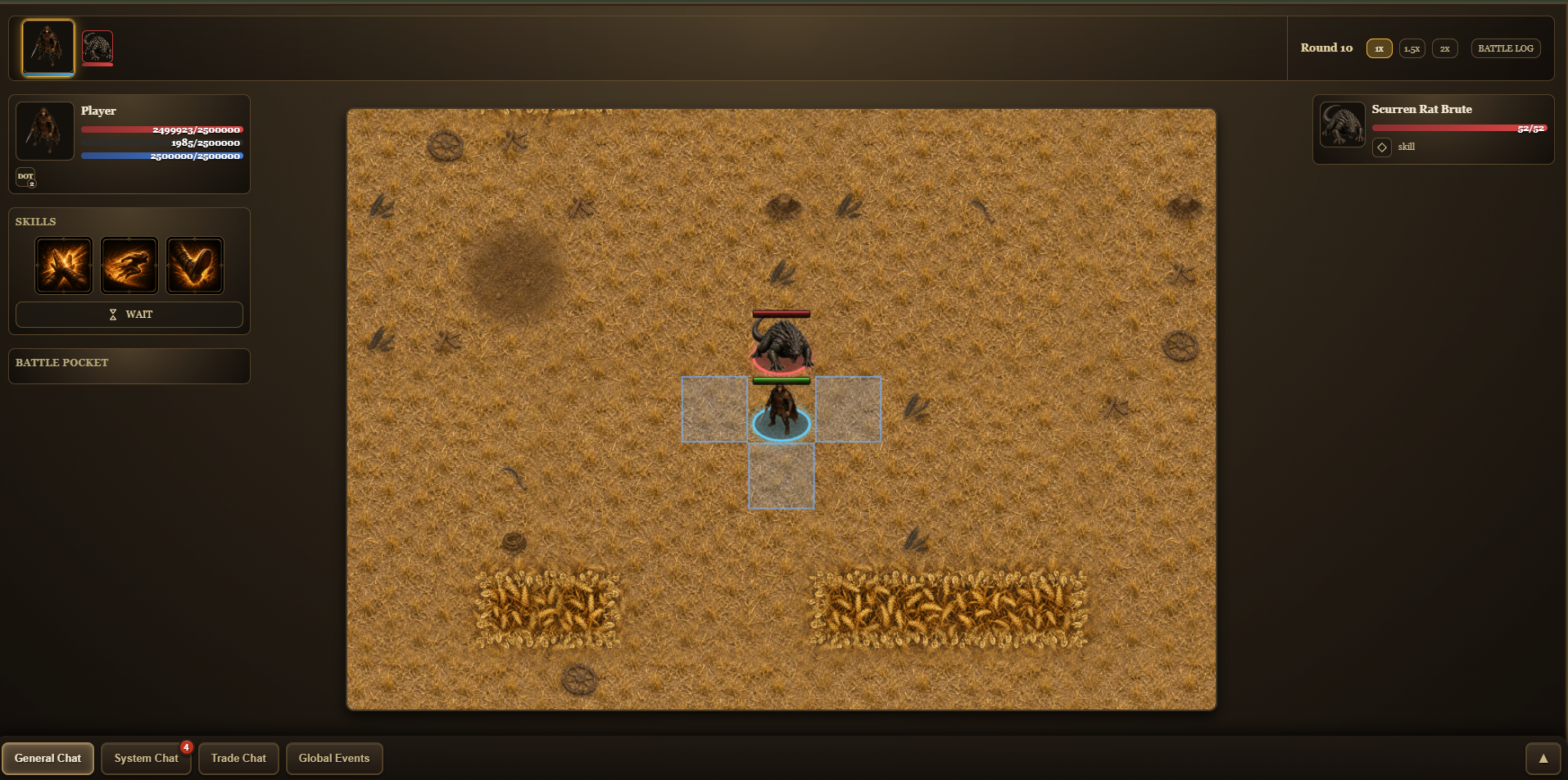
The game has tactical combat, which will be a very important part of the overall experience. The main focus will be cooperative battles where a team of players fights against creatures of the world.

You can also capture Monolith creatures and summon them into battle on your side. You will be able to give them direct commands, which should allow players to create different tactical combinations and strategies.

Regarding changing your nickname: yes, I will add that today. I honestly did not give it much attention because the game is not even in pre-alpha yet, so thank you for mentioning it.

As for the tutorial in general, I completely understand your point. Tutorials are often one of the most annoying parts of games.

However, the main problem is that the game contains a large number of mechanics that are not immediately obvious. I genuinely have not found a better way to teach players the basic actions without some form of tutorial.

This also includes the story quests. There are currently five of them, and together they introduce the player to all the major parts of the game that already exist. They also establish the story behind the global points of interest, which will require teamwork in the future.

At least so far, every tester who tried to play without following the tutorial told me that they had no idea what they were supposed to do.

Regarding attributes, I will add proper descriptions in the future when I work more deeply on the cooking and character progression systems. For now, this is roughly how they work:

Strength

  • Maximum HP: HP = Strength × 5
  • Maximum carry weight: Carry Weight = Strength × 5
  • Increases unarmed and blunt damage
  • Mining: your Strength, together with the tier of your pickaxe, determines which levels of wall hardness you are able to break

Agility

  • Affects turn order in combat
  • Increases dodge chance
  • Increases movement speed
  • Reduces the damage you receive while blocking

Intelligence

  • Determines the number of Find and Study slots: Slots = 1 + floor(Intelligence ÷ 5)
  • It will also be used for working with blueprints, paper, research, and many other systems

Stamina

  • Determines the size of your Stamina Points pool: Maximum SP = Stamina × 5
  • SP is spent on mining, since each swing costs stamina
  • It is also used by combat abilities that have a stamina cost
  • Gathering resources consumes SP as well

Psyche

  • Determines the size of your Monolith Energy pool: Maximum Energy = Psyche × 5
  • Psyche is related to runes, Monolith Energy, and other connected mechanics

I gave you a map, you can open it with a button M on keyboard, or press right button on it, and then use.
There is a search button at the top left, it will help you find resources, but only where you have already explored.

In the second quest, you will have a moment to get acquainted with the hand of god event, at the moment I have only transferred the windmill map to a new visual, but don't let that put you off, there is quite a lot of content if you like the roguelite genre.

It is best to start by going to the Beehive and clearing the first map 100% (completing all nodes); this will unlock the first artifact, enabling you to launch trophy raids, which provide a boost to the entire team.

Name change is available in the character tab.

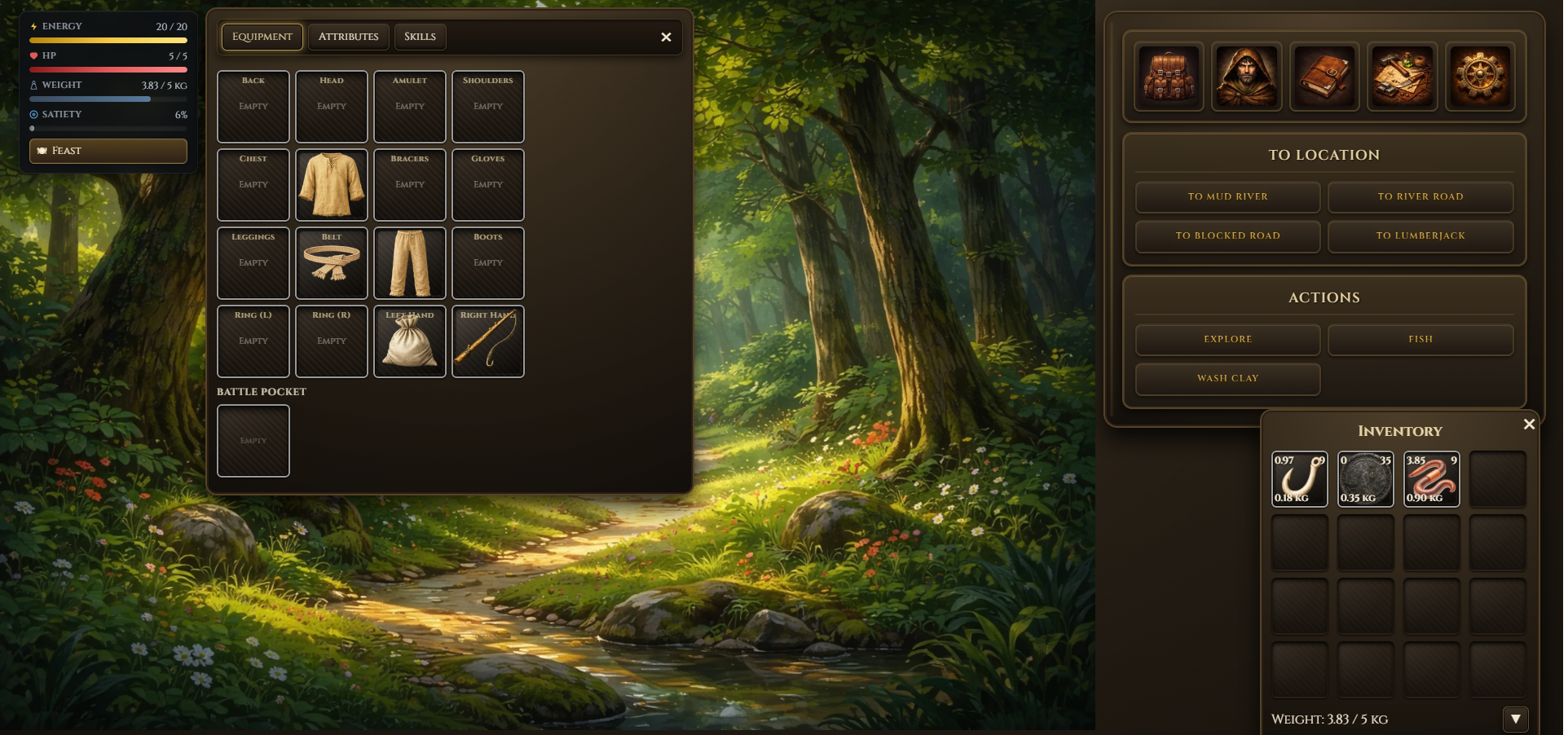
I also recommend trying fishing, to get the idea of creating a fishing rod, you need to find all the parts of the fishing rod in the inventory, you will get the rope from the quest, the stick can be found in the world, and the hook can be bought from the fisherman for rusty copper coins. I am not sure that you will be able to catch fish normally without tutorial, but I promise to add it soon.

(+1)

Ok great thanks, now tactical combat makes sense to me  :)


When the Monolith’s light disappears, the lands are covered in darkness.

Dark creatures can be found in hidden areas of some instances. They can also travel through the darkness, gather resources for the player, and sometimes bring back news from settlements.

Settlements have different levels of darkness. The higher the level, the more mutated the creatures become.

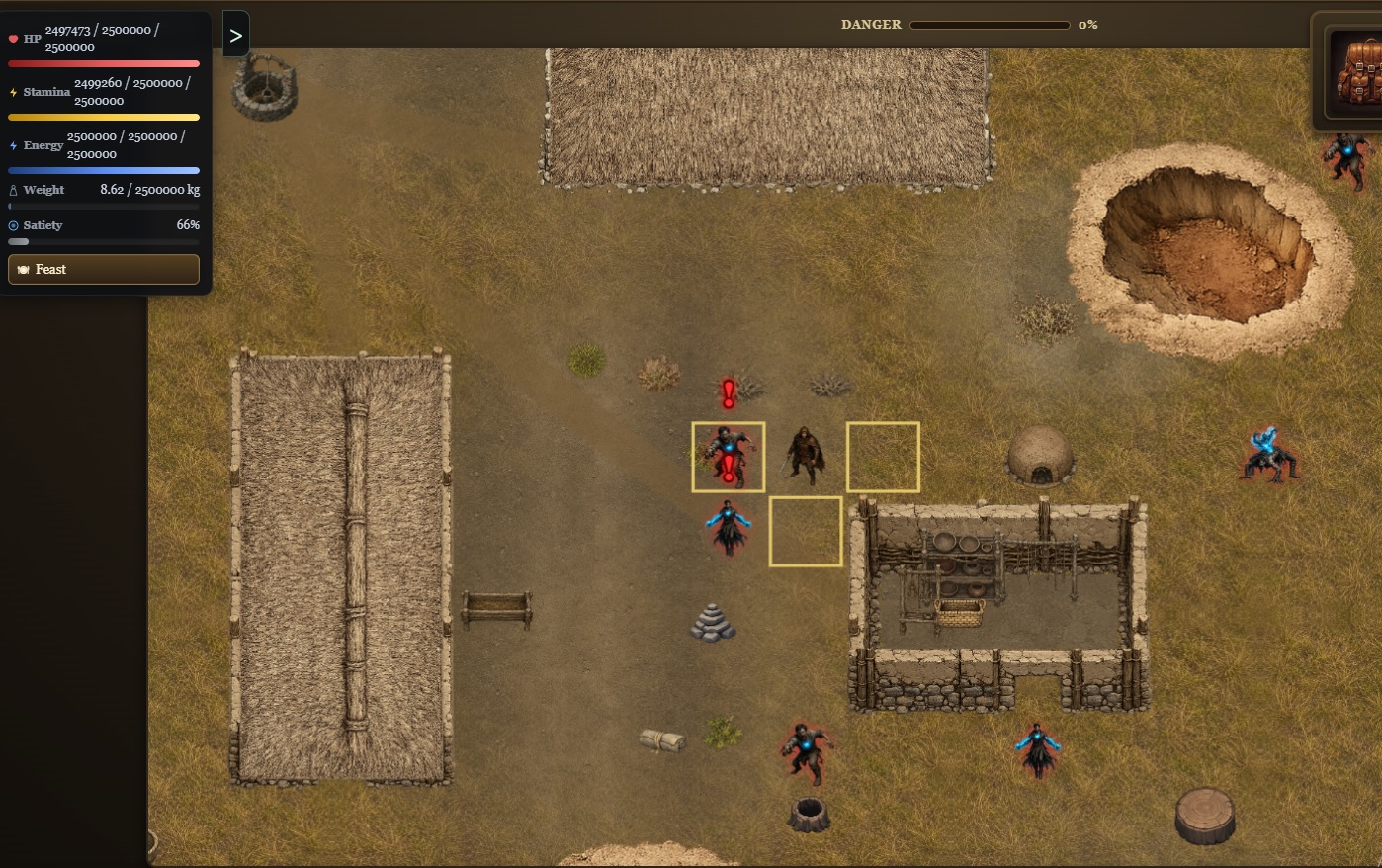
The new instance is quite difficult, but also interesting. Our tester and I could not complete it, but we still managed to get some loot. Our characters are not very strong yet, so that probably made it harder.

Creatures captured in Monolith Shards are very helpful here.

Here is a small preview of the mid progression.