I'm also making a similar game myself, so there were parts I could learn from.
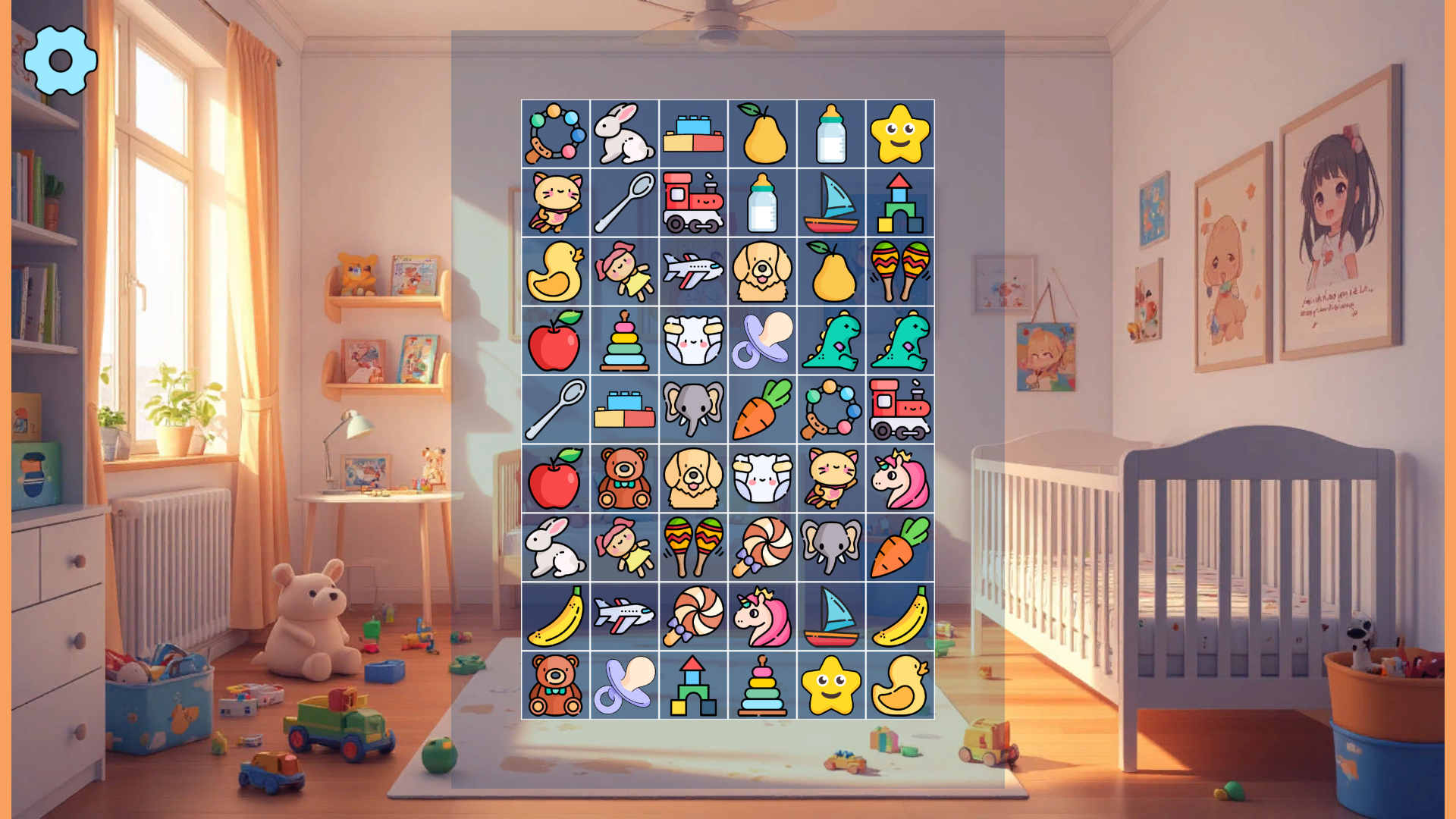
At first, I thought it was Mahjong rules and the puzzles were too hard, but it turns out you can connect tiles if there's a path. The game probably explained that part, but I must have missed it because I got a bit lost initially.
It's impressive how you used AI to create such a consistently well-executed style.
Thanks for the feedback. You're right that the tutorial could have been better. I only made a minimal tutorial on the last day of the jam. And then only because I had mostly completed my other tasks, and I had a little time. Creating an interactive tutorial in the remaining time was beyond my capabilities.
I'm not sure using AI to create this style is such an impressive feat. We can discuss this in a private conversation. Perhaps you genuinely encountered some kind of problem with the AI. Or perhaps I encountered the same problem, but was too stubborn to notice and kept generating images until I got it right.
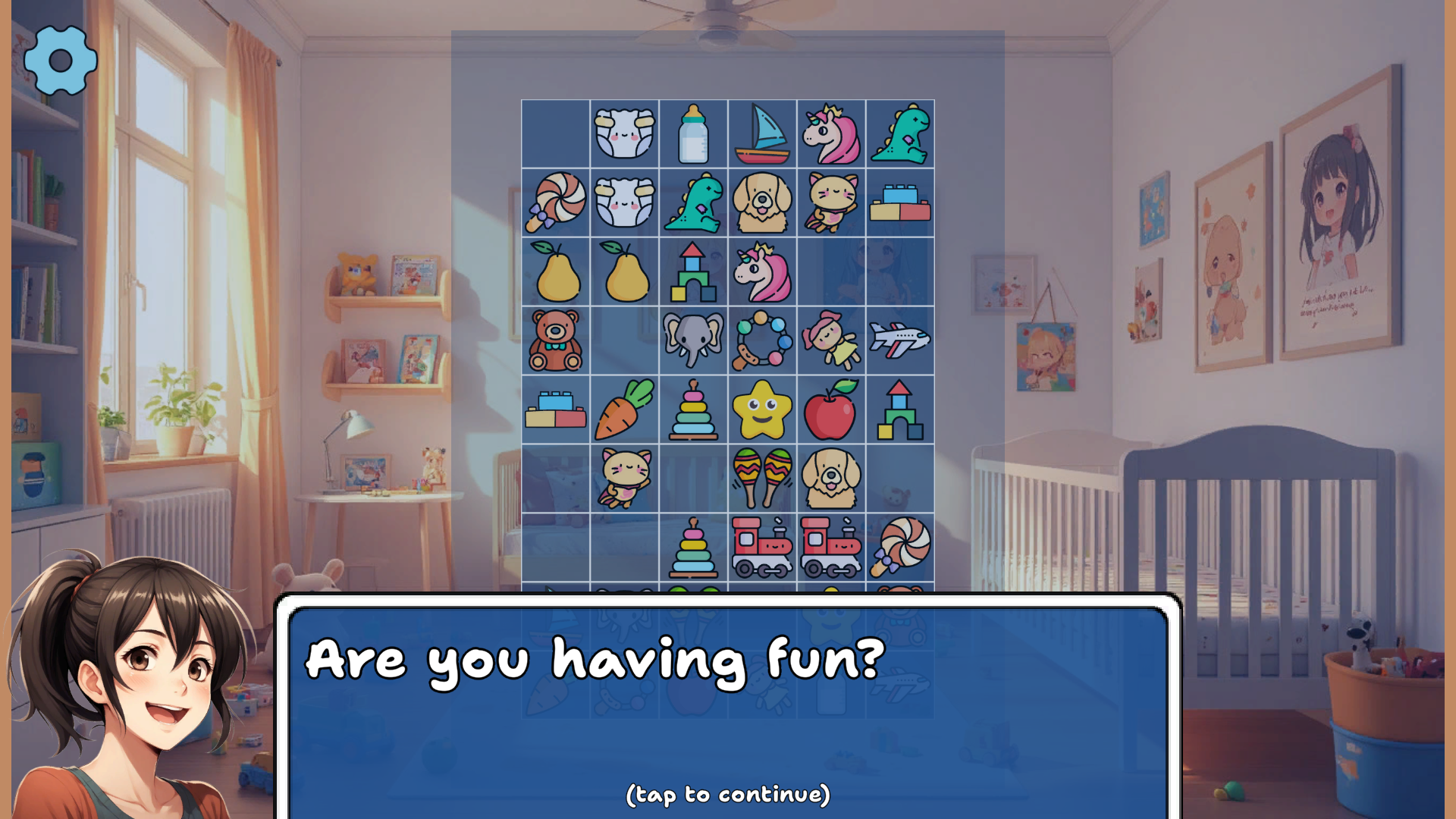
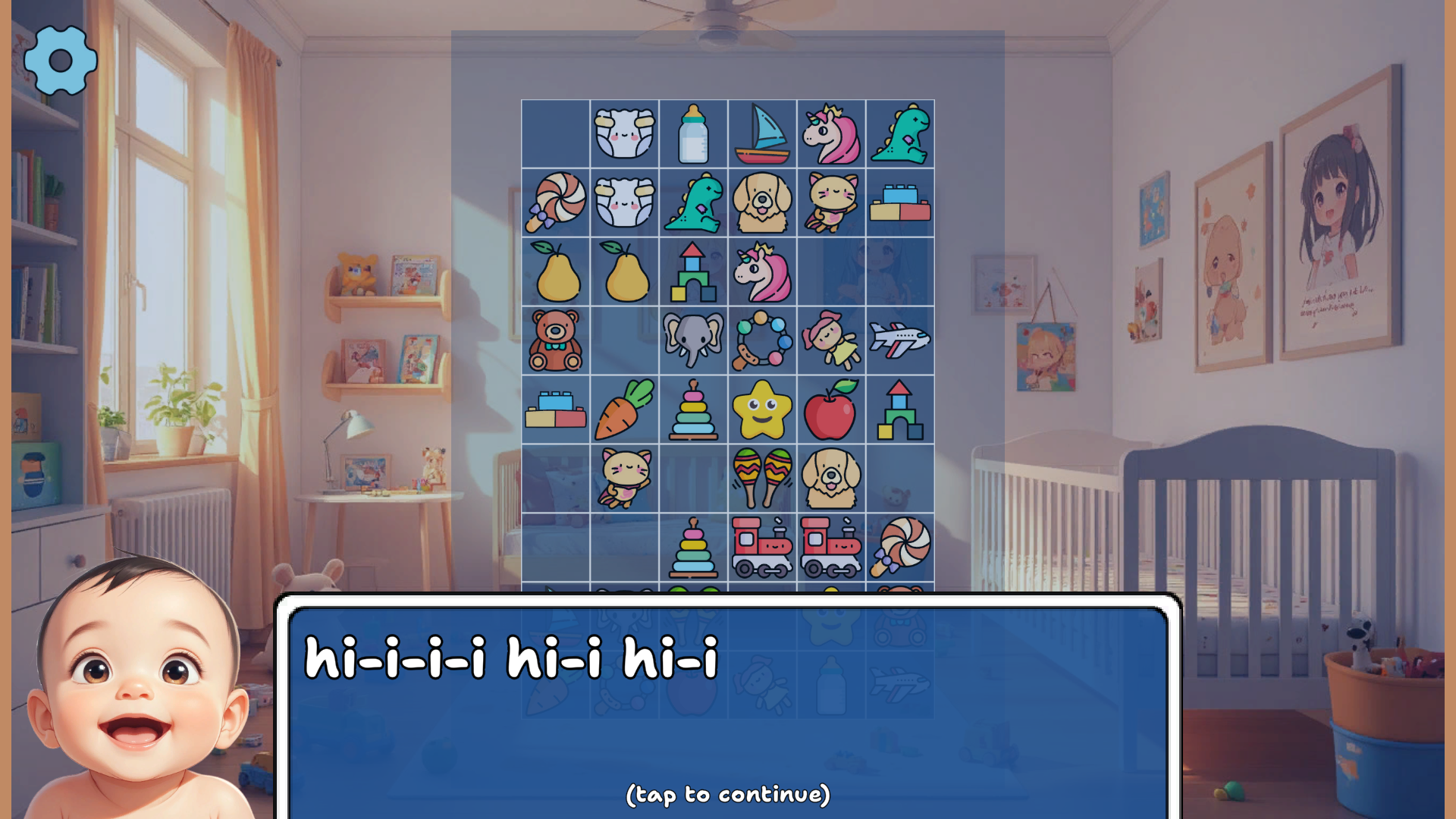
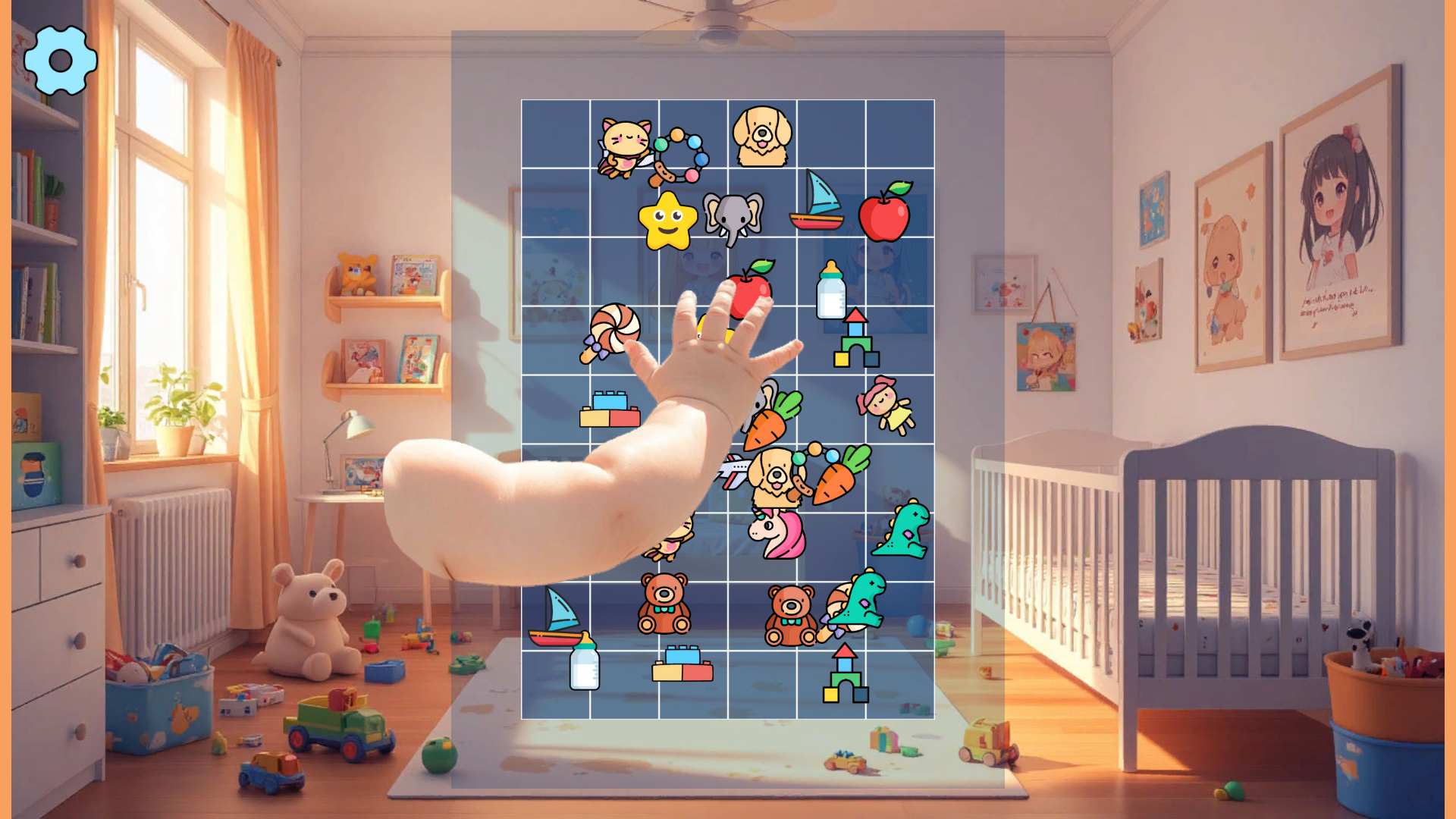
Big fan of the art! Love the 2D puzzle over the 3D background. Even the baby's hand coming into frame to occasionally scramble the puzzle pieces was nice. I came across only one bug, or maybe it was an intentional challenge and I didn't understand why it was happening, but when I would try to match two pieces together every now and then, it would not work until the baby scrambled those pieces. Thanks for the game!
Thank you for your feedback. You can't interact with the board until your turn is over.(Until the chip is moved and removed from the board and until the child's intervention is complete.)
I understand that you want to connect the next pair as quickly as possible. I can unlock this feature (for those cases where the child isn't expected to intervene unexpectedly after a turn). And frankly, it will require a huge amount of work.
You've made me think that the player needs to be visually shown that chips are being moved and that they can't interact with the board. It's obvious, but I wasn't thinking about that when I created the game. Thank you.



Comments
I had a lot of fun playing.
I'm also making a similar game myself, so there were parts I could learn from.
At first, I thought it was Mahjong rules and the puzzles were too hard, but it turns out you can connect tiles if there's a path. The game probably explained that part, but I must have missed it because I got a bit lost initially.
It's impressive how you used AI to create such a consistently well-executed style.
Thanks for the feedback. You're right that the tutorial could have been better. I only made a minimal tutorial on the last day of the jam. And then only because I had mostly completed my other tasks, and I had a little time. Creating an interactive tutorial in the remaining time was beyond my capabilities.
I'm not sure using AI to create this style is such an impressive feat. We can discuss this in a private conversation. Perhaps you genuinely encountered some kind of problem with the AI. Or perhaps I encountered the same problem, but was too stubborn to notice and kept generating images until I got it right.
The music fits the game just perfectly. Really liked it. Nice game overall!
Really loved the art of the game and the music fit well with it. Good Job!
Thank you. I also think this music and art are a great combo.
Big fan of the art! Love the 2D puzzle over the 3D background. Even the baby's hand coming into frame to occasionally scramble the puzzle pieces was nice. I came across only one bug, or maybe it was an intentional challenge and I didn't understand why it was happening, but when I would try to match two pieces together every now and then, it would not work until the baby scrambled those pieces. Thanks for the game!
Thank you for your feedback. You can't interact with the board until your turn is over.(Until the chip is moved and removed from the board and until the child's intervention is complete.)
I understand that you want to connect the next pair as quickly as possible. I can unlock this feature (for those cases where the child isn't expected to intervene unexpectedly after a turn). And frankly, it will require a huge amount of work.
You've made me think that the player needs to be visually shown that chips are being moved and that they can't interact with the board. It's obvious, but I wasn't thinking about that when I created the game. Thank you.