Introduction
We are going to dive into a classic yet experimental RPG adventure called Chronicles of Ekoris.
Chronicles of Ekoris is a turn-based RPG that balances familiar genre tropes with a bold, experimental structure. With three distinct chapters, each offering its exploration style, the game invites players on a journey that is as much about storytelling and world-building as it is about combat and strategy. The game provides a minimum of 10+ hours of content which heavily focuses on dialogue and exploration as well as combat. Here's an in-depth look with spoilers at how Chronicles of Ekoris delivered on its promise.

Chapter 1: Experimental Beginnings
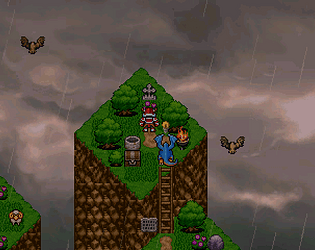
The first chapter of Chronicles of Ekoris introduces players to the world with a mix of traditional RPG elements and experimental game-play features. This chapter's charm lies in its variety; players will encounter a Map System, a Library, and a Monster Museum, all of which serve to enrich the player's sense of exploration and discovery. The inclusion of a journal system exclusive to this chapter is a helpful tool, allowing players to keep track of the story, side quests, and the many NPC interactions.
This chapter features objectives such as: “clear the five towers”, as well as visiting various villages with quests of their own. Each NPC has its own dialogue that adds depth to the world of Ekoris. There are not many side quests, but they give you more information and rewards, so it's worth doing them. However, some players may find the experimental elements a bit jarring, as the plethora of features can feel overwhelming and not all are fully explained or utilized to their full potential. The chapter ultimately sets the stage for the rest of the game but can feel disjointed as these features are not carried forward into subsequent chapters.

Chapter 2: Urban Odyssey in Kadora
The second chapter marks a significant shift in both game-play and tone. Moving away from the experimental variety of Chapter 1, players find themselves in the sprawling city of Kadora. This is a massive urban environment divided into four distinct districts. This chapter offers a linear and story-driven experience. The city is populated with over 100 NPCs, each contributing to the rich tapestry of the game’s lore.
The linear nature of this chapter makes it easier to follow, but some players might miss the more open-ended exploration and features of Chapter 1. The focus on dialogue and story here is immense, with fewer opportunities for combat. This can be a refreshing change of pace, though it may not appeal to players seeking a more action-oriented experience. However, the lack of major game-play mechanics from Chapter 1 could leave players wondering about their relevance to the overall narrative.

Chapter 3: Dungeon Crawler Finale
The final chapter takes another turn, dropping players into a dungeon-crawling adventure. This story-line consists of three massive dungeons: A Castle, A Tower, and A Cave. This chapter returns to more traditional RPG game-play, focusing on combat, strategy, and progression as players prepare for a climactic final battle. The switch to dungeon exploration feels both familiar and satisfying, giving players plenty of chances to grind, pick up stuff, and test the game's combat system.
The chapter builds towards an end boss fight that promises a dramatic conclusion. However, instead of neatly wrapping up the story, the game ends on a cliffhanger, leaving many plot threads unresolved. While this can be frustrating for players hoping for a complete resolution, it does leave the door open for potential sequels or additional content.
The dungeon designs are complex, with multiple paths, though some areas may feel repetitive or narrow. The challenging, tedious combat encounters can feel overwhelming. However, it does provide a good mix of enemies that require strategic thinking rather than brute force. For players who enjoy the grind, there are plenty of opportunities to level up and optimize their party for the final confrontation.
The character development for Mitsugi and Amara
Mitsugi is the main character of this story. He is a knight and descendant of a legendary warrior, which happens to be his grandfather's name, Tenzing. He is currently following the footsteps of his father and grandfather. Furthermore, he is on a mission to find out what happened to his home world, Ekoris. He is the most fleshed out from the rest of the characters moving forward.
Amara is a supporting character and friend who helps Mitsugi in his journey. She is a mage whose role in this story is incomplete. The dialogue given has shown there was a back-story brewing to be fully fleshed out. She takes after her grandmother, who was also a mage, and made it her mission to learn more about herself. However, it didn’t succeed in giving us the audience a full picture of how far she could have gone with her story.
The character development for Tirveg and Ysmene
Tirveg is a supporting character and friend who helps Mitsugi in his journey. He is an Ice Wyvern from the North of Ekoris whose role in his story is incomplete. It seems his role was written to be a mediator between humans and creatures, but isn’t often utilized. He isn’t fleshed out as much as the others, but rather treated as a side character. He could have been given more opportunities to expand his role further.
Ysmene is a supporting character and ally to Mitsugi in Chapter 2. She is a Paladin who serves to protect the Queen and the Land of Ekoris. She belongs to an elite guard force called The Onyx Rose. Furthermore, she is utilized just as much as Mitsugi in terms of storytelling and game-play to a certain point. She is considered the most fleshed out because there isn’t any mystery left to explore about her.
The character development for PlumBug
PlumBug is a supporting character and ally to Mitsugi. She is a Magic Fairy whose role is to aid Mitsugi on his journey. She appeared one day, being told she was sent to aid him, but she cannot say why. A mysterious fairy which, unfortunately, not much is known about her. She is extremely under-utilized in terms of play ability and story-telling. Even though she joins your party, it's only for a brief time until she is replaced. She needs to be provided opportunities to expand her role and make her a more integral part of the narrative.

Development with Landscape and NPC
With over 200 maps, Chronicles of Ekoris is a game that rewards the player for thorough exploration. The game has many places to visit, from small houses to a big city called Kadora. However, the sheer number of maps can sometimes feel overwhelming, and not all of them are equally engaging. The residential districts in Chapter 2, for example, might feel narrow like a mouse in a maze.
The developer has put significant effort into ensuring that each NPC adds value to the story or world-building. The dialogue is written sufficiently to provide players with insight into the history and culture of Ekoris. However, the sheer volume of NPCs, especially in Chapter 2, can make it easy to miss key conversation. Often times you will be given the next story objective with a destination without the function to replay the message, so taking notes is a must in this game.
Final Thoughts
Overall, Chronicles of Ekoris is a game of highs and lows, bold in its ambition but sometimes uneven in execution. Its experimental spirit makes it stand out, and with more polish and cohesion, it could be a great title in the indie RPG scene.
itch.io is an open marketplace for independent game creators. It's completely free to upload your content. Read more about what we're trying to accomplish and the features we provide.