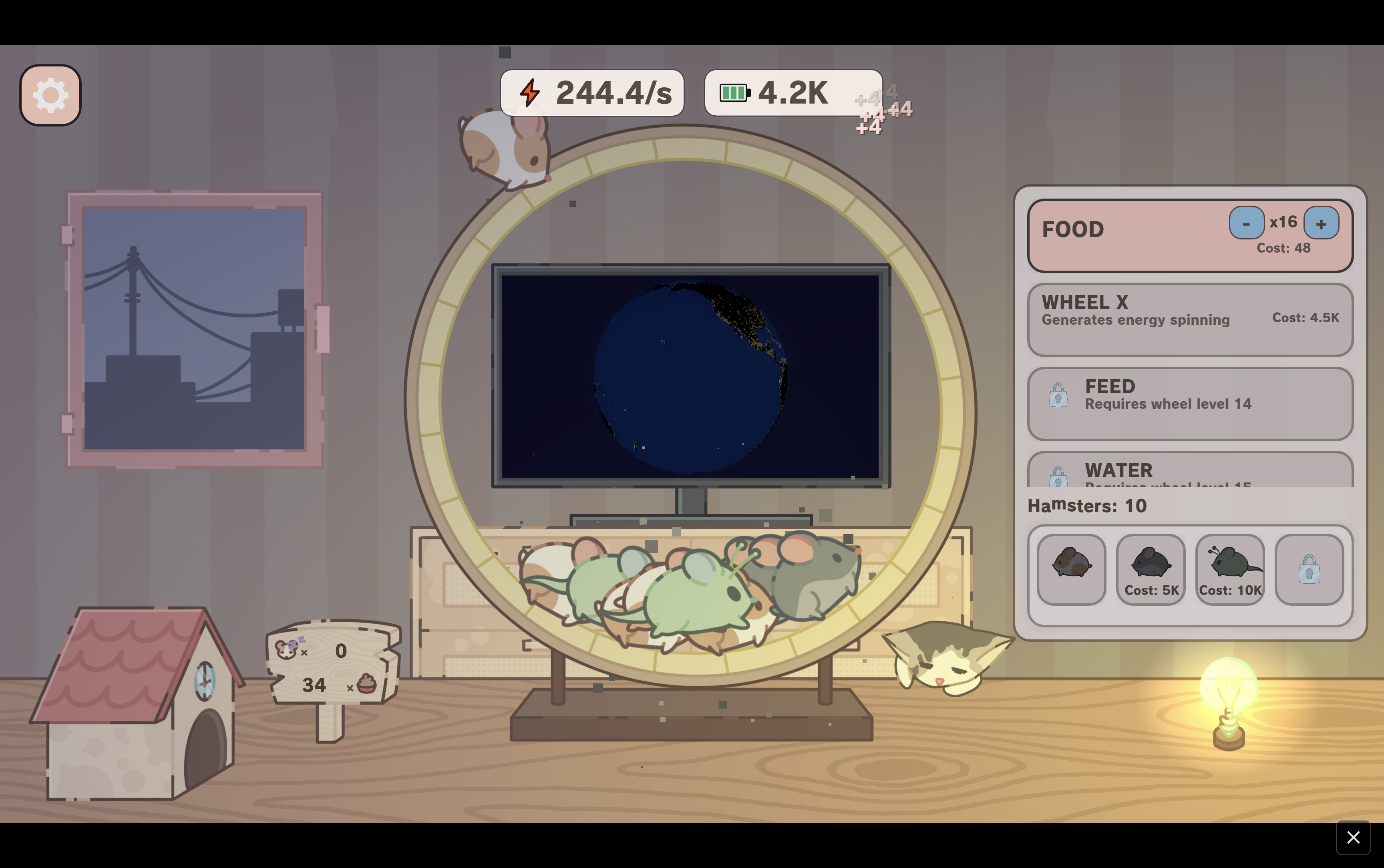
Definitely the cutest entry! I liked the variety in hamster designs. Not really an idle game, a lot of clicking/dragging involved. I do wonder if it’s necessary; maybe clicking could be restricted to managing resources, and the hamsters would do everything on their own. I did not quite get how long hamsters can work before exploding, so I was very careful with the cat. Ultimately, I did not have enough patience to see it through to the end, but I appreciate love and creativity! My favorite moments were when they tried to escape the wheel but kept on spinning anyway.
RubyBit
Creator of
Recent community posts
I found the visuals a bit inconsistent: the planets and backdrop lean into a realistic vibe alongside the scrollable 3D solar system, but the UI is pixel art and the alien avatar is very cartoony. The team is definitely capable of producing high-quality visuals, so it would help to have more direction and to spend some time on a solid gameplay loop.
Clever idea, polished art, and a lot of content! I’ll never look at my washing machine the same =) I get that the feeling of panic is the intention, but it makes it hard to think about the strategy and pick the right consumable in the moment. There are many systems and parameters, so it’s a bit overwhelming at first. Overall, a very strong concept and execution!
Thank you for playing! Difficulty is the hardest thing to nail when it comes to puzzles, and trial and error is definitely a viable strategy. I tried different options with controls, and this switch mode situation is indeed annoying, but I couldn’t find a better way to handle it in touch (and with keyboard+mouse, you can switch with a quick button press). Thank you for playing and the detailed review!
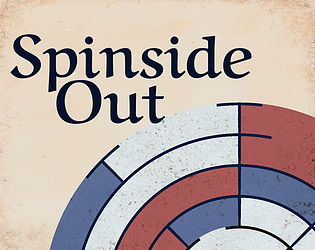
That’s some serious spinning! The time goals were spot on, and I liked the clean visuals. I would make the base speed a bit faster and add a restart button. This could work really well as a multiplayer game because of how chaotic it can get! Had to stop because my wrists got tired, but might try the rest of the tracks later. Strong entry!
An impressive number of systems that seem to go deep and work quite well together. It’s also hard to get a grasp on all of them. I wish there were a way to read the tutorial because it’s impossible to remember all the controls. The game ended for me when I ran out of fuel (it was outside combat). I guess you can’t do anything at that point? Music is definitely the highlight
Cool game! My favorite part is mid-air kills; I would give them some more juice!
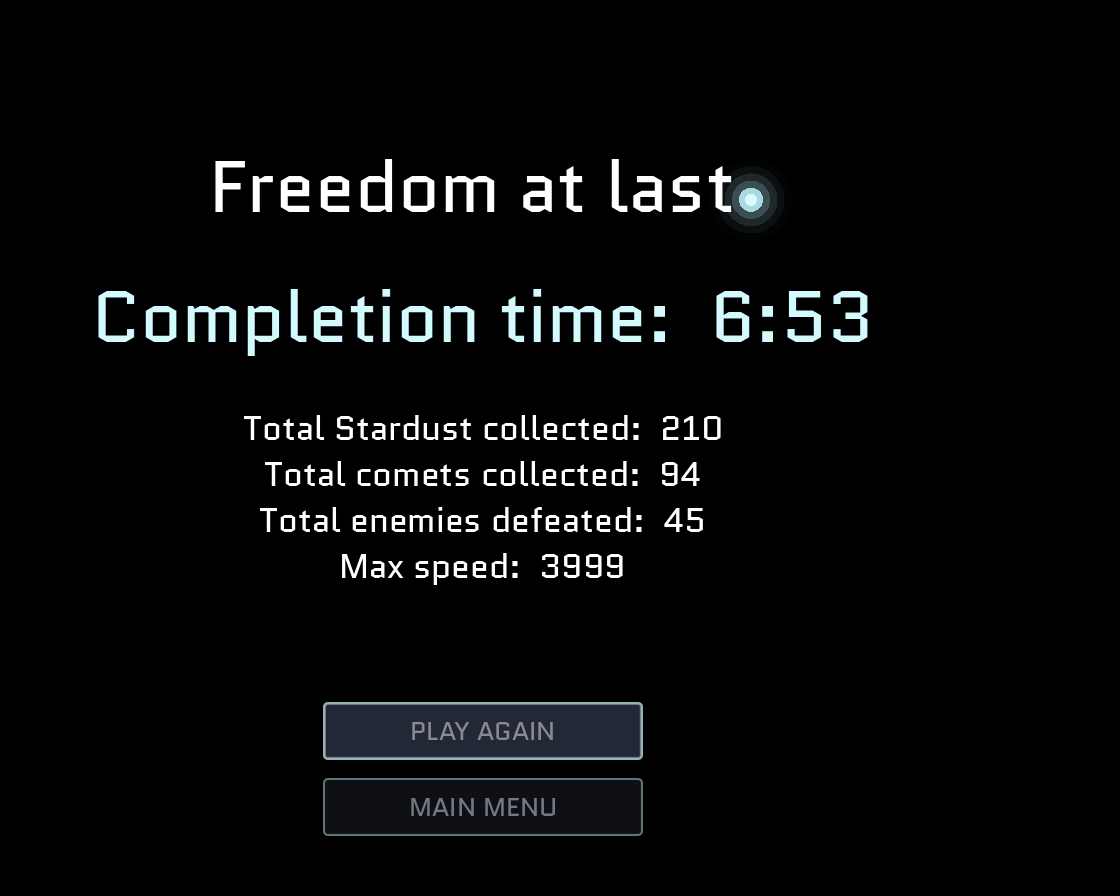
I didn’t quite understand what the comets do (the comets are blue rings on the outer orbit, right?), and the game felt on the easier side. I felt too powerful too quickly, even though my reaction isn’t great, and I had quite a lot of misses.
Visuals and audio are top-notch! And the title is super clever!
Thank you for playing! I definitely needed more playtesting to nail the onboarding, it’s a weaker point of the game for sure. The learning experience you are describing was kind of my intention: experiment at early stages, analyze the solutions that worked, replicate the results in the following level. So a post-game version with more content would have new sections of puzzles that would require a different strategy to succeed. I’m very happy you ended up enjoying it and playing through the end!
I liked the music, art, and overall simplicity of the concept. A lot of variety in levels as well!
I am not sure that removing orbit “notches” later on is the right move, since it just makes the puzzle more tedious rather than mechanically different or logically difficult. You have no way to see which planets a signal can potentially reach (if there is a way, then I missed it) and are forced to spend a lot of time looking for those potential alignments.
So I stopped playing after Cancer, though I am curious how the puzzles evolve later in the game.
I like the visuals and atmosphere, but I feel like it’s too difficult. I read the comments, and I get the idea of it becoming easier as you gather upgrades, but if I am only able to travel a couple dozen meters in my first several runs, I don’t really feel motivated to play more (and it does not help that I physically can’t because my wrist has to take a break). Still, an interesting concept and a strong art direction!
An easy recommendation for every first-time game developer!
After spending some time working on a prototype for my game, I started to feel that something was wrong with the process, and I was not sure where to take it next. After reading the book, I now understand that I have started building features and mechanics without fully identifying the fun (or “the toy”). I gained a new perspective on development that I will use across my projects going forward.
The book’s language is simple, the content is properly structured, and the concepts are well articulated. It cites other useful resources and references them diligently, allowing the reader to dive deeper into each topic.
One thing I missed is concrete examples of games in different genres for paper prototyping and the process of “finding a toy”. The limitations of paper call for creative solutions that a beginner might struggle to identify. Same as for “finding the toy” since the fun in one’s favorite games can be hard to pinpoint and stems from a combination of mechanics (or various moments in the game) rather than a single thing. Still, the author provides helpful pointers on how to explore these topics more deeply, and introducing these lesser-known concepts is already of huge value.