Indie game storeFree gamesFun gamesHorror games
Game developmentAssetsComics
SalesBundles
Jobs
TagsGame Engines

RATASOFTWARE.INC

130
Posts
26
Topics
73
Followers
20
Following
A member registered May 07, 2025 · View creator page →

Creator of

Recent community posts

The game sits somewhere in between those two extremes...

 The player has freedom to explore and interact with the environment, but progression is still driven by discrete narrative events and choices rather than fully systemic gameplay.

Because of that, I’m leaning toward balancing around player agency:

  • If an action is clearly optional or risky, the negative impact can be higher.
  • If an event is required to progress, its effects should be softer or at least partially offset elsewhere.

I’m thinking of adjusting the balance per context, depending on how much control and information the player has at that moment...

Hi everyone!

I’m currently working on a narrative-driven game where the player can lose in four different ways:

  • Depression
  • Fear
  • Injuries
  • Madness

Each of these stats can be accumulated up to 5 points. If any of them reaches 5, the player loses the game.

My question is about balancing:

How would you balance the events that increase these values versus the events or objects that reduce them?

For example, when it comes to madness: how many events or items that reduce madness would you include compared to those that increase it, so the game doesn’t feel too easy or too punishing?

Would a 50/50 ratio make sense? Or would you lean towards something like 60/40, scarcity-based healing, contextual recovery, etc?

I’d love to hear how you would approach this from a design perspective.

Thanks in advance for your insights!😘

Welcome!!! 😁

Thank you very much for taking the time to write such a detailed comment.

I really appreciate the honest and thoughtful feedback.

You’re absolutely right about the visual focus. I’m actually in the process of tweaking the image right now to make the valve feel more realistic and better integrated with the overall aesthetic of the game, and I’ll also try to improve the visual hinting so it doesn’t compete so much with the light on the left.

I chose a circular valve mainly because I really like the rotation effect in RPG Maker (it’s surprisingly tricky to get right) and the sound feedback when it turns, but I agree it needs to feel more coherent and grounded within the scene.

Your explanation about real valves is also very interesting, especially the note about cavitation. I wasn’t aware of that phenomenon, and I’ll definitely look it up and reconsider the sound design to make it subtler and more believable.

Thanks again for the great feedback, it’s genuinely helpful!!!

It sounds really great!. 

At the moment, I have a project still in development, but I hope to have something more tangible later this year.

Once I reach that stage, I’ll definitely be looking for some serious playtesters, so your timing and skills could be a great fit. In the meantime, you’re welcome to check out the project and follow it if it looks interesting to you. I’ll post updates as soon as there’s something ready to test.

https://ratasoftwareinc.itch.io/nightmare-in-san-vicente

Thanks again for reaching out!

Thanks a lot for share your oponion, i will try your idea!! 😉

Hi everyone!

I’d love to get some feedback from the community on a small environmental detail I’ve been working on for my game.

I recently created a stopcock / water valve located in the old water tank of San Vicente, which is part of the main map of my project. It’s a very simple interactive element, but it plays a role in the atmosphere and exploration flow, so I wanted to make sure it feels right.

What I’m mostly interested in knowing is:

  • Does it look smooth and natural within the map?
  • Does it visually fit the environment and art style?
  • Does it break immersion in any way, or does it feel believable?
  • Does the scale, placement, or interaction feel off to you?

Sometimes when you’re deep into development, it’s hard to tell if something works well or if you’re just used to seeing it. That’s why outside eyes are super valuable to me.

Any kind of feedback is welcome: visual, technical, or even just gut feeling.
Thanks a lot in advance, and feel free to be honest 🙂

Hi everyone!

I’m curious about how we players feel about narrative in games, especially in smaller indie titles.

As a developer (and also as a player), I often wonder where the balance really lies. On one hand, narrative can be a powerful tool: it gives context to the world, depth to the characters, and emotional weight to the player’s actions. A well-written story can turn a simple mechanic into something memorable, or make a quiet, minimal game resonate long after it ends.

On the other hand, I know that not everyone enjoys reading large amounts of text in games. Some players feel that too much dialogue or exposition slows the pace, breaks immersion, or starts to feel like they’re reading a book instead of playing a game. Especially today, with so many short-form experiences and gameplay-driven projects on itch.io, I imagine preferences vary a lot.

So I’d love to hear your thoughts:

  • How important is narrative to you when playing a game?
  • Do you enjoy reading dialogue, notes, journals, or lore if it’s well written?
  • At what point does “story” become too much for you?
  • Do you prefer environmental storytelling and subtle hints over explicit text?
  • Are there games where the narrative really elevated the experience for you?

I’m not thinking about big AAA games here, but rather indie, experimental, or narrative-focused projects,the kind that are common on itch.io. Any perspective is welcome, whether you’re a player, a developer, or both.

Looking forward to reading your opinions! 😁

I download most of the music and effects for my games in pixabay!

100 % recommended.

It’s absolutely a hobby for me 🙂

I’ve had a full-time job for many years, which is what pays the bills and keeps everything stable. Game development is something I work on in my free time because I genuinely enjoy it.

In a way, having another source of income is actually a positive thing. It gives me the freedom to design the game I want to make, without pressure to chase trends, monetize aggressively, or force it into something more “commercial”.

That freedom is very important to me. I can focus on the atmosphere, the rhythm and ideas that may be too personal, simply because I find them interesting.

Hi everyone!

I’ve adapted my old numeric padlock system to use letters (A–Z) instead, and I made a short video to show it in action.
It’s still a work in progress, but I’d love to hear your thoughts or any feedback on the implementation.

Any tips, suggestions, or ideas are more than welcome!

Thanks everyone and have a nice day!

Still in development... no demo available yet

Thanks a lot for reaching out and for supporting indie developers, for sure we all appreciate it.

My game is still in development and I don’t have a clear timeline yet for a playable build, but feel free to take a look at the project in the meantime in case it catches your interest.

https://ratasoftwareinc.itch.io/nightmare-in-san-vicente

Best of luck with your new series, and I wish you all the success with the project! 


Thank you so much for your interest! 😊
There’s still a long road ahead before the game is in a truly playable state, but I’ll try to keep the devlogs updated regularly...
I’d absolutely love for you to stream a gameplay once it’s ready!

Congrats on the merge! Having everything under one unified page is a great move, it definitely makes it easier to follow your projects and stay up to date with what you’re working on.

Wishing you the best for this next chapter, have a great 2026!

For my game, I’d say it would fit best as a handwritten diary or a weathered notebook, filled with fragmented notes, dates, and unsettling observations. Something you’d find abandoned in an old house, with torn pages and cryptic hints scribbled in the margins.

If I had to pick another piece of merch, maybe a simple wall calendar and an old clock, both slightly damaged, since time and dates play an important role in the game. It’s not flashy merch, but it fits the slow, eerie, story-driven experience I’m aiming for...

I think your approach makes a lot of sense. If your current setup already runs the games you enjoy without issues, there’s really no urgent reason to upgrade right now. A GTX 1050 Ti with 16 GB of RAM is still perfectly fine for esports titles and most indie games, and even older AAA games can run well with the right settings.

Upgrading just because of hype or fear of shortages usually isn’t the best move, especially when prices are inflated. Hardware markets tend to stabilize over time, and waiting often means getting better performance for a much more reasonable price.

I’m personally in the “wait and see” camp as well. Unless someone truly needs more power for work or specific new games, sticking with a solid and reliable system like yours seems like a smart and stress-free decision.

Wish you a great 2026 😘

Nada que ver con eso... 😂😂😂

Thank you very much for your interest.  😊

Your support is really important in encouraging me to continue with the project!

Thank you so much! That really means a lot to me!!
I’m really glad the atmosphere and pixel art managed to hook you, that’s exactly the feeling I’m aiming for.

I should probably warn in advance that progress is a bit slow and I can’t say yet when there will be something fully playable, but comments like yours are a huge motivation to keep going.

Thanks again for the support, and I hope I can share more soon!!!

Thank you so much for taking the time to play it and for such thoughtful feedback,  it’s really helpful 😊

I’ve already made some adjustments based on your comments. I’ve unified the chapter fonts and kept Cinzel, which is the same font used in the book index, and I’ve also increased the font size and contrast to improve readability.

Regarding the scrolling speed, it was intentionally accelerated so the video wouldn’t be too long. In the actual gameplay, the text scrolls at half that speed, maintaining a slower and more atmospheric pace.

Thanks again for your time and your feedback, it’s genuinely valuable for continuing the development of the game!!! 

I hope to have something new to show very soon. 😉

Best regards, and Merry Christmas!!!!!!!!!!!!

Hi everyone!

I’ve just implemented a key book-related story event and I’m looking for quick feedback.

  • Text readability and clarity
  • Tone and atmosphere
  • Overall presentation (does it feel right?)

No spoilers involved. Any brief feedback is appreciated.

Thanks for your time,

Hi everyone!

In many games, character progression is a central pillar of the experience. Leveling up, increasing stats, unlocking abilities, or becoming visibly stronger often gives players a clear sense of reward and forward momentum.

That said, not every game relies on numerical progression. Some experiences focus more on atmosphere, storytelling, exploration, or puzzle-solving, where progress is less about stats and more about discovery, understanding, or changes in the world itself. In these cases, the player may not “grow stronger” in a traditional sense, but still feels progress through new information, access to areas, or shifts in tone and context.

This raises an interesting question:
Is character progression through stats and upgrades truly essential for player engagement, or is it more about expectation and habit?

For players:

  • Do you feel more motivated when your character clearly improves over time?

  • Can a game feel satisfying without levels, stats, or upgrades?

  • What kind of progression matters most to you: mechanical, narrative, or emotional?

I’m curious to hear different perspectives, especially from players who enjoy slower, more atmospheric or unconventional experiences.

Thanks in advance for your comments!

Hey, congrats on the project, it’s looking really promising already!

The atmosphere and first-person perspective give strong classic survival horror vibes, and it honestly looks great for an indie game.

As for puzzle ideas, a few concepts that usually work really well in this kind of game:

  • Clock-based puzzles: setting the correct time on wall clocks or watches using clues scattered in notes, photos, or environmental details. They’re simple but very effective for tension.

  • Combination locks where each digit is found in a different location (documents, room numbers, symbols on walls, etc.), encouraging exploration.

  • Computer passwords: terminals that require passwords derived from dates, names, or fragmented information found throughout the environment.

  • Logic or game-based puzzles inspired by things like chess (piece positions, colors, checkmate patterns) or poker/cards (hand rankings, suits, sequences). These tend to feel intuitive and satisfying for players.

All of these fit really well with exploration-driven horror and reward attentive players without breaking immersion.

Best of luck with development — I’ll definitely be keeping an eye on this project!

Hello everyone! 

I share a short gameplay clip from my RPG Maker project. 

It highlights some of the latest events I’ve added to the library, including lighting effects, overall aesthetics, a couple of lock puzzles, and a retro MS-DOS-style terminal.

I’m really happy with how these events are turning out, but I’d love honest feedback from players and fellow developers. How does it feel to experience? Is the interface clear and immersive? Any thoughts would be much appreciated!

Thanks a lot and have a nice day!

Thanks friend!!! 😁

I can relate to the “scattered interest” part, even without ads or formal campaigns.

For me, most inbound interest comes from posts on socials or directly from Itch, and the signal-to-noise ratio is very different. Views and likes are easy to miss or forget, but longer comments, DMs, or people asking very specific questions are what I treat as real intent.

I don’t have a routing system beyond manually keeping track of those conversations, but I’ve learned that during updates or small launches, slowing down and answering those messages properly is more valuable than watching overall traffic numbers. That’s usually where playtesters and meaningful feedback come from.

That’s a really good way to frame it. I’ve noticed something similar on a much smaller scale.

Views, likes, or quick comments are nice, but the moments that really feel meaningful are when someone takes the time to write a longer message, point out a specific detail, or ask how something works. That’s usually when I know the project actually connected with them.

I don’t run a formal funnel or analytics heavy setup, but mentally I do separate “surface interest” from “real engagement.” 

Direct feedback has been far more useful for improving the game than raw traffic numbers so far.

Very interesting topic!

 I’m working solo in RPG Maker MZ rather than Unity/Unreal, but I hit very similar issues once a project grows.

1) Engine / scale:

RPG Maker MZ. Single large hub map representing a rural town, with many buildings fully enterable + lots of interior maps.

2) Default organization pattern:

I split logic by map rather than systems. One “main town” map, many small interior maps, and I rely heavily on consistent tile rules and visual language instead of complex hierarchies. For events, I reuse common events aggressively to avoid copy-paste chaos.

3) Flow killer:

Maintaining consistency as the world grows, especially when revisiting older maps. Small changes (lighting, mood, tileset tweaks) tend to ripple everywhere, and without strong tooling, cleanup becomes manual and time consuming.

I don’t have advanced internal tools like prefab systems, so discipline and naming conventions do most of the heavy lifting. Curious to see how your tooling ideas translate outside Unity-heavy pipelines.

Hi community! 

I've just finished implementing a padlock event in my game (much more difficult than I imagined... 😒) and I’d love to get your feedback. 

The event includes:

  • A visual padlock with 4 spinning wheels (numbers displayed as sprites).
  • A subtle “tic” sound when changing numbers.
  • Instructions displayed clearly above the padlock.

I’d really appreciate it if you could give your opinion on the following:

  • Does the padlock event feel coherent with the style and atmosphere of the game?
  • Is the interaction smooth and intuitive?
  • Does the sound fit well with the event?

Any criticism or suggestions are HIGHLY APPRECIATED.

Thank you so much in advance for your time! 

Hi everyone!

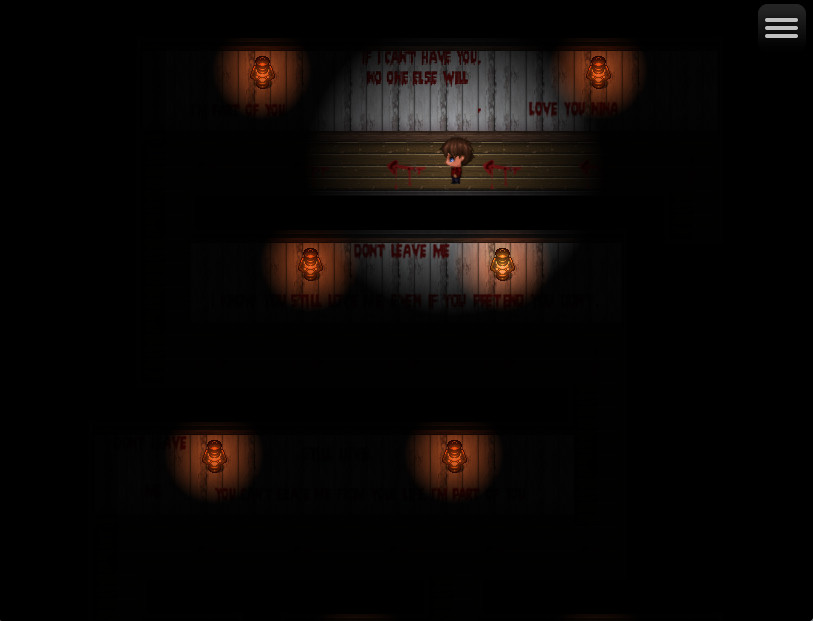
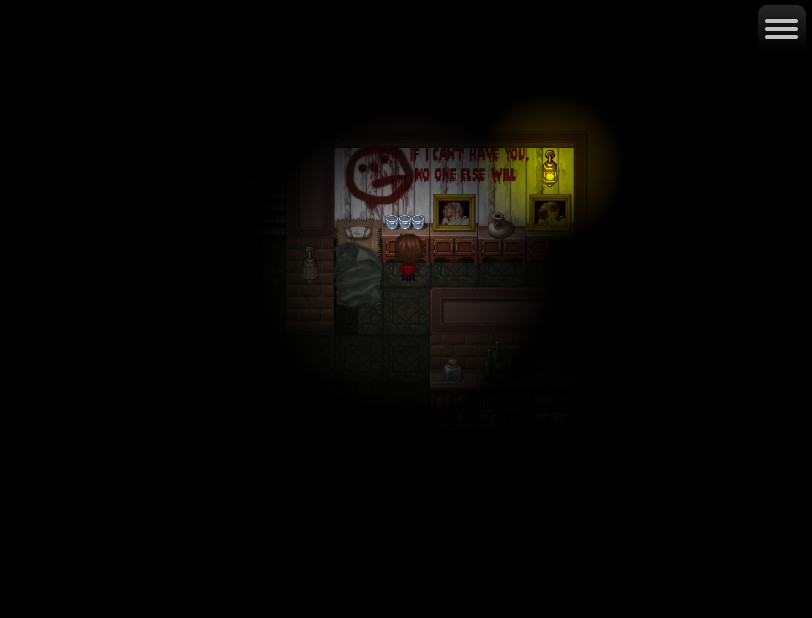
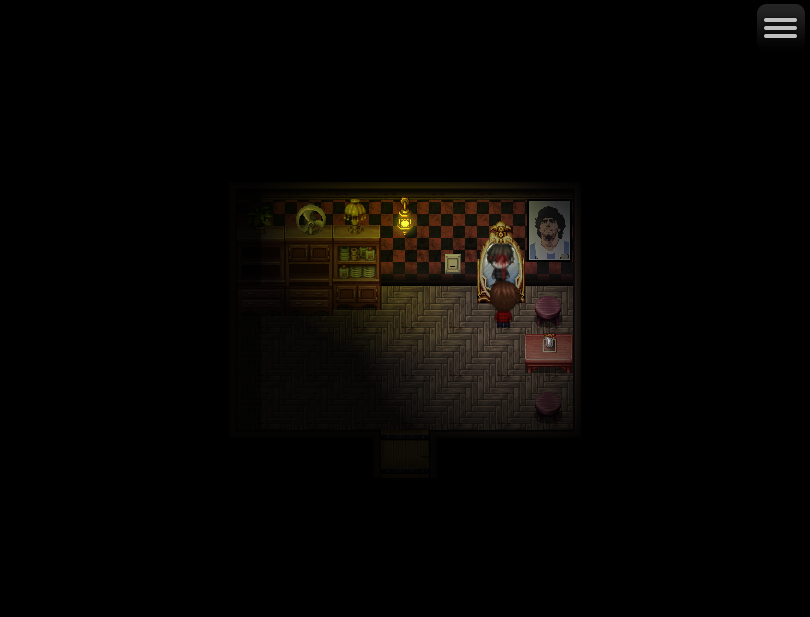
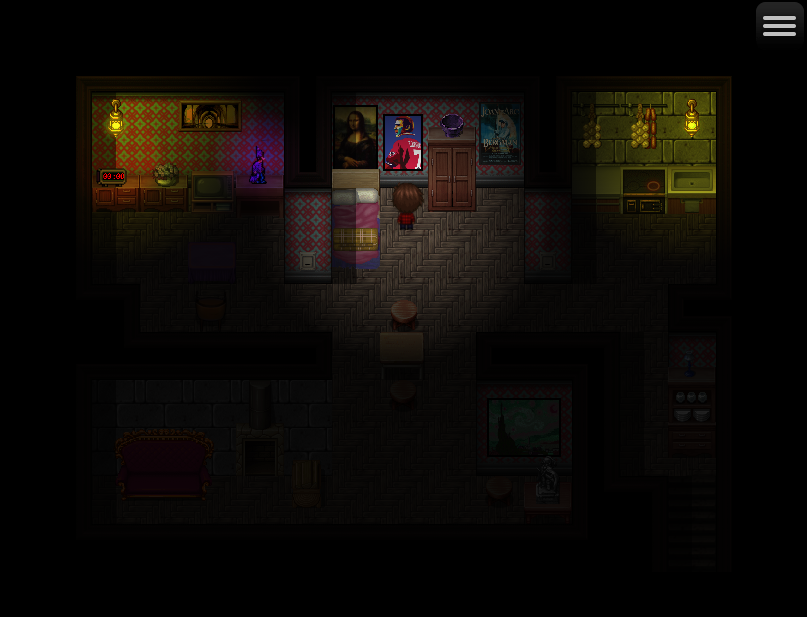
I’m working on a 2D horror/adventure game and I’ve just finished the first fully completed house in the village. 

I’d really appreciate some feedback on a few specific points:

1. Visual consistency:
Do the different rooms feel coherent with each other? Does the overall graphic style look unified, or are there elements that stand out in a bad way?

2. Lighting and atmosphere:
I’m trying to keep a dark, eerie tone throughout the game. Do the lighting effects look consistent with the style, or do they clash with the visuals in any room?

3. General impression:
Based on the screenshots, would this be a game you’d feel interested in playing?
Anything you would change or improve at first glance?

Thank you very much in advance for any feedback! It really helps me polish the game before moving on to the next areas!

To be honest, I hadn't thought of either of the solutions you suggest, but I think they would negatively affect the gameplay in my game. 

Imagine that the player clicks on a piece of furniture to open it. With the first click, they position themselves but don't open it, so they would have to click again... and so on with the hundreds of drawers, books, and other objects in the game...

I'm going to try leaving the left mouse click for moving, but leaving the action button on the keyboard or changing it to the right click.

Thanks for the advice anyway, best regards!

"I remember games where you could dig up treasures and things like that, but that was clearly different from movement/action. You could still do it by brute force, but it was basically impossible due to the size of the map and the time it took to try to dig." --> That's exactly what I'm looking for. 

The problem is when the move button is the same as the one you would use to dig, which is what happens to me with the native mouse behavior. I could also disable events until clues are found, but it seems more organic to me if the player decides to activate “action” on one of the 100,000 squares on the forest floor and JUST happens to be on top of the “treasure” and finds it. Such luck would deserve a prize. Imagine the look on their face. I'm sure they would start digging all over the map :D 

I'm working on a plugin that keeps the left mouse button to move, but doesn't activate the action button, which will be triggered by the right mouse button or the keyboard.

(Sorry for my english...)

Well, in the cases I mentioned, finding a map that marks an exact spot, or a clue that says “dig (for example) just to the right of the well, or next to the burnt tree...”  

The rest of the interactions are obvious: pick up an object, open a cupboard, open a door...

The specific case is, imagine something buried in a part of the ground that is exactly the same as the rest, there is no difference. Or a passageway under a carpet.

The player uses the left mouse button to move around and also to activate events by clicking on them. In the cases I mentioned, you may click accidentally, as both are part of the terrain you can walk on. 

However, with the keyboard, you have to position yourself exactly where you want to ‘interact’ on the terrain and press the ‘action’ button, which is different from the movement button.

Therefore, to leave mouse input enabled, what I am going to do is try to modify the behaviour of the left click. It should be used to move, but it should be separate from the action button.

I hope I have explained myself clearly...

Finally, I think I'll try to design a plugin so that the left mouse click doesn't act as an action key and will only be used for movement. 

Although I still think that moving around using the keyboard is more reliable, some colleagues have suggested that I keep the mouse mainly for accessibility reasons, as perhaps not everyone can use just the keyboard...

Thank you also for your funny comment about the mega bomb, I found it very amusing. 

In fact, to avoid accidental activation, the safest thing would be to deactivate both the keyboard and the mouse as well. 😁

Hey!

I totally understand your frustration,  getting visibility on Itch can be really tough. I just wanted to share something that might help: if you only create games for Android, you're limiting your potential audience quite a lot. 

I might be wrong, but in general most Itch users tend to look for PC games, especially indie experiments, jam entries, prototypes, or narrative projects made for Windows, Linux, or even browser.

In fact, creating a small browser-playable game could really help you gain visibility, since Web games get played instantly and don’t require downloads.

Keep it up! 😊