i like dice, but i didn't miss them here. dice are uncertain, & they take control away from the player & introduce emotional notes like surprise, humor, disappointment, futility, the thrill of taking a risk, trying to punch above your weight. those notes support DE's themes very well.
but this game feels dire & resolute, and the choices in each challenges seem less like risky attempts & more like intentional choices. the results of choices being determined by whether or not your stats hit a certain threshold, like in Fallout & Reigns, gives the player a lot more control. this also means the player is more accountable for their (in)ability to complete certain tasks. with what Winterwrath is right now, i think the weight of that accountability works very well.
but ofc, for a longer experience, you might decide that uncertainty feels more fair, or more RPG-y, or emotionally significant.
A member registered Dec 09, 2017 · View creator page →
Creator of
solo game for when you need a little party
rush-job zine about the village & its people

solo doodling RPG
one-page TTRPG vendor
A vaguely strategic roleplaying game for 2 players about flirting, girls, & 8x8 grids
A GM-less, narrative, anthology ttrpg about causing problems
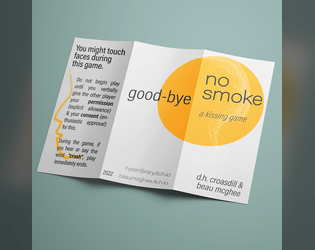
the hit roleplaying game about (not) kissing
How does Red Squadron fare in their fight against the Jellies? A space opera - act one.
Play in browser
an electric zine made out of a story i don't think i'll ever finish
Interactive Fiction
Play in browser

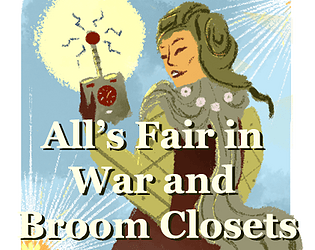
Roleplay, bluff and invent during the amoebic, American forever-war.
Run in browser
a game is a thing where you call the king "Shrek"
an electric zine about that time you had to serve coffee to people five years younger & much more stable than you
Simulation
Play in browser

you remember dogs right? this is just like that.
utilizing your favorite tarot deck, generate cataclysms
an erasable twine zine about some stuff that felt like the apocalypse but no i guess global warming's still gonna get me
Interactive Fiction
Play in browser
a zine about cool tattoos
a zine about chairs
A queer dating sim for two players & a checkers board
Recent community posts
 poem.
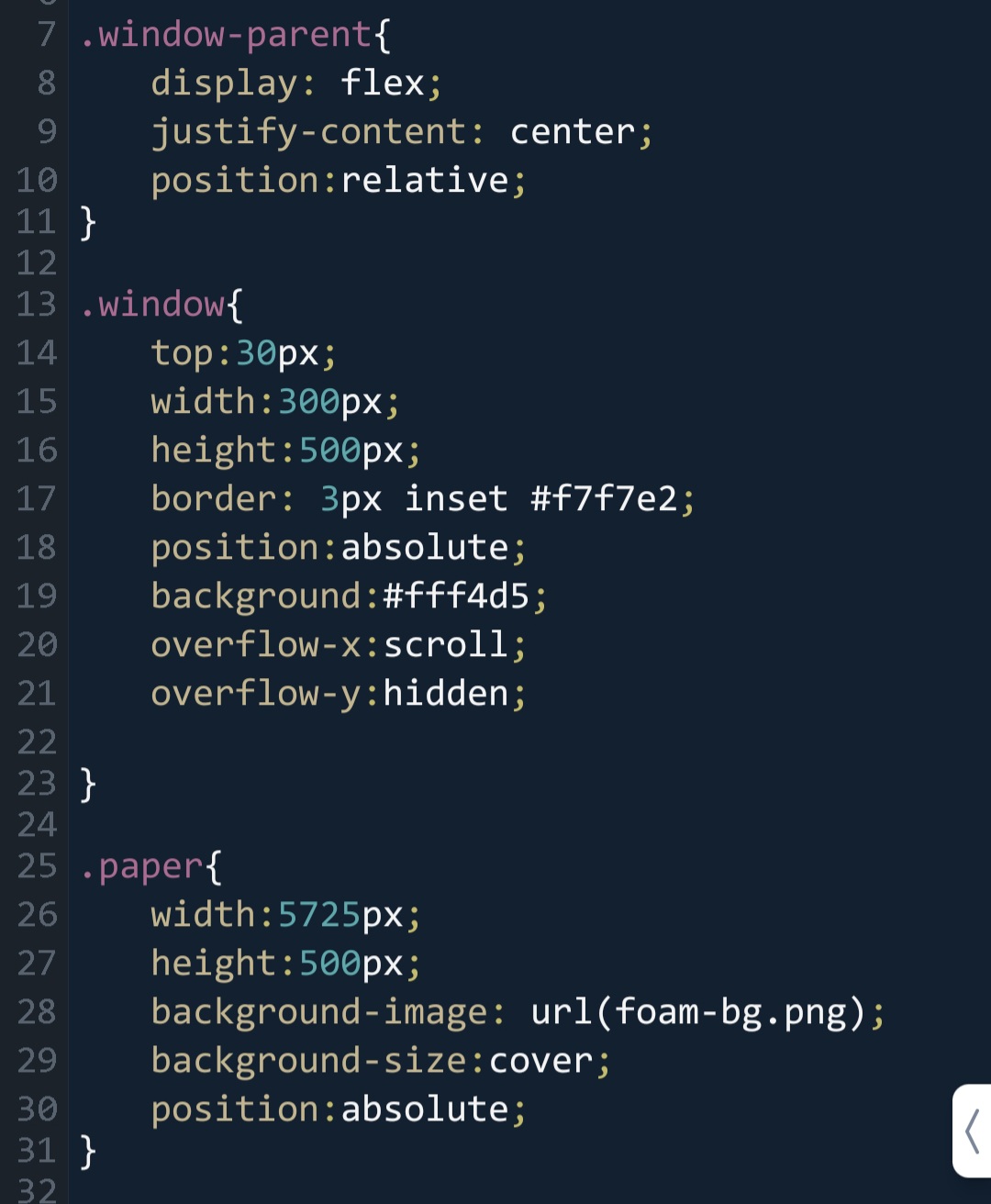
poem.aw thanks nur. i appreciate that coming from you. i made 100% of this on my phone, & everything except the bg image (put an image thru ditherit.com to get that good, crunchy look i love) & the tilt put on the tiles (javascript lifted from Pippin Barr's website & cranked up) is stuff you can do in html/css pretty straightforwardly. the window itself is a set of three divs nested inside of each other.
the css for that:
the html: