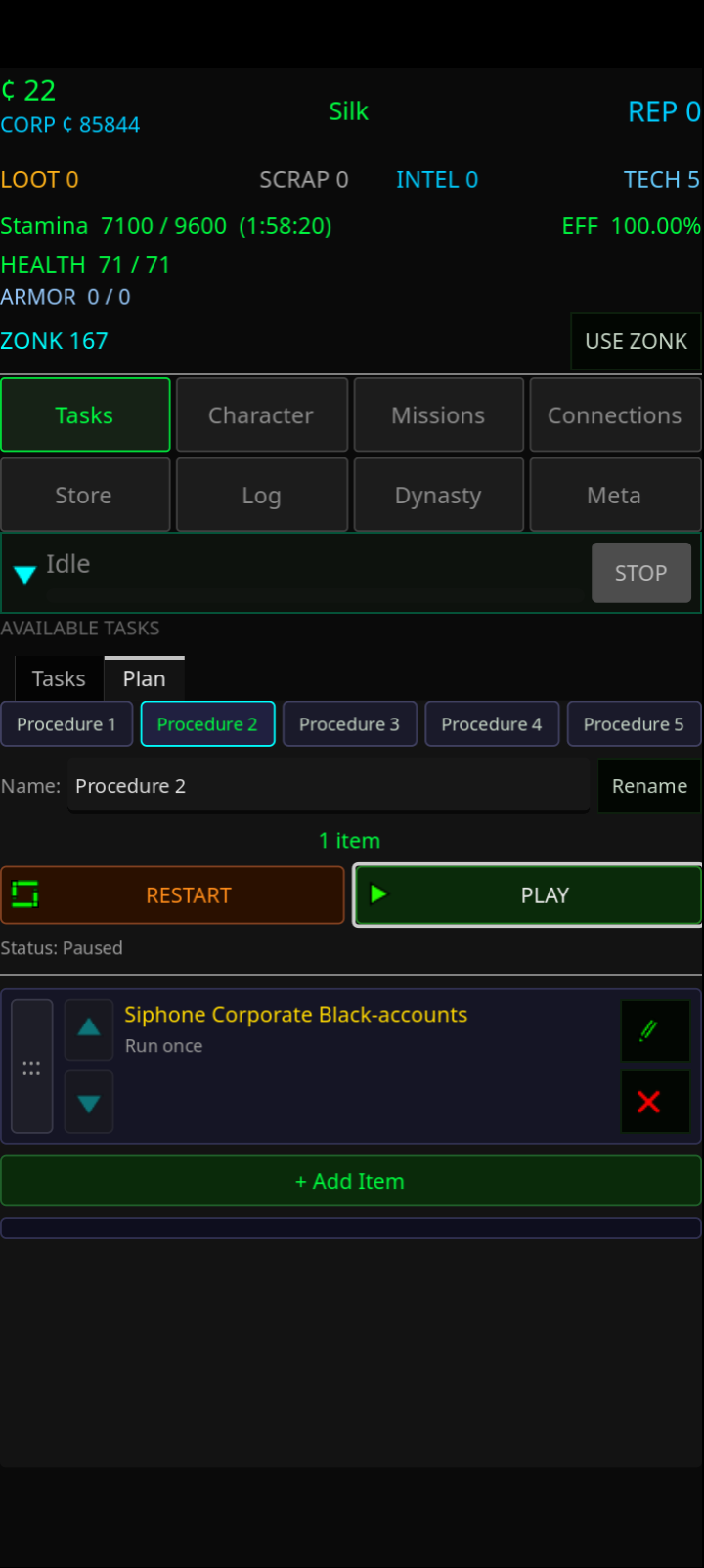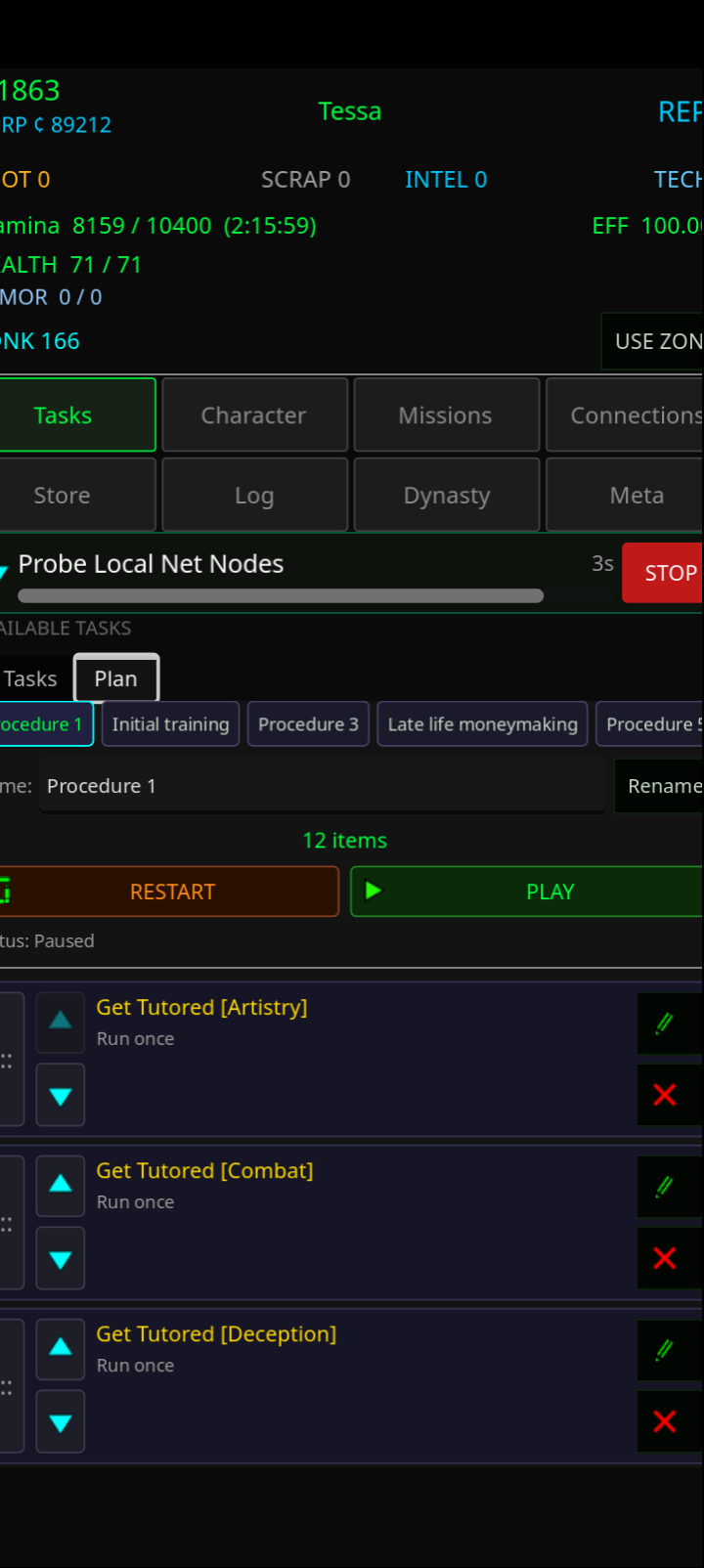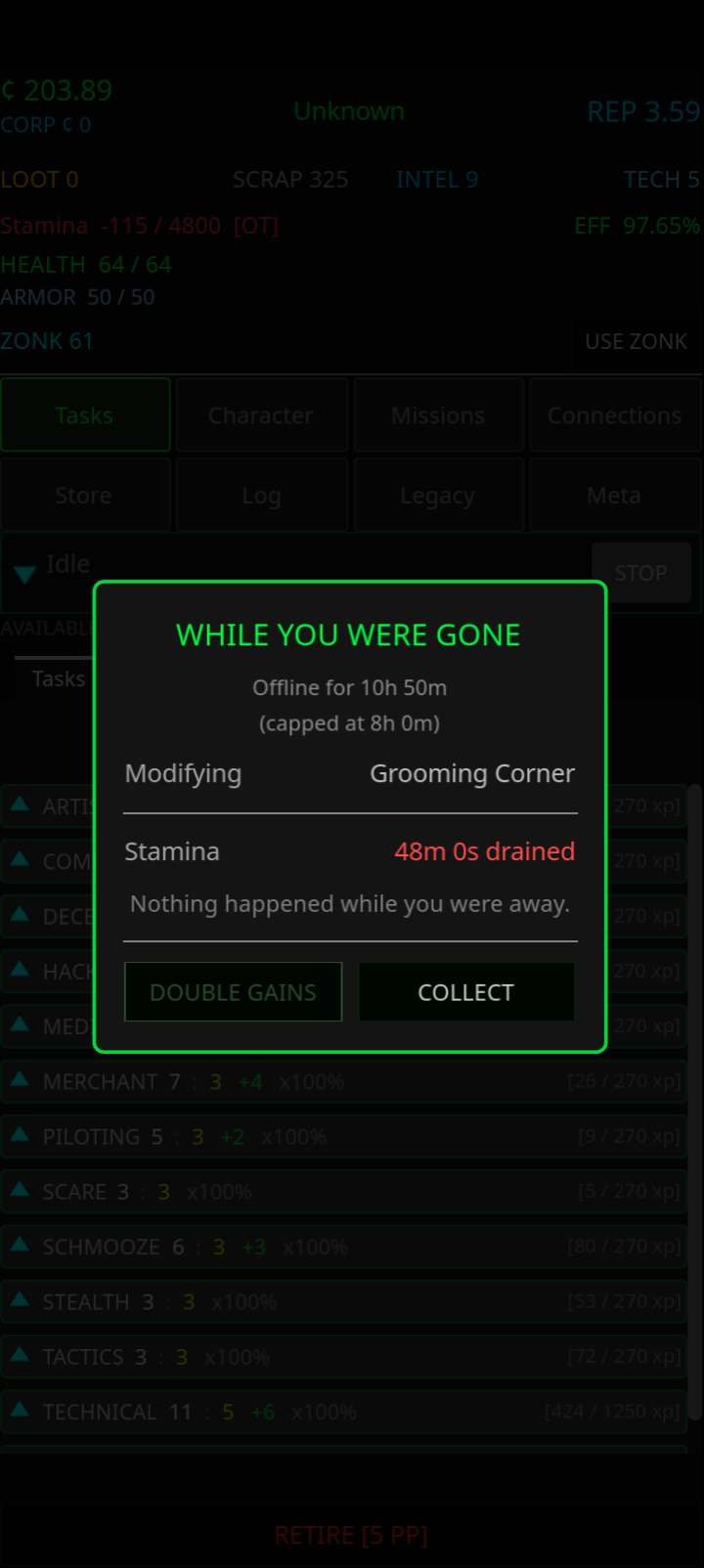








Globinpunch had a good expoundation on ghouls and paralysis on their blog, ifn you want to see a better articulation of my brief suggestion : https://goblinpunch.blogspot.com/2019/10/scraps-of-undeath.html?m=1
E5Burrito
Creator of
Recent community posts
Paced at roughly a single session, EotBS is a three page mini-dungeon for D&D/Pathfinder/OSR type games. It concretizes the atmosphere and environmental expectations for a buried tomb in a way that would allow a GM to rapidly insert it into an ongoing campaign with minimal prep time.
Interconnectivity between rooms is great for such a small map! There are a bunch of different ways the party could progress, depending on how much time they're willing to spend digging around or searching.
A few elements could be improved upon. Qitar the summoner knight seems underdeveloped, as are the three assassins who have agreed to hang out in his underground lair with a bunch of ghouls, hiding in coffins and the like. (Both boil down to stat blocks and basic battle tactics.) There are a handful of different 'groups' present, but they seem to exist without friction given the map layout and text. There's no level recommendation, which would be hard, given how swingy the final fight would be if executed as written. (One lose-your-turn Magic Save per round, or four? It's all up to a die roll early in the conflict.) Qitar is listed as having 60 Hit Die, which is hopefully a typo. The exits listed in room 9 don't align with the map itself. Combat seems to be predicated on stunlocking the PCs, which is usually not much fun at the table. (I recommend letting paralysed PCs choose to act, if they take 1d4 damage for doing so.) Traps, as written, don't have tells or interesting choices for the players to make so much as existing to do damage based on luck.
Gripes aside, I think fun could easily be had with this one, and it'd be quicker to flesh it out and adjust it to your liking than to improvise or spin up your own deadly crypt. If I had an ongoing hack-and-slash, I'd print this out and keep it in my last-minute binder.
I can lock on top of or next to an asteroid, but either way holding down (or clicking) on the asteroid doesn't do any mining.
I agree that precision clicking on a phone/tablet with a game running in real time can get irritating, and auto lasers sound like a good way around that, but at present screen visibility is a moot issue. No mining is possible, at all, in the OS/Browser combination I'm working with.
Did you test mobile functioning with a computer via a compatibility mode? Most languages have different calls for different HID inputs, it's possible the mining function(s) are looking for mouse input specifically, which a test on the computer might miss.
A fun concept, and I think the setting could make an interesting TRRPG scenario somewhere in the Last Days of Angelkite or Mork Borg territory.

However! As you can see in the screenshot, for some phones it's impossible to get past attribute selection. The confirmation button is off the edge of the screen, and whole the faded out background / deactivated interface scrolls around the pop-up attribute window doesn't.
I've been a huge fan of BGBye for a while now - it was a pleasant surprise to find that a programmer I respect so highly is also "The Enemy" in the competition to make the best free / open licensed plotting tool for fiction writers!
That's partially in jest. PlotBunni's use of AI is wildly different from ours with StoryCAD, so we're kind of apples and oranges, since you (Fyrean) have got AI focusing on text and we're using it more to focus on making suggestions related to plot structure.
Anyway, massive props. I played around with structuring a story, churning the AI over a few times, messing with the export function and the UI theming... good work here! I'm obviously biased towards what we're doing over at storybuilder dot org (and welcome you to check it out, for Opposition Research if nothing else), but I have to admit to being jealous of PlotBunni's theming flexibility and how easy it makes API integration look. 5 Stars.
A nice, quick play. Manages to maintain a sense of player progression and suspense over what ominous DC nonsense is looming a few seconds away ready to ruin your run.
I love how it handles finances. Mandatory segregation of money into different accounts for different uses (what we used to call the "colors of money" back in the day), the chase after employment metrics to secure funding with actual task completion almost an aftersight, pie in the sky wastes of money you'll never have sitting on the upgrade list just to tempt you.... all good stuff!
I appreciate how upfront this "game" is with what the team behind it is doing.
Get X points to earn a discount on overpriced clothing. Points earned diminish as you approach X, but that can be overcome with a bonus you get for turning your IRL social media feed over for marketing their overpriced wares.
But how is it as a game?
Well, one mistake early on, during the 'familiarize with the UI' phase, loses the game. There's no option to restart the game. You ~can~ get a mercy replay....if you start advertising for them on your socials.
It's the most bare of barebones DDR knockoffs. Bare to the point of not having music. All user input is either 'Miss' or 'Perfect', no scaling.
Level two cannot be passed without registering your personal info with the company. There is no continue option from the level two victory screen, just external links and the promise that after you submit enough you'll be permitted to try for the big prize.
TLDR - Low effort Template Factory asset flip. 90% marketing, 10% game, and that 10% isn't very good.
I like the new endgame/final 'boss'! I beat it in this version and the last one, and the sudden endgame for chickening out in the previous iteration was a little jarring. This one feels frantic, but uses what the player has learnt about the game up to that point, so it makes winning feel earned (even knowing it's so RNG dependent).
You may want to look at resetting the bid rate down to its baseline after moving (ascending, winning or losing) - because the gambling increments scale with the player's financial position, it's easy to end up in a spot where you have a hundred dollars, are gambling up to a million dollars (because that's the kind of money you were playing with back when you were rich), and have to click -100 about ten thousand times if you don't want every stonk session to be 100% ride or die.
I've noticed two Nash conditions you may not have planned for - I'm not sure they're worth addressing, since the player (ie myself) still had fun despite IDing an Ur-Tactic... but they may violate your authorial intent, so I wanted to let you know. (Anyone else reading this, SPOILER WARNING!)
1 - Going 100% in and riding a stock until it rugs gets immediate prestige currency. I like that the game has fail forward mechanics, but the current balance rewards intentionally tanking for three or four minutes to snatch up the nonAI Bot bonuses.
2 - Because insurance is a set price per ascension layer, it's easy to go all in and chicken out immediately at x1.3 or so safely, over and over. Very quickly you end up with funds so high that the insurance is a non-expense, a rounding error. Since that's exponential growth, it doesn't take long to build a maximalized AI Bot empire while in Moms Basement. You can instantly max your unlocks from that point on, skipping straight to All In ascension tests for the rest of the ascension layers, because of all the cash flow the bots give you.
Fix confirmed!
New issue : Going all in while trying to climb the ladder and move out of your mom's basement triggers away from the actual stonks tracking chart. The button that triggers the event is almost a full screen height below the chart. Scrolling the page to try to see the chart better cancels the attempt.
Love it!
I wrote a straight up Utopian TTRPG once in a somewhat similar style - one player's PC wakes up from a coma in a perfect future, and everyone else has as many GMCs as they want. The GMs detail scenes and answer the PC's clarifying questions in ways that don't strain credibility beyond the breaking point, through the acts and actions of GMCs around the PC (mostly the folks acting as councilors for the PC). The PC asks questions about how things are, why they're that way, and how it came to be, as well as directing their single fish out of water character's actions.
The game ends when the PC has found a way to incorporate themselves in a fulfilling way into the society, or chooses to reject it and finds a way out. Everyone wins (or loses) to the degree that they can (or can't) now chart a theoretical path from here and now to this utopian future.
Vincent Baker said it was pretty neat! That's the highest praise I think I've ever gotten for anything TTRPGesque I've made.
Anyway, diatribe aside, I enjoyed reading What If, and think it would be fun to play, in a way that challenges typical tabletop social norms. (Especially recommended if you're a bit Subby and want a way to come out about it to a prospective Dom.)
Good advice. As a tiny child I wrote my first game, a maze, on our family's Commodore for my dad. As a teenager I hacked Zombie Smashers X (a River City Ransom inspired beatemup) to turn it into a story of my high school friends and I beating up demon meatloaf monsters as a reference to a random free TTRPG we played twice. You learn things with each project, and these hyper local passion projects are a lot easier to stay invested in long enough to finish and improve your programming skills.
(I <3 your Love2d tutorial/manual, btw! My game Political Cliques wouldn't exist without it.)
I had fun! Thank you for putting this out there. I thought the mechanics would get old after a while, but the pacing is perfect, and engagability stayed super high.
A criticism : Having Head Start delay the Refract currency gain the way it currently does makes sense - otherwise a few levels of Head Start would equate to infinite Refract points! But going from 66+ Refract on a full playthrough to 15 or so is a huge setback. It's a late game issue, possibly a post game one, but if you decide to expand the game further you may want to look at it. Maybe have Refract delayed like it is now, but have its income boosted such that it hits its previous high when the player gets as far as they had been previously?
The new pacing is much more reasonable. There's a bit of late game difficulty with it, but it's still substantially better.
In the "late game", once the player has access to the strongest drill, process slows to a crawl. Shutting the game down and leaving it alone for a while (say, long enough to cap out the eight hours) means coming back to either a completed game or one where the player has so much money they can bulk up on high end equipment, then take another break and win while away.
You've played this already. One currency. Click the button to earn one unit. A static list of engines each produce a set trickle of currency, each costing x1.15 what the last purchase of that type did.
Functional. Gameplay doesn't match theme. No variability or strategy or synergies or plot or discoveries or prestige cycles or novelty or art. Click a bit, wait [1.15 to the X+1 power] seconds to buy another engine, until the next tier becomes viable, then reset X to 0 and start over.
Kudos to the author for successfully making a game that functions properly. No sarcasm there, it's an achievement. Side eye to the author though for putting it out for mass consumption when it's a waste of time to play in the current iteration.
Great balance of the three assets (production, research, and armanda strength), good UI, nice cycle length, strong theming... Great job!
If I can make a suggestion, though - the 'pity' stardust the player is guaranteed every cycle is brilliant, it keeps forward momentum going, but it does mean there's a bit gap for the first... hour?... where failing or succeeding in caching data just once is functionally identical. Because succeeding twice is several meta upgrades deep, it leaves the player in a place where abandoning a dozen or so cultures as soon as their cycles start is exactly as effective as trying their hardest for those cycles. This becomes apparent about 20 minutes in, at which point I almost walked away. Consider just having 1 stardust as a base, with each success adding 1 to the counter? There would be a reason to keep engaging with the game in that case.
I'll try to figure out a targeted cache dump for my cell's browser. Might just switch to a new browser.
Another heads up - the tutorial forced focus still triggers in the event of a user leaving and returning later. Since the "while you were away" progression notification takes display and interface priority over whatever the tutorial is trying to indicate to, that's another potential hard lock scenario.

On Android, using Duckduckgo browser :
The first time the player accesses the Operations screen is a surmountable lock, as the forced focus "Click Here" bubble just occupies the middle of the screen. Rebooting fixed it, put it off to the right-hand side. I *think* it's trying to target a navigation tab that isn't there because the hard drive upgrade window hasn't closed yet.
Hard lock a few seconds later, unfortunately, when the "Click Here" tutorial bubble to begin the hack on Rebecca's system isn't over the hack option. Clicking on the option, or in the bubble, does nothing, and progress is halted.
I love everything about this.
The mechanics are simple, but some checks can be bypassed a limited number of times in an episode by a character particularly suited to the attempt. This accordingly looks like it rewards rapid, concise play and teamwork. Add the extra XP for giving a speech re the theme of the episode and you've got strong ST:TOS/TNG emulation potential.
The setting has an internal tension I'd love to see stewed over for a season or three. There was a galaxy spanning, no-kidding evil empire. The PCs are inheritors of some of their tech, making them particularly well suited to show up and fix other people's issues, then move on to the next place in serial episodic fashion, never looking back. See the obvious issue? Yet, as the example episode shows, there IS oppression and human suffering and involuntary isolation to face down, and the PCs are the people equipped to do it. In the absence of any Trekkian 'Prime Directive' and the presence of guaranteed successes on skill checks, the question seems to be, from a reading of these corest of core documents with no play testing on my end yet, "How much Adventurism is the right amount? When do you abandon people in the interest of non-intervention? Sure, Colonialism is bad, but look at this specific scenario : These people need us to come in and fix things." All asked, as these questions are in real life, one nuanced, particular instance at a time. Will the players ultimately look back over a campaign and see themselves as galactic FEMA workers? Jedi? NKVD enforcers? Some real, beautiful, Dogs In The Vineyard style 'Are we the baddies?' potential here, provided in a way that refuses to give authorial approval to any particular conclusion.
Beautiful stuff. A big departure from FIST, but thoroughly enticing. Probably my favorite Lasers/Feelings hack, and I haven't even played it yet.
Good music. Nice visual style that doesn't really sync thematically with the material.
I got to the point where a single upgrade remained, but it requires another upgrade that doesn't appear to be implemented yet (leather gloves) as a pre-requisite. The advertised scaling of card power/colors wasn't present, it cut out after two color upgrades with no apparent way to progress beyond green. There was also only one type of Gambler available, not multiple ones with distinct behavior.
So, fun, but incomplete, in the "play til you decide you're bored" style that doesn't offer any closure.
A Legacy style TTRPG is a fun concept - I know, I've got piles of printer compatible sticker sheets and lotto ticket style scratch offs waiting for my own project along those lines!
I enjoyed reading over this. A lot of the "Legacy" schtick is about intentionally placed voids in the campaign setting and mechanics, which has the fascinating twist of formalizing who gets to settle those bits of undeclared worldbuilding. It also lends to a paced escalation, not only of player/character knowledge but of the threat level of the world. Interesting stuff!
Having not played it yet (I'm a year into running a Dracula Dossier campaign that's showing no signs of slowing down) it seems like this would be well suited for a group with a GM who likes to doodle and think about factions and game politics without an excess of specific scenario planning, and Players who don't mind losing characters and making up world changing factoids on the fly. It seems like it would really reward repeated play, something in the 12 to 18 session range probably, because of how it's structured to enable callbacks that Players have buy in with.
The mechanics seem quick to pick up, resting somewhere between Black Hack and Apocalypse World. The introductory scenario is almost ready for immediate use, it probably wouldn't take more than twenty minutes to think up enough details and derails to make up one or more sessions of play. The biggest impediment to play is the necessity of printing out (and binding) (and bookmarking) the 100+ pages of the manual, which (because of the Legacy elements) can't be used digitally or streamlined. [Edit: But note the reply below]
I'd play it if offered a seat at the table, and I'd run it if a player asked.
(Mild Spoiler : I enjoy the meta-trolling on page 55 re the number of Unearthed Secrets check boxes)
Hi! Well done, making an engaging game with a solid play cycle. There's room for UI and balancing tweeks, but as a Min Viable Product this is a winner.
Bug report : Unlocked mines don't get restored on reload. That's a ~ 5-10 minute time sync to 50%+ through the list of consecutive mines. It really disincentivizes picking the game back up.
Recommended! Good engagement-to-payout ratio for a clicker, allowing attentive or relatively passive play to both be viable options. Solid juice - unlocks change visually depending on level of completion, UI is intuitive and well structured. Multiple viable upgrades and moment to moment elements to focus on, keeping engagement high and allowing for player choice despite the story being on the rails. No bugs. Good music choice, it doesn't get old. ~30 min playtime.
The puns and lack of bugs suggest AI was limited to some of the images, and those elements were consistent with each other and neither hallucinatory nor attention grabbing. Calling it slop would require the belief that all AI images are intrinsically slop - these are well done. Comments about disliking it's presence seen to be ideological in origin rather than statements on the adequacy of the actual pieces used. I found them roughly par with asset store elements.
I liked the little Prison Architect style people, the association carried a lot of thematic implications that supported the vibe.