A downloadable playbook.
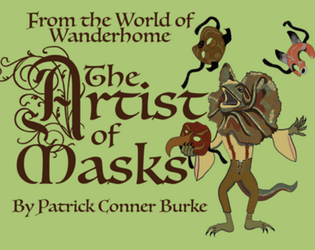
This playbook exhibits not only the strength of Wanderhome as a canvas for creators, but also the writer’s creative understanding of the game itself. Like the best playbooks, it is at once a whimsical character archetype, a window into a relatable sort of personal anguish, and a demonstration of self-love—a song of oneself, in a Walt Whitman sort of way.
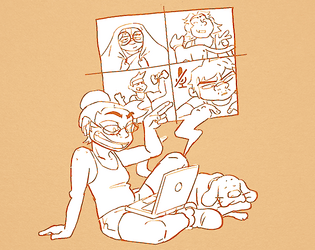
The art and layout of the playbook look perfectly in keeping with the core book, down to the font choice, the worldbuilding-by-vague-implication, and the playful treatment of duality: not just “two you are and two you aren’t,” but “two you share, and two you keep for yourself.”
In fact, that’s the central conceit of the playbook itself: what parts of yourself do you share to an audience, and what parts do you keep to yourself? Having spent time online and in the public eye, I can attest that being a Personality for an Audience is a position that can be exhilarating, validating, or horrifying, depending on the moment.
But the playbook itself takes an optimistic approach to masks, positing that you can wear a mask not to hide from the world but instead to share something that reads clearer within a crowd. The playbook, in its structure, posits that hiding parts of oneself can be pro-social, because some stories are strengthened by exaggerating your movements and saving the wrinkles in the story for the backstage.