A downloadable game for Windows, macOS, Linux, and Android.
(Review based on version 0.4.5)
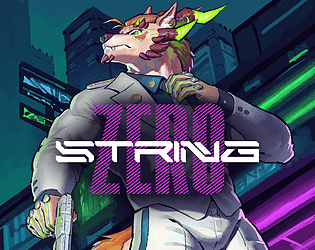
To start the review with what is probably the VN's most prominent aspect, the plotting and the worldbuilding sure are maximalist. The cast gets very large very fast – it feels like at least a solid third of the first arc is just character introductions – and even if you manage to keep track of all those people, there's still the mysterious backstory with loads of players who may or may not haunt the present narrative moment. The prose comes with a liberal amount of fictional slang and terminology, on some occasions bordering on impenetrable unless you seek the aid of the hover text explanations and the in-game compendium. And, needless to say, there are many cultures, factions, and technological as well as religious concepts to learn about.
I think this kind of thing is generally a matter of taste to a degree that threatens to render criticism futile, but let me try anyway, and start by listing some ways in which it all worked for me. The plotting is sharp on the level on character motivation; what everyone is doing and why is usually easy enough to grasp. Despite the sprawling extent of the cast and the lack of quieter moments of downtime, the central relationships (the father-son one and the not-quite-lovers one) feel interesting and emotionally believable. All that slang and the sense of the depth to the setting's politics, technology, and cultures do make for a transportative reading experience – it's definitely a well-realized secondary world. (Nitpick zone: I could do without the use of clearly contemporary terms like "himbo", which show up rarely enough to feel like editorial oversights, deliberate or not.)
In general, I enjoy the VN's willingness to throw the reader in at the deep end and present them with an information overload, making it difficult to say which questions are supposed to be answerable and which remain open. Reading String Zero is an active and engaging process: I always felt aware of what I was bringing into the text and where I was succeeding or failing as a reader. It's confidently challenging, never holding your hand such that trying to piece the mysteries together yourself would feel pointless.
To me, the biggest weaknesses are structural, both in the big picture and in the more granular details of when and how information is revealed and how scenes follow each other. The first chapter is by far the roughest part: we open on an abstract sequence so dense with lore that I'm sure I retained about zero percent of it, and the scene with Kavir is heavy with worldbuilding but light on the kinds of strong character moments and actions that would give the reader an easy way in. Everything in the bar works better, though the one-on-one character introductions get a little repetitive, and Ravy's quest to find Crown comes off as a tad too impersonal for being the big organizing principle driving the plot in that segment. Plus, even as the story alludes to everything being a part of someone's (the) Design, it doesn't help make the events themselves feel causally connected.
The gist of the first arc is easy to summarize: Ravy wants to join Kavir's crew, completes a sort of arbitrary task as a test, and is then let in. There's just so much happening between these beats – and specifically in a way seemingly arising from a narrative need to introduce and set up a bunch of stuff rather than as an organic consequence of them – that the story feels more shapeless than it actually is. The political intrigue with the wolves I'm mostly fine with, as it touches on the Ravy/Aerran relationship I can buy being important to establish at this point. Where things go a little too far for me is the cosmic horror incident; the writing does a lot of work to justify an unwise, impulsive decision a character takes, but all I could think was "huh? is this happening now?" because it felt very sudden as an escalation concerning a magic ability we had barely begun to understand. I think the price to pay for all this is that when reading, it's often easier to grasp the narrative function behind why we have to learn about this or do that plot beat now, with how the story progresses as a result of actions taken by characters fading into the background.
But the VN is never a bad read, and besides the confident prose, the top-notch presentation and the high production values certainly help. I think cyberpunk is one of those things that's more fun to do if you go all the way instead of just gesturing in that direction, and it definitely happens here, especially with the music. But what I appreciate most about it is the bold, creative direction that doesn't just spend the entire budget on five million CGs. For example, the most striking scene in the game involves a realistic, tactile animation of rain against a glass surface, which is not the kind of thing you always see being done in this space.
My only criticism – and it's a big one, at least to me – is how the UI prioritizes aesthetics above the comfort of reading. The text box you're looking at for most of the game has a big font size and covers the entire width of the game window, meaning your eyes have to move back and forth a lot if you pay close attention to the shifting expressions of the sprites. I remember one scene where a character was positioned on the right side of the screen being very annoying to read, and ultimately opted to not keep the window in full size. While I can't say how much this boils down to a personal issue, I found the text pretty bad to read compared to Ren'Py's sensibly centered defaults that keep your eyes close to where the sprites usually linger.
On the whole, there's a lot to like, and in some ways, I found myself positively surprised after initially fearing the game's lore-heavy style wouldn't speak to me. And in any case, I think it's an admirably big swing to make something this complicated and this full of idiosyncratic touches (though I didn't go into specifics, I like the mix of technological/mystical/religious elements in the worldbuilding), as easily as it all goes down thanks to the wonderful attention to detail and the slick presentation. I'll definitely stick around for more, and I hope the writing finds it footing with structure as the story moves past its setup phase.