

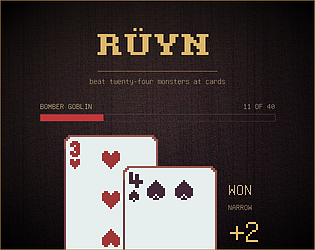
Card Crawler is a roguelike RPG dungeon crawler, and every fight is played as a hand of cards. Eight floors down, twenty-four enemies with names and health bars, two classes with their own passive, active and skill tree.
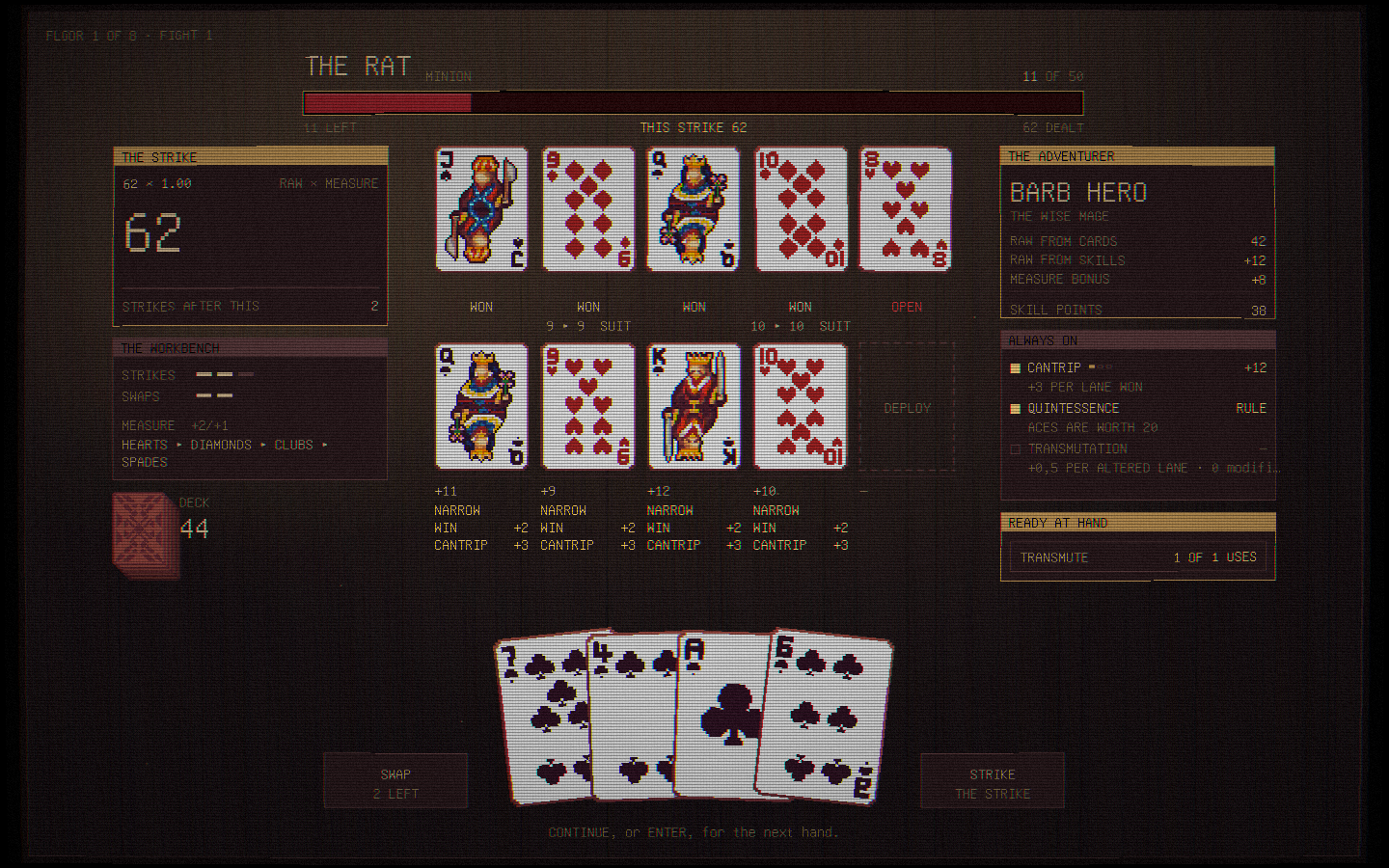
Not a card game with a dungeon painted on it. A dungeon crawler whose combat system happens to be a deck: three strikes to put an enemy down, and each strike is one hand across five lanes.
The deck is an ordinary 52-card poker deck, and it's the only part I didn't invent — no custom frames, no keyword soup. The number printed on the card is both its strength and its damage. A seven is a seven.
Five lanes, three strikes. The enemy lays out a row of five, some face down. You hold eight and deploy up to one per lane. Win a lane and you take the value of their card, not yours — beating a Queen with a King is worth twelve, not thirteen. The prize is what you take off them.
Here's the rule the whole game turns on. You get paid for winning narrow: two extra points if you win by one, one if you win by two, nothing beyond. Dumping your King on their Three is a waste. Every hand asks the same question — how little can I spend and still take this lane?
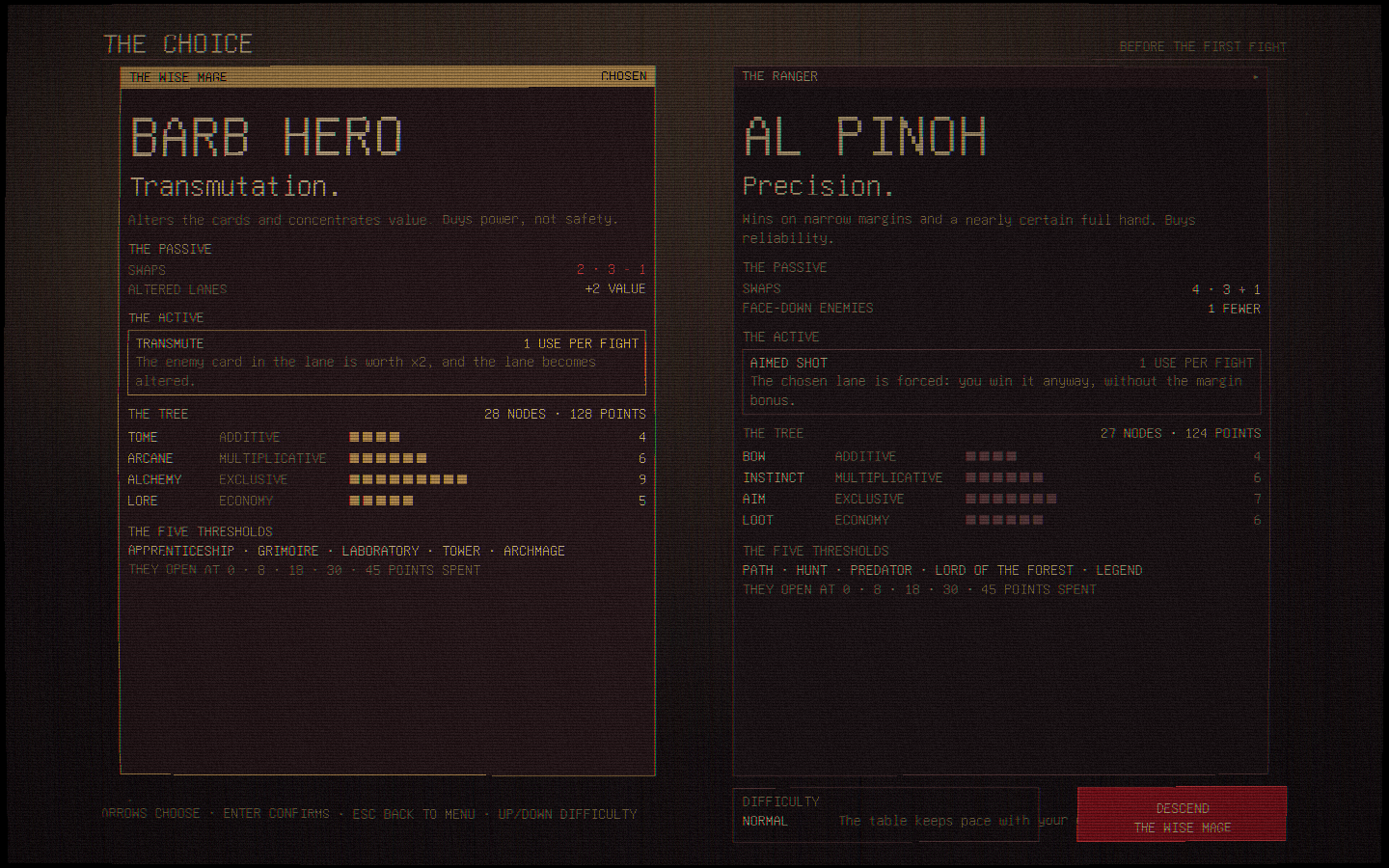
Two ways down. The Wise Mage transmutes: he doubles the value of an enemy card and marks the lane, and half his tree counts the lanes he's marked. The Ranger is precision — four swaps instead of three, one fewer face-down enemy, and an Aimed Shot that forces a lane but pays no narrow bonus, because you didn't win it by a margin.
It's early access, and I'd rather say where it's rough. Eight floors, twenty-four enemies, both trees, all playable. What isn't done is the tuning: from the ninth fight on, the most damage a perfect player can deal sits below what the enemy has. Nobody has reached the bottom yet, me included. Better you hear it here than on floor nine.