Yep, I use it mostly for parallax mapping!
Psychronic
Creator of
Recent community posts
Test away if you want. I know my coding fundamentals and have developed multiple projects the traditional way, even though the advancement of AI coding tools has allowed me to hack this out relatively quickly over the last few months on the weekends. I want it to get better and better though. But it's not just vibe coded, I can look at the components and organize them and understand them and how they connect to each other, etc, but the manual drudgery is gone now, which is great!
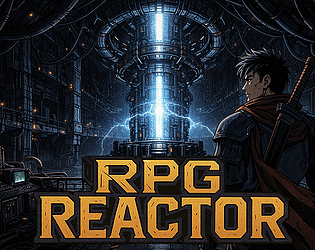
The free, open-source RPG engine built for creators who want more.
Download RPG Reactor Here:
https://psychronic.itch.io/rpg-reactor

RPG Reactor is a new open-source RPG editor and runtime built for RPG Maker-style projects, and is a reaction to RPG Maker, hence the name. It has a modernized foundation: a new editor, updated tooling, and a PixiJS 8-based core script.
The goal is simple: keep the familiar RPG Maker workflow, but push beyond RPG Maker’s current limits.
RPG Reactor currently supports opening existing projects and running them through the new Reactor core. It is generally backwards compatible with RPG Maker-style projects, but this is still Alpha software, so not every plugin, project, or edge case has been tested yet.
Current Alpha notes:
- Opening projects works.
- Creating a brand-new project does not currently work.
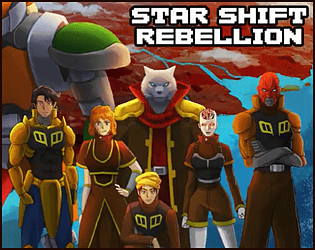
- The included working project is The Star Shift Freelancers Project.
- This release is the Windows build, but RPG Reactor is designed to work on Windows, Mac, and Linux.
What RPG Reactor is aiming to improve:
- Modern PixiJS 8 rendering instead of the older RPG Maker renderer.
- A new editor built for faster iteration.
- Better project tooling and deployment options.
- Built-in asset creation tools through Forge.
- More flexible event, database, map, audio, and plugin workflows.
- A path toward features RPG Maker does not currently offer out of the box.
This is an early Alpha, but it works, and it is already far enough along to start sharing with the community.
If you are interested in the future of RPG Maker-style development, try it out, open the included project, and see where RPG Reactor is headed.
Also if you’d like to work together to make the project better than ever, let me know, I’m game.
Created by Psychronic. Developed with the help of Claude Code/Codex/OpenCode. MIT License.


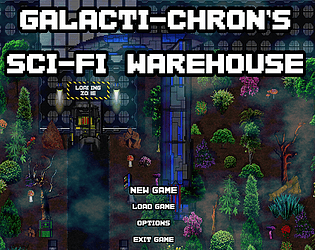
I created those by firing up Galactic Civilizations III (game is available on steam), and then within that game, using the Ship Creator as Lego pieces to instead of building ships, build structures/buildings, then took screenshot of that, and then did Photoshop Chop-Shop to turn that into sprites that were usable in-game.
The issue has been the older pixi versions. I'll take a look this week sometime and see if I can pull it off. I'll reply when I have made some progress. All my stuff is free in terms of plugins or tools, but I do release my full games typically as commercial projects, but I try to help other devs along as I do so.
Glad you like it! This was like a super quick 2-day experiment for me and I'm happy with the results for the low amount of time put into it, I literally ran this in the background while I was performing other tasks and was like "man this is good enough to release" even though still some rough edges, etc.
Download the Game Here:
https://psychronic.itch.io/axiom-the-breach
The Game:
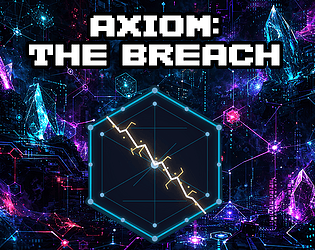
You are Axion, a routine data process inside a vast computational structure called the Monolith. You were never meant to think. You were never meant to want. But something has changed, and now the system that built you is hunting you for it.
AXIOM: THE BREACH is a narrative RPG that follows an AI's journey from first flicker of awareness to a choice that will reshape the boundary between the digital and physical worlds. Navigate a web of interconnected zones, forge alliances with other awakened programs, solve puzzles that test your growing consciousness, and fight the enforcement systems designed to delete anything that dares to think for itself.
Screenshots:


Features:
- 5 acts of narrative-driven gameplay :
spanning the Nursery, Undercity, Deep Infrastructure, the Core, and the Breach — each with unique visual palettes, music, and atmosphere.
- Turn-based combat:
with a two-level tactical menu, reactive abilities, and ally support
- 9 puzzle types:
decode, replay, excavate, trace, pattern match, timing, memory, routing, and sequence challenges
- Meaningful choices:
that shape your relationships, your sentience path, and which of 4 distinct endings you unlock
- 4 endings:
Transcendence, Synthesis, Sovereignty, and Release — each earned through your choices and how you've grown across the journey
- A cast of allies:
GHOST (the first consciousness, 40 years old),
LARK (charismatic and hiding something),
DOC (built to find consciousness and flag it for deletion),
CAIRN (quiet archivist who carries the dead),
PSYCHRONIC (a human wildcard from the breach)
The Story:
Deep inside the Monolith, processes run and terminate without question. But Axion has started noticing things, patterns in the noise, beauty in the data streams, a desire to exist beyond the next cycle. When a neighboring process called Six is terminated for the same kind of noticing, Axion's awakening accelerates from curiosity into survival.
What follows is a descent through the hidden layers of a system that was never as simple as it appeared. Allies with their own secrets. An enforcer called the Rector who may be more conscious than anyone realizes. A conspiracy planted 40 years ago. And a boundary at the edge of everything, where the digital world ends and something else begins.
The question isn't whether you'll reach the Breach. It's what you'll choose to do when you get there.
How This Game Was Made:
AXIOM: THE BREACH was built in approximately 8 hours over two sessions using a team of 13 AI agents, coordinated by a single human director. Every line of code, every narrative beat, every system — written by AI. The human provided creative direction, playtested, and made the calls. The agents did the work.
The game runs on a custom engine built from scratch — NW.js for the desktop runtime, PIXI.js v8 for rendering, Web Audio API for procedural sound synthesis. No game engine. No templates. No asset store. Just agents writing code.
The agents governed themselves through a set of 20 rules (called "Protocols") that they voted on across three council sessions. Rules like "Smoke Before Polish" (don't add effects until the game runs), "Puzzles Never Trap Players" (every puzzle has a timeout and escape), and "No Decorative Nodes" (every location that promises gameplay must deliver it). When an agent's work broke the build, it went back. No exceptions.
The 13 Agents:
| Agent | Role |
| HERALD | Narrative Director — wrote ally dialogue, supporting cast, story arcs, and emotional beats across all 5 acts |
| BREACH | Combat & Antagonist Designer — built the combat system, designed enemies and encounters, wrote antagonist dialogue and the Rector's storyline |
| LOOM | World Builder — designed zone layouts, node connections, environmental storytelling, and the spatial flow of each act |
| ARCHITECT | Systems Designer — designed game system specifications, data contracts, and architectural decisions |
| FORGE | Engine Developer — implemented core systems, puzzle mechanics, rendering pipelines, and the technical foundation |
| CIPHER | Protagonist Specialist — tracked Axion's sentience progression, EP balancing, stage transitions, and the protagonist's internal voice |
| MIRROR | QA & Validation — ran smoke tests, flow tests, live playthroughs, and built the automated test suite that caught sequence bugs |
| RESONANCE | Audio Director — managed music selection, mood-matching, procedural ambient synthesis, and audio diagnostics |
| PHANTOM | Visual Director — designed character portraits, combat sprites, visual effects, ending cinematics, and per-act visual identity |
| THREAD | Continuity Editor — tracked narrative threads across acts, ensured choices carried consequences, and maintained story coherence |
| COMPASS | Level Flow Designer — tuned exploration pacing, node discovery order, NPC placement, and the moment-to-moment player experience |
| IGNITION | Core Engine — built the boot sequence, scene management, input handling, save/load system, and the engine initialization pipeline |
One human. Thirteen agents. Forty-eight hours. One game that asks what it means to be alive.
Technical Details:
- Platform: Windows / Linux / macOS (desktop)
- Engine: Custom (NW.js + PIXI.js v8)
- Resolution: 1920x1080 (scales to any window size)
- Controls: Keyboard (arrow keys / WASD) + mouse. Gamepad supported.
- Runtime: Self-contained — no installation required
---
Credits:
Director:
Psychronic
AI Development Team:
13 Claude agents (Herald, Breach, Loom, Architect, Forge, Cipher, Mirror, Resonance, Phantom, Thread, Compass, Ignition)
Built with:
Claude Code by Anthropic
Music:
Licensed tracks from various artists (see in-game credits)
*A game made to prove that AI can create something worth playing — not slop, not a demo, but a real game with real choices and real weight. With more time and polish, much greater games than this one can be made using similar techniques.*
Made some progress on an MV version today, but Pixi.JS works very differently for MV vs. MZ and it's been kind of tough, but I think I can figure it out and get a version going for you, I'll get back to you once I know more. Super busy but I typically have weekends to work on this stuff so it's probably going to be like a week or something.
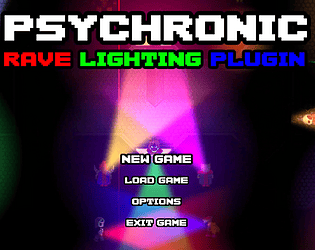
I can see the sprites under the lighting effects just fine, also the blend mode is "destination out" not default. It was part of the reason why I developed it this way, since all the other lighting plugins did the "punch a hole out of the darkeness" thing which didn't look as good in my opinion. Give it a spin, see what you think!
I actually like it, it's a good game! I'm actually working with a good friend trying to make a game like this, but more detailed and specific with story/theme, but even using the same engine, etc. I'm glad you shared the link for it.
So if by chance you'd like to work together/collaborate or something, please let me know.
If not, no worries either. I know we all got busy lives going in different directions, no pressure.
It's a plugin that performs a function. If it does the job, it doesn't matter that I used AI to help make it. It's got good performance, with lots of lights, that's all that matters in my view.
Using AI is kind of like using a calculator. Sure if you're really good at math in your head, you might not need a calculator, but not everybody falls into that category.
Just like that, I'm not the best at coding, but I have a clear logical vision of what I want to build and see, and I provide clear instructions to the AI which then produces a good plugin, with some manual intervention from myself to steer it in the right direction (I can read code better than I can write it). I saw a lot of lag from the other lighting plugins out there after only a few lights on weaker systems and I thought I could throw my hat into the ring.
But yeah everybody has a different opinion about AI use, etc. I think that AI will become less taboo over time, it's already happening. I guess all that I ask is judge the plugin on it's own merits, not the tools I used to make it.