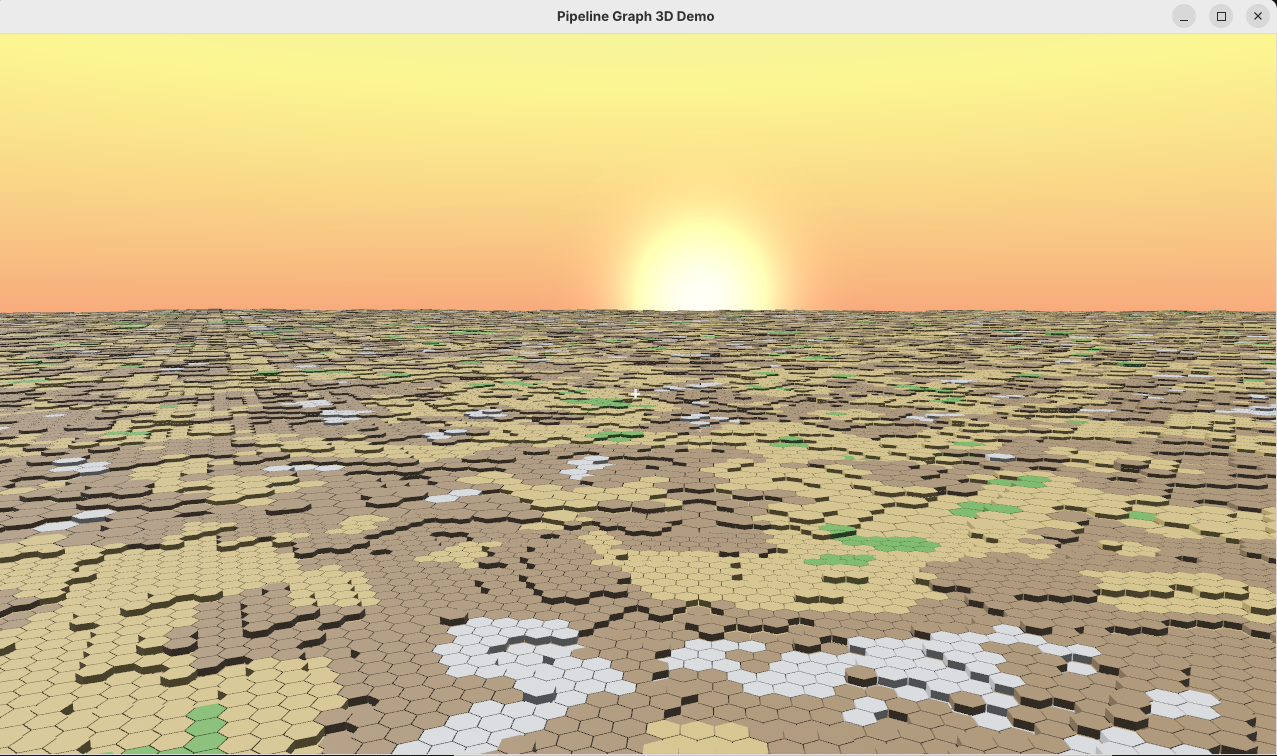
Hey, I'm Rou, I'm a professional programmer; this is my Hex Sandbox Project. Although it may look graphically unimpressive, it has some really neat features that will allow for rapid prototyping and development in the coming weeks. To put it bluntly, it aims to improve on other "Block Game" by addressing several issues I've experienced while playing Block Game. This first post will be largely dedicated to technical improvements over other Block Games - but you should expect some updates in the coming weeks.
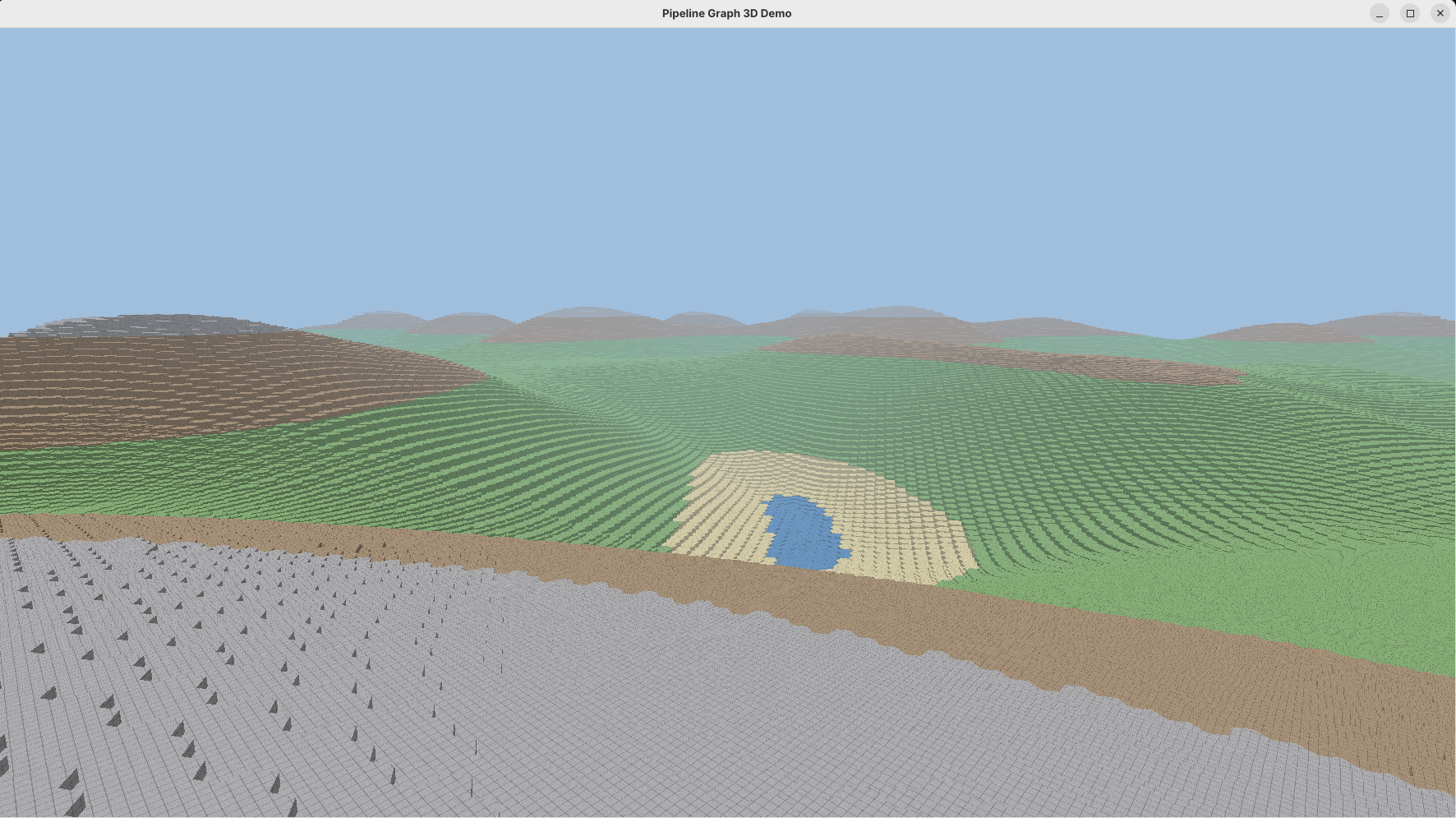
July 28th, 2026 - Oh Look, Hills! (Render distance 10km)
Key Supported Features:
- Modding support is trivially simple: the entire system is developed with modding support as a first class feature. Everything in the world, in fact is represented by "mods" - my core game and the features I provide use the exact same tool set that a modder would have - this means anything I can do, you could also do.
- Crazy Fast Performance: Whenever I played other block games, I was always frustrated that the game would not use my CPU or GPU effectively, and no matter how powerful my machine was, the game was functionally capped at a certain speed because it was designed for a single, or maybe two CPU cores. This is completely done away with, the engine uses as much resources as you can throw at it, not only does this make the experience more enjoyable for people with modern hardware, but it also allows servers to host many more people than a typical Block Game server. Internal tests show that a modest home PC can host around 128 players without issue; I am working to break the world into different "server regions" so in theory, the number of friends you could play with is literally endless (friends not included). The system is also built in such a way that extremely large landscapes and render distances are possible on even potato hardware.
- Hexagons over Cubes: This is probably the biggest visual difference between Block Game and my implementation - the world is built with hexagons rather than cubes. Hexagons have some properties that make building much more interesting, for one, you are able to build at angles not possible with cubes. I've played around with this a ton, and have built a few interesting systems that I think keep the building accessible and simple, but allow the greater freedom that block games simply can't provide.
- Dynamic World State: This feature is something that extends the world to be more than just a backdrop or scenery. The world has the ability to efficiently react to the player. Fire spreads, dirt turns to mud in the rain, leaves change as seasons change, mechanical/electrical component simulation, the possibilities are endless. Other Block Games that I know of use separate systems to make all these things work - in the engine, the world state is represented one way - making these extensions easy and intuitive for development or modders.
July 27th, 2026 - A Flat and Boring World