Sorry, no specific time is set. I've been hired to create an open-world version of MAPGrid, so that's where my focus is at the moment. Additional tilesets is next on the agenda though.
MightyAndPowerfulGames
Creator of
Recent community posts
Yes, creating your own tilesets is easy. More complex tilesets (like the ones shown) can be tedious to create though, because of the shear number of unique meshes they use.
The rule system uses a logic-based approach with various actions that can be performed, e.g. “Set Mesh”, “Set Collider”. MAPGrid also contains documentation that explains the rule system further.
I'm glad you like it!
The actual combining of the mesh is multi-threaded, but the process of evaluating the ruleset is not. I fully plan to make it much faster at solving tiles, but I have a lot on my plate for the time being. An indie studio contacted me asking about allowing for much larger tilemaps, and sense they're paying extra for it, that's what I'm working on as of writing this.
I may host documentation online at some point, but it's not a priority as of now.
Thank you for buying MAPGrid!
Hey, thanks for the question!
As of writing this, MAPGrid does support real-time editing of tiles. The only concern is that depending on your target platform, like mobile, the performance may or may not be acceptable. I simply haven't tested on mobile yet, so I can't say, but I plan to optimize it for mobile in the future.
I created a demo for a game in which you CAN remove tiles with minimal performance overhead. You can try it out for free here!
There are certain ways you can limit the performance impact of editing tiles:
- Use separate Tilemaps. Editing tiles is a lot faster if you separate the editable tiles from the static tiles. Using a separate Tilemap for your editable tiles means less has to change when you add/remove a Tile.
- Use simple meshes. Use as few vertices as you can. Fewer vertices = Faster chunk rebuilding.
- Disable the fancy stuff. MAPGrid has certain features that improve the look of tiles, but also slow down real-time editing. "Smooth Mesh Seams" is one of these. Again, if you can get away with using it, then by all means go ahead, but it can impact performance.
- If removing many tiles at once, don't rebuild after every tile. Manually rebuild after removing all the tiles. The functions for Adding/Removing tiles have an optional parameter "rebuildChunk" which determines whether or not the chunk will be rebuilt. If not, after you've removed your tiles, call "RebuildPendingChunks" on the same tilemap to rebuild the chunk.
- Smaller Chunk Size. This one is a trade-off between overall performance, and the performance spike of editing a tile. Typically, you can get away with reducing the Height of the chunk, because many games don't utilize it anyway. When you edit a tile, the whole chunk is rebuilt, so a smaller chunk means less has to be rebuilt. But, this also means more, separate chunks in your scene, potentially slowing down the rest of your game. Always test solutions for your specific use-case.
The documentation on the API for MAPGrid is in development, but I can assist you on discord @mightyandpowerfulgames
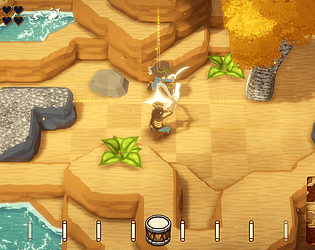
Hey all, I have been working on MAPGrid for about a year, and I am finally releasing a usable version for anyone in need of a good 3D tilemapper. Please note that it's still in beta, so expect to find some bugs, and things that could be improved. However, I am developing it alongside a game, which has been proven to be more effective (like fortnite with unreal engine). A free demo of that game can be found on my profile as well.
MAPGrid is "on sale" until version 1.0, If you purchase the beta on itch.io, I will additionally give you a free asset store key when it's up there.
The default tilesets are reminiscent of Octopath Traveller, but you can easily swap the textures to achieve a different looks: MAPGrid's default tileset using LowlyPoly's texture pack from the asset store.
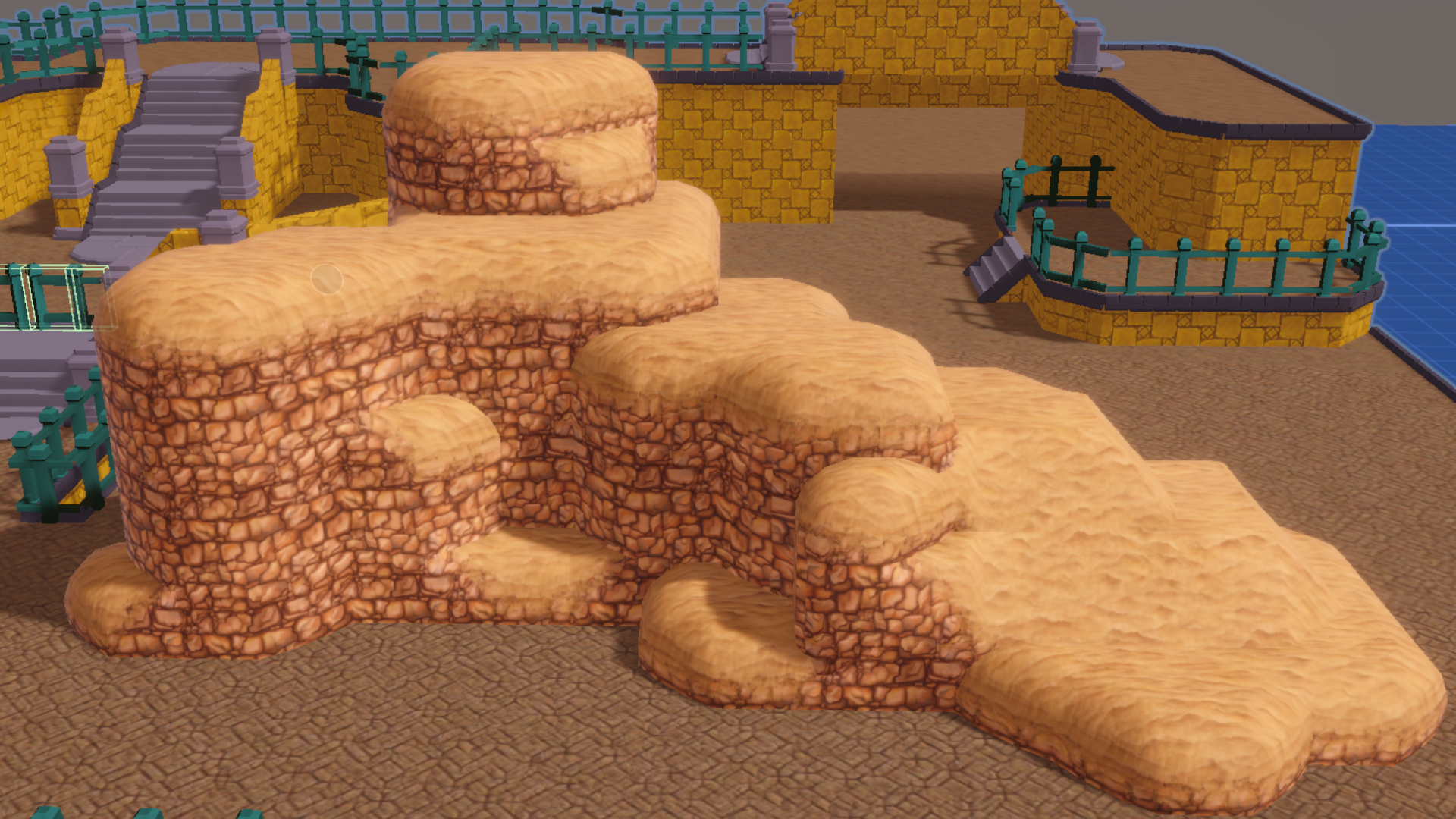
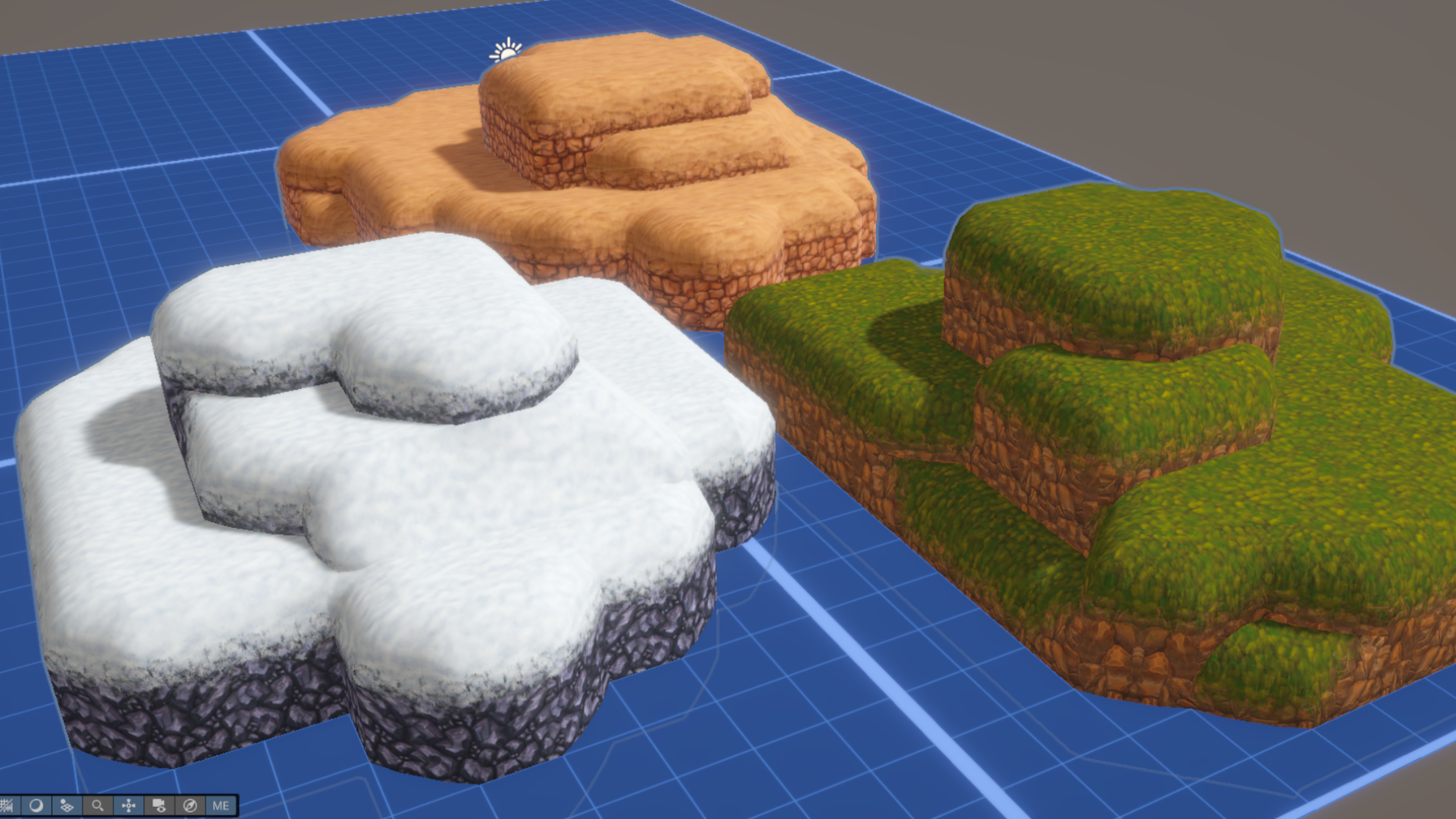
I will continue to develop and improve MAPGrid, and any profits I earn from the beta will go towards creating some higher quality tilesets and features for version 1.0, such as:
- Grass/Foliage System
- Path Painting
- Dynamic Tile Transitions
- Higher Quality Default Tilesets
- Water.
All feedback is appreciated!
I appreciate your kind words! There are plenty of ways I want to do dynamic music in the full game. I can't wait to work on them, but I need funding to afford to keep developing it. If you enjoyed the game, please consider giving a couple dollars to fund the development.
The perspective is definitely a difficult issue to address, but yes, it should be solved.
To address the punching issue, you're correct, it could be more obvious. The punching ability doesn't recharge over time/beats, it recharges gradually anytime you attack an enemy. It's really an experimental way of getting the player to avoid running away from enemies.
My brother does most of the music for my projects, Here's his Youtube Channel, but he hasn't officially released these tracks yet. He has made some pretty interesting tracks, but those are for the full game.
Hey, Thanks for taking interest in our project! I don't have a roadmap or definite release dates for these things, but I am working on them. For example, I'm experimenting and finding which pathing solution fits well with the way MAPGrid works, as well as working out the kinks in the default tileset templates, to make it as easy to use as possible without sacrificing functionality.
MAPGrid is being developed along side a game, so I have to prioritize the features required by that game.
Minimal documentation is provided as of writing this, but I plan to fully document the system when it's complete, but that's a LOT of stuff so I decided it's best to put that effort towards finishing the system first.
If you decide to use MAPGrid pre-release, feel free to ask me anything at the support email provided in the readme.