Thank you so much!
Matteo Sciutteri
Creator of
Recent community posts
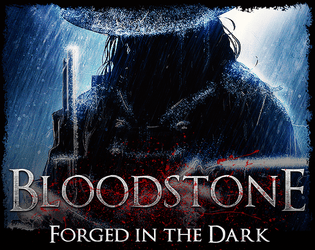
Hi! Thank you for your kind words. I'm happy you like the game. Here are the answers to your questions:
1. Arcane is everything related to the occult powers of the ancients. For example, the GM could present an obstacle like an arcane barrier that protects an area (i.e., the center of a cursed church). In this case, players can try to manipulate this power (to disable the protection or to use it to their advantage). About the bullets: you can use them to stun or to parry. Check the character sheet under the "Firearm" section.
2 and 3. Harms can have different sources. I.e., a bomb can inflict FIRE damage, a magic trinket ARCANE damage, a sword PHYSICAL harm. Some creatures can inflict MENTAL harm (i.e., paralyzing a character with fear or horror). The executioner can resist this kind of harm. The priest can resist OCCULT harms (i.e., a cursed spell or weapon).
4. You can use it whenever you want, but of course, the enemy can try to stop you during combat. So, using in a dangerous situation can be difficult or put a character in a worse position.
I hope I answered all your questions. Let me know if you need more help!
Now, to gain +1D, a player can introduce an additional threat. The push is after the first roll. In the book's notes, John explains the issue before: "You push, you roll three dice instead of 2, and if you obtain 6,6,6, you will be disappointed because the push was not necessary, so you wasted your stress."
Yes and no. There is more to take in account.
1. There is position / effect to check. You can roll a 6, but with a limited position, you can't inflict harm (maybe you can break their armor or magic defense).
2. If you make a Parry move, you are not making an Action Roll. And you resist the consequence of an Action Roll. So, if an enemy attacks you, you can try to avoid the attack by making an Action Roll (if in the fictional situation you can do, i.e. if you are tied up, you cannot flee), or you can try to parry the attack (and you can parry ONLY an attack, not any kind of danger). If you make an Action Roll, to avoid the enemy attack, you can push or keep the stamina for the (possible) Resistance Roll. If you try to parry, and you fail, you don't have any other option: you suffer harm (or the consequence of the attack).
3. Just to be clear, the NPCs can make their move first, if they have the opportunity or the power.
Hi!
Thank you for the questions. I hope I can clarify your doubts.
First of all, you wrote a bunch of questions using " turns", but in Bloodstone there are no turns - like in other FitD games, it's the GM that moves the spotlight back and forth between the characters and the scenes (if they are not together). So I'm assuming when you say "turn" it's more like "the action of the character".
Apostles:
- If the Apostle completes the ritual, it becomes a powerful entity - I suggest you to create an 8-sided clock to represent their dangers.
- If the characters reach the Church before the ending of the ritual, the Apostle has less power so a 6-sided clock is better.
- About the special abilities - it depends on how the Apostle is. Half-human, half-wolf? Or Half-human, half-bat?
Stamina:
- When a character faces an Action Roll, they can spend Stamina points to add dice.
- Than, you check the Action Roll result: there are any consequences? If yes, the player can resist but only if they still have Stamina points. If not, they cannot resist. If there are no consequences (i.e., they roll 6), you don't need to check the Stamina.
- After this, if they have spent the Stamina (pushing or resisting), they regain all Stamina points.
Parry:
You use the Firearms to Parry because that's how Bloodborne works - so, in Bloodstone you do the same stuff.
Parry interrupts the action of an enemy. So, if the enemy moves against a character, you can try to parry to interrupt their action. If you fail, the action becomes real, and you face consequences (i.e., a giant wolf attacks you, you try to parry the attack, you fail, you suffer harm).
Stun:
You CAN use a weapon to stun or if you want to harm. But in Bloodborne, most of the time, you use the melee weapons to inflict harm. The firearms are here to parry and stun.
Weapons:
Yes, Base and Alt forms are two different kinds of weapons. You transmute your weapon to do different stuff (again, like in Bloodborne).
It's not only a Light vs. Heavy attack - for example, you can have a cane with a blade that transforms into a metallic whip.
Resources:
You spend stamina because you don't mark on the character sheet when you use it (you will regain it very soon). You Mark blood and insight because you need to track them for a longer time.
Blood -> only to imbrue your weapon with blood
Harms - it depends on the situation, I guess. You can suffer 1 harm in a desperate situation if it's desperate about other details (like: you are chasing a living dead, fleeing with your girlfriend. It's fast, so it's a desperate position, but you don't risk much harm).
Night's Clock
If you fill it, the Apostle gains much more power, completing the ritual.