Loved the layers of spring mechanics and the groan/a-ha moment that preceded my successful present acquisition. And nice to see Microban 1 lurking in the top right corner aka the real gift to us all.
10/10 would enter your dungeon of springs again
If the first one is anything to go by, I’m in for an alphabetical treat in the coming months! (I also felt this way at the outset of Sufjan Stevens’ 50 States project, and didn’t feel shortchanged when the decades since provided just two outstanding entries).
Having fixed my spaceship, I’m now going to attend to my pollen-collecting activities.
Tired: Dragons hoarding gold, Knights attempting to smite them
Wired: Dragons generating wealth through Spa treatments
Inspired: Economic interdependency ending the conflict between Dragons and Knights
10/10 more spas should offer the rejuvenating effects of total incineration followed by steam-based resurrection
This was delirious & wonderful. I hope more people consider the psychogeography/tourism potential of making awesome puzzlescript games (Japanese whiskeymakers who love sudoku, where you at?)
That one level with the three barrels in the tiny room was a real treat – such a complex puzzle in so minuscule a space! Hope you keep making lovely games :)
I think Snake Up might have an unintended solution?
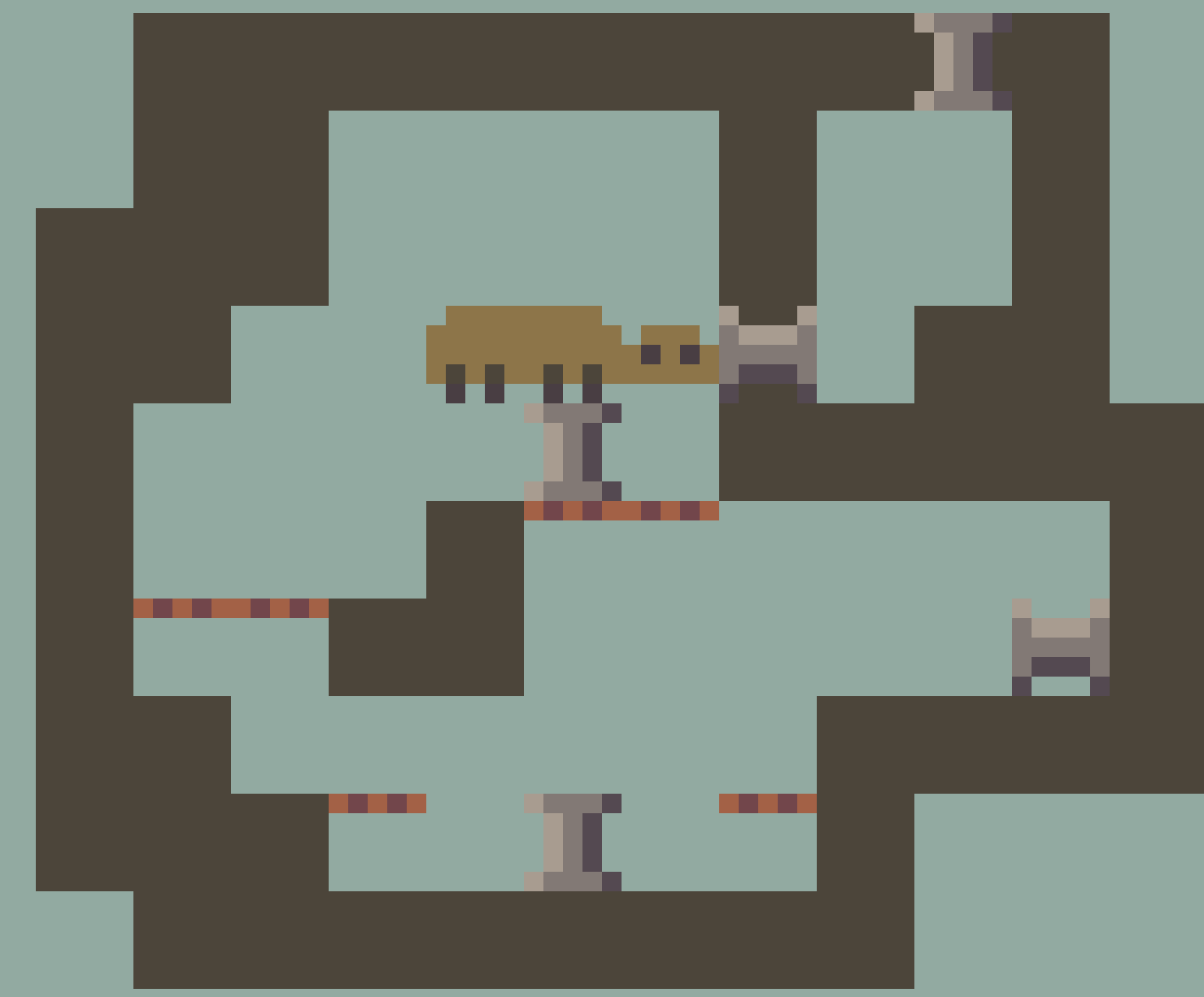
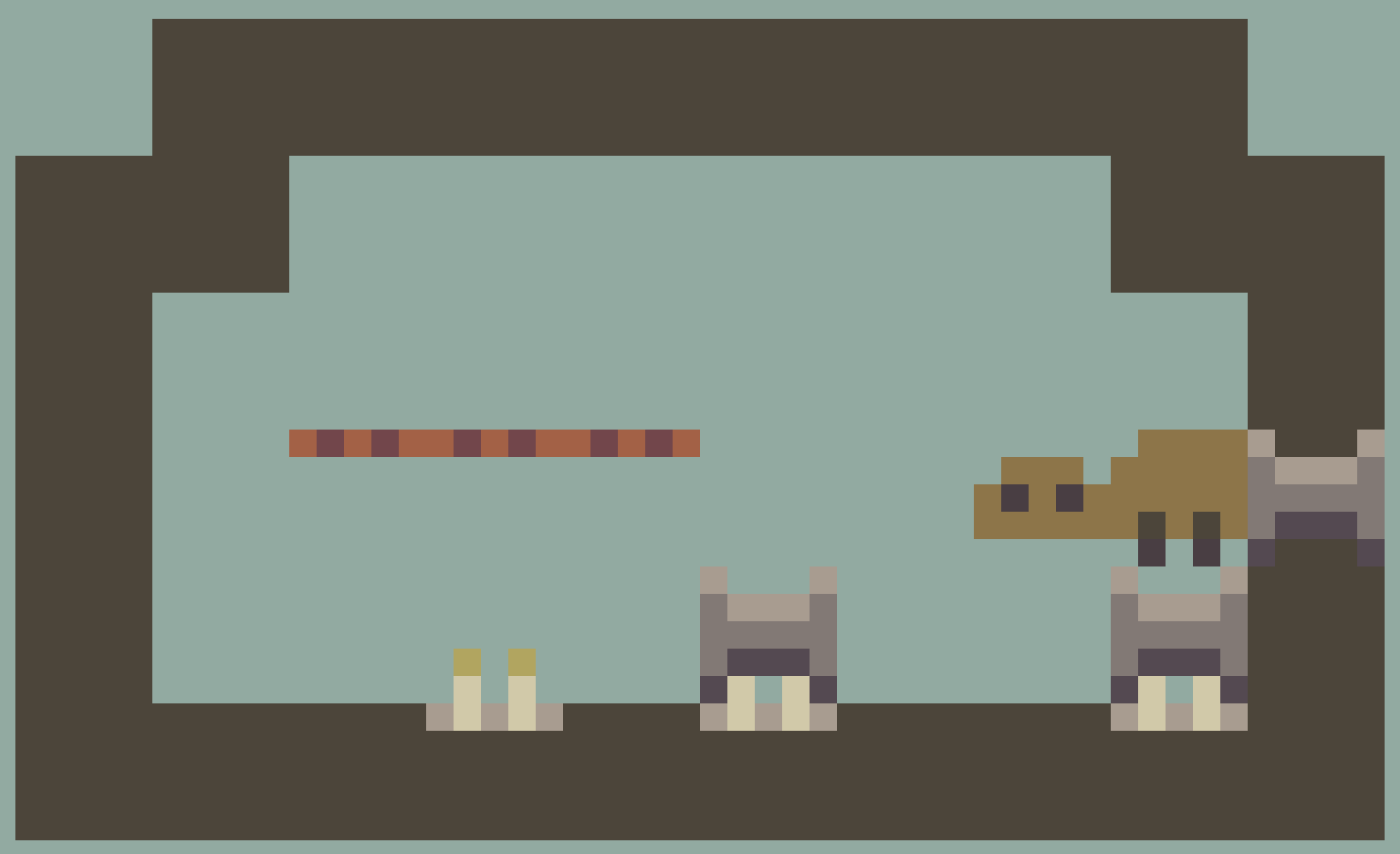
If you head immediately left, you can totally ignore the lower-right side of the level. You just need to get up next to the horizontal pipe and extend to your full height to push it one space to the right. Then you can get on top of it to exit the level:
This seems promising! You’re getting a lot of production value out of Puzzlescript :)
If you’re looking to make the lab more explorable, then some devs have done some pretty clever games with rooms you can move between and persistent states: eg https://neonesque.itch.io/remnant-labs
For my money, I think the puzzles could be a bit more focused. At the moment, complexity is achieved by adding more stuff — targets, color blocks, crates, level-real-estate etc — but without a lot of conceptual variation. If you look at David Skinner’s Microban levels (https://au-voleur.itch.io/microban-1), each one takes place in virtually the smallest possible area that’s required to accomplish the goal, and each one is built around a different insight into the basic idea of pushing blocks on to targets.
When the levels are conceptually tight (ie what does the player need to understand to complete the level), it allows you to be more expressive in how you put them together into sets. In simple terms, it might be: here’s a level that’s a bit fiddly, now here’s a level where I’ve changed one thing from that previous level and suddenly it requires a totally different solution path. If you can harness those variations then the flow across multiple levels becomes much more interesting: here’s an idea, but it’s more complicated than you think, unless you do this, but watch out for that, etc.
Looking forward to the future instalments!
Got a perfect clear with no orbs used. I suspect it’s 80% early dumb luck, 10% early rat king and 10% strategy. Plus the rat king revealed the eventual location of the bomb scroll as the other corners had rats in them. I think detonating all the bombs as soon as you get to 10 hearts is an important step to a perfect clear.
One strategic insight is that it’s best to start with the squares around the dragon, as they’re more constrained than everywhere else. One has to have the egg, and the squares that are directly North, South, East or West of it can’t contain 7s. Essentially that means if you click all the squares around the dragon and clear them, you’ve probably got a good layout for this challenge.
Early on you’ve got to expand in whatever direction you have good information for, and I suspect that if this goes in the opposite direction to the King Rat area then it might be best to restart. The rat reveal is essential for two reasons: 1. The rats give you much more flexibility in using up your hearts, 2. The information you get from killing them is even more useful in this run where you’re very constrained by not using orbs.
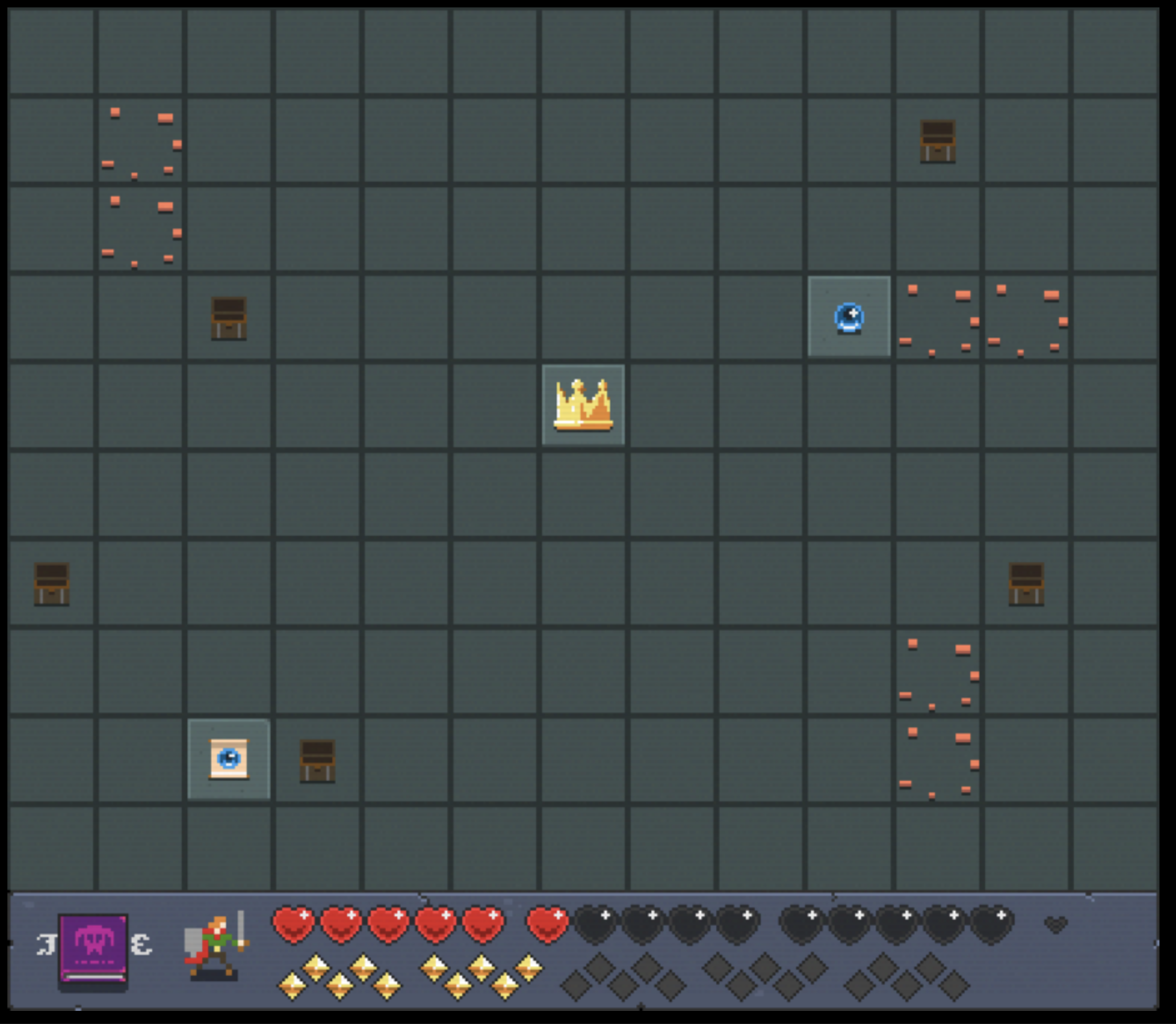
But the design is minesweeper with hidden information. Every enemy except for the bats, skeletons and green slimes has a feature that you can use to make deductions:
etc etc
It’s not a slamdunk with the three stamp attempt, because you likely won’t have enough hearts to clear the board unless you’re very careful about only spending hearts on unrevealed monsters (vs the slimes that get revealed by the slime mage scroll).
I found the best strat for the three stamp run is to restart the game (you can just press R for a quick reset) until you get a favorable starting reveal. Ideally you want the mice to limit the search area for the rat king to no more than 3 columns or, ideally, indicate the exact column it’s in. Otherwise it’s almost impossible not to accidentally click on unrevealed mice as you work your way through the board.
There is a way to make it less random if you’re just going for the Future Generations achievement
Leave the squares around the dragon unclicked unless you know for certain they contain a monster. When you get the blue orb scroll, don’t use it. Save it for close to the end and if it has nowhere else to proc, it will reveal the squares around the dragon.
It only looks like RNG because you’re not observing enough of the hidden patterns. Those things provide you with the additional information you need to make logical deductions.
For instance, below is a spoiler about Gargoyles..
Gargoyles always (unless bugged) appear in pairs and face towards each other
Or a question you could ask yourself about Guardians
How many Guardians are there? Notice anything about their shields? Where do they appear?
Or a question you could ask yourself about mice
Is there any significance in the direction the mice face in?
The broken walls are a really interesting addition. But I wonder if they highlight an issue in how the game conveys hidden information?
I assume that to avoid visual clutter, you don’t want to have fallen monsters all over the place. But equally, if you left dead monsters only where their position/orientation/etc was relevant, it might give away too much.
What if you had a toggle button or mouseover area on the bottom bar that just showed where the monsters you’ve killed were? It would allow players to make deductions without having to rely on remembering what they’ve killed. I guess an alternative would be a more elaborate marking system that could mark-up uncovered cells and distinguish between possible values and certain values (eg placing a purple 4 on two squares would denote the other gargoyle is here or here)
That was a rollercoaster! So much clever stuff packed into such a small space and it felt great to figure out the final trick.
I'll put it below the fold, so as not to spoil anyone (wish itch had spoiler tags!!) but you could put yet one more slightly mean sting in the tail
.
Not sure if this wholly avoids other solutions, but by removing one square in the wall of the room with lots of blocks in it, you'd maybe force the player to preserve one of the 14 blocks in that room to fill the gap in the wall
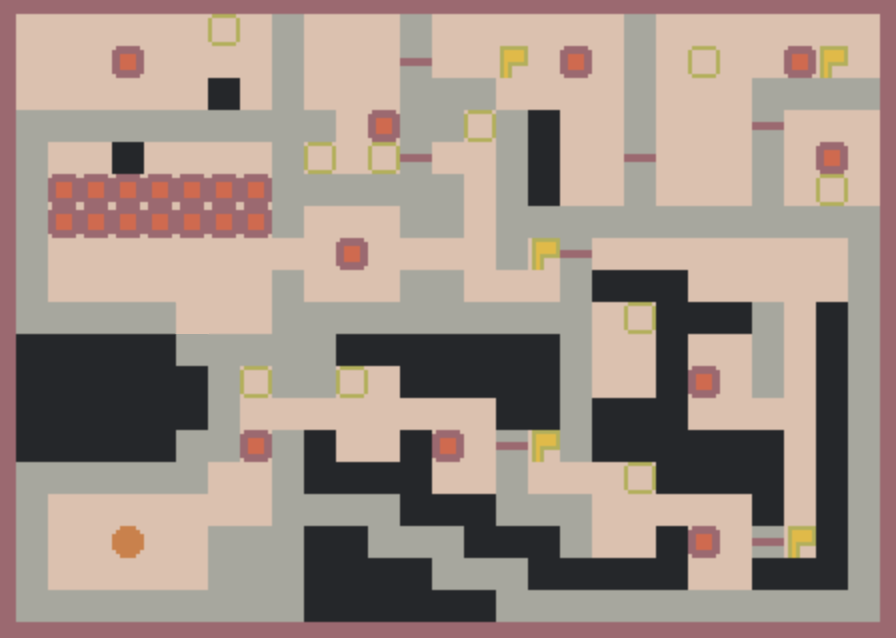
Ah! Was able to suss it out without having to resort to rot13-ing. I'd foolishly decided a certain move wasn't possible for the first missing 2 and the second 2 required such a feat of manoeuvring that I laughed out loud when I finally got it to work!
I think it's a case of spending too much time thinking I was missing something surrounding that one block that has sightlines to the big room and the last room, instead of being confidently logical.