Indie game storeFree gamesFun gamesHorror games
Game developmentAssetsComics
SalesBundles
Jobs
TagsGame Engines
(+1)

Why AI is Not a Panacea? After All, Nobody Believes in Magic...

Thank you for this formal and deeply analytical post. As a Visual Novel creator (writing under the Medow / MOS project), I highly appreciate your call to avoid echo chambers. I would love to add a counter-perspective to your thoughts, specifically regarding the "trapped" feeling of the dev community and the ethics of artistic survival.

Having a solid background as an IT instructor (from the days of IBM-XT, Basic, Symphony — a sort of digital proto-office — from... Wow, over 40 years ago), a webmaster for over 25 years (dorinm.ro), and a specialist with documented activity in emergency medicine, I cannot help but view this collective outrage through a purely clinical lens. It is time to stop putting cultural sterile dressings and moral bandages on what is, in essence, a severe case of adaptive necrosis and evolutionary stagnation.

Your analysis hits a very important point with the Microsoft Word analogy, whose current implementations are extremely aggressive, but I believe the situation with AI tools is even more widespread than we admit. We often point fingers at Renpytom, yet we overlook that industry-standard major utilities, such as Adobe Photoshop, Premiere, or even audio editing suites, have already deeply integrated generative and assistive AI into their core architecture. To draw a hard ethical line only at an engine developer using an LLM to eliminate the tedium of repetitive coding, while the entire digital production workflow relies on similar algorithms, seems like a selective standard.

This melodramatic narrative of "betrayal" regarding Renpytom's use of code assistants (LLMs) is built on a profound historical amnesia. This "infection" of algorithmic assistance didn't start suddenly in 2021 or 2023; it has been mutating within our software workflows for decades. Where were these code "purists" when early versions of Microsoft Visual Basic or Delphi introduced proto-AI mechanisms for syntax assistance and automated code generation? Where is the outcry against writing platforms like Hemingway or advanced editors that dynamically restructure an author’s syntax and recalculate text readability? We have been living in a symbiotic digital ecosystem for a very long time. Crying "anathema" now just because the tool received a marketing name like "Artificial Intelligence" is pure selective hypocrisy.

Let’s put the finger directly on the wound and clean the accumulation of pus in this discussion: the real issue here is inadaptation disguised as ethics. There is a foolish illusion floating around the community that AI is a "magic button" that replaces human intellect. The raw reality of production proves the exact opposite: an uneducated person, lacking deep practice, literary depth, or architectural logic, is utterly incapable of using AI to generate anything fluent, cohesive, and valuable. AI is not a creator; it is a competence amplifier. To manage an AI-augmented workflow that cumulates text, art, and code, one must transcend the condition of a mere technical executor and become a Narrative Architect.

My philosophy — which I call "Darwinian adaptation through technology" (visible in my VN project - MOS) — stands on the complete opposite side of the purist spectrum. I firmly believe that a creator’s greatest sin is the silence imposed by a lack of resources. For independent or solo creators, text often remains trapped on white pages because we do not possess the painter’s brush or because complex programming logic absorbs far too much of our finite lifetime.

In my universe, the story is 100% human — the heart, the emotion, and the architectural structure. But I use Artificial Intelligence as my own production department (art, sound, code assistance) to transform manuscripts into immersive visual experiences. Without these tools, these fragments of imagination would be lost forever in the abyss of "powerless" projects.

The panic we are witnessing comes from rigid programmers or niche artists who see their mechanical monopoly dissolving. As the pure technical "peak" (the linear writing of code or the mechanical drawing of an asset) is taken over by a layer that is increasingly profane in execution, the value shifts entirely to the overarching human vision and structure. In art, just like in biology, the law is absolute: adapt or perish. Using technologies as a production department to rescue complex narratives from the graveyard of projects blocked by a lack of resources is not cheating — it is pure Darwinian adaptation for the survival of your voice. Those who choose to waste their limited human lifespan doing repetitive tasks manually, out of a purist nostalgia, are free to do so, but they should not dictate the survival strategy for the rest of us.

While I respect your concerns regarding the ecological impact and the preservation of pure craft, I believe technology must serve to liberate creativity, not suffocate it. For many of us, adapting to these tools is the only way to ensure our voices are actually heard.

With respect,

Dorin Merticaru
(+1)

Hi, thanks for your opinion!

I agree with you when it comes to AI being present in Photoshop etc., the issue is mostly that Ren'Py isn't owned by a company, so that is certinly why people (including myself) feel "betrayed", whereas, I can at least speak for myself, I don't trust Adobe or Microsoft in the slightest when it comes to acting ethically. This is a selective standard, especially since, at the end of the day, Renpytom's goal is to make Ren'Py better to allow people to create games.

Now, I think I don't agree with you when it comes to inadaptation. I do agree, however, that AI isn't as simple as pressing a magical button that will do a task for you, and that, if you want AI to actually be efficient, you really need to work on your prompt in a way that will direct it efficiently. And although I am no expert, I have been trained, to my displeasure, to do that: so my problem isn't that I'm not able to adapt or handle the tool, my problem is with the tool itself — though I still admit it has merits, as I've mentioned in my original post when it comes to help people. Real life implications include, for example, allowing better water irrigation in some regions, which I think is an amazing use of gen AI (although research has raised some scepticism considering the ever-increasing water consumption of AI, but that's another discussion). To carry on commenting on this theme, I do not personally adhere to "survival of the fittest" as a philosophy/moral, as I don't think something being natural (natural selection) is necessarily good (for example, "survival of the fittest" would be a way to justify meat consumption; and yet, I'm a vegetarian).

It isn't true that the panic comes from "niche artists": when it specifically comes to art, AI has outraged the whole profession: it's not just a niche majority complaning because they can't adapt, but a whole field of profession that has been threatened, people who lost their livelihoods because they were replaced etc.

I think you raise an interesting point when it comes to indie artists not being able to bring some stories to life due to a lack of skills, and that's why, while I don't approve of gen AI when it comes to creation, I do feel empathy for those who eventually turn to it. Yet, I can't help but think of my own situation: I've been wanting to make visual novels since 2017, realised I wouldn't go far if I didn't learn how to draw, so I decided, in 2018, to learn how to draw. Eight years later, my art still looks amateurish, but I've developed some skills that I'm trying to grow, as a way to improve myself and still find an authentic form of expression, which I don't think AI truly allows, even under the supervision of a "narrative architect." So to that, I would reply that learning to acquire a skill is always better than just relying on an AI to do, for example, art for you, because it directly contributes to your growth as a person. But even for someone who doesn't have time to dedicate to that (existence has material conditions after all), I have worked with artists and voice actors who volunteered; and beyond me, the examples are numerous. People have skills they'd love to share for creation — that's what drives artists after all —, there are free resources, so I find the use of AI rather unjustified. Obviously, you can't ask too much of a person working for free, and free assets might not always match the idea in your head, but limitations allow creativity. I therefore can't see how using AI isn't instead suffocating creativity.

I can concede that AI is a useful tool for people who know what they're doing (like in Renpytom's case when it comes to programming). However, there is a difference between using AI for tedious tasks (Renpytom's case) and using it as a "narrative architect" to compensate for skills you don't have. Because that is the very problem: you don't have enough skill to redirect the AI, and therefore, you stop being a creative, you just let the AI take reins (for an example based on your profile, there is a picture of a woman: why aren't the buttons of her sleeve shaded in the "cartoon" version? why is the border of her hair blurry in the photorealistic version? why is there on the board a planet AND a brain???? That is because the two of them are giving "sci-fi", but I fail to see how someone studying space would also be studying the brain).

And your focus on the fact the story is human-written is interesting, because it echoes a perspective I used to have: I've always written, so I used to think that what mattered most was the story I write, rather than the quality of the art. Well, that is completely false: visual novel is a novel, but is visual. So I think that losing control over your art (as AI tends to cause) doesn't allow to make your voice "survive", if we are to use the Darwinian framework you offer: instead, someone speaks over your voice.

I am very grateful you shared your thoughts and phrased everything very respectfully! I appreciate it!

Best,

Chimériquement

(1 edit)

Why AI is Not a Panacea? After All, Nobody Believes in Magic... (2)

Thank you for your detailed response and for taking the time to go through my profile. I appreciate the openness to dialogue, but the way you interpreted my arguments and my project shows how easy it is to fall into the trap of hasty conclusions when one is unfamiliar with the entire journey behind a work. To a certain extent, your reaction reminded me of the discussions I sometimes have with my daughters — full of a noble idealism, but often detached from harsh logistical realities, and confusing a romantic attachment to manual effort with the value of the final result. I find it truly amazing how erroneously I was interpreted.

I will begin by emphasizing that any collaboration with valuable people is extraordinary — I myself have a profound respect for human geniuses like Renpytom (Tom Rothamel), Hyuchia (Diana Islas Ocampo), fr33mind, etc., whom, if I had absolute power, I would have rewarded better than fate rewarded Bill Gates or the great creator of Apple, for the freedom they offered us through their tools.

Furthermore, the history of free and open-source software (FOSS) is full of messianic figures — people who did not just create lines of code, but true monuments of creative freedom, refusing to sell their souls or their work to major corporations, thereby saving millions of artists from silence. I am thinking of Ton Roosendaal (creator of Blender), Spencer Kimball and Peter Mattis (creators of GIMP, a scalpel against the Adobe monopoly), Linus Torvalds (creator of Linux), Richard Stallman (the father of the GNU project and the Free Software movement), without forgetting Guido van Rossum (creator of the Python language) and, why not, the Godot Engine, thanks to the efforts of Juan Linietsky and Ariel Manzur.

Yet, the raw reality of truly independent (indie) creators is that we do not have the budgets or the teams of major corporations behind us. Volunteering and free resources are beautiful in theory, but in practice, they bring massive compromises that, more often than not, suffocate and kill major projects before they ever see the light of day. Yes, even I wasted over 3 years of my life completely empathetic to these ideas of ours, only to experience reality as it is.

Let us analyze the facts you present. At nearly 60 years old, I feel that... "Winter is coming"! From the perspective of human time management — which is a finite and unrecoverable resource — a rigid attachment to manual execution is not an indicator of growth, but one of biological and artistic self-limitation. Like you, I chose in the past to sacrifice nearly four decades to produce a "sub"mediocre aesthetic, just to maintain an "illusion" of "authenticity."

From your response, it seems you assumed that using AI in my project stems from a lack of practice or a desire to find an easy "shortcut." The reality is completely the opposite. Over decades, I have invested an immense amount of labor into pure, manual craft: I have written a monumental body of work that currently totals over 3.5 million words across 12 published novels, I have perfected my own drawing style, and I have mastered 3D graphics and volume projections through Blender, creating complex scenes and complete rigged character models. Only to find, in the end, that it has all turned back into "stardust" covering HDDs long forgotten in the storage room of my life...


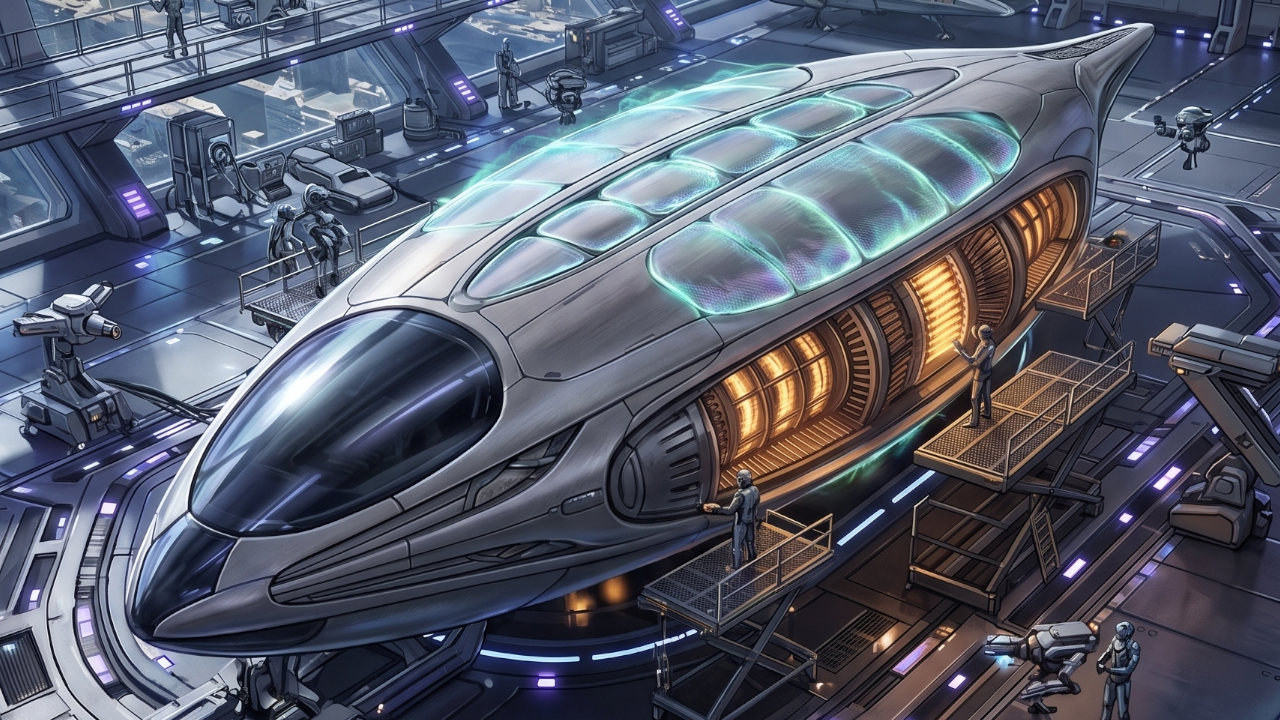
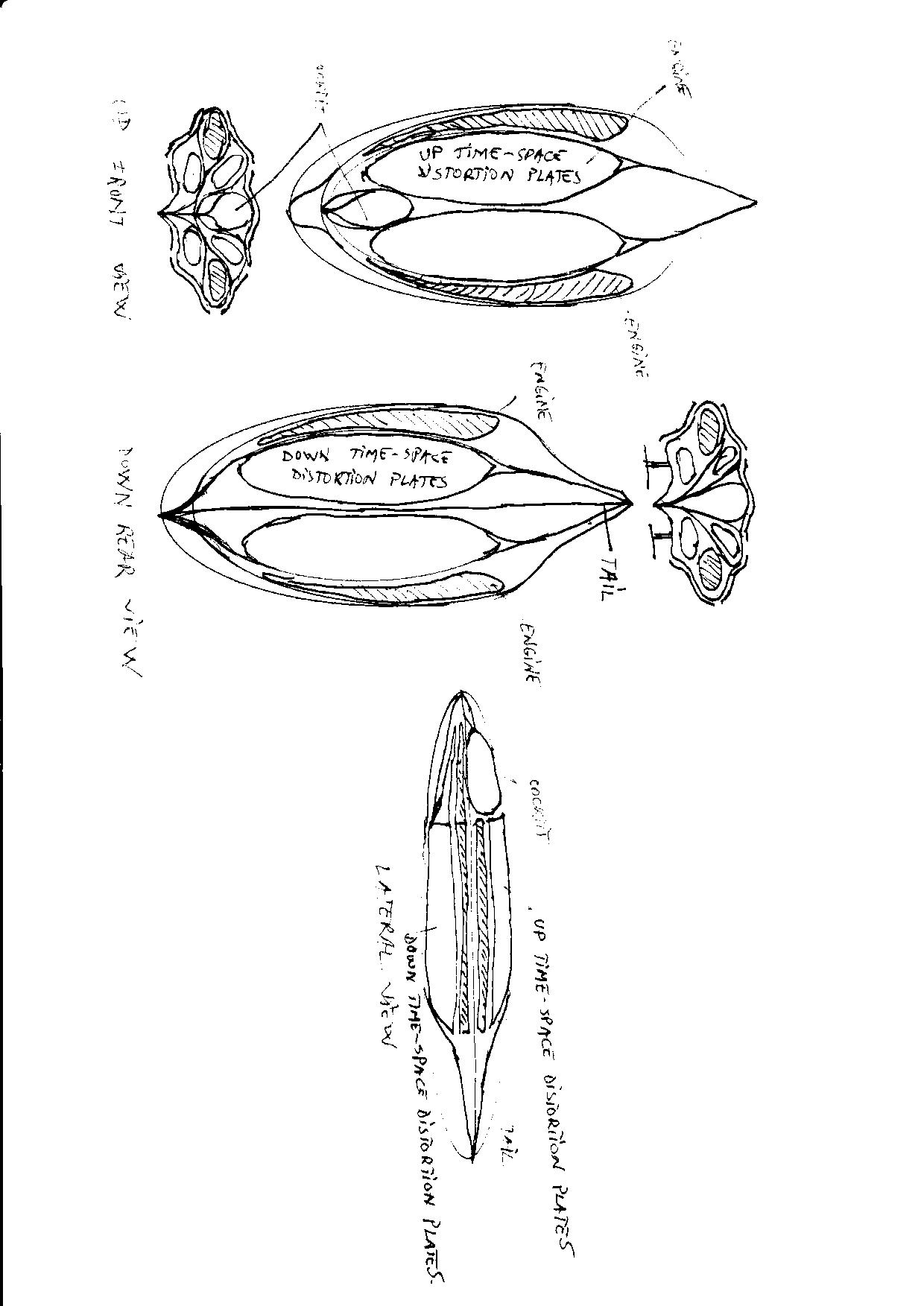
In the effort to create the MOS universe, I started from deeply personal elements: the visual characters are based on photographs of myself, my father, and my relatives, and the environment elements start directly from my own technical blueprints as a departure point. Why did I choose to integrate AI assistance anyway? Because of the only completely undefeated and finite resource: biological time. At one point, exhausted by the massive logistical barriers that threatened to bury my life's literary work forever in drawers, I had abandoned the idea of creating altogether, retreating professionally into the field of cybersecurity. The emergence of AI was a lifeline for me, a unique chance to rapidly "leap" over the physical obstacles of time so that these 3.5 million words would not remain trapped within the pages of books forgotten by myself in my personal library. Initially, I invested another 3 years of my life just to revive my accumulations on a writers' platform. But it turned into a 10-hour-a-day effort to understand and not be crushed by the explosion of these technologies before actually starting the production of MOS late last year.


Concluding on this point, the philosophy of MOS (Mortgage One's Soul) refuses, through learned experiences, this type of cultural conformism. I refuse to impose silence upon myself or generate a transmission blockage for my story just because I did not receive the biological ability to paint at birth, or because I no longer had the resources and time of my life to perfect it with sweat to a level that, regardless, would have been far from any possible evaluation of "professional" or "on-trend."

Regarding your observations on my profile, you asked rhetorically why a planet and a brain appear on the board, stating that "someone studying space wouldn't be studying the brain." This remark betrays precisely the lack of structural depth in your perspective. In substantive Hard Science Fiction (along the lines of Theodore Sturgeon or Isaac Asimov), the evolution of consciousness (the brain) and logistical expansion in baryonic space (the planets) are indissoluble. The brain in MOS is not a "sci-fi" decorative element thrown in at random; it represents the biological substrate of adaptation, the architecture of consciousness that must navigate the energetic mortgages of the universe. The AI executed, with difficulty, my orders, which more or less reproduced the conceptual correlation I demanded as a Narrative Architect. The fact that you see a contradiction there only demonstrates that you analyze elements in isolation, losing sight of the bigger picture.

Furthermore, you interpreted these imperfections as a "loss of control." In reality, it was a conscious strategic management decision. I could have forced the algorithms to strictly adopt my drawing style, but it proved impossible for an AI to ever truly understand even a single individual. Yes, strange as it is, it seems that sometimes not even a human being is capable of that! I arrived at a hybrid style, extremely difficult to control, and I deliberately chose to no longer consume my limited time trying to stubbornly maintain an inert aesthetic purism. I abandoned myself, out of pure considerations of productivity, to the errors of the technology, accepting them as an assumed cost so that the story could be delivered.

Look at the rest of the industry. Unity already uses AI massively (Unity Muse and Unity Sentis) in its workflows. The giants automate everything to increase their profit margins. Asking an indie creator to write everything manually, as a "purist," while the platforms they deliver on optimize their production through aggressive algorithms, is a form of economic suicide. Unreal Engine has deeply integrated generative AI and automated scanning (MetaHuman, RealityScan) to reduce execution time. If the top standard of the industry itself uses AI to generate virtual humans and three-dimensional environments, it is absurd to accuse an independent writer of using their own artificial "production department" to illustrate their work.

Is there really any need to further argue that relying on "volunteers" or free resources means turning your work into a hostage of whims and compromises? Limitations do not always liberate creativity; most of the time, in the real world, limitations kill independent projects and send them straight into the individual memory of forgotten ideas.

Accepting digital slavery to "giants," while simultaneously punishing an open-source developer who uses AI assistance to survive the workload, is a double standard that ethics cannot support. Everyone is free to choose their mode of survival. You have chosen the path of asceticism and manual limitation, accepting that your voice looks amateurish from a visual standpoint for the sake of the process. I have chosen the path of offensive Darwinian adaptation: I use AI as a subordinate production department so that my vision can be delivered to the world at maximum capacity, without compromises. History and evolution will decide which organism was better adapted to its environment.

All the best,

Dorin Merticaru

P.S. Oh, yes... My interventions regarding AI are not meant to proselytize or impose a cynical "survival of the fittest" philosophy. They were intended as a simple exchange of experience, honest and transparent, from one independent creator to other independent creators. My message is simple: let us learn to accept and master these tools, with all their errors, because they are our only chance to make our voices heard in a saturated digital world that will soon be completely omnipresent.

Thank you once again for the opportunity to clarify these nuances, and I wish you much success in perfecting your own artistic path.

P.P.S. By the way, my second certified qualification is that of a paramedic, a passion I have sustained with over 30 years of collaborative activity in the field of holistic medicine ("New Medicine")