https://oaktree-games.itch.io/infinite-initiative
Tribe Coding: Tragedy or Triumph?
I shipped a game this week that was built, in large part, with AI. On Itch, I know how that sentence tends to land. Let me make the case anyway — and then you can tell me I'm wrong.
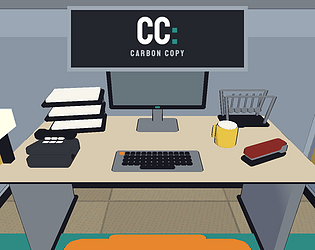
The game is Infinite Initiative. It's a free deckbuilding roguelike you play in your browser: queue a whole turn of cards, commit them at once, and watch the combo detonate while a sardonic Game Master narrates your worst decisions. Nine classes, endless runs, roll-for-initiative wired into the core. Go play it first if you like — the rest of this is the making-of, and the game should stand on its own.
Now the uncomfortable part.
The tragedy. I'm not going to pretend the worry isn't real. There's a wave of "vibe-coded" games right now — generated in an afternoon, shipped broken, slapped with AI cover art, built to grab a few bucks before anyone notices the seams. They bury good work under noise. They treat "I made a game" as something you can buy instead of something you do. If your instinct when you read "made with AI" is to brace for slop, that instinct has been earned, and I'm not going to try to argue you out of it. Craft is the whole point of this place. Anything that cheapens it deserves the side-eye.
The triumph. Here's the other side, and it's just as true. I'm one person. I have a day job, a new baby, and about two hours most nights. A year ago an idea this size would've stayed in a notebook — too much surface area for the time I actually have. This week it became a finished, free, cared-about game, because I worked the problem alongside an AI partner instead of alone.
I call it Tribe Coded, not vibe coded. The difference is the human. I made every design call. I did the balance, the cuts, nine audit passes, a regression review, the hands-on testing — the unglamorous care work you can feel when you play it. The AI was a real collaborator on the code and the writing. The bar didn't move. The speed did.
So here's exactly where the line falls — because hiding it would make me one of the people I just complained about:
Design, balance, QA, the final say — me. Every one of them.
Code & writing — me and the AI, in partnership. I reviewed and approved what shipped. (The GM's best lines come straight from my real tabletop group.)
Card art — AI-generated, through OpenArt on the NanoBanana model. A deliberate, one-time exception for this project, told to you plainly instead of left for you to find out.
Sound — synthesized in code at runtime. Music — a licensed chiptune pack from my own library.
And the one promise that doesn't bend: my main game, Cosmic Scale, is hand-drawn down to the last pixel in Aseprite, and it always will be. Two projects, two pipelines, one rule — tell the truth about both.
So which is it? I think the question is slightly wrong, and that's the real answer. Tribe Coding isn't a tragedy or a triumph on its own. It's a triumph when a person who cares uses these tools to reach further than they could alone — and a tragedy when a person who doesn't uses them as an excuse to skip the caring entirely. The tool isn't the variable. The care is.
A person who cared, using AI as a partner — not a person who didn't, using AI as an excuse.
That's the bet OakTree is making, out in the open. I'd rather be judged on it than dodge it.
So judge it. Play Infinite Initiative — free, right here. Break it. Tell me what feels great and what feels cheap; I want the hard takes too, not just the kind ones. The whole reason a prototype goes out into the world is to find out where it actually stands.
Tragedy or triumph? You've got the controller. You tell me.
— OakTree Games