Update: Central Cluster Balancing & The M1 Experimental Sandbox!
Hello Tycoons!
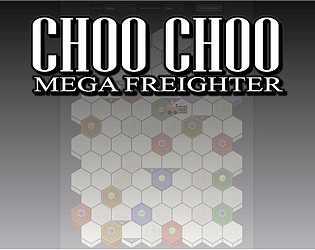
We have a crucial new update rolling out today for Choo Choo Mega Freighter! Over the last 48 hours, our primary focus has been tightening up the core gameplay loop. We've spent a lot of time analyzing the early-game progression curve and have performed a major rebalancing of the foundational meta-tree.
Additionally, we've been working in overdrive on several massive new gameplay systems. Instead of keeping them locked away in development, we're opening the doors to the M1 Macro-Region for some chaotic, unfiltered playtesting.
Here is the full breakdown of today's patch:
⚖️ Central Cluster Meta-Tree Balancing (Core Focus)
<span class="selected" <the="" most="" important="" part="" of="" this="" update="" is="" the="" health="" core="" game.="" we've="" taken="" a="" hard="" look="" at="" pacing="" early="" game="" and="" heavily="" restructured="" rebalanced="" <="" span="">>span class="selected">Central Cluster</span> of the meta-progression tree.
- Early-Game Smoothing: The costs and pacing of the foundational nodes have been adjusted to create a much smoother, more rewarding progression curve for new and returning players.
- Decluttering: To ensure the core upgrades feel impactful and easy to navigate, we've moved all the highly advanced, niche mechanics out of the Central Cluster entirely. The core tree is now strictly focused on the fundamental tools you need to survive.
🧪 Welcome to M1: The Experimental Playground
So, where did all the advanced mechanics go? We've transplanted 12 brand-new, highly complex nodes into their new home: the M1 (Coal) Macro-Region (12 o'clock).
⚠️ PLAYTESTER WARNING: These M1 nodes are highly experimental. They are absolutely not balanced, they are not in their final order, and their costs are likely completely out of whack. We are putting them in your hands early specifically for playtesting. Go wild, break the economy, and let us know what happens!
Here is what you can playtest right now in M1:
- <span class="selected" <the="" waste="" management="" pipeline:<="" span=""></span>>span class="selected"> Pollution is now an economy. Unlock the Waste Permit to bypass landfill cooldowns, build Trash Compactors to crush garbage into deliverable Compact Trash, and use Waste Foundations or Waste Retrofits to build cities that demand the trash!
- <span class="selected" <the="" "lunchtime"="" mechanic:<="" span=""></span>>span class="selected"> Unlock the Diner hex. At the 50-second mark, trains will dynamically route here to idle, saving you massive amounts of fuel (and muting engine noise at Level 2).
- Advanced Traffic Control (Gates): Build Track Gates or City Gates that project 3D volumetric laser walls. These block trains from passing based entirely on whether their cargo holds are full (Amber) or empty (Cyan).
- Recipe Cities (Sync & Async): Advanced cities demanding complex supply chains. Assembly Cities demand 2 distinct goods over time, while Fusion Cities require 2 goods to arrive simultaneously, doubling market values and putting your train into a +10 Fuel Overfill state!
- Deadhead & Monopoly Hexes: Smart-routing infrastructure. Deadhead Hexes reward empty trains with +3 Fuel, while Monopoly Hexes grant instant cash bonuses for hauling stacks of identical goods.
🐛 Critical Bug Fixes & Technical Polish
- UI/Macro-Bridges: Fixed the SVG rendering system so that macro-bridges connecting clusters render correctly. We also wrote a custom interpolation algorithm to guarantee that the UNLOCKED! placard sits flawlessly in the dead-center of the visual gap between macro-clusters.
- Depot Crash: Fixed a hard crash that occurred when players tried to start the ignition sequence without a Depot placed on the board.
- Start Button Exploit: Fixed an exploit where players could forcefully click the Start button even if the UI showed it was "LOCKED" due to missing tracks, trains, or fuel.
- City Generation: Hardcoded the city-generation algorithm to ensure Compact Trash and Coal never randomly spawn in the early game before they are legitimately unlocked in the tree.
Jump into M1 and let us know which of the new experimental features you enjoy the most. Thank you all for playing and continuing to leave feedback!
— Moe

 2026-03-23 Challenge done!
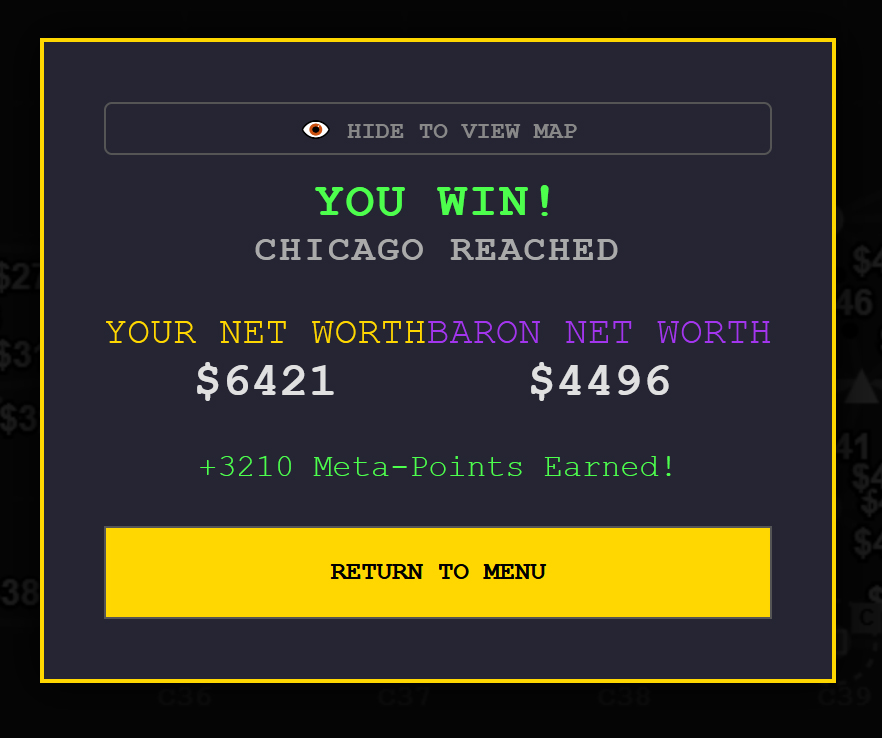
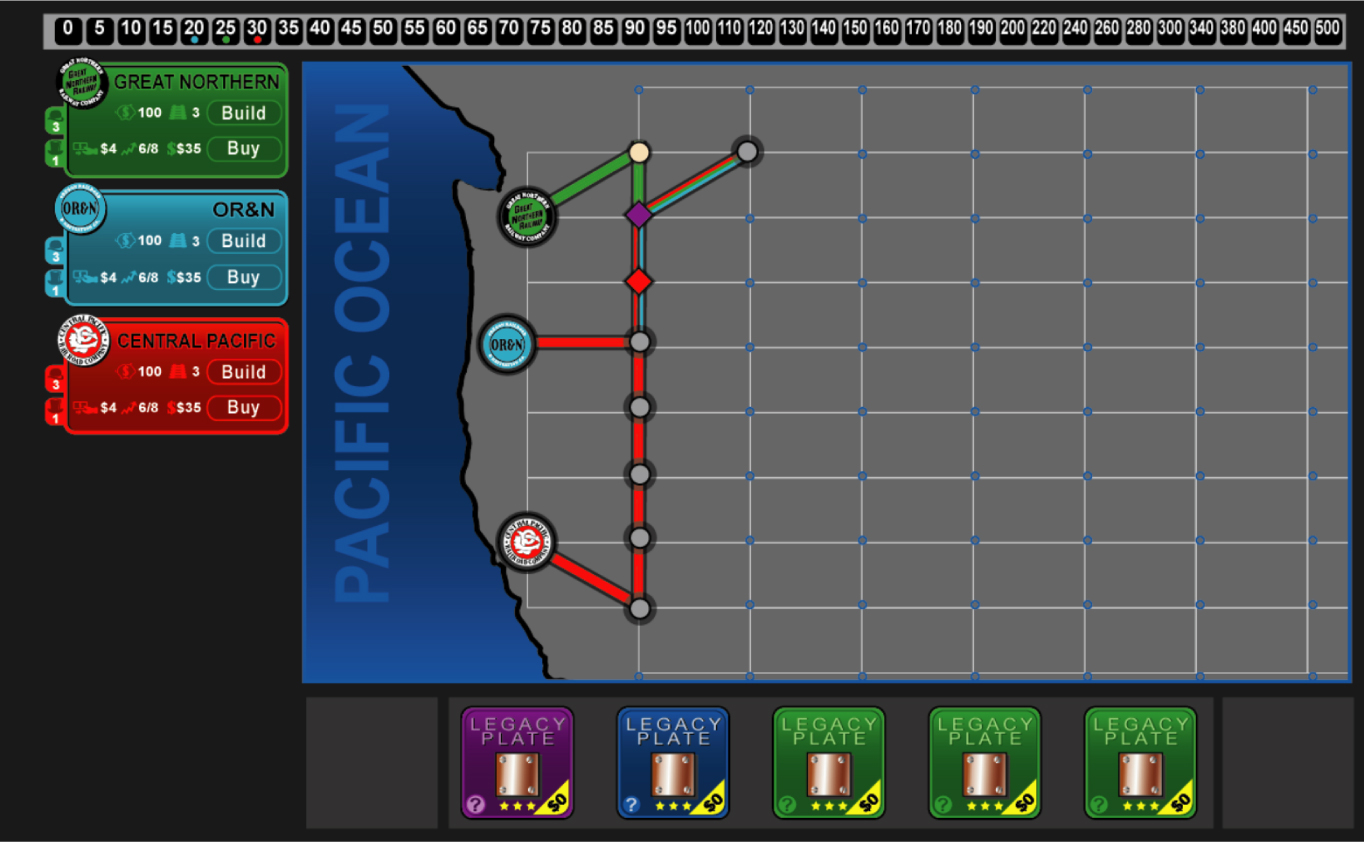
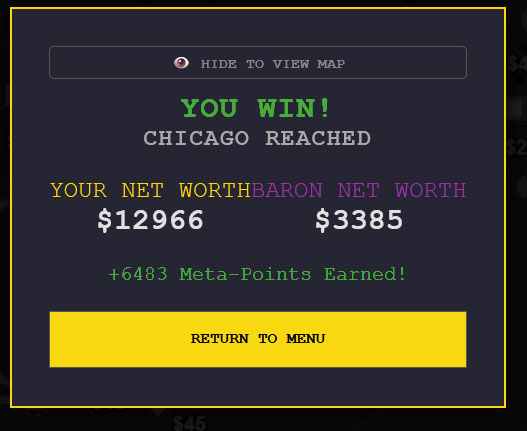
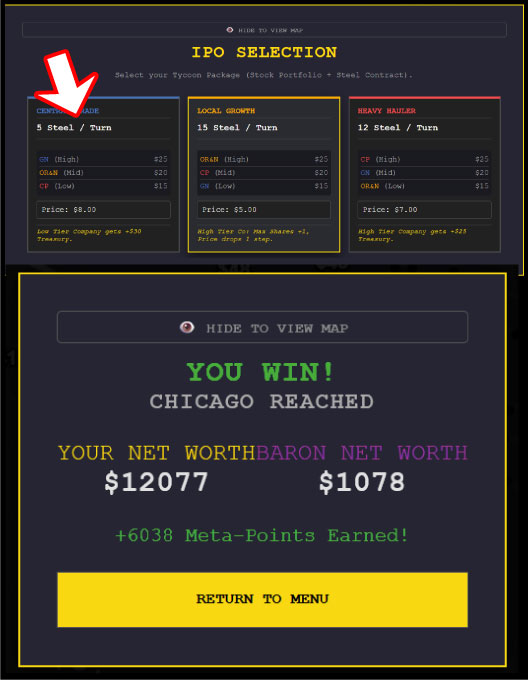
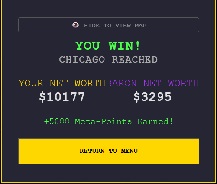
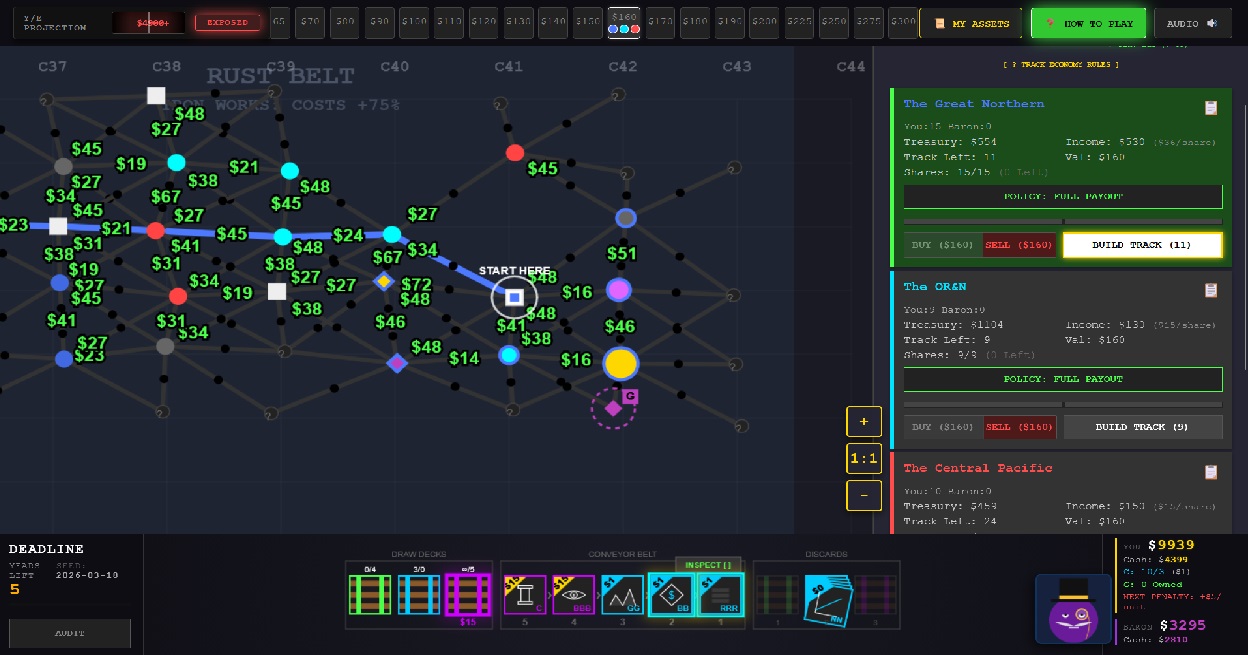
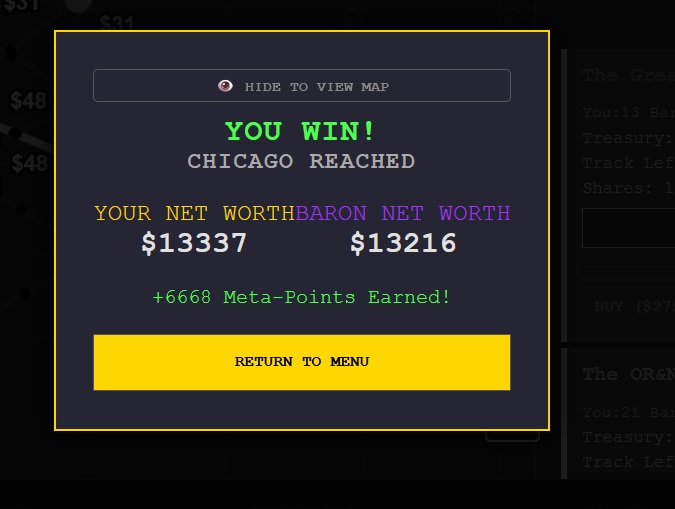
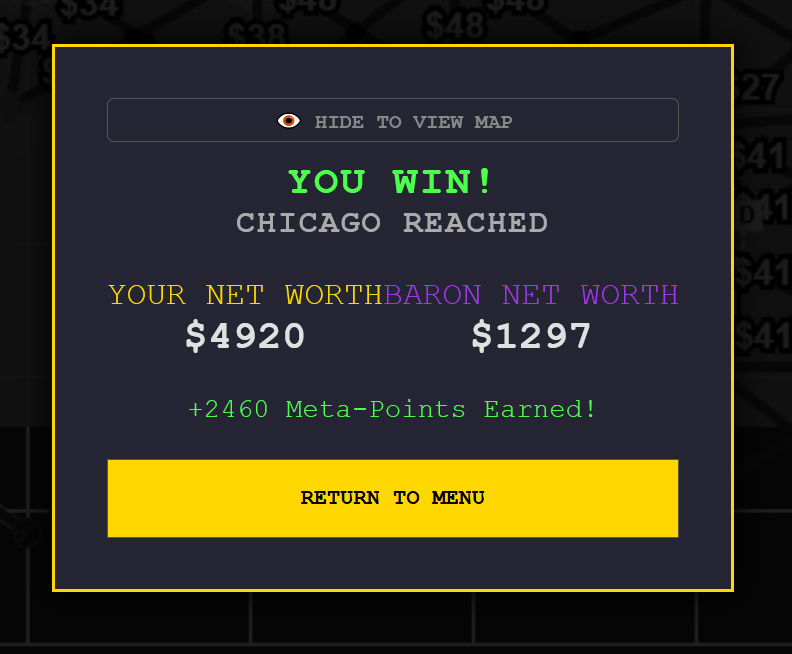
 is a hard one!