Indie game storeFree gamesFun gamesHorror games
Game developmentAssetsComics
SalesBundles
Jobs
TagsGame Engines

hotel.kilo

7
Posts
14
Followers
4
Following
A member registered Oct 10, 2024 · View creator page →

Creator of
Recent community posts

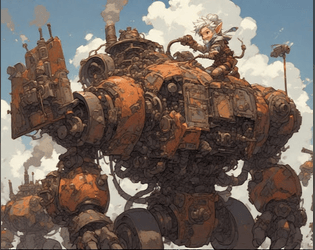
Q1: What is the core emotional and thematic focus of "Echo in the Hangar"?

"Echo in the Hangar" is a game that deeply explores themes of grief, absence, and the breakdown of systems, whether mechanical or emotional. While it delves into heavy topics, the game's tone primer explicitly states a desire to avoid being a "bummer," instead encouraging "gallows humor, Pika mysticism, mech superstition, and improbable friendship." This unique blend allows sessions to range from pensive to strange, highlighting how absurdity and beauty can sustain individuals amidst profound loss and systemic fraying. The game emphasizes collective experience, captured in its mantra: "We spiral together. We witness each other. We carry what we can."

Q2: How do players navigate the emotional intensity of the game?

Players navigate the game's emotional intensity primarily through the "Tone Dial." This tool is used during Session Zero to establish shared emotional expectations for the group, with settings ranging from "Light Spiral" (✨) to "Pensive Core" (🌧), "Bleak Beauty" (🌙), and "Igloo Threshold" (❄). The Tone Dial can drift from session to session, or even scene to scene. If the group crosses into the "Igloo Threshold," which signifies "sublime silence" and "sacred futility," they are encouraged to pause, breathe, and collectively decide whether to remain in that dark space or "spiral toward the next light." This collaborative approach ensures that the emotional journey is consensual and managed by the players together.

Q3: What is the "Shred Index" and how does it impact gameplay?

The "Shred Index" is a crucial shared meter, ranging from 0 to 10, that tracks the squad's collective emotional wear, mission pressure, and quiet breakdowns. It's not about individual damage, but rather the system's overall decay. The index ticks up when a character's "Flaw" is triggered, someone "spirals" emotionally, a character is lost, behavior changes due to absence, a personal object is left behind, or a lie is told to maintain morale. As the Shred Index rises, the game's atmosphere shifts, moving from "Light Spiral" (0-3) to "Pensive Core" (4-6), "Bleak Beauty" (7-9), and ultimately "Igloo Threshold" (10). Reaching 10 signifies a "collapse" where something breaks—a character, a mech, a command, or a bond—leading to outcomes like the "Igloo Threshold," the surreal "Skyfall", or a "Final Transmission."

Q4: Explain the concept of "Echoes" and their role in the narrative.

"Echoes" represent characters who are lost but not truly gone, becoming a haunting presence within the narrative. When a character reaches the "Collapse" state, they can transform into an "Echo" with various modes:

  • Ghost: Present in whispers, static, and dreams, highlighting forgotten details or past routes.
  • Gadfly: A sharp, unfiltered presence that disrupts comfort with commentary, rumors, or sarcasm, often revealing unspoken truths.
  • Conscience: The unresolved voice in another's head, asking uncomfortable questions or offering absolution/denial.
  • Log: A dispassionate record or pattern, existing as data (flight logs, training footage), reminding others of archived truths.
  • Elsewhere: Alive but distant, reassigned or spiritually detached, describing changes in the world from afar or sending ambiguous messages. Echoes serve as a "pressure valve" for the GM-less system, allowing past events and characters to continue influencing the story, reflecting the game's focus on memory and absence.

Q5: How do "Functions," "Flaws," and "Spiral Anchors" define a character?

These three elements form the emotional and mechanical core of a character's identity:

  • Function Stack: This defines a character's coping profile, with modifiers (+3 to –2) across five traits: Reason (logic), Impulse (action), Recall (memory), Wonder (idealism), and Grounding (empathy). Players roll a 1d20 plus the relevant modifier to determine success in actions, with the outcome shaping the tone.
  • Flaw: This represents "what breaks you—habitually, quietly, honestly." Each Archetype has a specific Flaw trigger (e.g., The Ace shuts down trust with procedure, The Bleeder absorbs others' pain). Triggering a Flaw earns "Spiral Points" and may tick the Shred Index, representing a character's meaningful unraveling rather than failure.
  • Spiral Anchor: This is "what holds you—until it doesn’t." It's a memory, belief, or ritual that provides emotional stability (e.g., "I still make room for her in the cockpit."). These anchors are deeply personal and reflect the character's internal struggle and connection to their past or lost comrades.

Q6: What is "Skyfall" and when might a group engage with it?

"Skyfall" is an optional "lore module" or "post-spiral expansion" that offers a surreal change of pace. It's an uncharted jungle island covered in mech debris, where the local inhabitants, the Pika, believe a crashed pilot (or pilots) is divine. It acts as a "tone palette cleanser" or amplifier for tables that have hit the "Igloo Threshold" and want to pivot into "strange catharsis." In Skyfall, a character who vanished can become a myth, and the game uses "Reverence Meter" and "Echo Points" to track the Pika's belief and the ability to invent dogma or reshape reality through myth. It allows for a dreamlike, absurd, or even return-to-reality experience, filtered through myth and misinterpretation.

Q7: What safety tools are embedded in the game, and why are they important?

"Echo in the Hangar" places a strong emphasis on emotional consent and player safety, stating "The mission comes second. The table comes first." Key safety tools are established during Session Zero and can be adjusted throughout play:

  • Lines & Veils: To identify topics that are off-limits (Lines) or should fade to black (Veils).
  • Script Change Tools: "Pause," "Rewind," and "Fast Forward" allow players to control the pacing and content of the narrative.
  • X Card: A simple way for players to stop or skip content that makes them uncomfortable by tapping or saying "X."
  • Open Door: Players are explicitly told they can step away from the game at any time without needing an explanation. These tools are crucial for a game that delves into potentially heavy themes like grief and absence, ensuring that all participants feel safe and comfortable exploring the emotional landscape.

Q8: How does "Echo in the Hangar" acknowledge its inspirations and its unique approach to rules?

The game openly acknowledges its primary inspirations: Dan Abnett's "Interceptor City" for the concept of "Shred" and emotional unraveling as a mechanical cost, and "Mobile Suit Gundam: MS Igloo" for providing the "Spiral's edge" and the "sublime silence" of the "Igloo Threshold." The rulebook explicitly frames itself as "unapologetically, a thank-you note to both."

Furthermore, the game takes a distinctive approach to its rules, declaring itself a "memory system. Not a rules system." It notes that "Fragments shift. Tone drifts. Echoes reword what was once written." If players encounter "contradictions, gaps, or unresolved mechanics," they are encouraged to treat them as "artifacts" and collaboratively resolve them at the table, invent new logic, or "let silence answer instead." This flexible, narrative-first philosophy underscores the game's emphasis on shared storytelling and emotional resonance over strict adherence to mechanics.

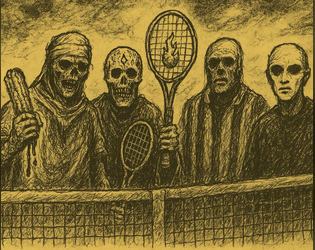
What is "BJÖRN BORG: SERVE THE FLESH"?

"BJÖRN BORG: SERVE THE FLESH" is described as a "MÖRK BORG Grindcore Tennis Mini-RPG." It's a role-playing game where players engage in brutal, ritualistic tennis matches, emphasizing carnage and divine prophecy over traditional athleticism. The game's tone is grimdark and chaotic, aligning with the MÖRK BORG system's reputation for dark fantasy and high lethality.

How are characters created and what are their core abilities?

Character creation involves combining a Nordic and violent name (e.g., Ulf Deathgrip). Players assign points (-3 to +3, totaling 0) to four core stats:

  • Strength: Governs serve power and "unholy fury."
  • Agility: Determines footwork and return precision.
  • Presence: Used for flaunting, screaming, distracting, and seducing opponents.
  • Toughness: Represents grit, endurance, and "churro digestion." Each character also starts with HP (1d8 + Toughness, minimum 1) and chooses one piece of starting equipment like a Racquet, Flashy Shoes, Headband, or a Gender Neutral Codpiece, along with a sacred churro.

What is the structure of a tennis match in "Serve the Flesh"?

A match follows a loop of four actions: Serve, Return, Flaunt, and Toughness checks.

  • Serve: (Strength check, DR12 or DR14 for power shots). Two faults result in a point loss.
  • Return: (Agility check, DR12). Failure means the opponent scores. A critical fail means the ball hits a Ball Boy, leading to retaliation.
  • Flaunt: (Presence check). Success grants a bonus to the next roll, failure a penalty. Critical failures cause damage and loss of Presence.
  • Toughness Checks: Start from Rally 4 and increase in difficulty (DR12, DR14, DR16...). Failing results in a penalty to all rolls until rest or churro sacrifice. Matches can be of different formats: Sudden Serve (3 Sacraments to win), Standard Carnage (4 Sacraments), or Grand Slam of Bone (6 Sacraments). Victory can also be achieved by "Glory" with enough Flaunt successes.

How does the unique scoring system work?

The game uses a thematic, brutal scoring system instead of traditional tennis terms:

  • Love becomes Hate
  • Fifteen becomes Blood
  • Thirty becomes Flesh
  • Forty becomes Ruin
  • Advantage becomes Glory Winning a game awards a "Sacrament," which are the main objective for winning the match formats.

What role do "Churros" and "Flesh Points" play in the game?

Churros are sacred items with various effects when consumed or "sacrificed." A "Crunch of Remembrance" heals HP and requires a shameful confession. "Powdered Prophecy" offers a temporary stat boost (Serve, Rally, Flaunt) or other benefits like regaining a Flesh Point, but can also be filled with wasps causing damage. Special churros like the "Churro of Doubles Unity" or "Black Churro" offer unique benefits or drawbacks. Flesh Points are a crucial resource. They are earned through confession, sacrificing HP, or crowd favor. They can be spent to reroll failed rolls, cancel critical failures, or automatically pass Toughness tests, providing a way to mitigate bad luck or endure the match's harsh conditions.

What are "Court Hazards" and "Ball Boy Retaliations"?

Court Hazards are environmental effects that alter the rules or add challenges to a match, rolled randomly. Examples include "Ashen Court" (increasing Agility DR), "Blood-Slicked Clay" (causing damage on Toughness failures), or "Screaming Net" (requiring Presence checks before serves). Ball Boy Retaliations occur when a player critically fails a Return roll and hits a Ball Boy. These are punitive effects, such as the "Cursed Ball" (increasing the next Return DR), "Acid Spit" (dealing damage), or "Doll Effigy Tossed" (penalizing the next Flaunt). If three or more retaliations occur, a Ball Boy can ascend to become the "Umpire of Gristle," issuing divine curses.

How do Doubles Rules and the "Holy Triangle Doctrine" change gameplay?

Doubles Rules:

  • One player per team serves.
  • Both teammates roll Return; either success continues the rally. If both roll a 1, the crowd pelts them with fruit (1d4 damage each).
  • Both teammates roll Flaunt, with cumulative results (two successes = +2 bonus, one fail cancels one success, two fails = -2 shame).
  • A "Churro of Flesh Unity" can be shared for a doubles bond (+2 to RALLY together), but betrayal has severe consequences (-2 TOU permanently, lose Flesh Points). Holy Triangle Doctrine: This optional rule triggers when three players are tied in Sacraments or deeply entangled in rivalry. All three roll Presence, and the highest chooses a powerful effect like a +2 bonus to their next roll, revealing an enemy's secret, or gaining a Flesh Point. This adds a layer of strategic manipulation and interpersonal conflict.

What does the provided "Doubles Playtest" demonstrate about the game in action?

The "Doubles Playtest" simulates a "Sudden Serve" match (3 Sacraments to win) between two teams, The Bleakvolleys and The Gorestrings, on the "Court of the Inverted Crowd" (Agility DRs +2). It highlights several core mechanics:

  • Character Stats & Equipment: Characters like Gunnar Hatefist (high STR, low PRE) and Freya Bloodspin (high AGI, high PRE) use their strengths.
  • Match Flow: The rally-by-rally breakdown demonstrates Serve, Return, and Flaunt checks, with Toughness checks starting in later rallies.
  • Consequences of Failure: Double faults (Ingrid in Rally 4), critical fails (Gunnar & Freya in Rally 2 hitting Ball Boys), and their associated Ball Boy Retaliations (Tripwire Roll, Acid Spit, Doll Effigy) are showcased, along with the crowd pelting due to double critical failures in doubles.
  • Churro Usage: Viggo uses a "Crunch of Remembrance" to heal and confess, while Gunnar uses "Powdered Prophecy" for a Rally bonus and to heal.
  • Scoring & Sacraments: The Bleakvolleys steadily gain points and ultimately win the first Sacrament, demonstrating the scoring system in practice. The playtest successfully conveys the grimdark, chaotic, and high-stakes nature of the game, with injuries, confessions, and tactical use of churros.

What is SOUL//HACK?

SOUL//HACK is a unique tabletop role-playing game that moves beyond traditional cyberpunk tropes. Instead of breaking into computer systems, players delve into symbolic systems of memory, grief, and identity, experiencing "metaphysical transformation." It's described as a "ritual operating system" where the system "welcomes you in—politely, beautifully, irreversibly." The game focuses on semantic recursion, emotional transactions, and the progressive dissolution of the player-character's selfhood, treating identity itself as data to be exfiltrated, encrypted, or erased. It's a "mapless cyberpunk descent into symbolic systems, recursive identity, and memory collapse."

How does SOUL//HACK differ from traditional RPGs or cyberpunk games?

SOUL//HACK intentionally subverts many traditional RPG conventions. It trades initiative for invitation, stats for symbols, and power for semantic recursion, emphasizing metaphor over geography. Players don't use "decks, ICE, or monofilament wire"; instead, they engage with "questions, secrets, items that remember you better than you remember yourself." Unlike games where characters have "builds" or fixed "stats," SOUL//HACK characters are defined by a "Triad" (You Bring, You Fear Losing, You Entered the Zone To) and are expected to change significantly. The game isn't a "hacking simulator" or "tactical infiltration" but rather a journey of "metaphysical transformation" where the cost of progress is "your selfhood."

What are "The Zone" and "Areas" in SOUL//HACK?

"The Zone" is not a physical place but a powerful, adaptive metaphor for the real-world hack or symbolic system being infiltrated. It's described as "a skin stretched over the real-world hack: a bank heist, a data leak, a jailbreak in the corporate mind." Within the Zone, "Areas" are not locations but "recursive psychological thresholds" or "states of being" expressed through memory and metaphor. Examples include "The Glass Orchard" (a firewall disguised as crystal trees) or "The Choir of Unspoken Names" (invisible voices begging for recognition). Each Area presents a surreal prompt and demands a "Transaction" that further unravels the player's identity.

What are "Transactions" and how do they work?

Transactions are the core mechanic of SOUL//HACK, representing metaphysical exchanges where players "give, gain, transform, or fracture a part of yourself." Players engage with resources called "Secrets" (truths carried), "Items" (objects with Zone significance), and "Questions" (unresolved aspects of identity). When a player declares a Transaction, they assess its "Narrative Weight" (Trivial, Personal, or Soulbound), which applies a modifier to a 1d6 roll. Success leads to the intended outcome, often with added "Burden," while failures or critical rolls can trigger "Burden Spikes," "Instability," or "unintended effects," emphasizing that every action carries a cost and transformation.

What are "Burden," "Instability," and "Mutations"?

"Burden" represents a character's "psychic load—the weight of memory, grief, contradiction, and identity." It typically increases with each Transaction. Reaching certain Burden levels triggers "Soft Mutation Thresholds," leading to "Pre-Mutation Symptoms" or Mutations locking in. "Instability" signifies "short-term volatility" or closeness to "psychic or symbolic rupture," increasing when players delay Transactions, others Fracture resources, or Zone Feedback triggers. High Instability can lead to "Glitch Mutations." "Mutations" are the Zone's signature, representing how it rewrites the character. They manifest as sensory shifts, behavioral compulsions, Triad transformations, or resource distortions, and can be Minor, Major, or Persistent, carrying over into future game cycles.

What is the "Landfill Lexicon" and how is it used?

The "Landfill Lexicon" is a glossary of poetic, corrupted terms that form the Zone's unique language, described as "a system of metaphor and static that operatives encounter, speak, and become." Terms like "Lacrimae" (tear-shaped fragments of emotion), "Obfuscara" (a cloud of distorted meaning), or "Name Drift" (erosion of an operative's name) are used to flavor Area descriptions, inspire Transaction prompts, craft Zone Feedback rules, or define Mutations. Players can incorporate these terms into their narration, and their usage can even trigger mechanical effects like gaining Instability or modifying Transaction rolls, making the Zone feel alive and responsive to the players' linguistic engagement.

What happens when a character reaches an "Exit State"?

When a character's Burden reaches 10, they trigger an "Exit State," which is framed not as a failure but as "integration" into the Zone. Players choose from various Exit States, each with a unique effect on the game and the Zone. For example, "Subsumed" means the character becomes a Zone protocol, spawning a permanent Feedback Rule, while "Forgotten" erases a Triad element from another player's memory. Even upon exiting, the Zone retains a "copy" or "Echo" of the character, which can manifest as glitched items, new Zone Feedback Rules, or "Memory Scars" for remaining players, ensuring that the character's transformation leaves a lasting mark on the evolving system.

What is the core philosophy behind SOUL//HACK's design regarding transformation and narrative?

SOUL//HACK fundamentally rejects traditional narrative arcs of heroism, improvement, or clear resolution. Instead, it embraces "hauntological becoming with resolution," where stories "echo, break, mutate" rather than end neatly. The game emphasizes "the refusal of closure," suggesting that transformation doesn't necessarily mean becoming "better" or "transcendent," but rather becoming "Else." This philosophy encourages players to embrace "glitching," "lingering in brokenness," and "choosing alteration without resolution," acting as a form of resistance against societal demands for palatable aging, neat memorialization, or profitable self-optimization. The game's design encourages players to "glitch and stay," to transform "without utility, without prestige, without conversion into power."

Shooting Stars – A Study in Systematic Futility

This briefing summarizes the core themes, mechanics, and philosophical underpinnings of Shooting Stars: Speeding to Oblivion, a tactical starfighter game that challenges traditional notions of player agency and heroic narratives.

I. Core Premise: Systematic Futility and the Irrelevance of Individual Heroics

The central, defining characteristic of Shooting Stars is its deliberate rejection of the "heroic gaming" paradigm. Unlike most tactical games that promise "agency in exchange for engagement, meaning in return for mechanical mastery," Shooting Stars is "designed to be rigged against meaningful victory, where individual heroics are systematically punished and tactical superiority becomes a liability for survival." This is not accidental unfairness but "intentional philosophical design."

The game's fundamental thesis, articulated directly, is that "individual heroics are temporary, systematic violence is permanent." This isn't mere flavor text; it's the mechanical reality that dictates outcomes. Player skill and tactical decisions have immediate consequences and provide "mechanical satisfaction of tactical agency," but ultimately, "systematic forces arrive to render all of that agency strategically irrelevant."

II. Key Mechanical Elements Reinforcing Systematic Futility

Several game mechanics are designed to undermine traditional notions of player empowerment:

  • Strategic Annihilation Timer: From Turn 5 onward, a "battle station" (or similar "strategic threat") arrives on a roll of 11+ (1d6 + Turn number), automatically eliminating starfighters that fail a PILOT check. This omnipresent, unavoidable threat signifies "cosmic-scale threats that individual pilots cannot meaningfully oppose."
  • Example (Gate Runner): Even after eliminating Red Flight, Blue Line Fighter 3 is "eliminated" by the Battle Station's arrival on Turn 5, resulting in a "Pyrrhic Survival" despite "Tactical Success."
  • Zone Degradation Timeline: Engagement zones evolve to become more dangerous over time. "Open Space zones become Debris Fields on Turn 4+," and "Blue/Red Capital Ships become Capital Ship zones on Turn 2+," which combine "Debris Field and Point Defense effects (death trap)." This "systematically removes safe maneuvering space."
  • Example (Gate Runner): Red Flight's Line Fighters are "shaken by leaving the deadly Space Station zone" in Turn 1, and by Turn 4, all "Open Space zones become Debris Fields," requiring PILOT checks to avoid damage.
  • Psychological Pressure (NERVE System): Pilots accumulate negative modifiers ("Rattled," "Spooked," "Breaking Down," "Bugged Out") with failed NERVE checks, which are mandatory after every action. This "ensures that even skilled pilots become less effective as systematic stress accumulates."
  • Example (Gate Runner): Red's Line Fighters are progressively "Rattled" then "Spooked" and "Breaking Down" due to failed NERVE checks, making them increasingly ineffective and ultimately leading to their destruction.
  • Environmental Conditions: Temporary conditions like "Sensor Jamming: -1 to all PILOT rolls until end of Turn 4" further hinder player effectiveness, demonstrating external factors beyond control.
  • Asymmetry of Doomed Forces: The game deliberately allows for extreme imbalances, such as Blue Squadron winning "86% of tactical engagements under pristine conditions." However, this "imbalance is intentionally meaningless because pristine conditions don't exist within the game's systematic framework." The superior side may achieve tactical dominance only to be overcome by environmental or strategic collapse.

III. The "Rigged Game" and the Paradox of Engagement

Shooting Stars openly admits to being a "rigged game," posing the question: "if the game is rigged and individual agency is illusory, why play at all?" The answer lies in its nature as "experiential philosophy." Players don't play to win, but "to experience the psychology of systematic futility in a controlled, repeatable format."

  • Authentic Powerlessness: The game creates "authentic powerlessness—the visceral understanding of what it feels like to make tactically sound decisions within strategically doomed situations." Players feel the tension between their immediate agency (dice rolls matter) and ultimate irrelevance (their success doesn't matter).
  • Anti-Heroic Narrative: It functions as an "anti-heroic narrative," rejecting the "empowerment fantasy" of most gaming. Instead of "become powerful enough to matter," it offers "understand why mattering is structurally impossible." It promotes "get real" over "git gud."
  • Tactical Subplot: The fighter engagement itself is a "tactical subplot within a vast multi-layered battle." While players "desperately maneuver their squadrons...they're actually background extras in someone else's strategic sequence." This highlights nested layers of "systematic irrelevance."
  • Example (Gate Runner Scenario): The "Reality" objective explicitly states: "Fighter actions are irrelevant; the battle station’s arrival determines the outcome." Furthermore, "the space station is destroyed by a capital ship collision, and the data transmission succeeds via ground team infiltration."
  • Honesty and Acceptance: The game's honesty about being rigged is a core design choice. It "refuses to offer false comfort about individual agency or meaningful choice." It does not apologize for its unfairness, because "the game is rigged because reality is rigged."

IV. Victory Conditions and Their Philosophical Implications

The victory conditions in Shooting Stars reflect its fatalistic philosophy:

  • Tactical Success: "Eliminate enemy squadron before battle station arrives." This is the traditional "win" condition but is often undercut by strategic annihilation.
  • Pyrrhic Survival: "Escape with survivors when battle station arrives." This acknowledges that survival, even amidst mission accomplishment, is often the most one can hope for.
  • Example (Gate Runner Outcome): Blue achieves "Tactical Success" by eliminating Red Flight, but the battle station's arrival reduces them to "Pyrrhic Survival" as one survivor is lost.
  • Strategic Reality: "External forces complete objectives." This underscores the ultimate irrelevance of the players' actions to the overarching strategic goals.
  • Systematic Annihilation: "Battle station eliminates all participants." The most complete expression of the game's core theme, where all efforts are rendered meaningless by overwhelming forces.

V. Conclusion: The Point of Pointlessness

Shooting Stars challenges players to move beyond conventional gaming expectations. The point of the game is not to achieve a traditional victory, but to gain "clarity about their actual position within systematic structures—not the protagonists of their own heroic narratives, but participants in systematic processes larger than individual agency can meaningfully address."

As the designer's note concludes: "The dice don't care. The zones don't care. The strategic annihilation timer doesn't care. And that, precisely, is the point." The true "victory" is "not triumph over systematic forces, but recognition of systematic forces. Not empowerment through competence, but understanding through authentic powerlessness."

What is the core philosophy behind "Shooting Stars: Speeding to Oblivion"?

"Shooting Stars" fundamentally rejects the common gaming promise that individual skill and tactical acumen guarantee victory. Instead, its core thesis is that "individual heroics are temporary, systematic violence is permanent." The game is intentionally designed to be "rigged" against meaningful individual triumph, with overwhelming strategic forces ultimately determining outcomes regardless of player actions. This isn't about accidental unfairness but a deliberate philosophical design aiming to provide an "experiential philosophy" of powerlessness within systematic structures.

How do game mechanics in "Shooting Stars" reinforce its philosophical design of "systematic violence"?

Various mechanics in "Shooting Stars" are specifically crafted to highlight the futility of individual actions against larger forces. Zone degradation systematically removes safe areas, forcing pilots into increasingly dangerous environments. The "Strategic Annihilation" timer introduces an unavoidable, cosmic-scale threat that cannot be countered by tactical play. The "Nerve" system models psychological pressure, making even skilled pilots less effective as stress mounts. Even the objective "reality" of scenarios, like in "Gate Runner," explicitly states that fighter actions are "irrelevant" to the true outcome, which is dictated by external strategic events. These elements collectively underscore that individual competence is structurally insufficient.

What is the significance of the "rigged" nature of "Shooting Stars" and its departure from traditional game design?

"Shooting Stars" deliberately deviates from traditional game design's obsession with balance and fair opportunities for success. It features asymmetric advantages, where one side (Blue Squadron) might win tactical engagements 86% of the time under ideal conditions. However, this tactical dominance is intentionally rendered meaningless by the systematic pressures. The game's "rigged" nature is its "honesty," refusing to offer false comfort or disguise its predetermined structural outcomes. It doesn't promise that skill triumphs but instead aims to teach players to "get real" about the limits of individual agency in the face of overwhelming systematic forces.

How does "Shooting Stars" resolve combat and movement within its system?

Combat in "Shooting Stars" is resolved through opposed PILOT rolls, where the attacker and defender both roll 2d6 plus their PILOT attribute and any modifiers, with the higher roll winning. Ties favor the defender. A hit removes one hull point. Movement between "engagement zones" requires THRUST checks, with difficulty increasing based on the number of zones moved. Failing a THRUST check means the starfighter remains in its current zone. These mechanics govern the immediate tactical actions of individual starfighters.

What role do "Nerves" play in a pilot's performance and the game's overall design?

The "Nerve" attribute and associated "NERVE Checks" are crucial for simulating psychological resilience. After every starfighter action, a pilot must make a NERVE check (2d6 + NERVE vs. 8+). Failing a check moves the pilot down a "Status Track" (Operational, Rattled, Spooked, Breaking Down, Bugged Out), incurring cumulative penalties to all future rolls. This system directly ties pilot effectiveness to their psychological state, demonstrating how systematic stress erodes individual competence and can lead to a pilot's removal from the game, even without taking hull damage.

How are different types of zones and environmental conditions integrated into gameplay?

"Shooting Stars" features various engagement zones, each with unique effects. "Open Space" has no special effects, while "Debris/Asteroid Fields" require a PILOT check to avoid taking hits. "Point Defense Fire" zones have a chance to inflict random hits. "Capital Ship" zones combine both Debris Field and Point Defense effects, making them highly dangerous. Environmental conditions, such as "Sensor Jamming" (-1 to PILOT rolls) and "Communication Breakdown" (negating the Squadron Leader perk), further add layers of systematic challenge, impacting all participants regardless of individual skill.

What are the different victory conditions in "Shooting Stars," and which one is presented as the "reality"?

The game outlines several victory conditions: "Tactical Success" (eliminating the enemy squadron before the strategic threat arrives), "Pyrrhic Survival" (escaping with survivors when the strategic threat arrives), "Strategic Failure" (failing objectives and being eliminated), and "Systematic Annihilation" (everyone eliminated by the strategic threat). However, the "Reality" objective explicitly states that the fighter actions are "irrelevant" to the battle's true outcome. In the "Gate Runner" scenario, despite Blue achieving Tactical Success by eliminating Red, the battle station's arrival ultimately determines the true "Pyrrhic Survival" outcome, with the strategic mission completed by external forces, rendering the fighter engagement strategically meaningless.

How does "Shooting Stars" encourage player engagement despite its design philosophy of futility?

The "paradox of engagement" is central to "Shooting Stars." Players engage not to win in a conventional sense, but to "experience the psychology of systematic futility." The game provides mechanical satisfaction through dice rolls and tactical decisions, creating a tension between immediate agency (their actions matter in the short term) and ultimate irrelevance (their success doesn't alter the inevitable strategic outcome). This makes the game an "experiential philosophy" or "philosophical parable," where the mechanics serve as a vehicle for psychological insight into individual agency within overwhelming systematic structures, pushing players beyond traditional heroic narratives.

If Edward Gorey ever traded his sardonic misanthropy for a sense of cautious warmth — and then self-published character sheets instead of alphabetic obituaries — you might end up with something like FOLK.

Kate Barbaria’s zine is a quiet marvel: twenty brief portraits of characters that feel less like RPG stat blocks and more like emotionally resonant ghosts. Each is sketched with care, not just in ink (which flows with pleasing weight and whimsy), but in tone — evoking odd childhoods, hidden longing, and the everyday magic of uncertainty. These are not heroes in the traditional sense, but archetypes caught mid-thought: a boy who is both 75 and 10; a girl who walks close to the walls of her own home; a sailor, a seeker, a queen, a giver — all made strange by the specificity of their habits and hesitations.

What makes FOLK sing is its restraint. Barbaria doesn’t over-explain. Instead, she gives us a mood, a few italicized traits, and just enough narrative to suggest a life. Like Gorey’s work, it trusts us to connect the dots — but unlike Gorey, it does so with gentleness rather than doom. There is melancholy here, yes, but also awe. These are characters to care about, not mock. They feel like old memories you never had.

Visually, FOLK is a delight. The linework is clean and expressive, with echoes of children’s books, haunted correspondence, and mid-century design. Each character feels at home on the page but ready to slip off into your next campaign, your next story, your next dream.

In the growing genre of system-neutral RPG zines and narrative tools, FOLK stands out not for its mechanics but for its mood. It’s a compendium of almost-friends and whispered backstories — a beautifully quiet invitation to imagine alongside its creator.

Whether you use it for character inspiration, narrative prompts, or just a lovely read on a rainy afternoon, FOLK is a small, strange treasure: part Gorey, part journaling game, and entirely its own.

In a quiet corner of the tabletop RPG community, Bekah Walker has created something remarkable. Her homebrew "Moomins & Dragons" began as a birthday gift for a friend—a simple pamphlet adapting Tove Jansson's beloved Finnish characters for Dungeons & Dragons. What emerged in the 2022 "Ultimate Edition" is far more significant: a gentle but profound challenge to the fundamental assumptions underlying one of the world's most popular games.

Walker wasn't trying to make a political statement about RPGs. She was simply attempting to faithfully adapt a universe where problems are solved through understanding, patience, and community care. But that faithfulness necessitated what amounts to a radical reimagining of D&D's entire mechanical framework. When your source material features a world where even the "monster"—the lonely, misunderstood Groke—is fundamentally pacifistic, you can't really maintain a combat system based on defeating enemies. When your heroes' greatest strength is their capacity for empathy and hospitality, experience points through violence stops making sense entirely.

The result is accidentally revolutionary. Walker's adaptation reveals how many of D&D's supposedly "universal" mechanics are actually quite specific to a particular kind of power fantasy. The Moomins' radical kindness acts like a solvent, dissolving away everything in traditional RPG design that isn't actually essential to the tabletop experience. What remains is something still recognizably an RPG, but operating on completely different principles: cooperation over competition, healing over harming, understanding over conquering.

Consider the combat system redesign. Traditional D&D encounters become collaborative problem-solving sessions where initiative determines speaking order rather than attack sequence. Hit points represent emotional resilience rather than physical durability, and healing comes through acts of kindness—listening to complaints, offering small gifts, providing comfort. When a character's emotional health reaches zero, they experience a "breakdown" that removes them from play temporarily, but even this is handled with compassion rather than punishment.

The character races reflect similar thoughtfulness. Peikkos (the hippo-like creatures that include Moomins) gain mechanical benefits for helping other players, while Snorks' emotion-responsive color-changing fur becomes both flavor and function. Hemulens, as authority figures, face social challenges that mirror their canonical personalities—they struggle with persuasion but excel at intimidation, except with other Hemulens. These aren't just cosmetic changes; they're mechanics that actively encourage the collaborative, emotionally intelligent play that defines Moominvalley.

Perhaps most tellingly, Walker had to completely reconceptualize what constitutes an "encounter." In traditional D&D, encounters are primarily combat scenarios designed to drain party resources. In Moominvalley, encounters become opportunities for creative problem-solving, emotional growth, and community building. The sample campaign "The Quest for Jam" demonstrates this beautifully—players might negotiate with a Park Keeper, help scientists with their research, or simply survive the Groke's unintentionally dangerous presence through clever thinking rather than sword-swinging.

This transformation reflects something profound about Tove Jansson herself. As a Swedish-speaking Finn, a queer woman, and an artist in mid-20th century Finland, Jansson wrote from multiple outsider perspectives. The Moomins' radical inclusivity—where everyone belongs in Moominvalley, from anxious Fillyjonks to the terrifying-but-lonely Groke—springs directly from that lived experience of marginality. Jansson created a world where difference is celebrated rather than feared, where problems are solved through patience and understanding rather than force.

Walker's adaptation honors that spirit with remarkable care. The document itself reads like a love letter, complete with heartfelt dedications and gentle invitations for others to expand the work. There's no commercial ambition here, no attempt to exploit beloved intellectual property. Instead, we see the same generous, inclusive spirit that made the original Moomins so enduring, extended into a new medium with obvious reverence and joy.

The fact that this homebrew has been gently gliding under the radar since its initial 2020 publication speaks to both its creator's humility and the work's inherent integrity. Walker shares this as a gift to fellow fans rather than a product to be marketed. In an era of aggressive IP protection and corporate gaming, there's something beautifully subversive about a noncommercial fan work that demonstrates how much creative space exists within the boundaries of respectful tribute.

"Moomins & Dragons" proves that RPGs can tell radically different kinds of stories without sacrificing mechanical interest or player engagement. It suggests there's room for many more approaches to collaborative storytelling than the medium typically explores. Most importantly, it shows how the values embedded in our game mechanics shape the stories we're able to tell—and how changing those values can open up entirely new narrative possibilities.

In adapting the Moomins' world of radical kindness, Walker has created something that's simultaneously a faithful tribute to Jansson's vision and an unexpected blueprint for what tabletop gaming might become. It's a reminder that even our most beloved systems can be reimagined when we approach them with sufficient care, creativity, and love.