On Sale: GamesAssetsToolsTabletopComics
Indie game storeFree gamesFun gamesHorror games
Game developmentAssetsComics
SalesBundles
Jobs
TagsGame Engines

fakejohn

17
Posts
55
Following
A member registered Apr 17, 2024

Recent community posts

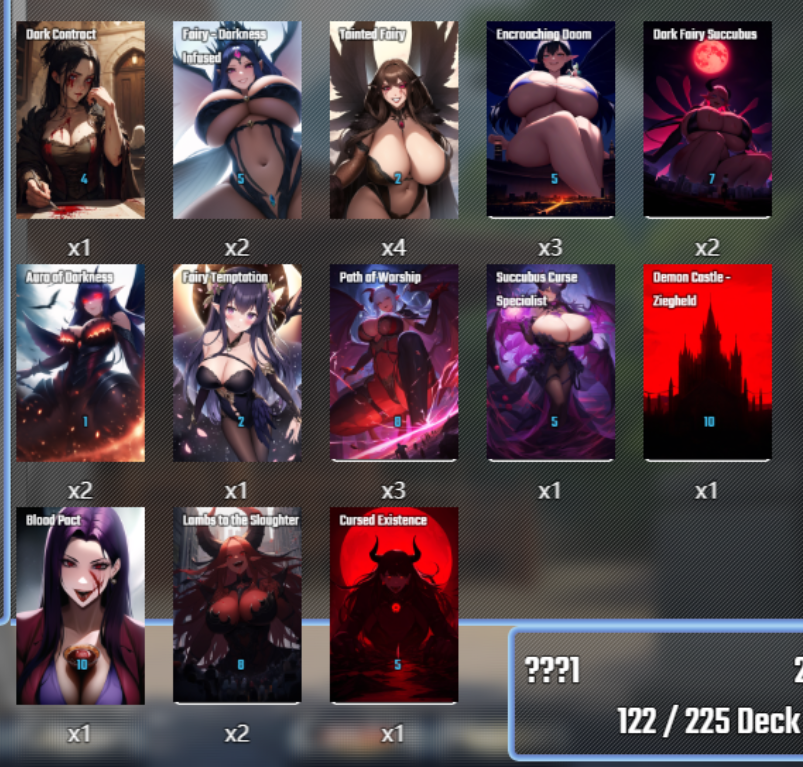
That said, when it comes to the issue of blue cards being too powerful, the fault really doesn't lie with the system itself. It's just that the card draw is completely out of hand. Both drawing and removing cards are forms of deck thinning. In any card system without resource costs, drawing cards is a terrifying mechanic—because essentially, it's just another way of reducing your deck size indirectly. And with certain existing cards in play, even with an extremely high thinning ratio, there are still situations where your hand bricks completely.

But card removal is different. That’s actual card removal. It directly reduces the number of specific cards in your deck. As long as those cards' total count drops below your starting hand size, then the success rate of pulling off an OTK becomes theoretically 100%. Sure, drawing cards still carries a technically possible brick chance and can be barely balanced because of that. But card removal? There’s no balancing that. In fact, in any deckbuilding game, removing cards has always been an extremely efficient effect. Just like in Yu-Gi-Oh! where players will always default to a 40-card deck unless there's a very specific reason not to, or like in Slay the Spire, where once you reduce a deck to 10 cards or fewer, Warrior’s infinite OTK becomes consistently achievable.

So if you’re going to criticize the system, well—card removal is probably the single most dangerous mechanic, and the one that deserves the most scrutiny.

As for generic types, sure, they might have issues. But the real root of the problem lies in mixed card pools and universal cost systems. Honestly, you could remove all the red cards from the game, and I wouldn’t mind. Most of them aren’t that useful anyway. But as long as red energy exists, you can always trade it for high-cost cards of any color—which means every character is still playing the exact same system. I didn’t even look at the red cards during my run. Unless I specifically needed to gain some height early on, red cards meant absolutely nothing to me. I was simply using red energy to buy powerful purple or green cards to enable my core output.

So in a way, as long as zero-cost draw effects and universal energy are allowed to stay, then this playstyle of:

“Everything becomes deck thinning, and universal energy buys everything.”

will never become obsolete.

So ultimately, I still stand by my original point. I absolutely do not support introducing card removal effects at this current stage—because balance has already gone out the window. But I do support giving clearer distinctions
(1 edit)

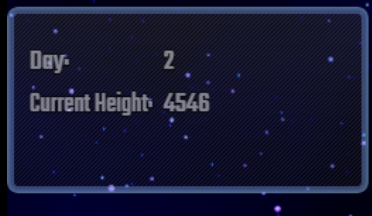
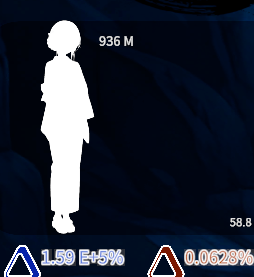
I think the point you're overlooking is that as long as your library can complete an idle, you're basically OTK. in the current level, the only thing that limits you is growth rate. The only reason it's hard to find a use for it in yellow and blue cards is simply because your enemy has a terrible card that halves blue and yellow energy. Initial. This will greatly affect your run speed. But as long as the overcards keep up, then you can theoretically run indefinitely. The first time you pass an empty library, you only have to compound the cost of 1 drop of blood that is better than nothing. You can replace all the energy you've saved up with generic premium red cards and supplement your draws appropriately to make sure you can still continue to turn the deck empty. The cards you buy in the store will all go into the deck, leaving you with no “weak” cards in your hand. You'll just be grabbing more and more high-level damage and high-level red cards as you go along. Of course, it doesn't matter if you don't grab high-level red cards, you just need to spend a little bit of red energy to buy high-level purple energy, and then use the high-level purple energy to buy high-level purple cards and you're done. As long as the deck is running, you'll make more and more money on your costs. So adding removal cards is a terrible thing. Because right now the only thing that can interrupt your running is if the filter draw ratio isn't high enough coupled with not enough luck to cause the deck to stop running with tons of high level energy cards and high level damage cards, otherwise your deck just keeps spinning indefinitely. On top of that In fact, I've been able to grow to a height of 6km in just 3 turns using purple characters that take advantage of the fact that it's easier to rack up purple costs now, and that's with a hand so full of cards I can barely see them anymore

At least at this stage, intensity alone is quite unnecessary. Because the only enemy is simply too targeted. Really, I think blue is actually the strongest. Because blue comes with a lot of card draw, and blue can be traded for a lot of card draw. As long as you have the ability to over empty your library, then OTK is basically a nail in the coffin. After all, the penalty mechanic for over-emptying the library only really becomes a threat very late in the game. Because of this, at least at this stage, the inclusion of card removal is obviously a bit too powerful. I'm in favor of putting Just At the very least, the authors had to separate the different types of cards first, or else limited capture filter draw is almost a given when you can get a higher cost.

Honestly, this game is fantastic. I haven't played a game this fun in a long time. But then again, the game does seem a little low on overall completion at the moment. Since there's only one level available, the enemy difficulty in that first level feels a bit lower than usual. Of course, I understand it's just a demo—but precisely because it’s a demo, I think there should be a reduction in the number of special statuses/keywords used, especially since I’m not quite sure what some of those keywords or effects actually do.

Standardizing descriptions is quite necessary. Providing clear and consistent wording, and making sure important information appears where it’s needed, is equally important. Also, I think the number of enemy attacks is a bit too much—it makes the overall combat flow feel a little... cluttered. Sometimes, I feel like if enemies only used one card per turn, it would help reduce the information density significantly.

A lot of enemy cards don’t really synergize with each other; in many cases, it feels like they’re just stacking random effects. I think it might be better to make individual enemy cards stronger, but reduce the total number of effects each turn, so the pacing feels less overwhelming.

It would also be nice to have clearer feedback for injuries. For example, when I’m swiping or checking values, my attention is mainly focused on the cards. As a result, I often miss when I take damage or heal, simply because there’s no noticeable feedback. Having at least some kind of hit confirmation would be much better than nothing.

That said, I didn’t get a very clear sense of the difference between HP and Desire during my playthrough. From what I can tell, Desire feels like a variant of HP—just used by characters that are more focused on that resource. But since many cards seem usable regardless of the character, it’s hard to see if there’s a meaningful mechanical distinction between the two.

Also… for a size-based game, how am I supposed to win without a good stomp or two? When I’ve grown to be thousands or even tens of thousands of times bigger than my opponent, I feel like it’s about time to end this farce myself~

Then again, with the way the current values are designed, it seems like both sides recover their sizes every time you start a new battle. I can see why that’s necessary for balance—but there’s something a little empty about realizing all the growth you’ve earned is only “temporary.” And with percentage-based growth, things can escalate really fast—both for the player and the enemy. Once that size gap opens up for whatever reason, it just snowballs and becomes harder and harder to close. And because of the nature of percentage scaling, values keep accelerating faster and faster. I only tapped the value a few times and already shot up to 2 kilometers tall. That’s… a bit much. So I think a better system might be to rely on fixed-value growth, and have both sides gain size only from each other whenever possible. That way, you avoid extreme inflation.

By the way, do you need any help with UI design? I don’t have much experience in that field, but I’ve worked with art before, so I might be able to assist a bit.

But as soon as I see that the mia I nurtured is still being bullied at school it can be very discouraging.

Seriously, this game is awesome. But I think the game is a little too sloppy when it comes to character-player interaction. A large amount of lines in the game are repetitive, especially in gym class. The repetition of dialog is actually okay, but what makes it worse are the comments about the protagonist/mia or other characters that may have changed that come with those repetitive dialog. It's as if most of the characters can't seem to notice whatever the protagonist is working out into during the episode. It's especially noticeable during the arm wrestling part of gym class. Even though the protagonist is already significantly bigger, those girls still always like to make a big deal out of it. And it seems that no matter how many times you beat them, it's as if their memories are erased during the next free workout. As such, I think the author should go ahead and add a comment about the protagonist who is not at a different stage, and how the girls who have been defeated change. At least with alex, I feel sure he wouldn't be willing to arm wrestle the protagonist after he became too big.

The same goes for mia's changes. Obviously I've worked hard to make mia so huge, but almost everyone is oblivious to the changes in mia. In front of the school, the principal still asks me “What do you think is the reason mia can't grow up?” Even though mia is the biggest girl at the moment. If turning a blind eye to the protagonist's growth can be blamed on the fact that this is an FMG game, then turning a blind eye to mia's growth is somewhat of a blow to the player's enthusiasm for exercising mia. I think at the very least the other characters should have to have different conversations about mia as she changes. mia should at least stop being jealous of Amanda's boobs, and even evil mia should have the balls to challenge the gym teacher. It's really discouraging to the player if their training of the character is pretty much the only difference in poor scores.

I triggered it on easy mode, using a build that is discard-based. I'm not sure of the trigger conditions for this bug, it seems like some days it triggers and some days it doesn't. On the other hand, I started the game with an archive of a previous game (I previously hit level 2 but didn't beat the girl, meanwhile, my last playthrough didn't), and I'm not sure if the cause of the bug is due to this archive that shouldn't have been saved?

For some reason, there seems to be something wrong with Follow-Up's determination of gaining magic, and in some cases it doesn't give me 1 magic. Also, when you're clicking on the top right corner while you're on one of the second level, sometimes the girl's mapping won't be refreshed and it's still the same monster as before.

On the other hand, since the protagonist is only one person, it's always inevitable to lose blood when facing a large number of enemies, and combined with hand limitations and build limitations, there really isn't much of a strategy when fighting a large number of enemies a lot of the time. I think it would be a good idea to add a few more enemies to all matches, but at the same time, have different enemies attack at different frequencies (e.g. once a round or once every two rounds), and of course, it would enrich the experience to have the other main characters team up with you.

I have to say, it's quite frustrating that the game doesn't have in-game saves during battles. While I understand that most roguelite games lack mid-game saves, it's a pity that this game requires constant combat with little downtime to appreciate the protagonist's illustrations. I think it would be a great addition to include a town scene where players can interact with the protagonist during non-gameplay time, applying different effects based on the protagonist's level. On the other hand, I'm not sure if it's because I'm playing the free version, but the lack of progression outside of battles, coupled with the relatively long duration of each game session (especially considering the protagonist is a solo character with limited tactical variability), makes the early stages of the game feel incredibly repetitive. For instance, for a prolonged period, your deck building remains rudimentary, essentially revolving around choosing between defense and offense.

You shouldn't put all your content on the same page. You should paginate it, otherwise the reading experience is terrible.

The short-lived effects of the potion were so frustrating that they passed like a dream. I think it would be a good idea to add a couple of other characters that the player would have to equip with permanent potions, and assistants to help test the temporary effects. On the other hand, I think there are too many materials now, and more could be gained by adding some quests or by advancing over time. As well as I would like to continue to see some content about attribute theft is that ok?

By the way, I hope the game includes some background music, so I don't need to play it myself.

To be honest, I was quite surprised to play this game for the first time. For most of the visual novel games I have played, the animation performance of this game can be said to be outstanding (most of the visual novel games made by AI that I have played have almost no performance, at most it is the fading in and out of characters and some pitiful movements).As a player from a non-English-speaking background, I'm not certain if I'm qualified to evaluate the writing, but it does feel quite enjoyable to read.

From a storytelling perspective, there seems to be an excessive amount of exposition at the beginning. Within a half-hour gameplay, only about five minutes are dedicated to FMG. I'm not averse to the five-minute FMG segments, as they don't take up much content. However, I believe the exposition could be streamlined, or some elements could be postponed. Currently, with numerous characters introduced all at once, it may be challenging for players to immediately grasp their significance or to thoroughly explore their traits and backgrounds. I suggest that Karina's storyline could be rescheduled. Additionally, I am somewhat skeptical about the amount of content this game will offer. Personally, I prefer a more gradual FMG progression. While a faster pace is appropriate for an illustrated short story, in a game, the protagonist appears to reach their developmental limits within half an hour, making it impossible to hide from the others. As another commentator suggested, the game cannot simply revolve around a talisman relay race. Therefore, I believe a slower pace would allow each character to undergo a more fulfilling development, thereby enriching the overall content. Nonetheless, I still hope the game offers means of growth beyond the use of talismans.

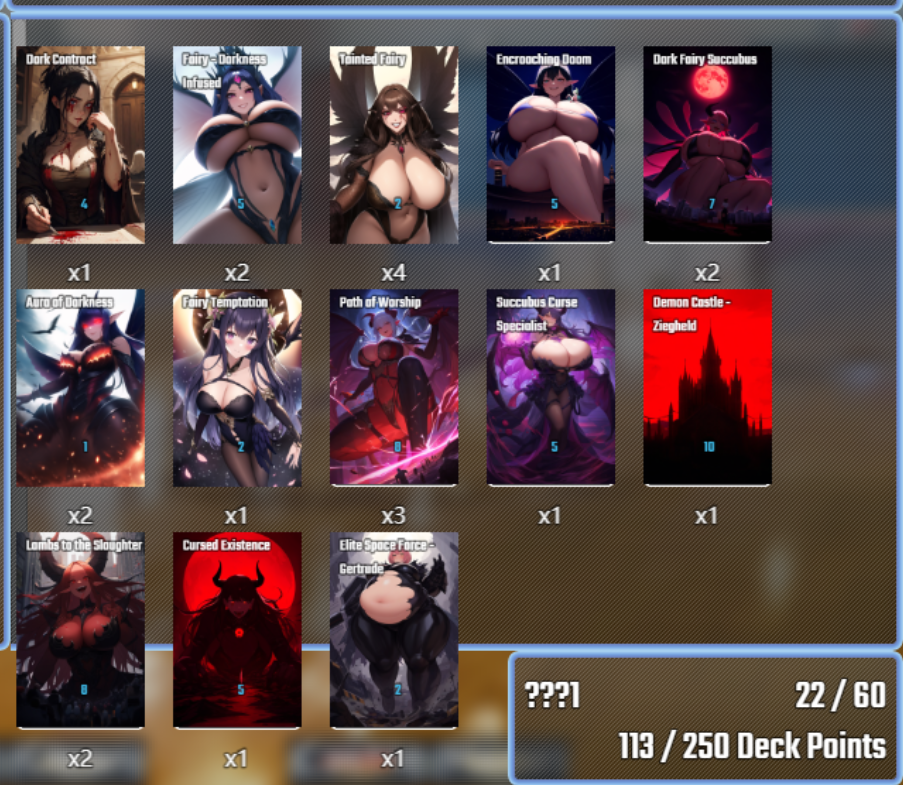
If you don't use bosses (such as Empress and Cultists), then I recommend this set, with fewer waste items.

lol