On August 15, 2012, at Gamescom in Cologne, I saw Fruit Ninja VR.
I thought: cool, but what’s cooler than fruit? Kebab! And what instead of ninjas? ZOMBIE! Shivers went through me, and I haven’t been able to free myself from that thought since.
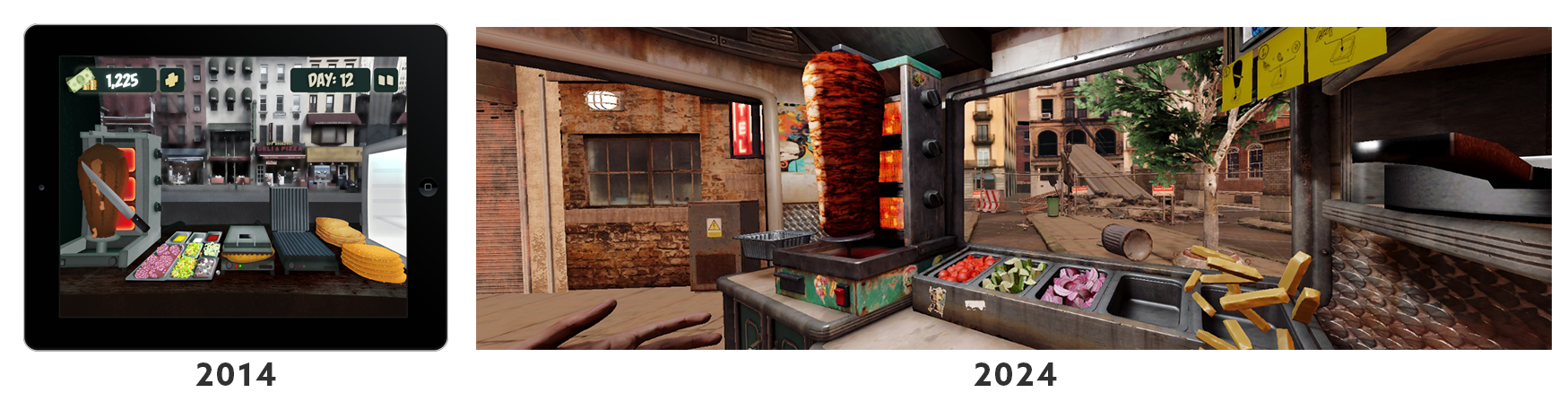
The idea was simple, but the vision evolved over the years. At first it was to be a mobile game — in those years kitchen time-management titles, where you prepared orders on time, were still quite popular. I wanted to add zombies, which were at their peak in 2012. This concept helped me get a job in mobile games. I thought I would quickly learn how to make games and release my project — a combination of Cooking Fever and Into the Dead. Two mobile prototypes were created, but the feedback was clear: shooting zombies on a phone is mediocre. Limitations in control precision, a small workspace and a stationary camera meant that it just didn’t work.
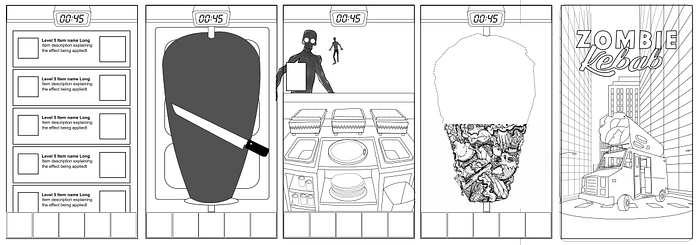
One day when I was collecting feedback after another redesign of mobile screens I heard: “Nah… not like that. Make it so the players feel they’re there.” Context was missing and the game lacked character. I started collecting references, taking pictures of the TV when a frame suited me.
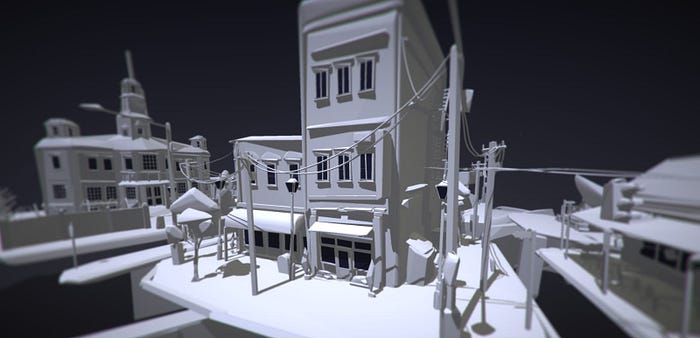
I could see it in my head: 1970s Brooklyn, 1990s Gdansk at night, industrial districts, graffiti, street trash, dark alleys. But how to embed it in the game?
The breakthrough came when I discovered Tilt Brush.
I could quickly sketch the world around me in a natural way. One night, after several hours of drawing, I suddenly took off the headset, convinced there was a zombie behind me. I felt there was no turning back — I knew that fear had to find its way into the game.
Sure, there were moments of doubt. Friends would ask: “Yo Dziki, how is Zombie Kebab?” I did not know myself: “What platform is this game coming out on?”, “Is this kebab made of zombies?”, “Why are you shooting them? — They just want to eat kebab at 4 a.m.”. When I had no answers to these questions, the project seemed absurd. Then VR opened my eyes. I just started creating this world around me, and magically it all started making sense to me. As I immersed myself in this place I realized that the Zombies don’t come for kebabs — zombies come to kill you, and you cook for people who have buried themselves in their houses — they’re afraid to come out because zombies are prowling around. You have a gun, a car, and people to feed. Sometimes an armed courier will come to pick up orders, sometimes a drone will come, and if you think hard enough — you’ll figure out how to turn on the ordering system on a broken TV.
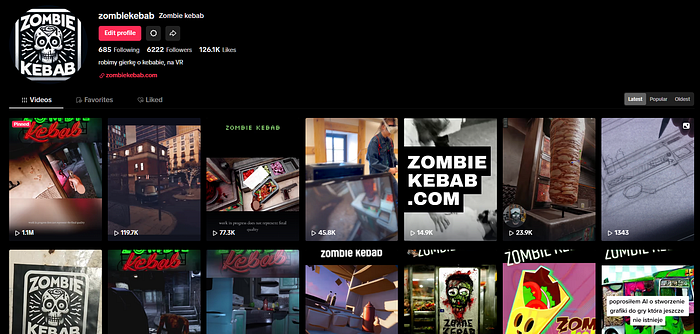
In 2020, I started uploading short snippets of gameplay to TikTok. No promotion, no trends. And suddenly? Tens — hundreds of thousands of views. Finally, measurable interest. That gave me a signal: the project was alive.
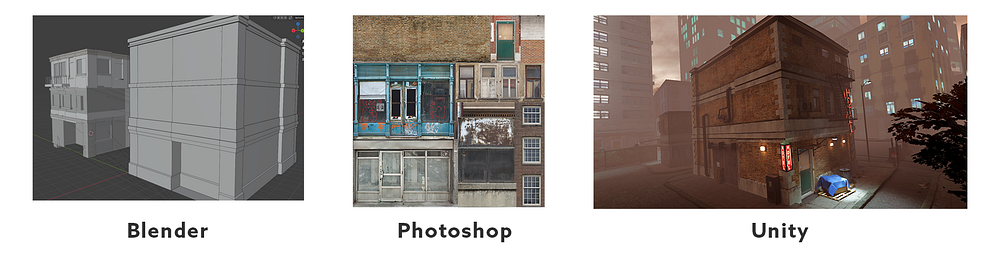
Learning what turned out to be necessary was not obvious. It’s not always clear what you need to learn. Tools: Inkscape, Photoshop, Blender, Unity, programming basics. But the key is to combine them consciously. You want a house in the game? You build a model in Blender, texture it in Photoshop, set up the materials in Unity, and look at it on the headset. That’s how I built my workflow.
TikTok showed me what people were interested in — not the art, but the gameplay. So I started sharing the development progress. The videos sometimes got a second life, most recently our footage with a truncated logo — signed “Armenian Fast Food Simulator” — is circulating on facebook a year after its release on TikTok. People sometimes ask in the comments: “What game is this?” And fortunately, an answer appears: It’s ZOMBIE KEBAB VR!
Creating a game is not just a matter of wanting to, it is a matter of regular, deliberate action. It doesn’t matter how long it takes to make a game. Even if it takes 10+ years, do what you feel, work at your own pace, iterate to your heart’s content. If you have the space to work intensely, get a team together, set up a repository, organize a channel on Discord, and make decisions. Make commits, post updates, and share your progress on social media, because when you see that someone cares, you know it makes sense, and the work moves forward somehow. Progress, however small, is more important than spectacular results achieved through superhuman effort. And remember:
A goal without a plan, deadlines, and regular work is just a fantasy.
No sooner than 2026.
Did you like this post? Tell us


Leave a comment
Log in with your itch.io account to leave a comment.
Excited to see this come to life. I was looking for the game because i remembered seeing clips of it on tiktok. Kinda sad to see its not done yet but ay it's a passion project i'm actually glad to see it wasnt rushed out after the big time Hype. I'll be h