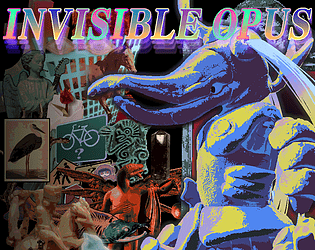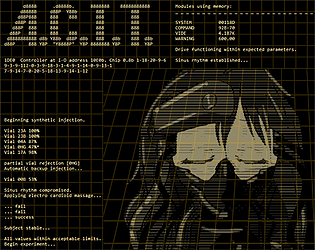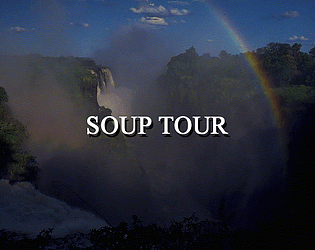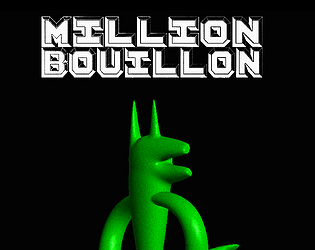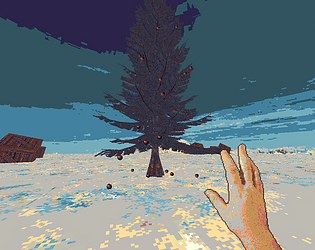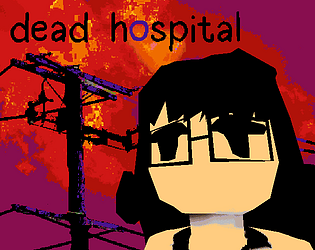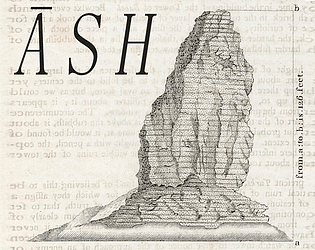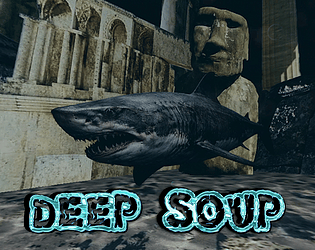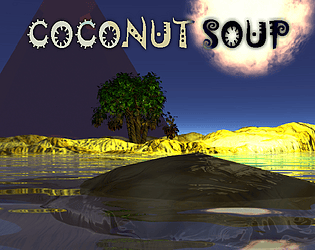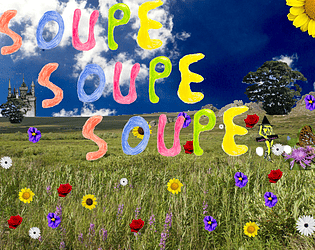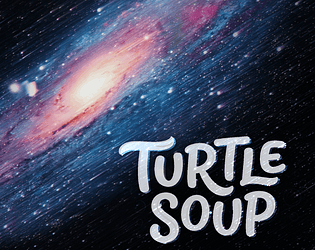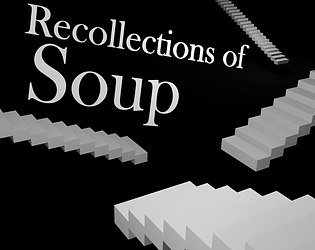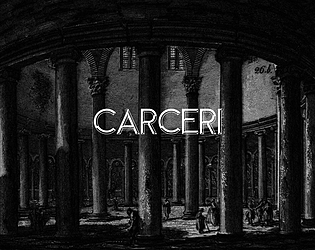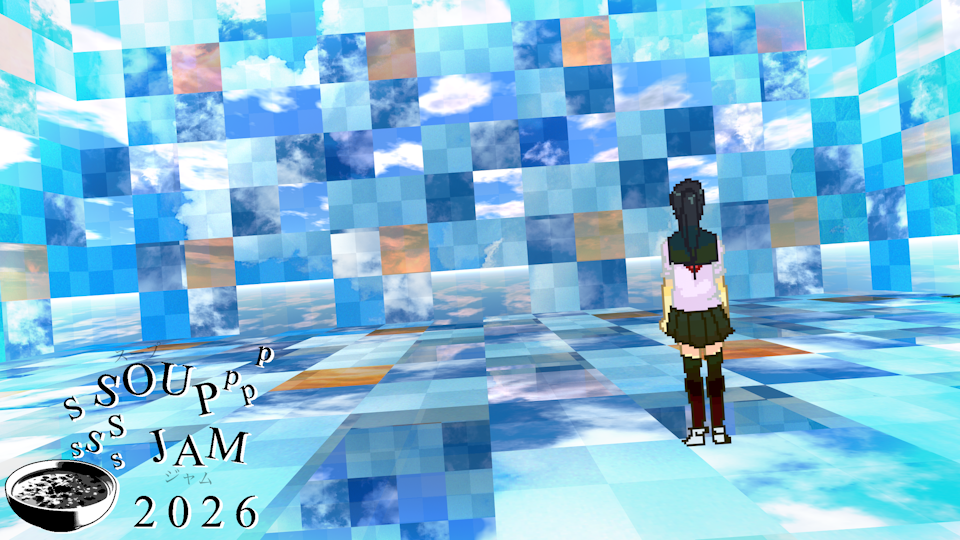

SOUP is an obscure Japanese minimalist art-game from 2007 where you walk around a series of small abstract rooms and generally soak in the atmosphere. Think of it as a sort of digital art gallery.
SOUP-likes are a microgenre of art-games which try to emulate the formula of the original SOUP. They are essentially "walking simulators" taken to their most minimalist limitations.
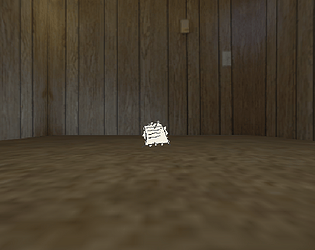
They are composed of a series of minimally-interactive diorama-like rooms generally consisting of the following elements:
Rooms are collected into sets called "days" (or "nights" in our SOUP-like games) which can be selected from the main menu. The original SOUP has 25 rooms spread across 5 days, but there is no upper limit to the amount of rooms a SOUP-like can have. There is typically limited interaction in each room aside from simply getting to exist in that space. Moving into walls will take you to the next room in a random order.
SOUP-likes are intentionally minimalistic, as the harsh constraints help breed creativity. You may be surprised at how much you can do with so little to work with.
You have multiple options for making a SOUP-like game:
Not at all! When it comes to SOUP-likes, it's best to bring yourself into it as much as possible, without worrying about trying to mimic some trendy aesthetic or a certain style. You should make whatever kinds of SOUP you want to make, in whatever style you want to evoke! As long as your SOUP is unashamedly yourself, that's all that matters. One of the best things about SOUP-likes is that each one is a unique reflection of the people who made them. Small pieces of their souls refracted into little box-shaped rooms. So in other words: Be yourself!
From my understanding, the original SOUP was created by a group of friends who each brought something of themselves to the project. That's where the name "SOUP" comes from: Many people adding their own ingredients to the mixture.
Most SOUP-likes are collaborative in nature, with many artists contributing rooms together. But there's nothing stopping you from doing everything yourself if you so choose.
I first encountered SOUP on an old website called "IndieGames.com - The Weblog" (which I don't believe is around anymore, at least not in the form I knew it in). It's where I got most of my indie games info along with TIGSource.
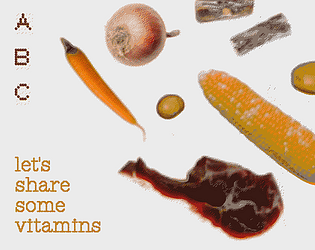
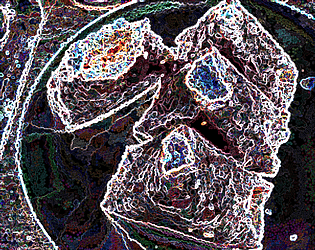
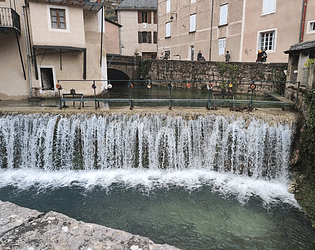
Indie game players at the time were generally a lot less welcoming to the idea of art-games than they are now. Experimental games like SOUP were typically mocked and derided as "not games" and "walking simulators" (derogative). When the article on SOUP was posted, most of the responses were mixes of confusion and pithy dismissiveness. They seemed unsure of what SOUP was even supposed to be, and angry that someone would try to pass off something so minimalistic as a video game. "It's just a box-shaped room with a JPEG in the middle" was a common complaint which still gets thrown at SOUP to this day.
However, I was not among those people. Something about SOUP really struck a chord with me, and I couldn't stop thinking about it years later. I was fascinated with its ability to evoke wildly different environments and atmospheres with such a limited amount of resources, and all while using the same "box-shaped room with a JPEG in the middle" format for every room! To me, SOUP is a true triumph of minimalist digital expression and I love seeing people explore its strict limits with their own SOUP-like games and mods.
I feel like digital spaces, as a concept, are often severely underappreciated and misunderstood. Sometimes, simply getting to exist in a digital space is enough, even if (or even because) there's "nothing to do." Who needs goals or achievements when the place itself is its own reward?

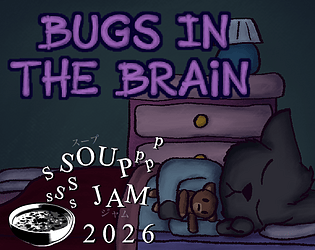
Here are some jam logo variations in case they are needed:
No submissions match your filter